Artwork
The Nativity
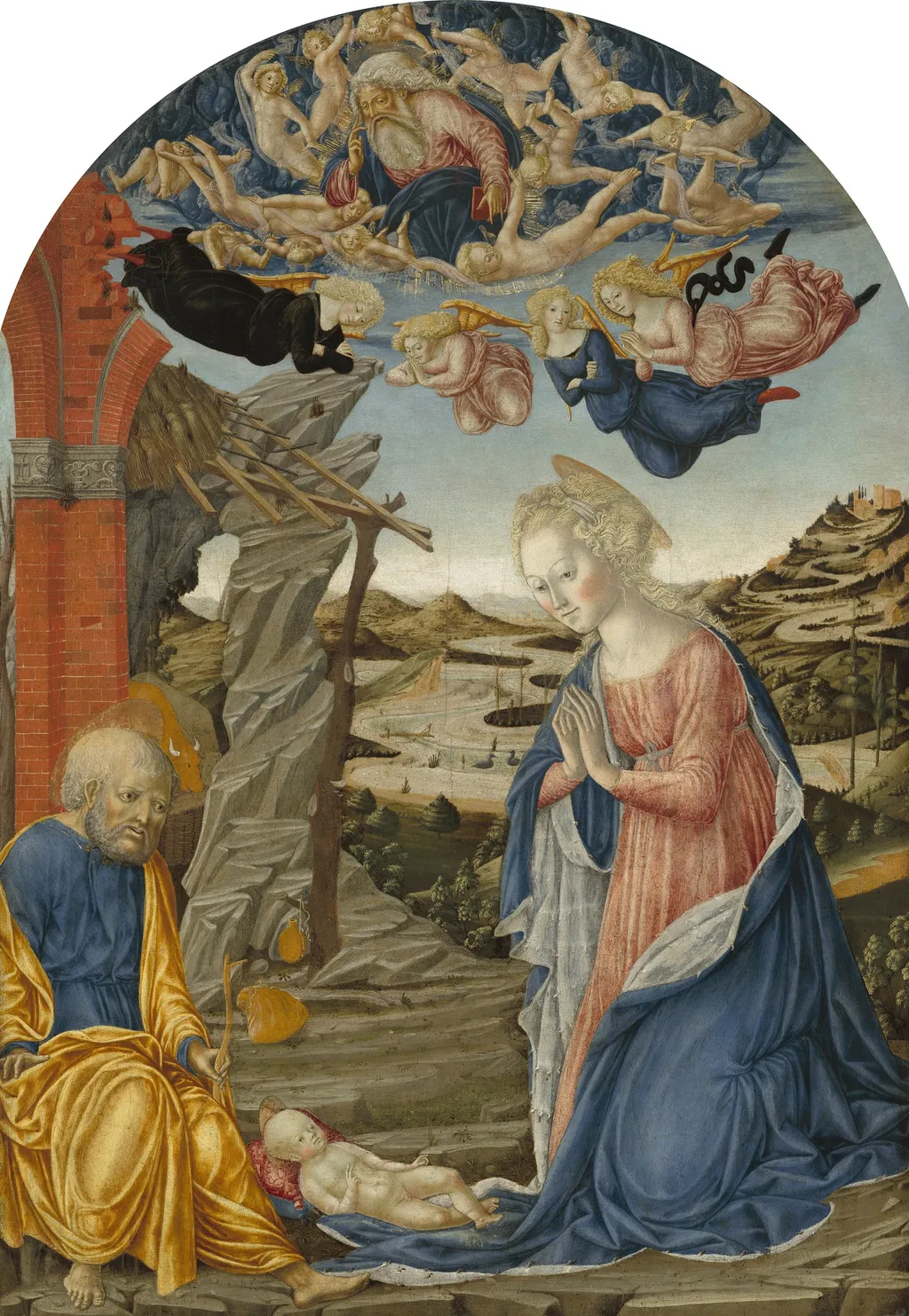
The Nativity is a tempera painting by the Early Renaissance artist Francesco di Giorgio. It dates from 1470 and is held in the collection of the Metropolitan Museum of Art.
About this work
Subject & Meaning
The composition follows traditional iconography, with the Holy Family arranged in a stable setting, underscoring themes of humility and divine revelation.
The painting depicts the Nativity of Jesus, centering on the Christ Child in the manger, flanked by the Virgin Mary and Saint Joseph. An angel appears above, while God the Father occupies the upper register, reinforcing the theological unity of the Incarnation. The composition follows traditional iconography, with the Holy Family arranged in a stable setting, underscoring themes of humility and divine revelation.
The inclusion of God the Father in a higher register reflects fifteenth-century Sienese devotional practice, linking earthly and heavenly realms.
Technique & Style
Executed in 1470, this religious painting by Francesco di Giorgio utilizes tempera as its primary medium applied onto a wooden panel support. The work measures 52 centimeters in height and 57 centimeters in width. Stylistically and iconographically, the composition depicts the Nativity of Jesus, featuring the Christ Child alongside Mary and Joseph.
The scene is further populated by angelic figures and includes a representation of God the Father, adhering to traditional religious subject matter of the period. The combination of tempera and panel was a standard technique for Italian paintings of this era, providing a durable surface for the detailed rendering of the sacred narrative.
History & Provenance
The Nativity is a tempera on panel painting dated to circa 1470 by Francesco di Giorgio Martini. The work depicts the Nativity of Jesus and is classified as a religious painting. The panel measures approximately 52 centimeters in height and 57 centimeters in width.
It has been part of the collection of the Metropolitan Museum of Art in New York, where it is currently housed. Earlier provenance and any commission records are not documented in the available sources.
The Nativity by Francesco di Giorgio, dated to 1470, is held in the collection of the Metropolitan Museum of Art in New York. Within the museum's inventory, the work is identified under its accession system, though specific accession numbers are not detailed in available records. The painting has been part of the museum's permanent collection, where it is displayed as an example of religious art from the Italian Renaissance.
Its exhibition history primarily reflects its inclusion in the Metropolitan Museum of Art’s galleries dedicated to European paintings.
Context
Francesco di Giorgio’s The Nativity (1470) occupies a transitional place in Quattrocento religious painting, reflecting his dual role as architect-engineer and artist. Scholars such as those at the Metropolitan Museum of Art situate the work within Siena’s late Gothic devotional tradition, while its spatial experimentation, particularly the layered recession of figures and architectural elements, anticipates High Renaissance compositional strategies. Critical reception has emphasized its synthesis of Sienese linearity and Florentine perspectival innovation, though its modest scale and intimate iconography distinguish it from contemporaneous monumental altarpieces.
The tempera panel’s inclusion in the Met’s collection underscores its significance as a document of cross-regional stylistic exchange during the late 15th century.
Overview
Francesco di Giorgio's 'The Nativity,' executed in tempera around 1470, depicts the birth of Christ within a dilapidated stable structure set against a rugged, rocky landscape. The composition centers on the infant Jesus lying directly on the ground, illuminated by a divine light that contrasts with the surrounding shadows. To the left, the Virgin Mary stands in a blue robe, gazing down at the child, while Joseph, clad in gold robes, kneels in adoration nearby.
The scene is animated by a host of angels floating in the sky above, playing musical instruments and singing in praise, a common iconographic element in Sienese art of the period. The crumbling architecture of the stable symbolizes the transition from the old order to the new Christian era. This work reflects Francesco di Giorgio's early maturity, showcasing his ability to blend the decorative elegance characteristic of the Sienese school with a growing interest in spatial depth and naturalistic detail.
The painting demonstrates the artist's skill in tempera, utilizing rich colors and precise linear definition to create a serene yet dynamic religious narrative that bridges late Gothic traditions with emerging Renaissance sensibilities.
Own this work as a print
Artist & collection

Artist
Francesco di Giorgio Martini (1439–1501) was an Italian architect, engineer, painter, sculptor, and writer.

- The Nativity
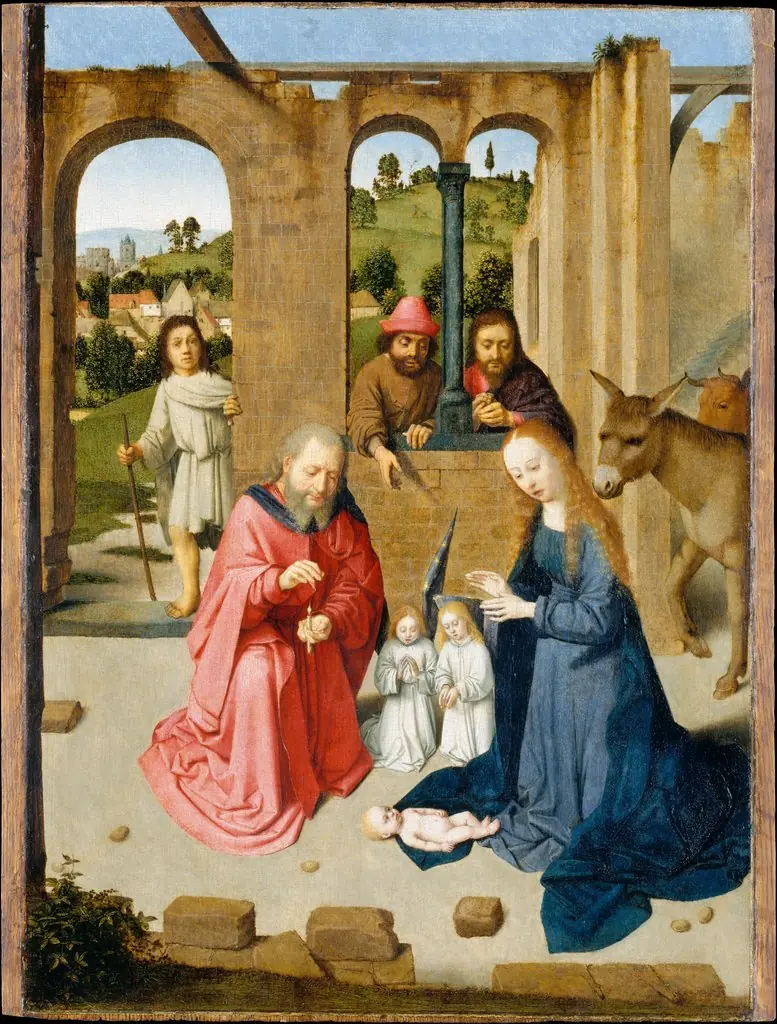 The Nativity
 The Nativity
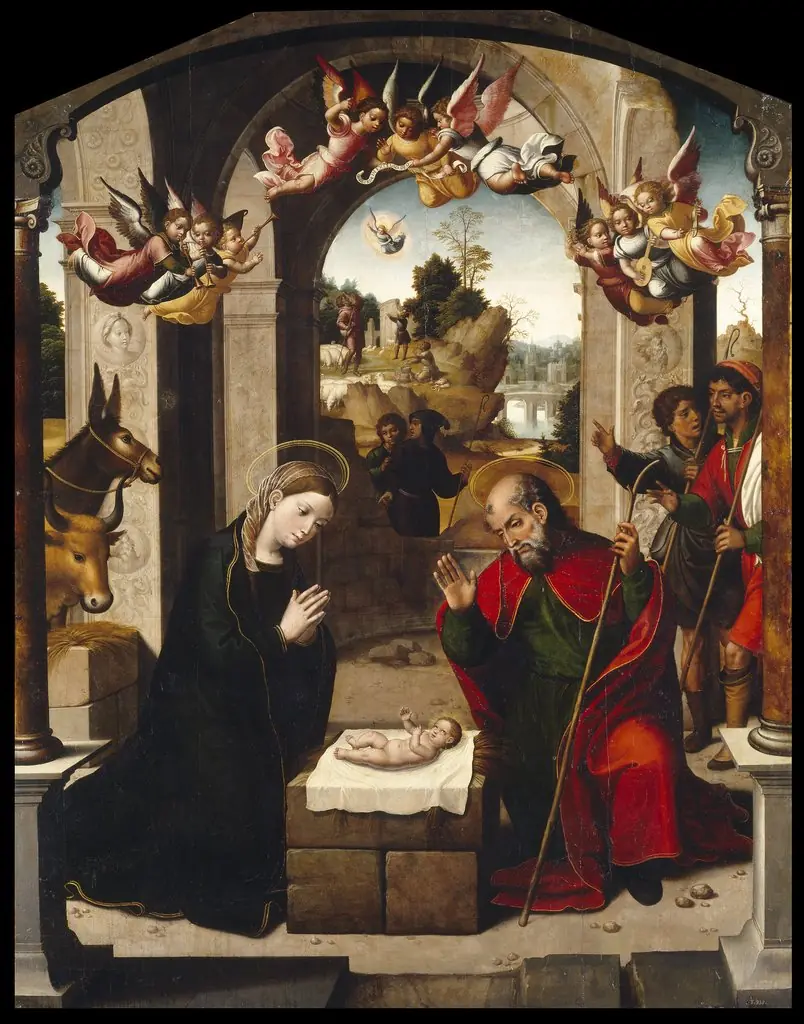 The Nativity
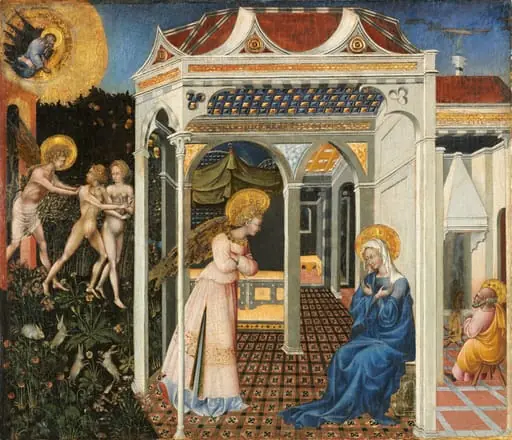 The Annunciation and Expulsion from Paradise
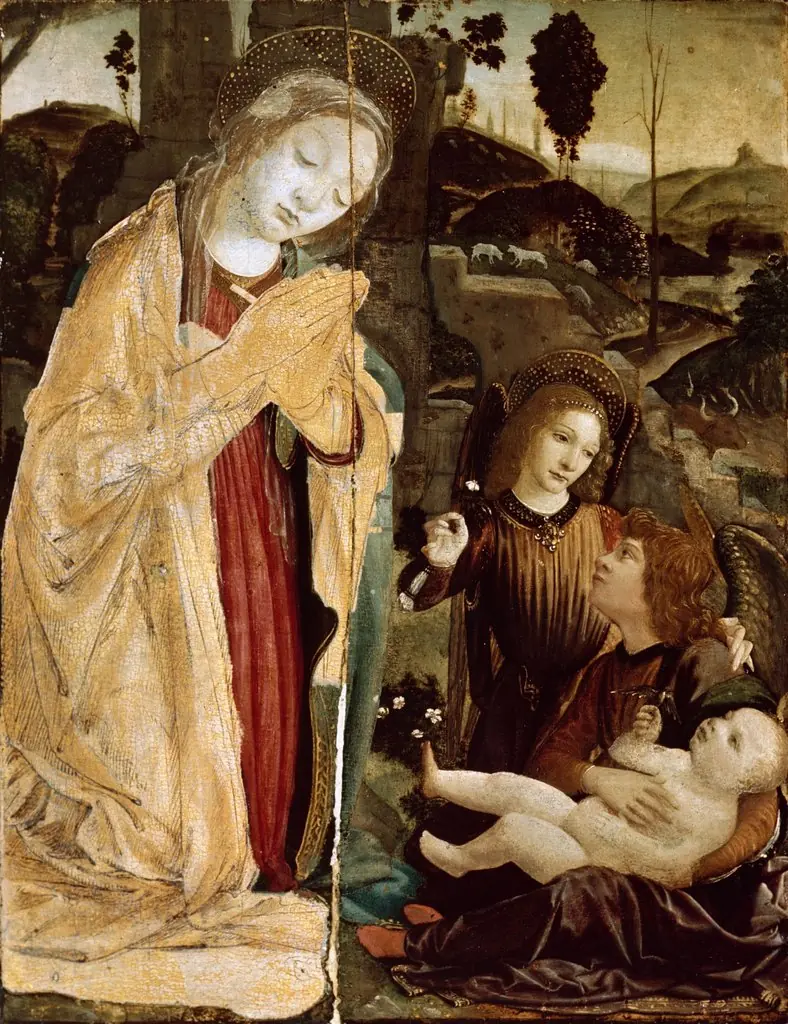 Madonna with two Angels Adoring the Christ Child in a landscape
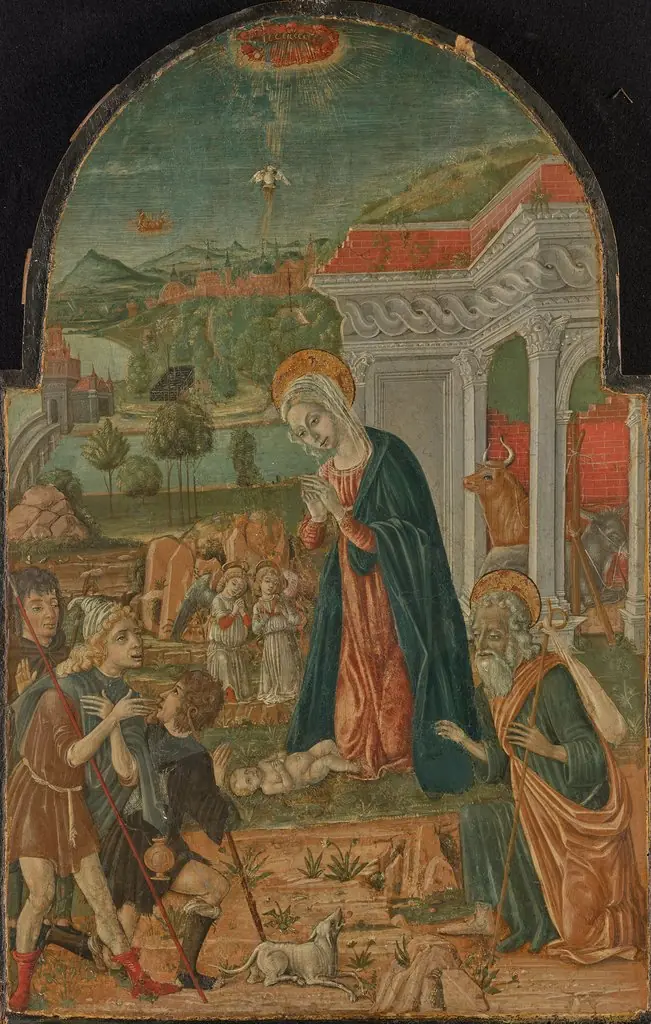 The adoration of the Shepherds
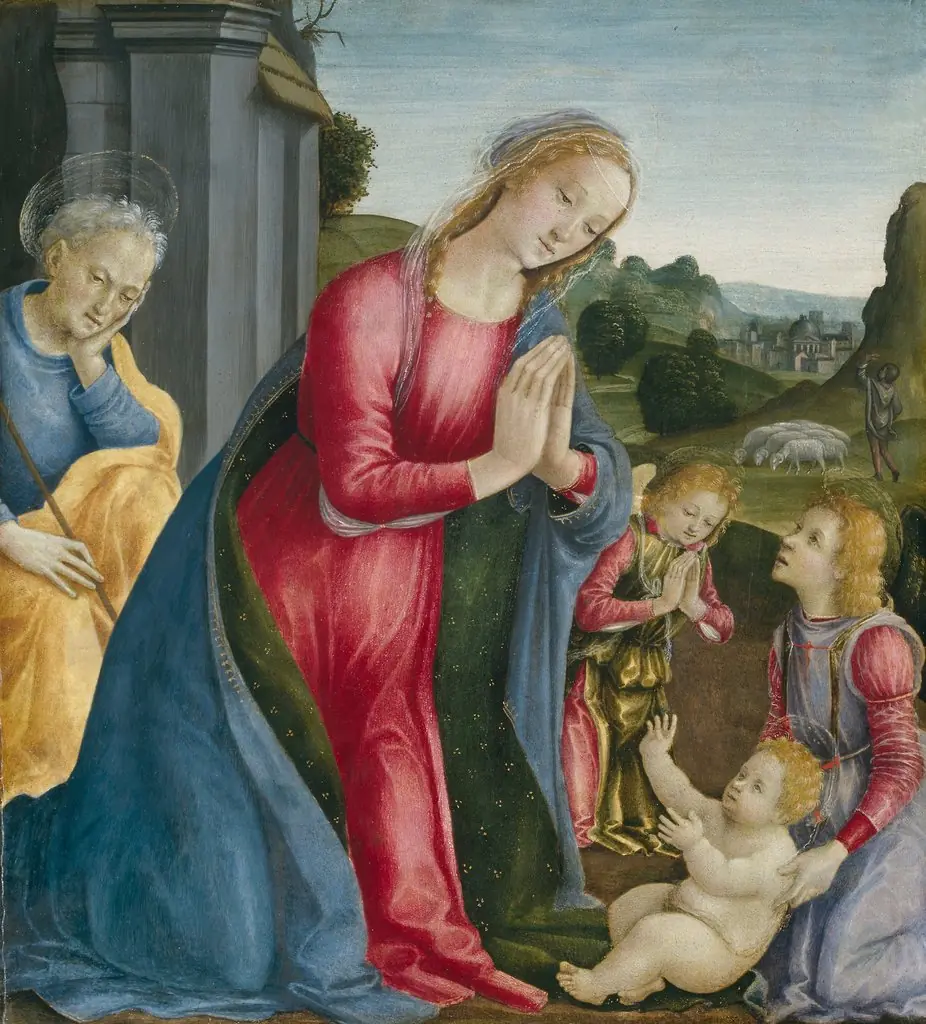 The Adoration of the Christ Child
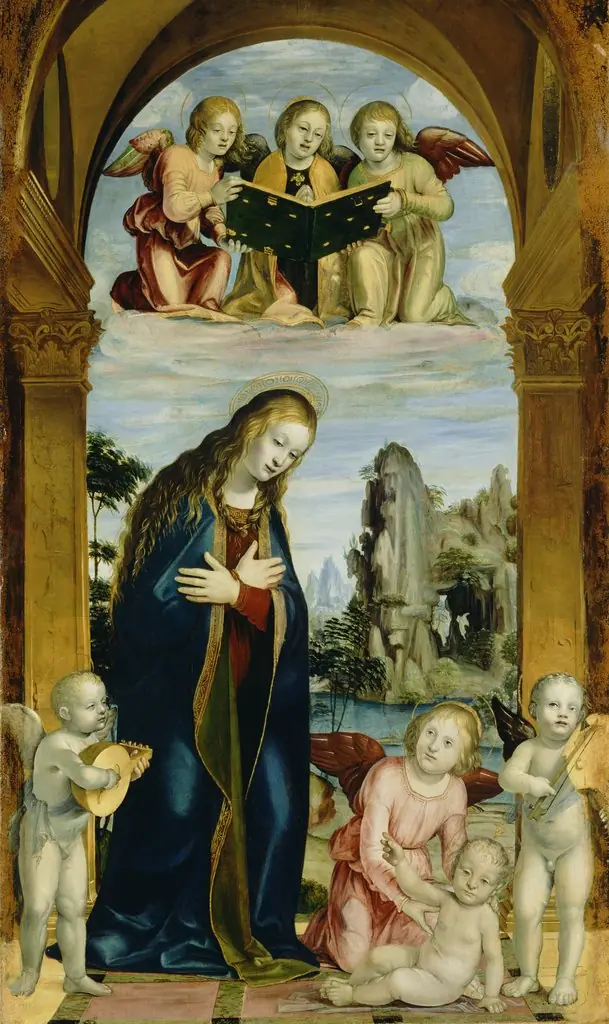 Madonna Adoring the Child with Musical Angels
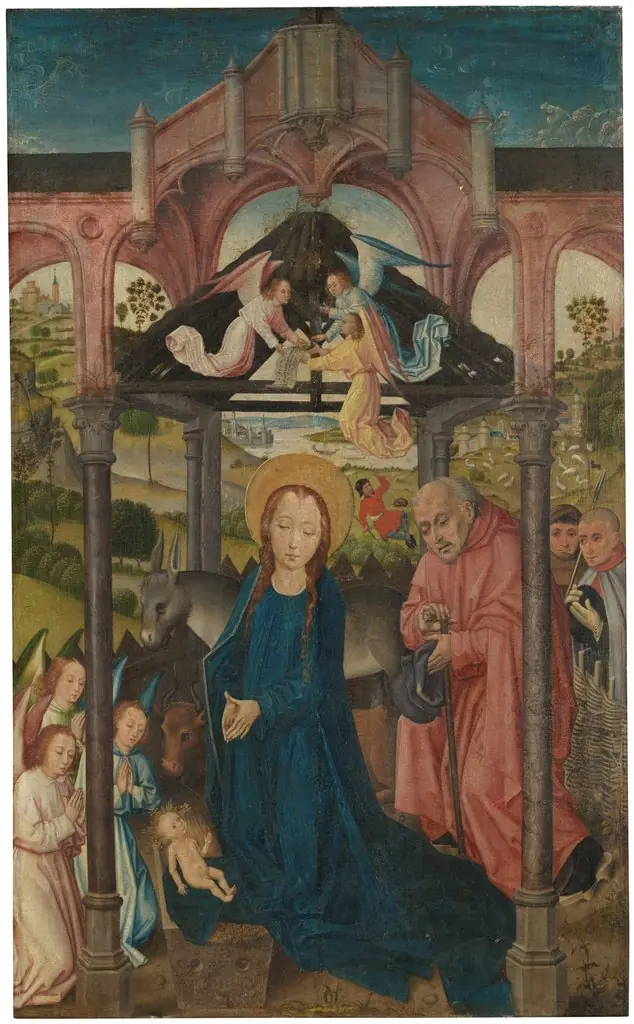 The Nativity
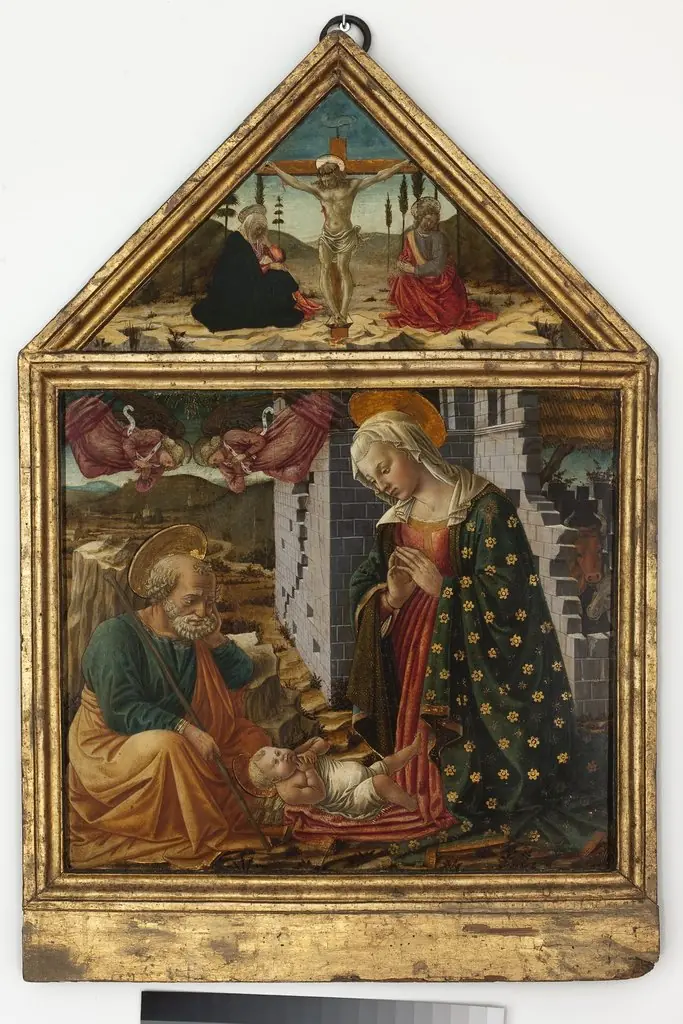 Adoration of Child Jesus and Crucifixion