Artwork
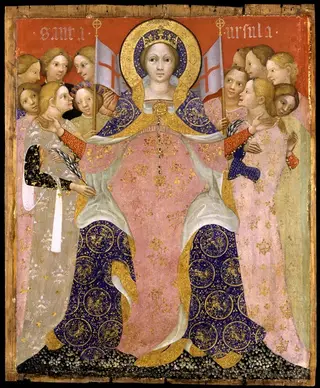
Saint Ursula and Her Maidens
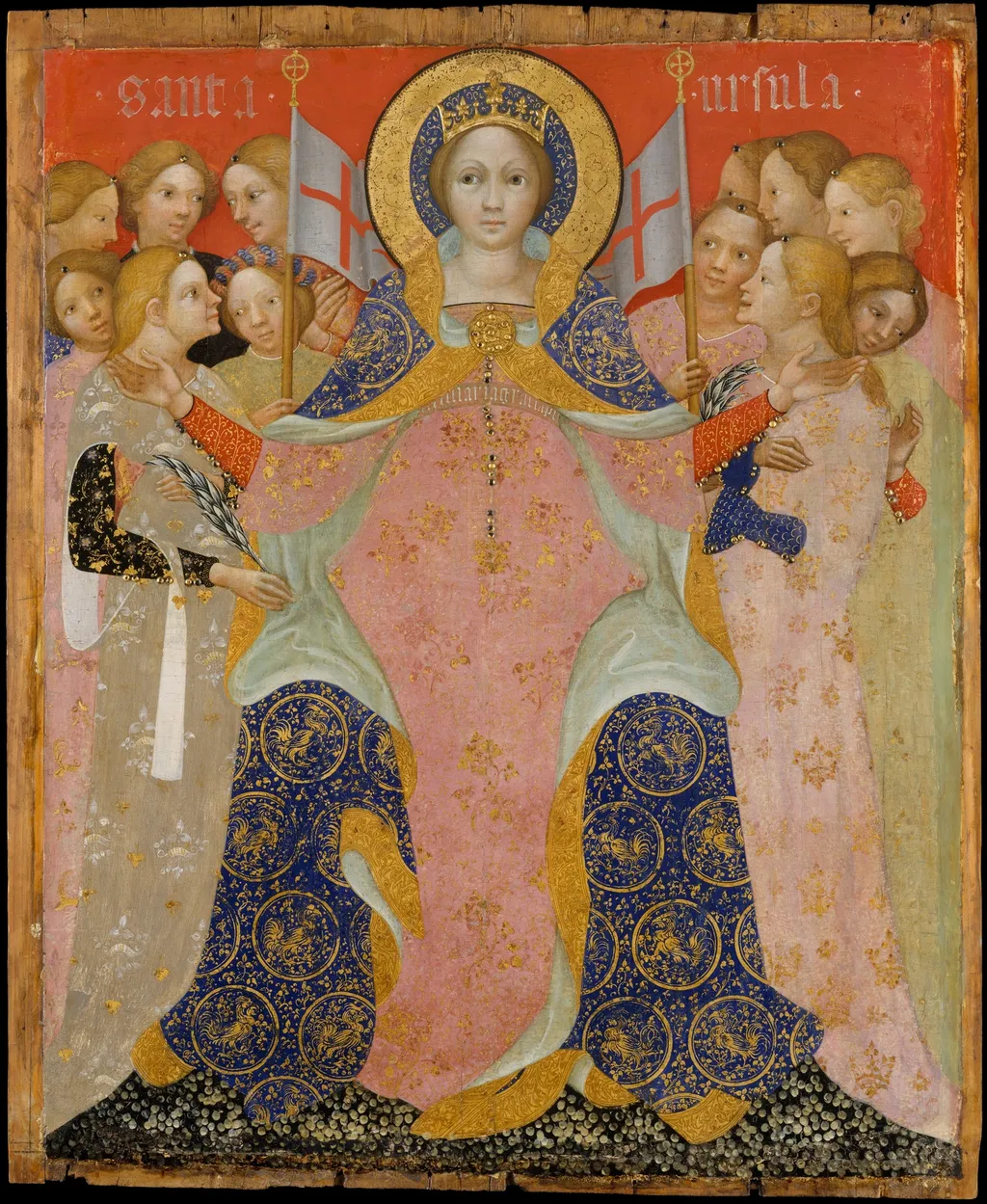
Saint Ursula and Her Maidens is an unspecified painting by the Early Renaissance artist Niccolò di Pietro Gerini. It dates from 1410 and is held in the collection of the Metropolitan Museum of Art.
About this work
Subject & Meaning
The work is part of the Metropolitan Museum of Art’s collection, reflecting its significance within Western sacred art.
The painting shows the legendary British princess Saint Ursula alongside a cohort of virgin companions, a composition identified by its title and confirmed by cataloguing data. As a religious work from 1410 attributed to Niccolò di Pietro, it belongs to the early Renaissance tradition in which Saint Ursula is portrayed as a martyred pilgrim, often surrounded by attendant maidens to emphasize her sacred mission. The inclusion of the saint’s name and the depiction of a solitary woman with attendant figures underscores themes of devotion, protection, and the collective nature of holy intercession.
The work is part of the Metropolitan Museum of Art’s collection, reflecting its significance within Western sacred art.
History & Provenance
The painting Saint Ursula and Her Maidens, attributed to Niccolò di Pietro and dated to 1410, is housed in the Metropolitan Museum of Art in New York. Its accession is recorded as part of the museum's collection, though the specific inventory number is not detailed in the supplied references. The work is catalogued under the museum's online entry, which lists its dimensions (94 × 78.7 cm) and classification as a religious painting from the early 15th century.
Exhibition records cited in the sources do not mention any recent or historical exhibitions of this piece, indicating that its public display history is not documented within the provided material.
Context
Niccolò di Pietro's 1410 panel Saint Ursula and Her Maidens, housed in the Metropolitan Museum of Art, exemplifies early fifteenth‑century Italian religious painting. The work’s iconography, depicting the martyred saint with her companions, reflects the devotional preferences of the period. Scholarship has identified the piece as part of Pietro’s mature output, noting its stylistic affinities with contemporary Venetian narrative cycles.
Its placement in a major museum collection underscores continued interest in female saints within late medieval art. The painting’s provenance and scholarly catalogues highlight its significance within the artist’s corpus and the broader discourse on gendered sanctity in Renaissance art.
Overview
Niccolò di Pietro Gerini, an Italian painter active across Tuscany, completed Saint Ursula and Her Maidens around 1410. This panel painting, now housed at The Metropolitan Museum of Art, exemplifies the stylistic shifts occurring in early 15th-century Italian art. It bridges the established traditions of the Late Gothic period with emerging elements of the Renaissance, showcasing the artist's characteristic approach to religious narrative.
Technique & Style
Gerini's artistic method in this work adheres to conventional compositional structures prevalent in his era. Figures are rendered with a certain stiffness and dramatic posturing, a hallmark of his individual style. The deep red background creates a striking contrast with the lighter, vibrant hues of the women's garments.
This visual interplay, combined with the traditional forms, positions the painting within the transitional phase between the Late Gothic and early Renaissance movements.
Own this work as a print
Artist & collection

Artist
Niccolò di Pietro Gerini (c. 1340 – 1414) was an Italian painter of the late Gothic period, active mainly in his native Florence although he also carried out commissions in Pisa and Prato. He was not an innovative…

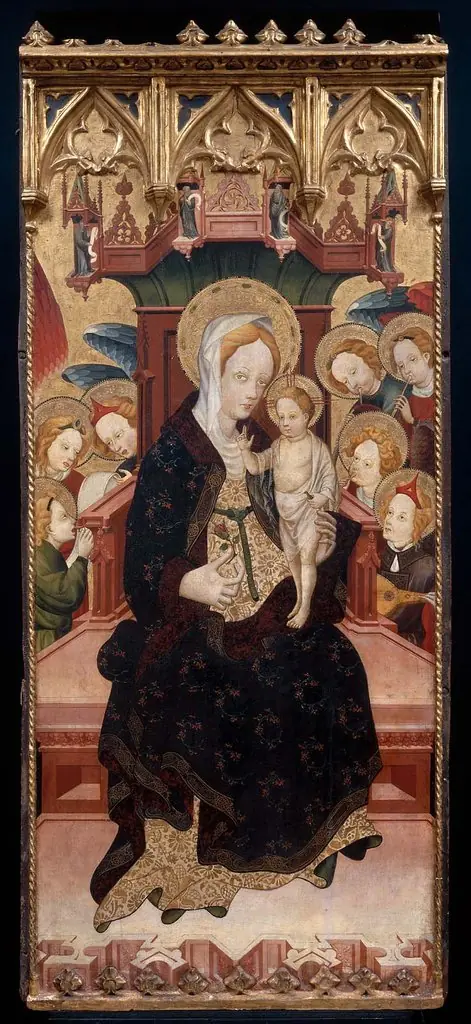 Virgin and Child Enthroned
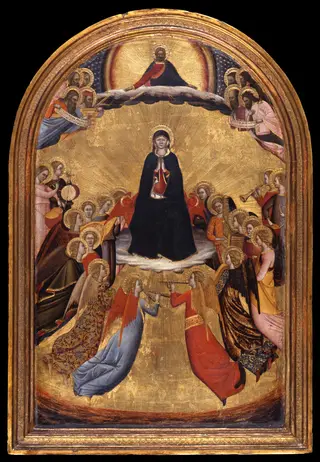 The ascension of Mary
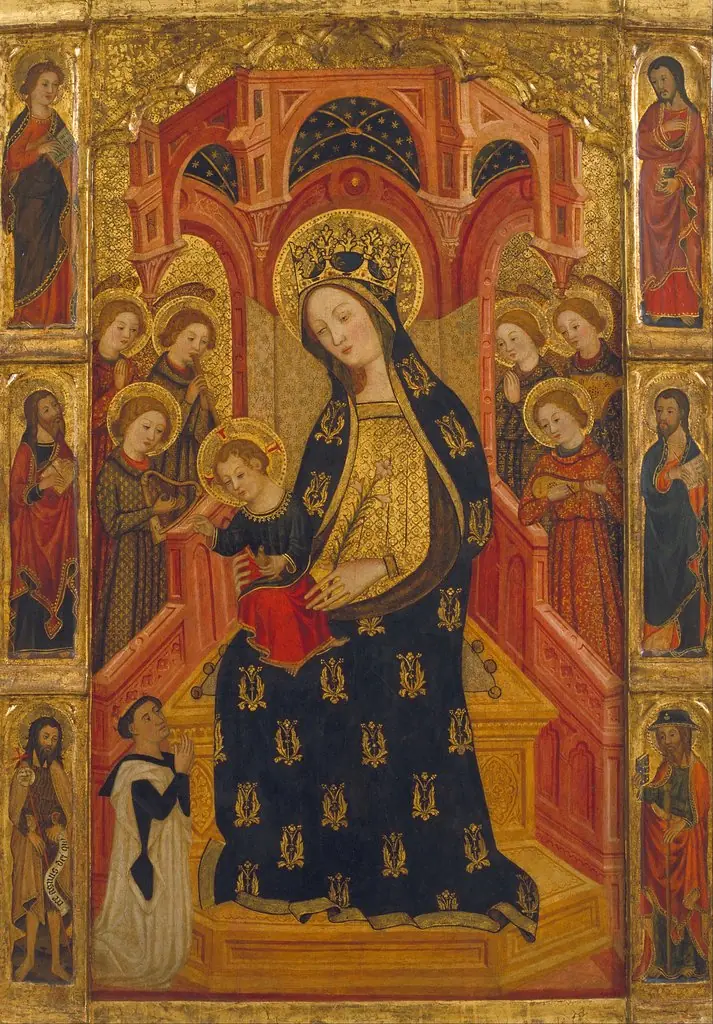 Virgin of the Angels
 Madonna and Child with Saints and Angels
 Madonna and Child
 Saint Catherine Disputing and Two Donors
 Madonna del Parto
 Madonna of the Pomegranate
 Madonna and Child Enthroned and Twelve Angels
 Coronation of the Virgin
 The Assumption of the Virgin
- St Ursula