Artwork
The Crucifixion
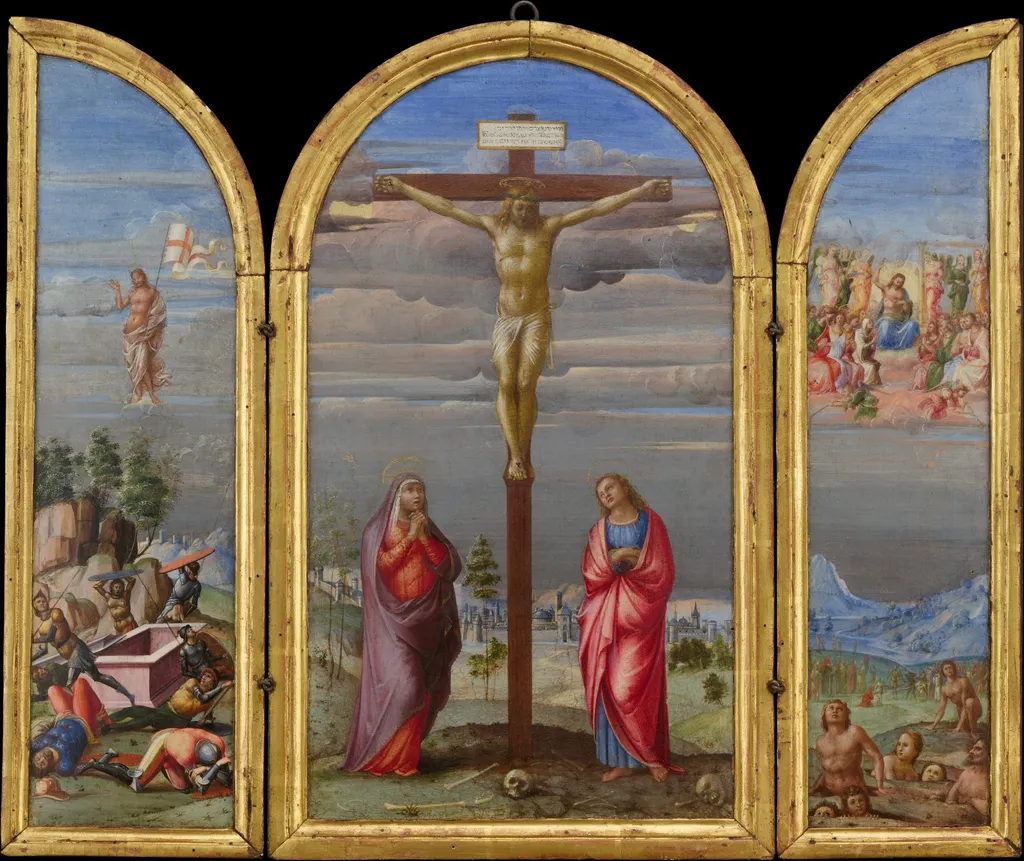
The Crucifixion is an unspecified painting by the High Renaissance artist Francesco Granacci. It dates from 1510 and is held in the collection of the Metropolitan Museum of Art.
About this work
Subject & Meaning
The composition emphasizes themes of sacrifice, redemption, and divine suffering that dominate Western religious art of the early sixteenth century.
The Crucifixion (1510) by Francesco Granacci portrays the central moment of Christ’s crucifixion, with the suffering savior flanked by the grieving Virgin Mary and other attendant figures, a standard iconographic program for the Passion. The composition emphasizes themes of sacrifice, redemption, and divine suffering that dominate Western religious art of the early sixteenth century. Measuring roughly 48 × 15 cm, the work is housed in the Metropolitan Museum of Art, underscoring its significance within the corpus of Italian Renaissance religious painting.
History & Provenance
The Crucifixion, an oil painting by Francesco Granacci, was created in 1510. The work is classified as a religious genre piece depicting the crucifixion of Jesus Christ alongside a female figure. While specific details regarding the original commission or the initial patron are not recorded in the available documentation, the painting's creation date is firmly established as 1510.
Currently, the artwork resides in the collection of the Metropolitan Museum of Art. The piece measures 48.3 centimeters in height and 15.2 centimeters in width. Granacci, whose full name is Francesco di Andrea di Marco, is the sole attributed creator of this religious panel.
No further provenance records detailing the ownership chain between its inception and its arrival at the museum are provided in the current sources.
Legacy
The Crucifixion (1510) by Francesco Granacci is a religious painting that portrays the crucifixion of Jesus and is held in the collection of the Metropolitan Museum of Art. Its inclusion in a major institutional collection underscores its importance as an example of early sixteenth‑century Tuscan devotional art, and it is frequently referenced in scholarship on Granacci’s oeuvre. The work’s dimensions, recorded as 48.3 cm by 15.2 cm, and its subject matter have made it a point of reference for studies of crucifixion imagery in Renaissance art.
Overview
Francesco Granacci, a Florentine painter of the High Renaissance, completed The Crucifixion in 1510. This painting presents the pivotal Christian event of Jesus Christ's death on the cross, a common subject for the period. The work is currently housed within the collection of The Metropolitan Museum of Art, offering insight into early 16th-century Italian religious art.
Technique & Style
Granacci's artistic approach reflects his training in Domenico Ghirlandaio's workshop, where he studied alongside Michelangelo. The palette, though now exhibiting some fading, originally featured bright colors, contributing to the painting's historical aesthetic. Details like the small sign above the cross and the distant city suggest a careful composition typical of the High Renaissance period, emphasizing narrative clarity and balanced forms.
Own this work as a print
Artist & collection
Artist
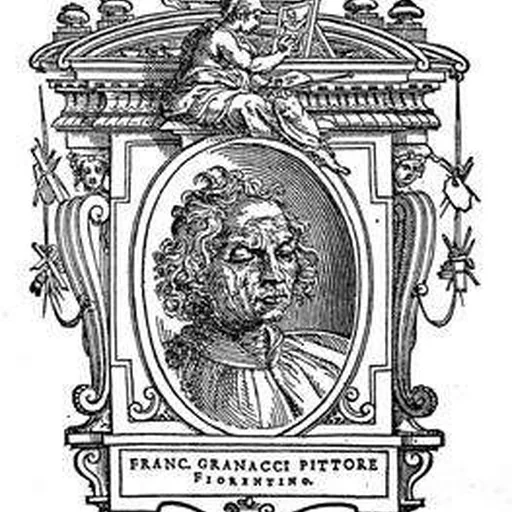
Francesco Granacci (1469 – 30 November 1543) was an Italian Renaissance painter active primarily in his native Florence.

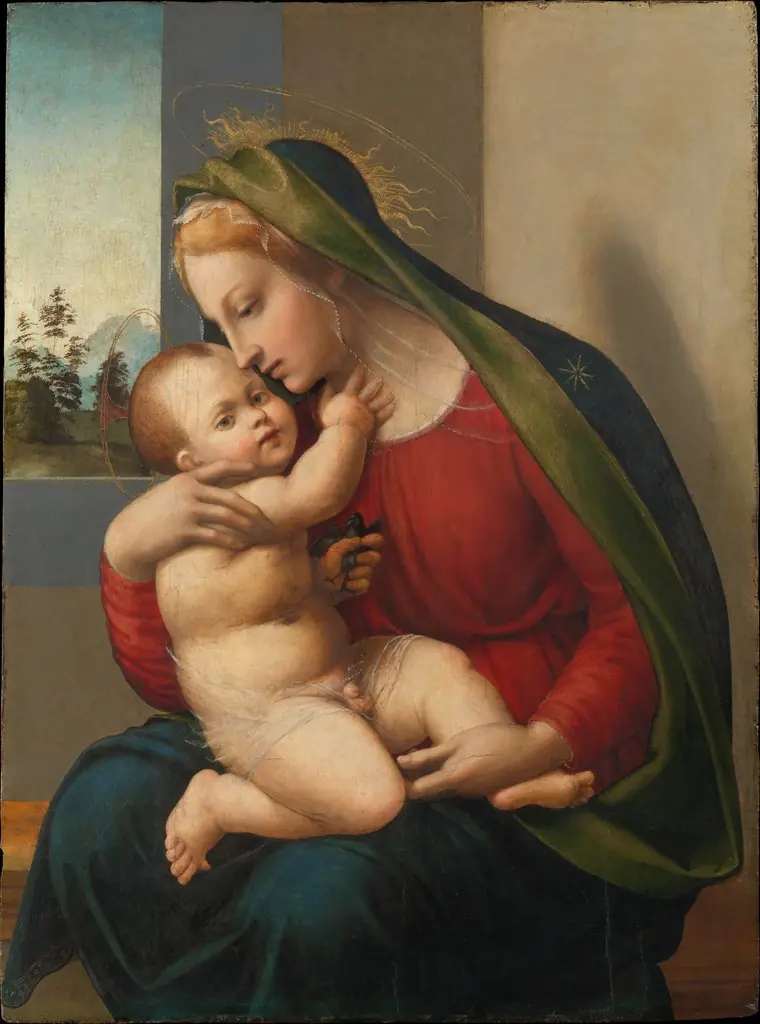
- The Crucifixion
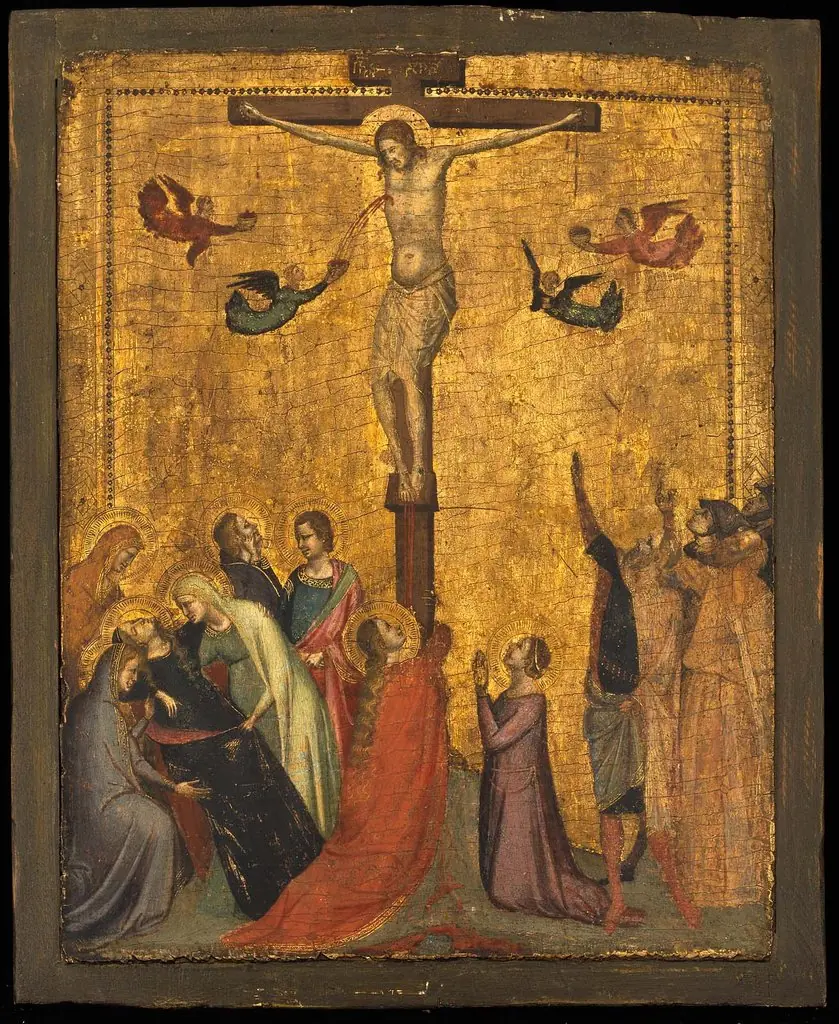 The Crucifixion
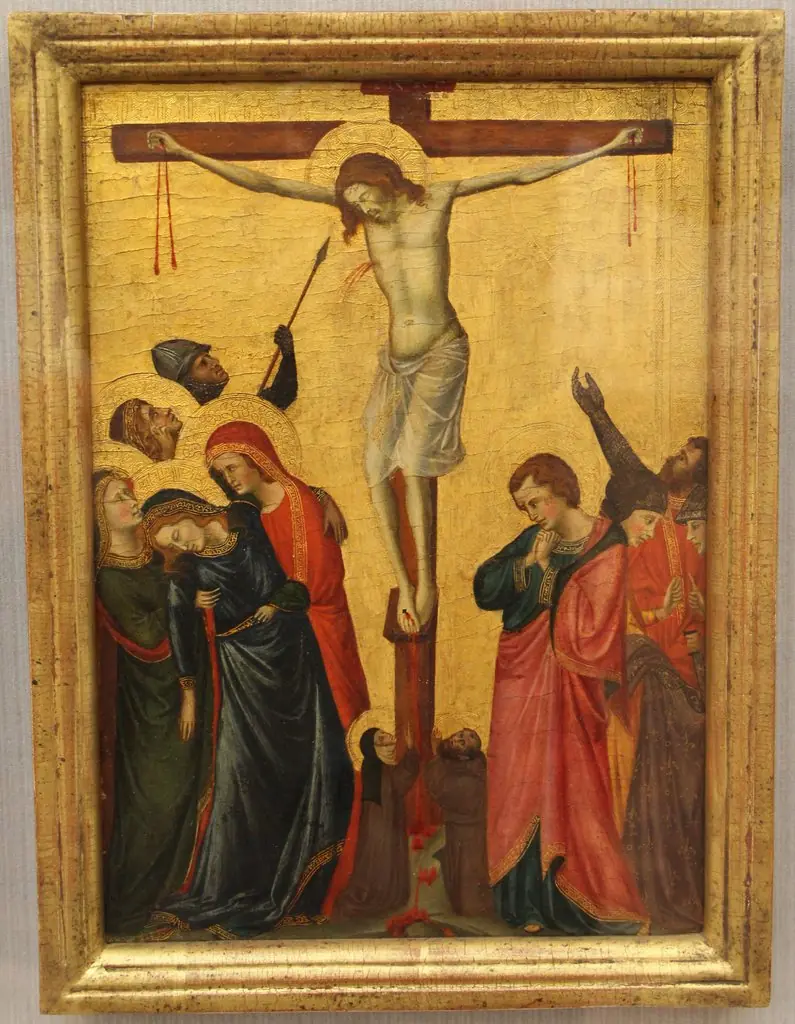 The Crucifixion
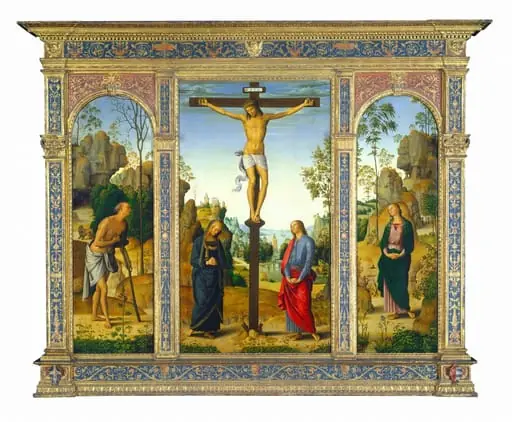 The Crucifixion with the Virgin, Saint John, Saint Jerome, and Saint Mary Magdalene
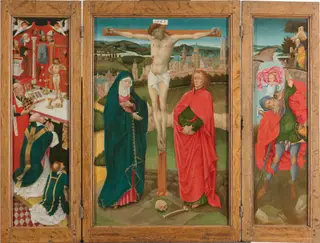 Drieluik met de kruisiging
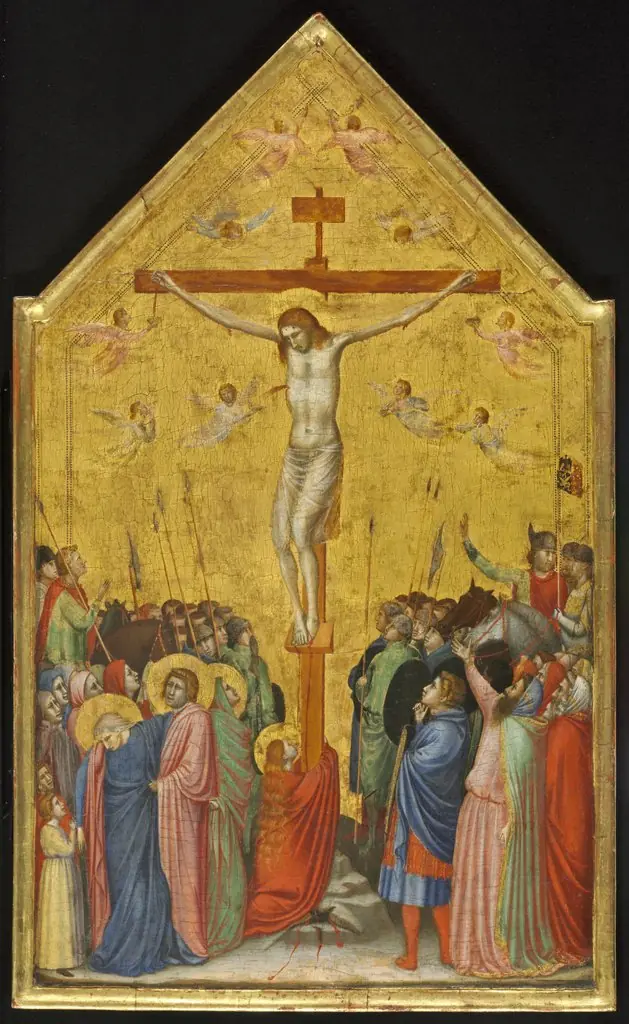 The Crucifixion of Christ
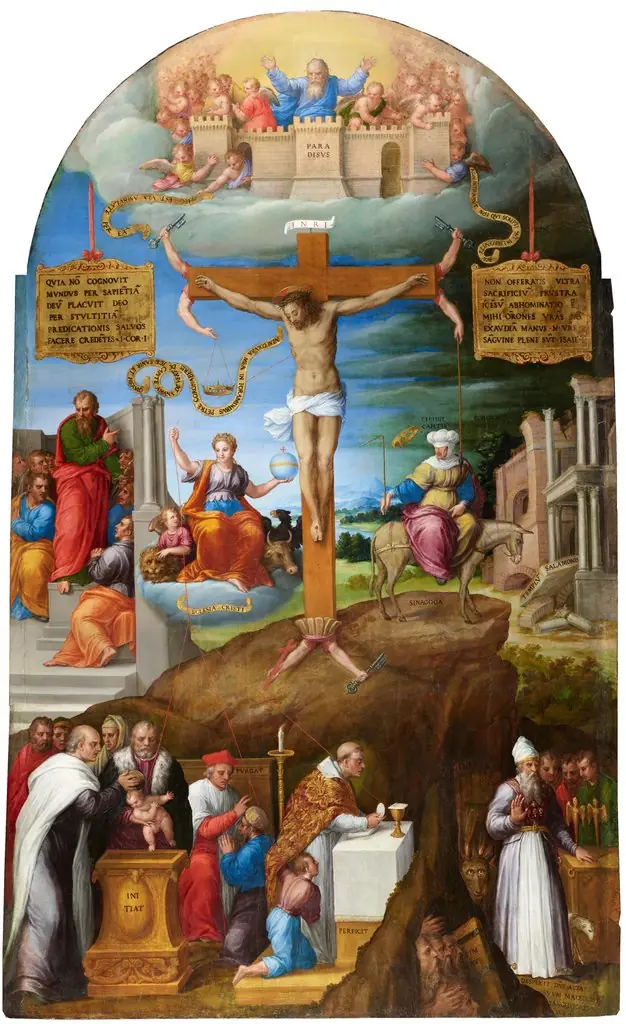 Living Cross of Ferrara
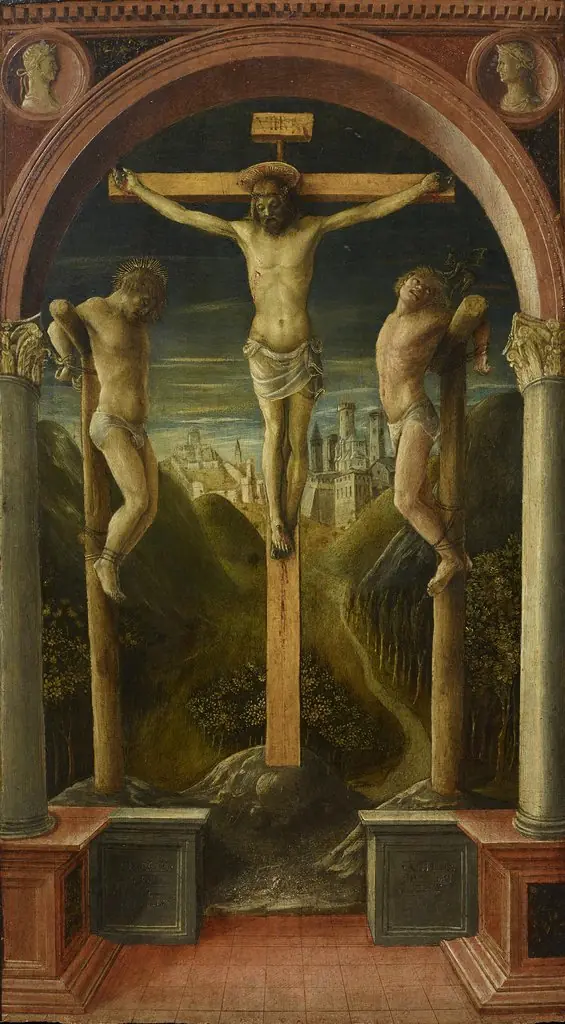 Crucifixion
 The Passion of Christ
 Interior view of wings of the triptych
 Crucified Christ with Mary, John and Mary Magdalene
 Crucifixion with the Virgin and St John