Artwork
The Crucifixion with the Virgin, Saint John, Saint Jerome, and Saint Mary Magdalene
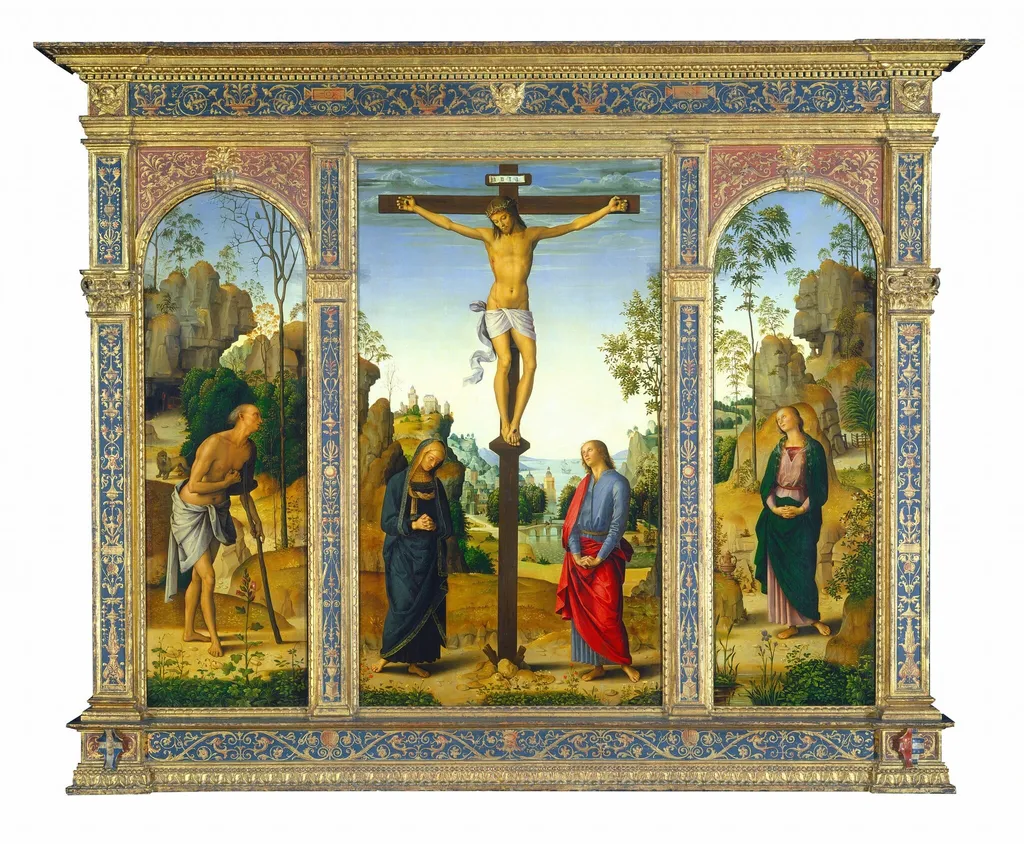
The Crucifixion with the Virgin, Saint John, Saint Jerome, and Saint Mary Magdalene is a tempera painting by the High Renaissance artist Pietro Perugino. It dates from 1484 and is held in the collection of the National Gallery of Art.
About this work
In 1796, Napoleonic troops seized a triptych from the Dominican church of San Gimignano and shipped it north.
In 1796, Napoleonic troops seized a triptych from the Dominican church of San Gimignano and shipped it north. By the time it reached Prince Alexander Galitzin in Rome, dealers had rebranded it as a Raphael. Only after Andrew W. Mellon acquired it from the Hermitage in 1931 did scholars restore the correct name: Pietro Perugino, whose cool Umbrian light and geometric calm shape this Crucifixion painted around 1482.
Subject & Meaning
The triptych's central panel depicts the Crucifixion with the Virgin Mary and Saint John the Evangelist at the foot of the cross. Side panels show Saint Jerome with his lion and Saint Mary Magdalene in a contemplative pose mirroring John's. The inclusion of Jerome indicates the work is a meditative devotional image on Christ's suffering and Christian sacrifice rather than a straightforward narrative.
The serene, symmetrical composition and the continuous landscape across all panels reinforce this reflective mood, with the calm figures set in a tranquil, atmospheric vista. The landscape, featuring a lake, bridge, and hazy distant mountains, employs the clear perspective typical of Perugino and draws on Flemish models such as the Portinari Triptych to enhance the spiritual depth. Thus, the triptych serves as a focus for pious contemplation of the Crucifixion.
Technique & Style
The triptych is executed in oil on panel, later transferred to canvas, though some records list the medium as tempera on canvas. The central panel measures 101 × 56 cm, the side panels 95 × 30 cm. The work displays Perugino’s characteristic formal qualities: a symmetrical composition with rhythmic variations in pose, a unified landscape that stretches continuously across all panels, and atmospheric perspective derived from Flemish models such as Hugo van der Goes’s Portinari Triptych. Delicate, hazy distances, slender trees on rocky outcrops, and a serene, contemplative mood typify the artist’s handling. The calm figures and landscape merge to create a meditative devotional image rather than a narrative one.
History & Provenance
The triptych was likely commissioned by Bartolommeo Bartoli, Bishop of Cagli. It originally hung in the Dominican church of San Domenico in San Gimignano. Following Napoleonic suppressions in 1796–1797, French troops confiscated it.
It was then sold to Dr. Buzzi, who resold it as a Raphael to Prince Alexander Mikhailovich Galitzin, the Russian ambassador to Rome. The painting passed to his son Theodore and later to his nephew Sergei Mikhailovich Galitzin, who displayed it in Moscow from 1865. In 1886 the Imperial Hermitage Museum acquired it with the Galitzin collection.
In April 1931 it was sold to Andrew W. Mellon via intermediaries; he deeded it to a trust in June 1931, and it entered the National Gallery of Art as a gift in 1937. The work's date is disputed: the museum's corpus records 1481, while other sources cite about 1485.
The triptych is held at the National Gallery of Art in Washington, D.C., where it entered the collection in 1937 as a gift from The A.W. Mellon Educational and Charitable Trust. Its exhibition history includes display from 1865 at the Galitzin Museum of Western Painting in Moscow, followed by tenure at the Imperial Hermitage Gallery in Saint Petersburg from 1886 until 1931. After its sale in 1931 to Andrew Mellon, the painting remained in his possession before being accessioned into the National Gallery of Art through the 1937 Mellon bequest.
Context
The work functions as a meditation on the Crucifixion, indicated by the inclusion of Saint Jerome, moving beyond a straightforward narrative. The composition typifies the Renaissance with spatial and perspective continuity across the panels. The serene deportment of the figures is mirrored in the landscape, which is characteristic of Perugino: gentle hills dotted with slender trees, a motif he transmitted to the Umbrian school.
Atmospheric effects, with hazy distance creating depth, derive from Flemish models such as Hugo van der Goes's Portinari Triptych. The triptych exemplifies Perugino's synthesis of Renaissance spatial clarity and Flemish naturalism, securing its place within the artist's mature output and the broader Italian Renaissance.
Legacy
The Galitzin Triptych was long misattributed to Raphael, a testament to its quality and the high regard it commanded. Now securely attributed to Perugino, the work is valued for its serene, unified composition and atmospheric landscape. The slender trees and graduated hillsides seen here are characteristic of Perugino and were transmitted to the entire Umbrian school, shaping regional painting.
Its passage through prestigious collections, from the Hermitage to the National Gallery of Art, underscores its enduring significance within the Italian Renaissance canon.
Overview
Pietro Perugino's The Crucifixion with the Virgin, Saint John, Saint Jerome, and Saint Mary Magdalene, painted around 1485, is an oil on panel work now housed at the National Gallery of Art in Washington. This triptych depicts the central Christian event of the Crucifixion, flanked by significant saints, showcasing the artist's characteristic devotional clarity and compositional balance.
![The Crucifixion with the Virgin, Saint John, Saint Jerome, and Saint Mary Magdalene [middle panel]](https://artifactworldgallery.com/img/pietro-perugino--the-crucifixion-with-the-virgin-saint-john-saint-jerome-and--a9b4c312771e3f71-w320.webp)
Own this work as a print
Artist & collection
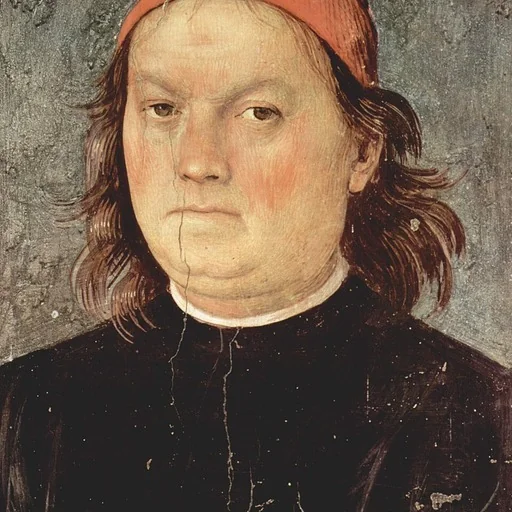
Artist
Pietro Perugino (US: PERR-ə-JEE-noh, -oo-; Italian:; born Pietro Vannucci or Pietro Vanucci; c.

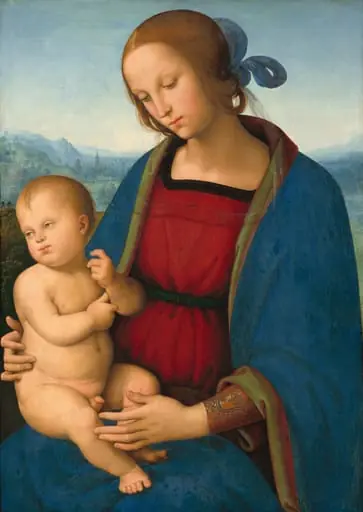 Madonna and Child
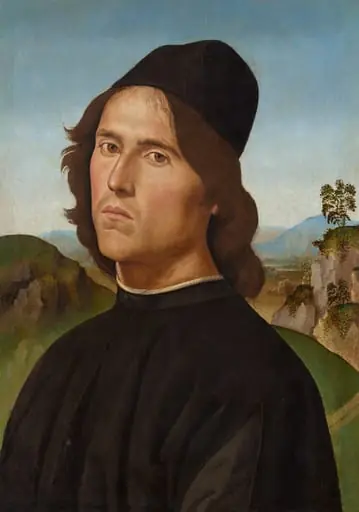 Portrait of Lorenzo di Credi
![The Crucifixion with the Virgin, Saint John, Saint Jerome, and Saint Mary Magdalene [right panel], by Pietro Perugino](https://artifactworldgallery.com/img/pietro-perugino--the-crucifixion-with-the-virgin-saint-john-saint-jerome-and--7d9a2b1f47b9fc9b-w320.webp) The Crucifixion with the Virgin, Saint John, Saint Jerome, and Saint Mary Magdalene [right panel]
The Crucifixion with the Virgin, Saint John, Saint Jerome, and Saint Mary Magdalene [right panel]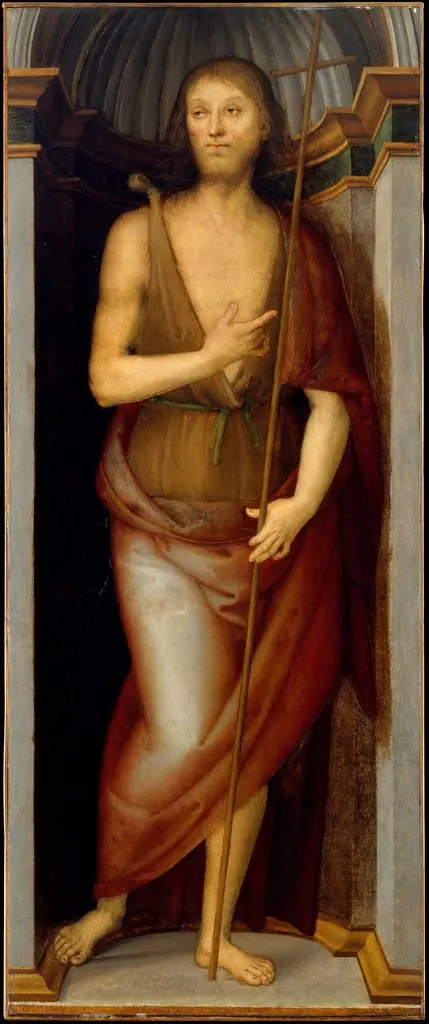 Saint John the Baptist; Saint Lucy
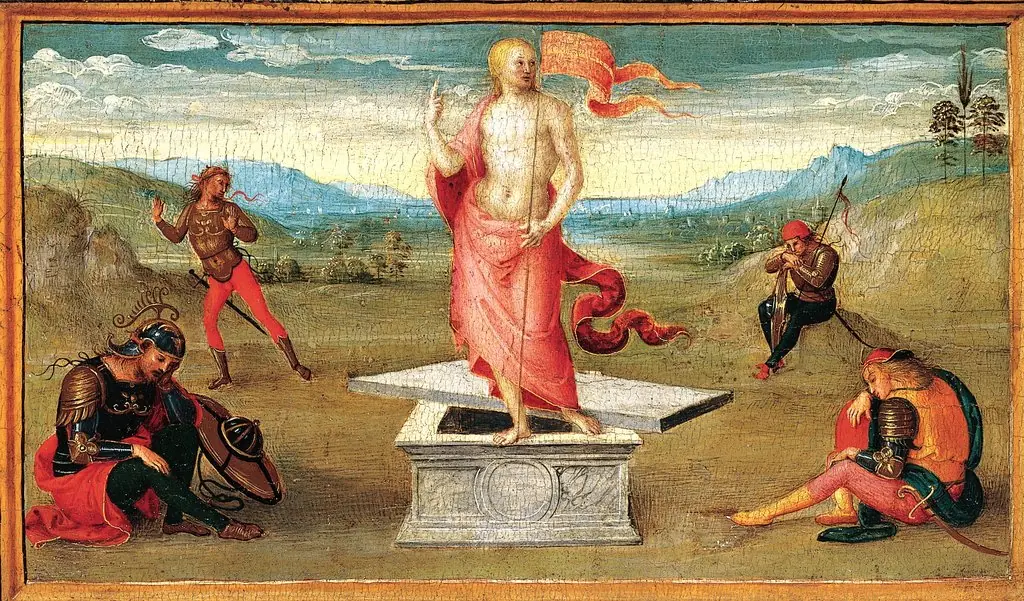 The Resurrection
![The Crucifixion with the Virgin, Saint John, Saint Jerome, and Saint Mary Magdalene [left panel], by Pietro Perugino](https://artifactworldgallery.com/img/pietro-perugino--the-crucifixion-with-the-virgin-saint-john-saint-jerome-and--1017dec17318baa5-w320.webp) The Crucifixion with the Virgin, Saint John, Saint Jerome, and Saint Mary Magdalene [left panel]
The Crucifixion with the Virgin, Saint John, Saint Jerome, and Saint Mary Magdalene [left panel]- The Crucifixion with the Virgin, Saint John, Saint Jerome, and Saint Mary Magdalene [middle panel]
 Resurrection of Christ
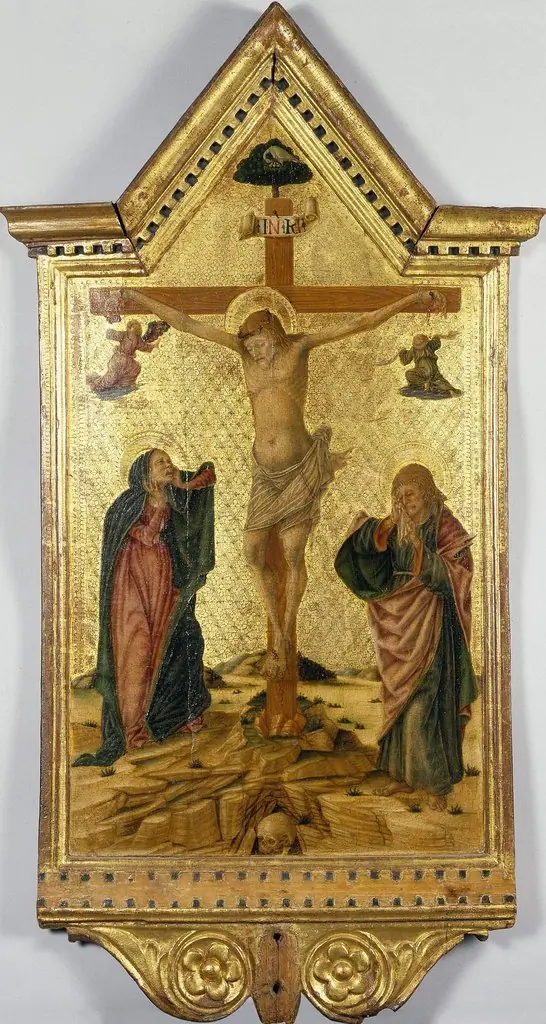 Crucifixion with the Virgin and St John
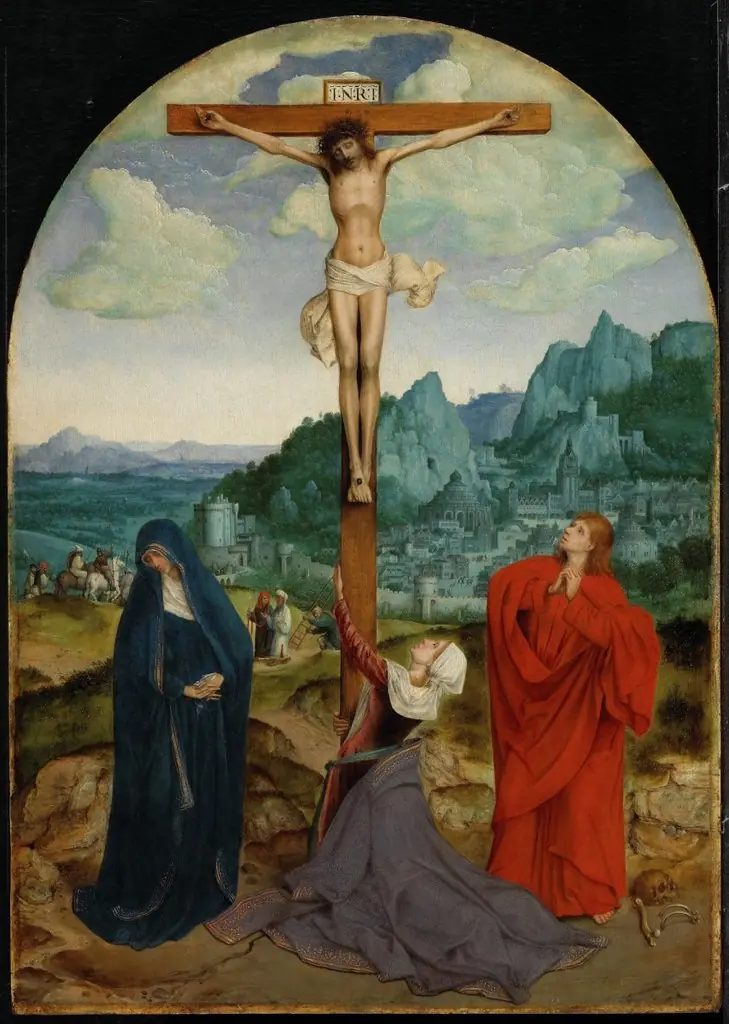 Crucifixion, with the Virgin and Saint John
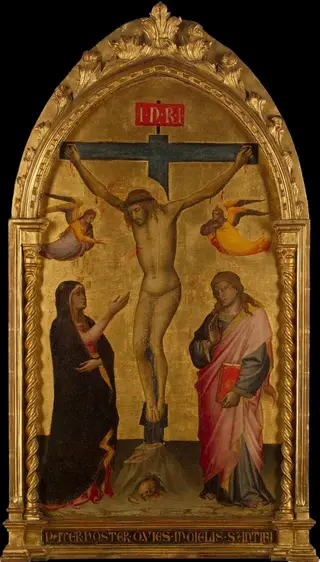 Crucifixion with the Virgin and St John
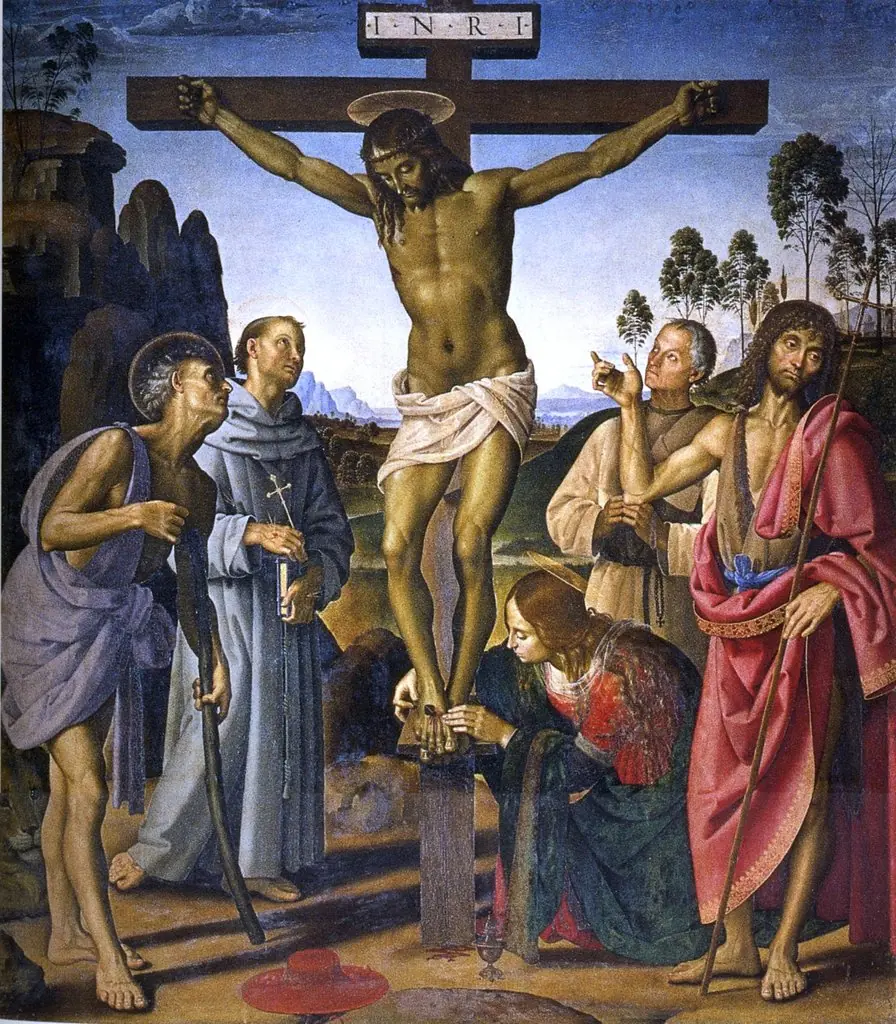 Crucifixion of Christ with saints
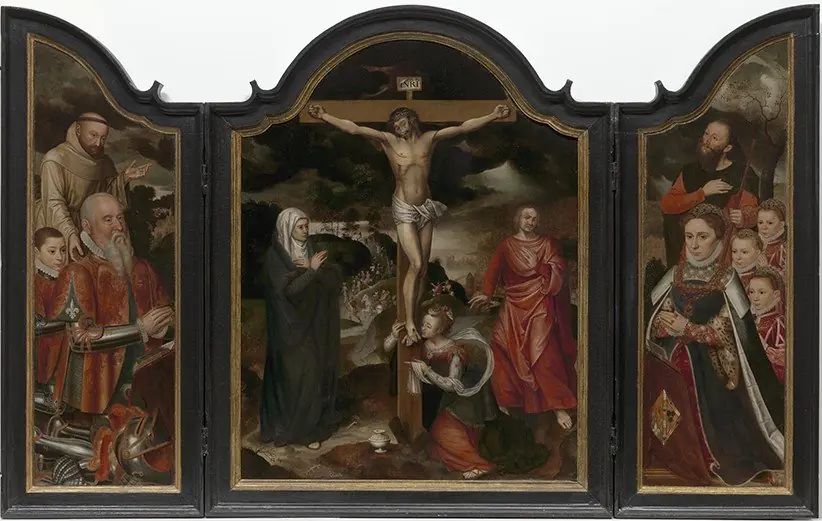 Crucified Christ with Mary, John and Mary Magdalene
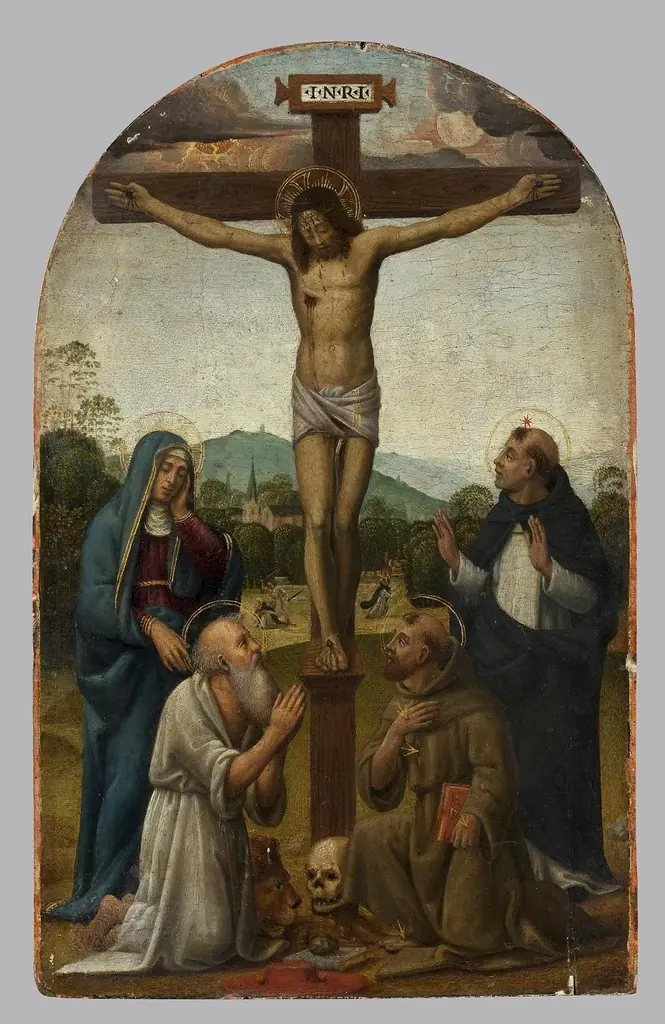 Crusifixion with the Virgin Mary and Sts Dominic, Jerome and Francis
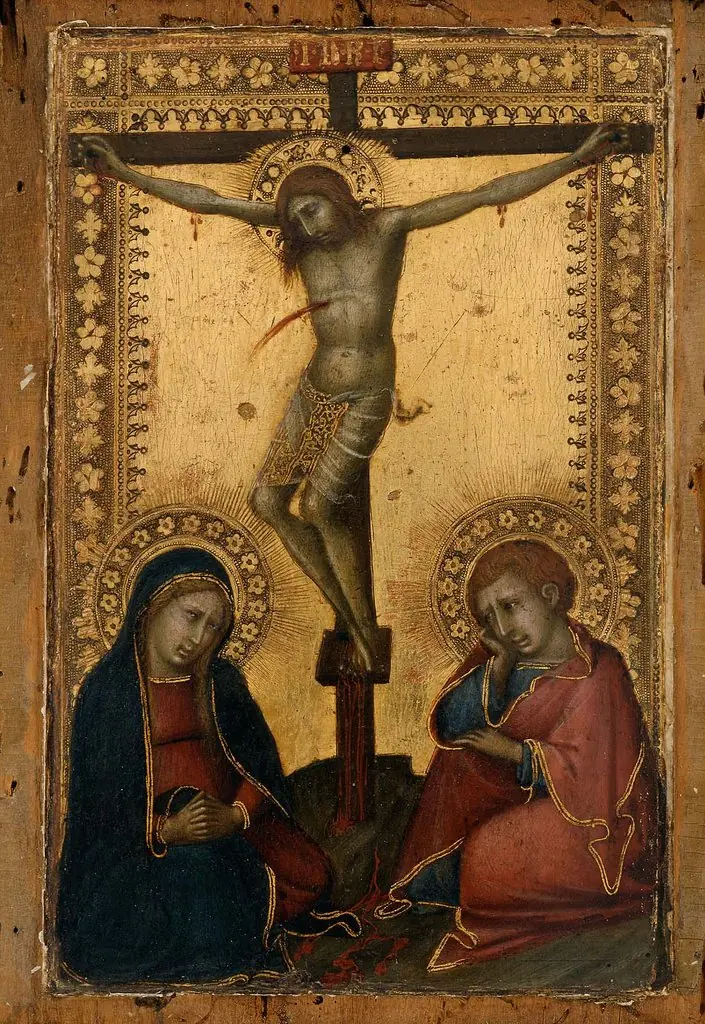 Crucified Christ with the Virgin and Saint John the Evangelist
 Studied in the Renaissance Florence course