Artwork
Judith shows the people the head of Holofernes
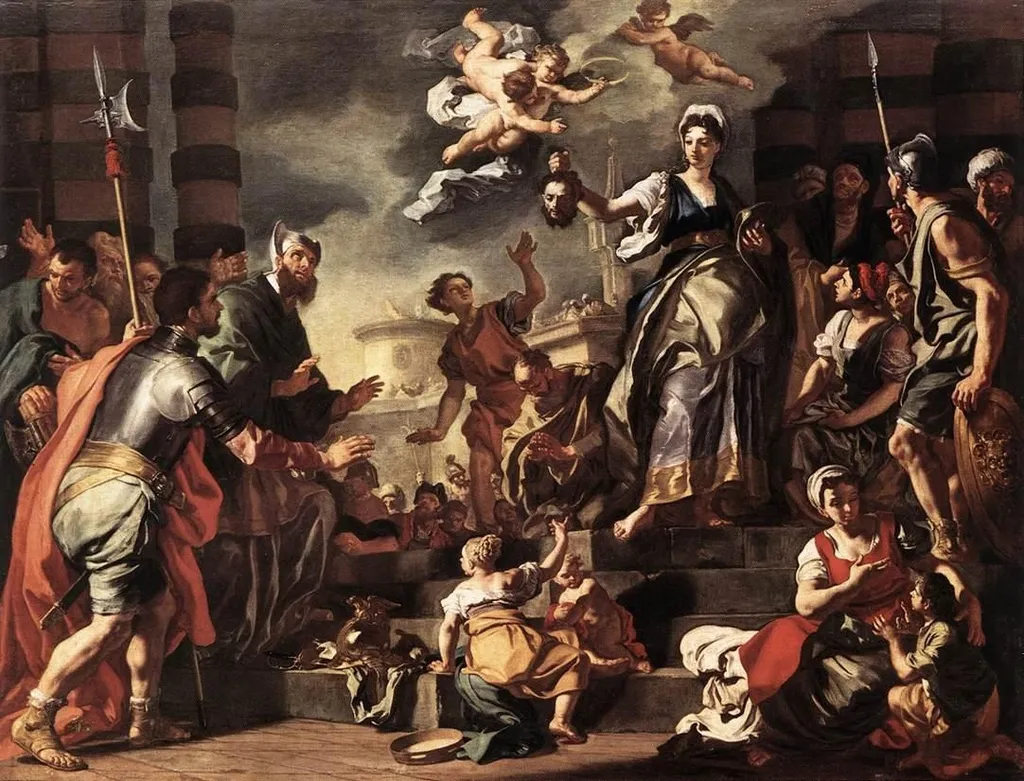
Judith shows the people the head of Holofernes is an oil painting by the Rococo painting artist Francesco Solimena. It dates from 1730 and is held in the collection of the Kunsthistorisches Museum.
About this work
Subject & Meaning
The scene underscores themes of female agency, divine justice, and the reversal of power, common to Counter-Reformation treatments of Old Testament heroines.
The painting depicts the biblical episode in which Judith, a Jewish widow, displays the severed head of the Assyrian general Holofernes to her people, signaling deliverance from siege. Solimena’s composition focuses on Judith’s gesture of revelation, aligning with the narrative’s climax of triumph over tyranny. The scene underscores themes of female agency, divine justice, and the reversal of power, common to Counter-Reformation treatments of Old Testament heroines.
Technique & Style
Francesco Solimena's Judith shows the people the head of Holofernes, executed in 1730, is an oil painting on canvas. The work measures 105 cm in height and 130 cm in width. As a religious artwork, it employs the traditional medium of oil paint to depict the biblical narrative of Judith presenting Holofernes' head to her people. The piece is currently held in the collection of the Kunsthistorisches Museum.
History & Provenance
The painting was created by Francesco Solimena in 1730, executed in oil on canvas. It depicts the biblical scene of Judith displaying the head of Holofernes and is classified as a religious work. The canvas measures 105 cm in height by 130 cm in width. The work is held in the collection of the Kunsthistorisches Museum, where it remains located.
The available sources do not document the original commission, the early ownership chain, or any intermediate provenance prior to its acquisition by the Kunsthistorisches Museum, nor do they provide details on how or when the institution came to hold the painting.
Francesco Solimena's 1730 oil painting, Judith shows the people the head of Holofernes, is held in the collection of the Kunsthistorisches Museum. The work is executed on canvas with dimensions of 105 cm in height and 130 cm in width. While the sources confirm the painting's current location and physical specifications, they do not provide a specific inventory or accession number for the piece. Furthermore, the available documentation contains no record of the work's exhibition history.
Legacy
The painting's influence is noted through its inclusion in major museum collections and continued scholarly reference to Solimena's interpretation of the Judith narrative. Its reputation rests on the work's technical execution and compositional treatment of the dramatic moment, particularly the presentation of Holofernes' severed head. The legacy of this artwork is closely tied to its presence in the Kunsthistorisches Museum's collection since its creation in 1730, where it remains part of the permanent display of 18th-century religious paintings.
Overview
Judith shows the people the head of Holofernes is a 1730 oil painting by Italian Baroque artist Francesco Solimena, executed in the Rococo style. The work depicts a pivotal moment from the biblical story of Judith, showcasing the artist's mastery of dramatic lighting and composition.
Artist & collection
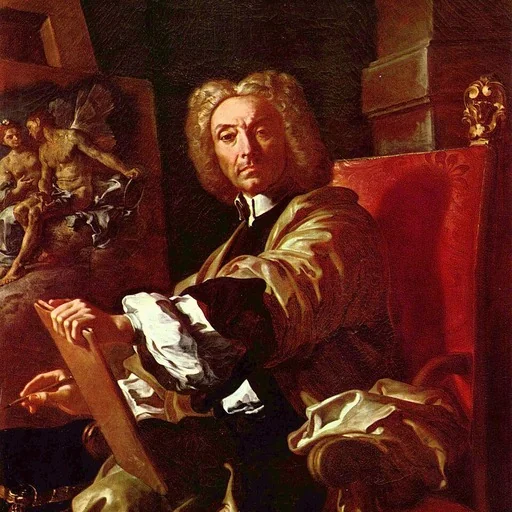
Artist
Francesco Solimena (4 October 1657 – 3 April 1747) was a prolific Italian Baroque painter, one of an established family of painters and draughtsmen.

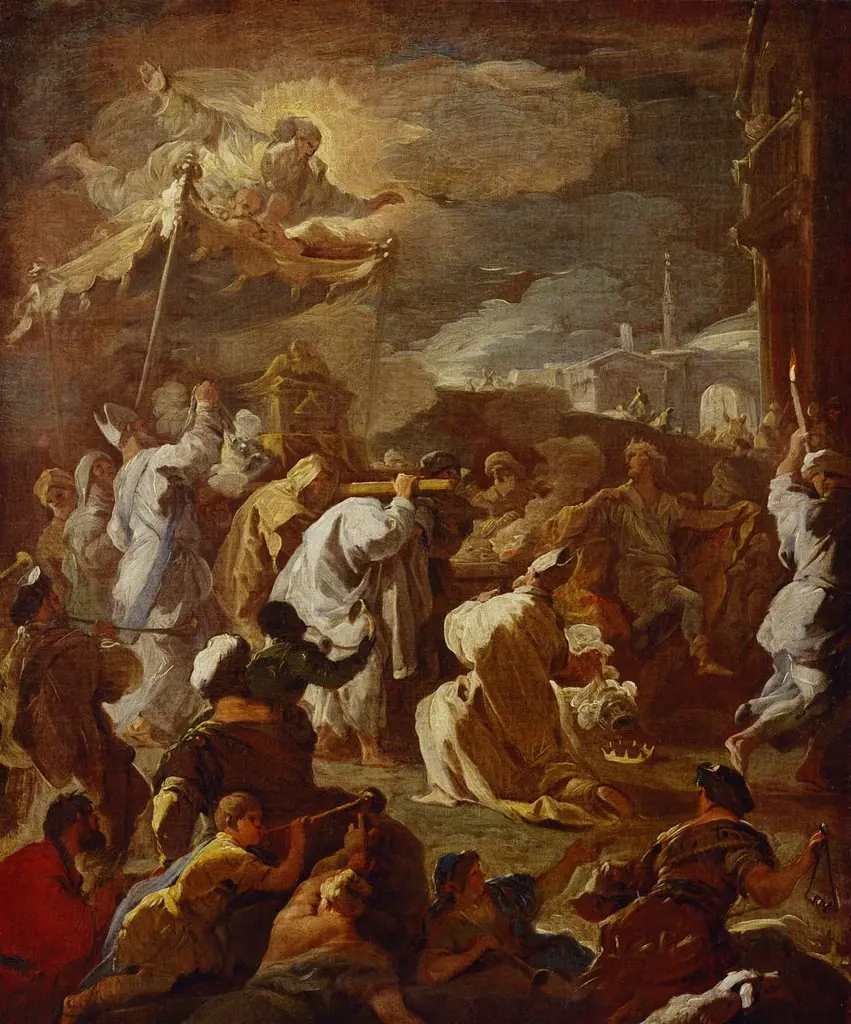 Transfer of the Ark of the Covenant by David
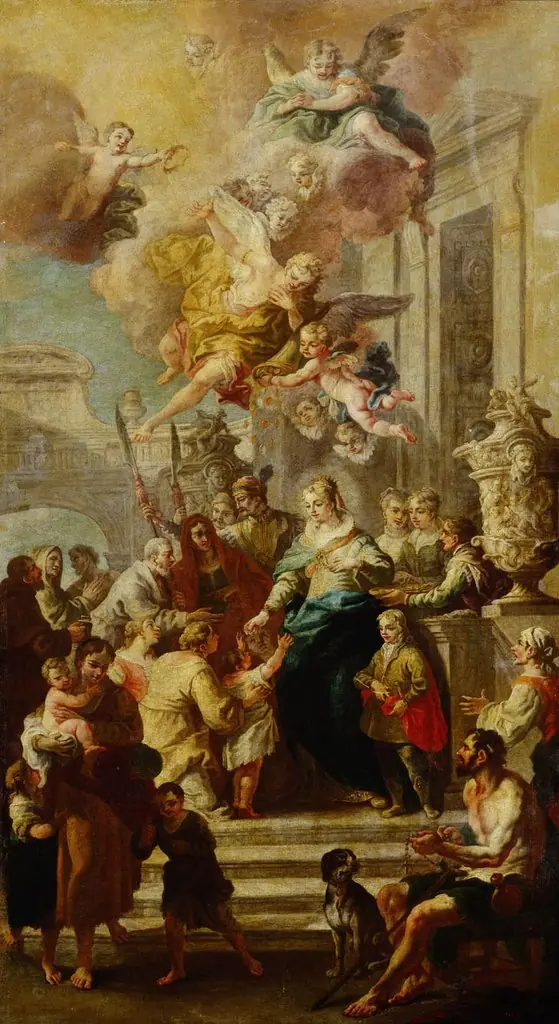 Alms donation from St. Elizabeth of Portugal
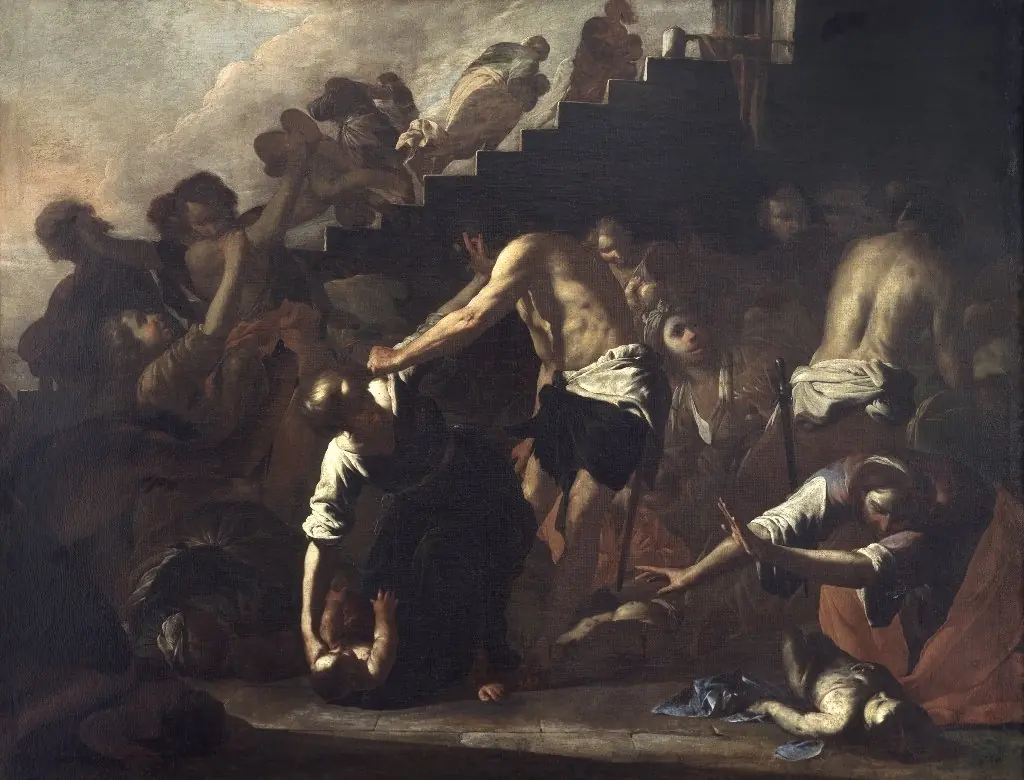 Massacre of the Innocents
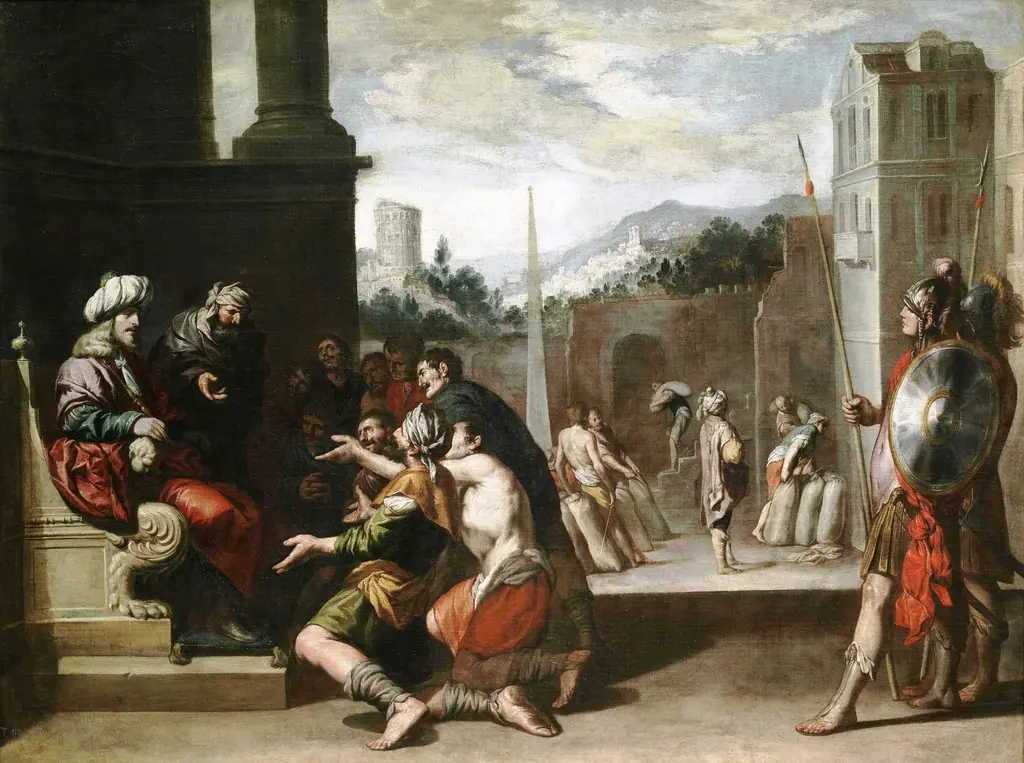 Joseph orders Simeon’s Imprisonment
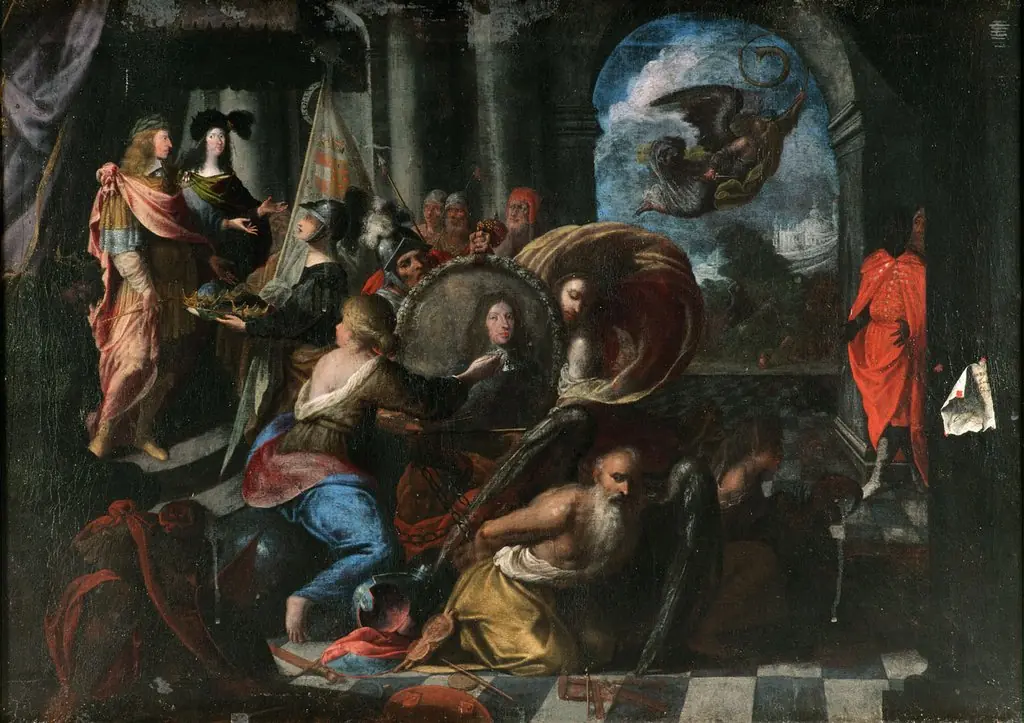 Allegory of the wedding of Archduke Ferdinand Karl and Anna de' Medici
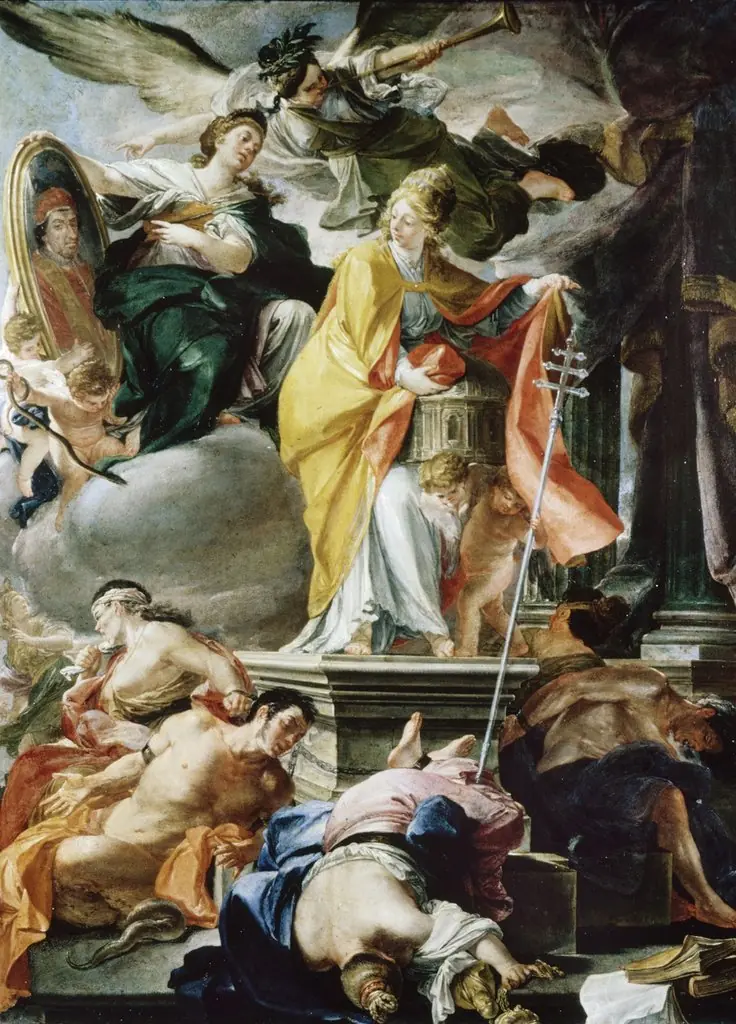 Allegory of the Papacy of Clement XI
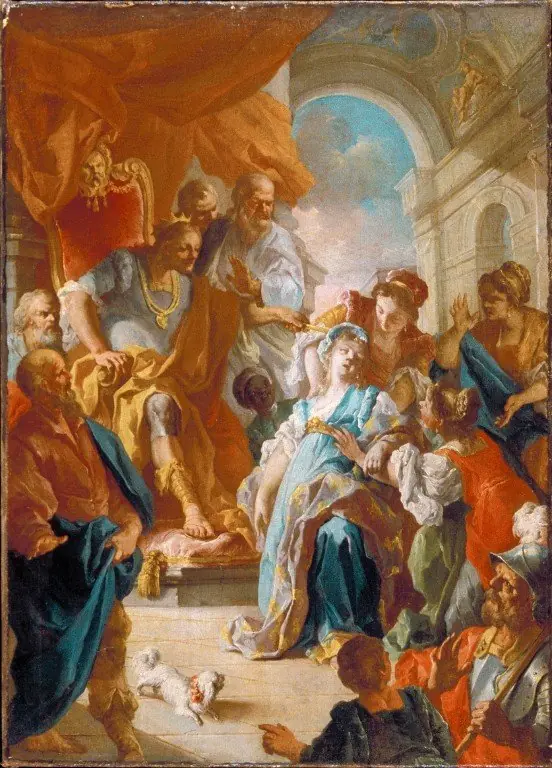 Esther Before Ahasuerus
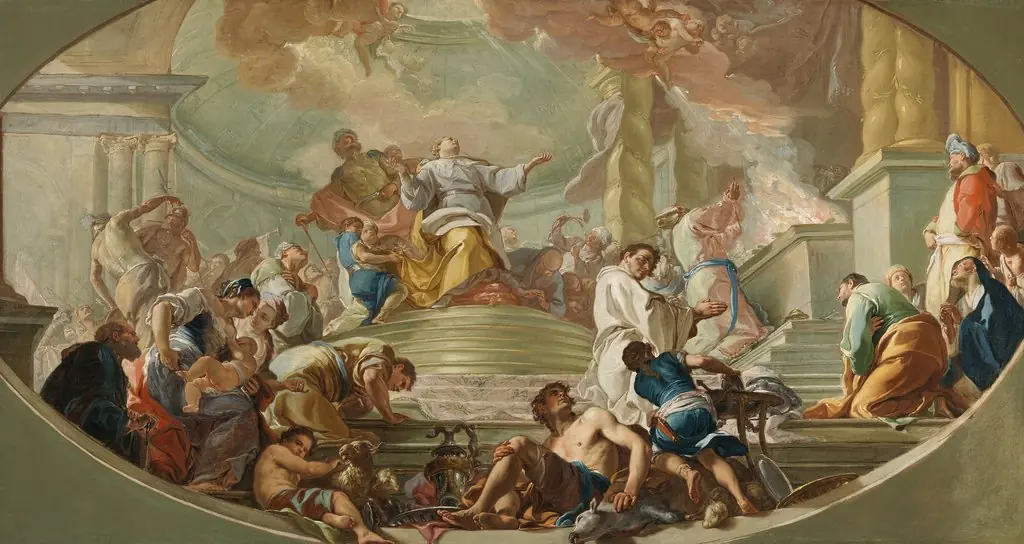 The Dedication of the Temple at Jerusalem
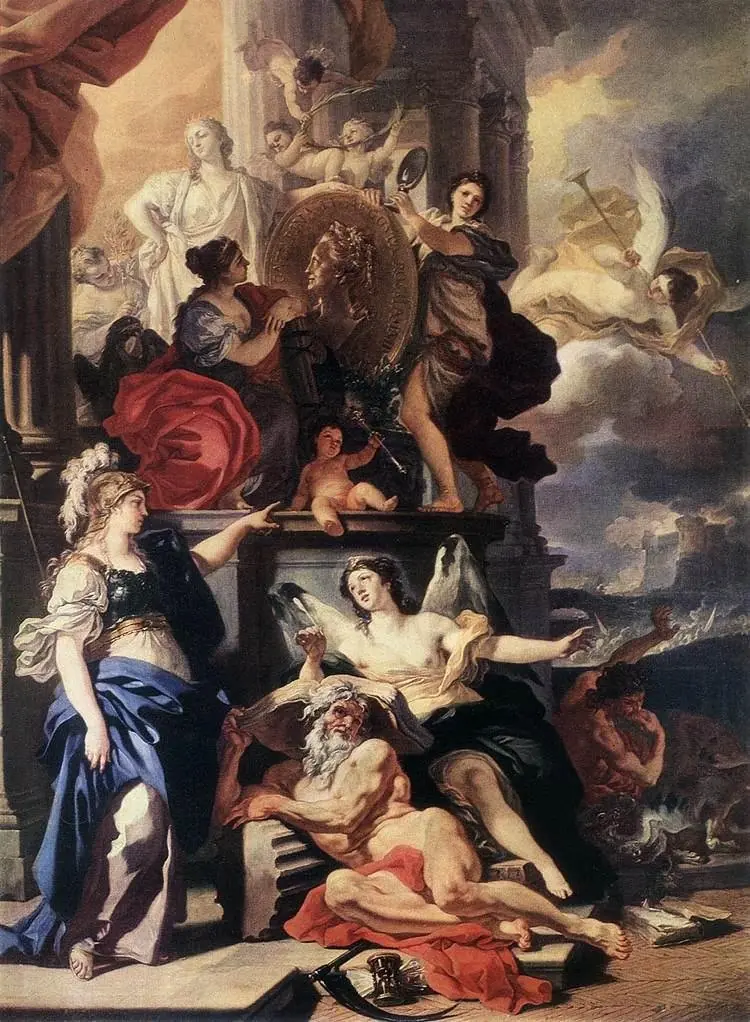 Allegory of Rule
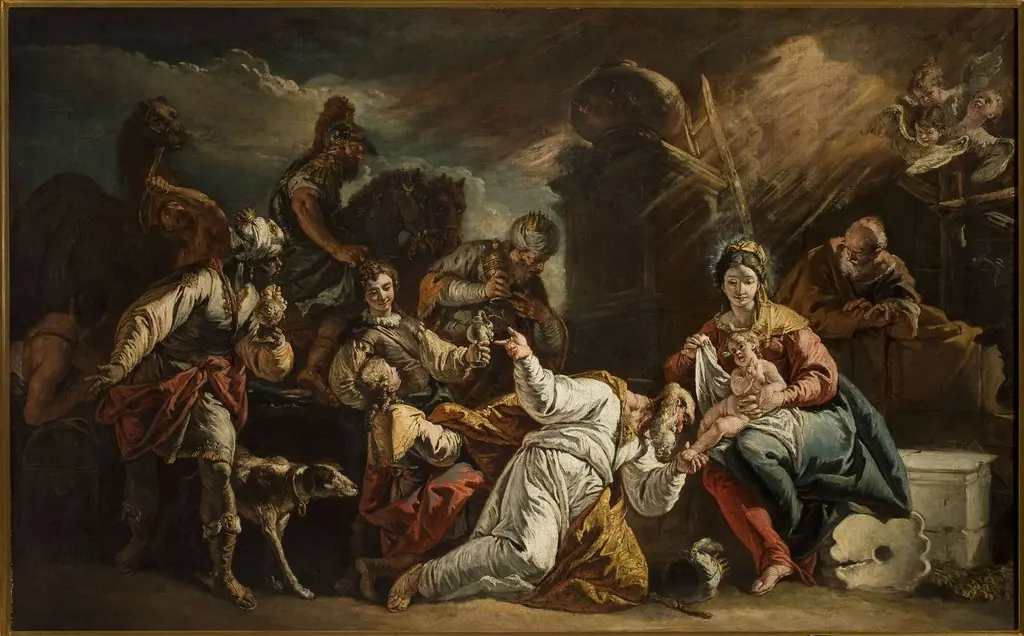 Adoration of the Magi