Artwork
Die thronende Maria mit dem Kind, dem Heiligen Dominikus und der Heiligen Katharina von Siena (Rosenkranzmadonna)
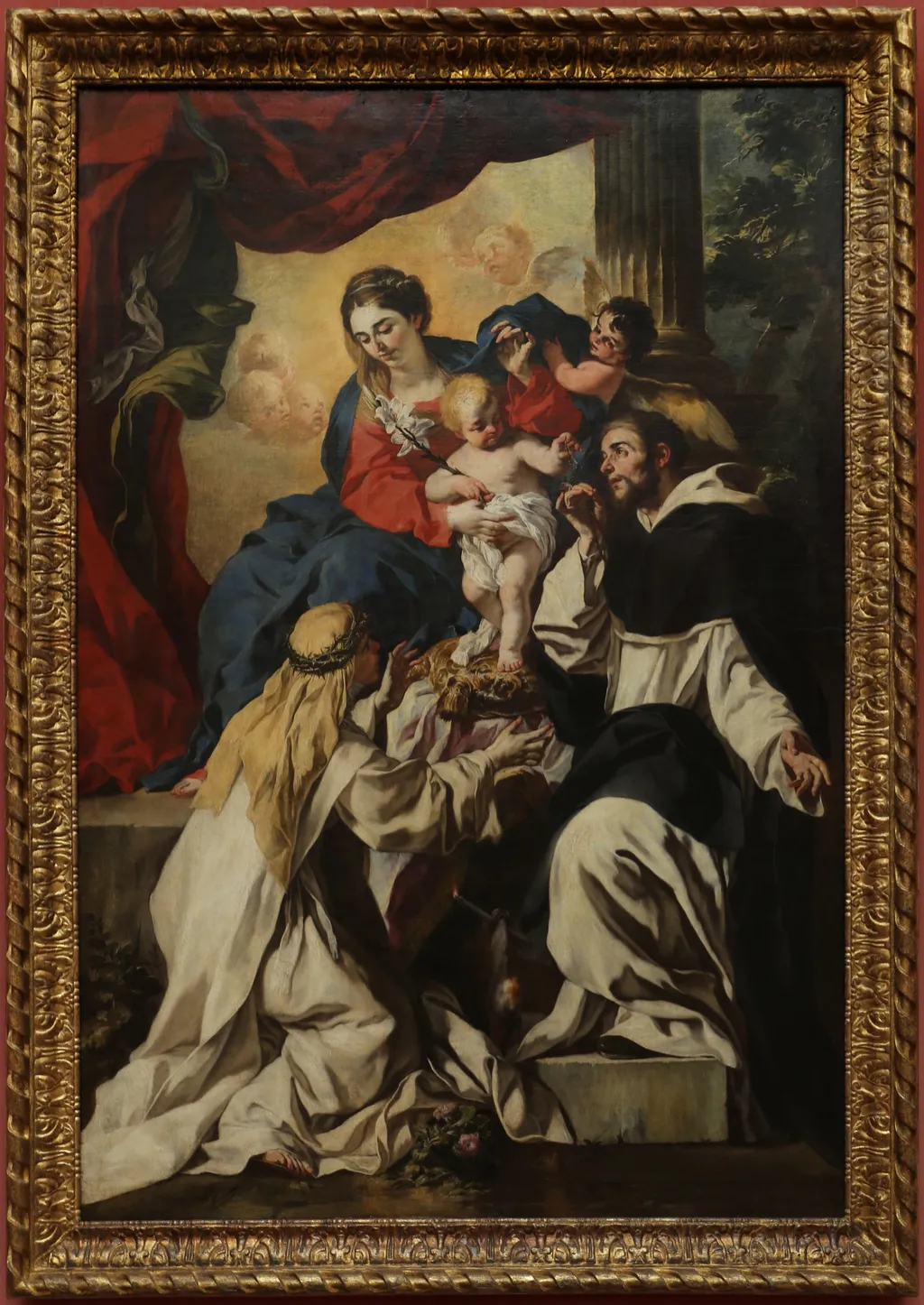
Die thronende Maria mit dem Kind, dem Heiligen Dominikus und der Heiligen Katharina von Siena (Rosenkranzmadonna) is a paint painting by the High Baroque Italian artist Francesco Solimena. It dates from 1690 and is held in the collection of the Gemäldegalerie Berlin.
About this work
Overview
The work is now held in the Gemäldegalerie Berlin, which acquired it in 1971.
Die thronende Maria mit dem Kind, dem Heiligen Dominikus und der Heiligen Katharina von Siena, commonly known as the Rosenkranzmadonna, is an oil on canvas altarpiece painted by the Neapolitan artist Francesco Solimena around 1680-81. The work is now held in the Gemäldegalerie Berlin, which acquired it in 1971. As an early work by Solimena, it occupies a significant position in the history of Neapolitan Baroque painting, demonstrating the transitional phase of an artist who would later become the dominant figure in the city's art scene following the death of Luca Giordano in 1705.
Subject & Meaning
The painting depicts the Madonna enthroned with the Christ Child, flanked by two principal Dominican saints. Saint Dominic, the founder of the Dominican order, kneels to the left receiving the rosary from the Christ Child, while Saint Catherine of Siena, the order's most important female saint, kneels to the right in fervent adoration of the infant. This iconography of the Madonna of the Rosary emerged in the late fifteenth century but gained wider currency after Pope Gregory XIII instituted the Feast of the Rosary in 1573, commemorating the Christian victory over the Turks at Lepanto in 1571. Solimena's restricted composition, limited to these two saints rather than the multiple adoring figures common in earlier centuries, follows a Roman model introduced to Naples by Giovanni Lanfranco. The work must have been commissioned as an altarpiece for a Dominican rosary chapel, though its original location remains unknown. X-radiography has revealed significant compositional changes: Solimena originally included a small winged figure in red above and behind the Virgin, holding a blue cloth, and a second putto at the drapery, both of which were later painted out.
Technique & Style
The painting is executed in oil on canvas. Its style around 1680-81 differs markedly from Solimena's mature manner, displaying instead bright, luminous colors with emphasis on white and pale red, swelling and exuberant forms, relaxed modelling, highly impastoed paint application, and fluid brushwork. These qualities reflect the combined influence of Luca Giordano and Pietro da Cortona, who was active in Rome and Florence. Strong chiaroscuro models the figures, with deep shadows in the fabric folds and bright highlights on faces and drapery. The surface shows smooth finish on skin and more textured, flowing strokes in the garments. The palette is dominated by deep blues, crimson reds, black, and creamy whites, with warm golden light illuminating the central group. X-radiographs have disclosed that the large red drapery sweeping across the upper left originally concealed an angel in the style of Pietro da Cortona, who crowned Mary with a rosary, confirming the early dating of the altarpiece.
History & Provenance
The Gemäldegalerie Berlin acquired the Rosenkranzmadonna in 1971, thereby securing representation of the second major master of Neapolitan High and Late Baroque painting alongside Luca Giordano, of whom the museum now owns seven works. The painting's original provenance and exact commission remain uncertain. Bernardo De Dominici, in his artist biographies, mentions a Madonna of the Rosary altarpiece in Sessa Aurunca in Campania, though this cannot be definitively linked to the Berlin canvas. Teobaldo Fortunato has published a later, weaker imitation of the Berlin painting, dated 1771, located in the church of Santa Maria delle Grazie in Casali di Roccapiemonte, Campania. This copy provides a terminus post quem for the overpainting of the angels in the original, suggesting that the compositional alteration occurred no earlier than 1771, perhaps motivated by a neoclassical desire for order.
Context
When Solimena painted this work around 1680-81, he had not yet developed the cool, classically oriented style and dark, restrained palette that would define his mature work. The Rosenkranzmadonna stands approximately two decades after Giordano's Saint Michael and represents a moment when Solimena was still absorbing influences from Giordano and the broader Italian Baroque tradition. In Naples, the compositional type of the enthroned Madonna with only two saints had been introduced by Giovanni Lanfranco, who had worked in Rome from 1602 to 1633 before moving to Naples in 1634. Lanfranco's altarpiece for the Certosa di S. Martino in Naples, now in Afragola, served as the prototype that Solimena drew upon for his Berlin picture, particularly in the motif of the large red drapery supported by an angel.
Legacy
The Rosenkranzmadonna holds an important place in Solimena's oeuvre as a document of his early development and in the broader narrative of Neapolitan Baroque painting. Its acquisition by the Gemäldegalerie Berlin in 1971 positioned it within one of the most significant collections of European painting, alongside works by Solimena's older contemporary Paolo De Matteis and his important student and successor Francesco De Mura. The painting's hidden history, revealed through modern technical examination, exemplifies how x-radiography can uncover artists' original intentions and subsequent alterations. The 1771 copy in Casali di Roccapiemonte attests to the work's lasting influence, while also helping to establish a chronology for the modifications to the original. Today, the painting is recognized as a key early work by the artist who would dominate Neapolitan art for much of the late seventeenth and early eighteenth centuries.
Own this work as a print
Artist & collection
Artist
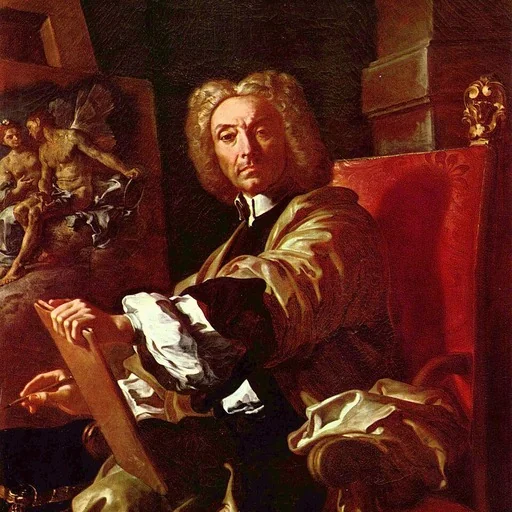
Francesco Solimena (4 October 1657 – 3 April 1747) was a prolific Italian Baroque painter, one of an established family of painters and draughtsmen.

 Madonna and Child with Three Saints
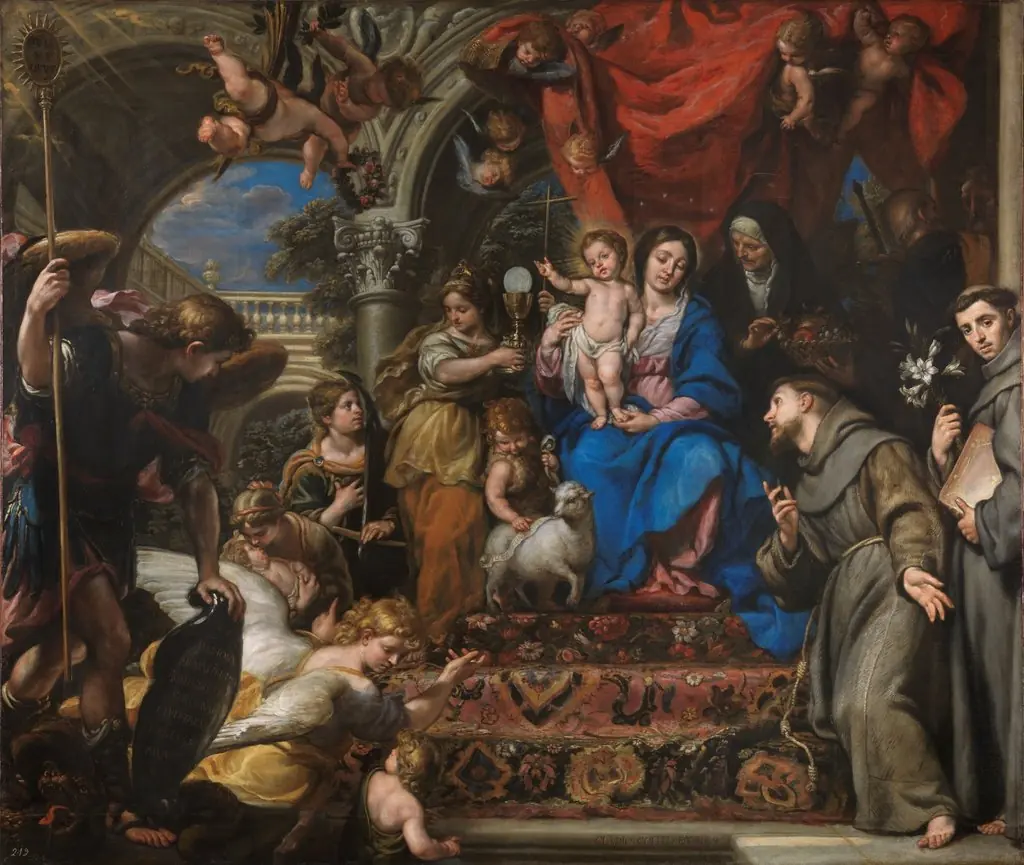 The Virgin and Child between the Theological Virtues and Saints
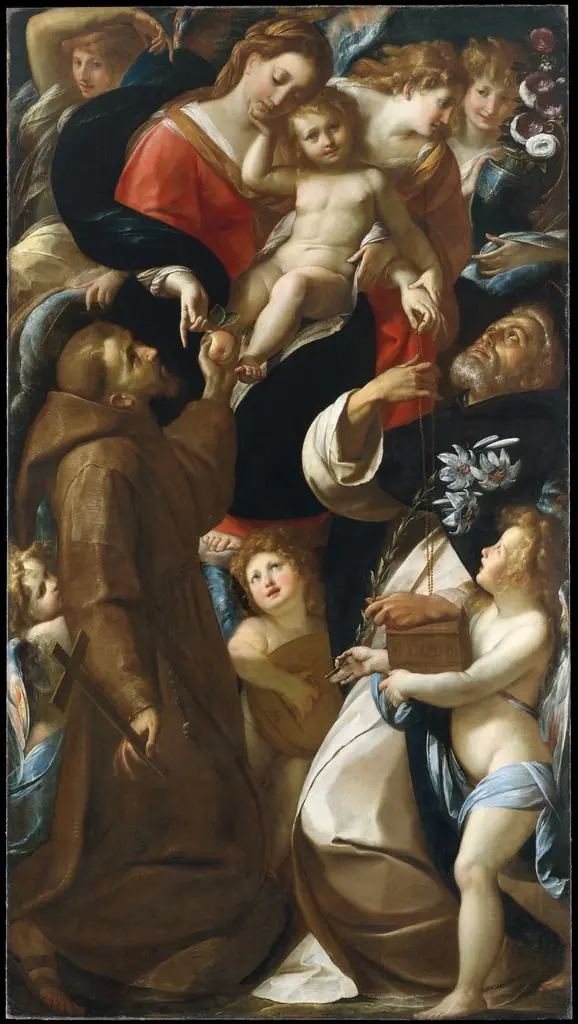 Madonna and Child with Saints Francis and Dominic and Angels
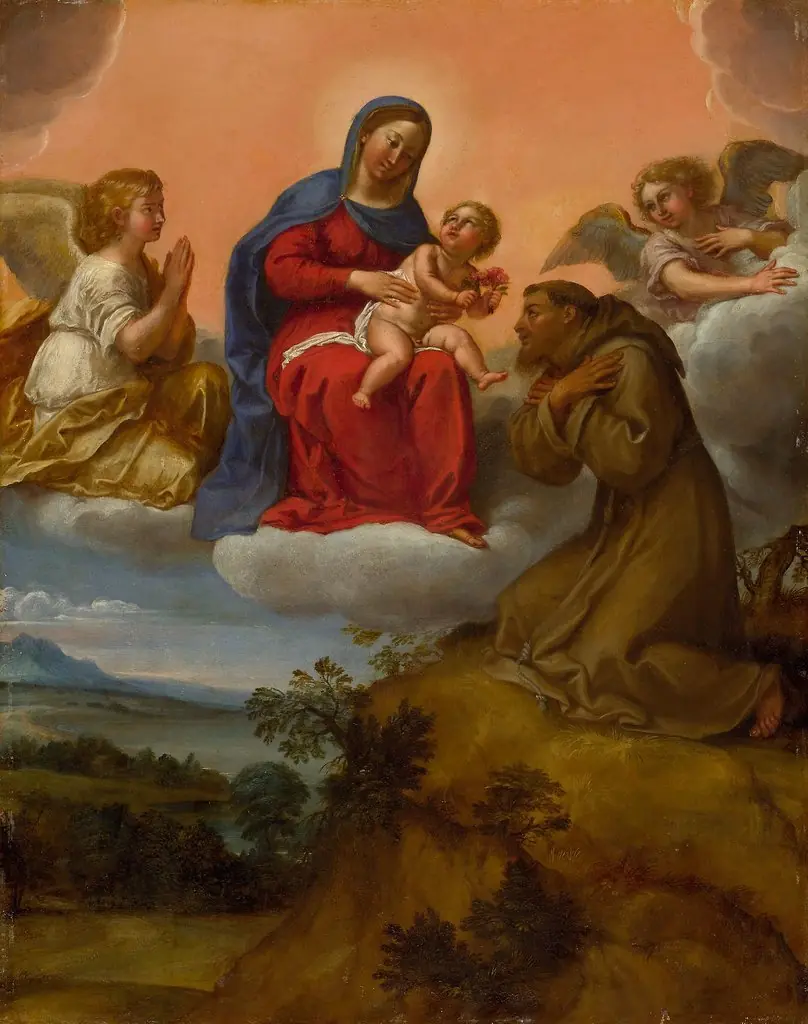 Virgin and Child Adored by Saint Francis
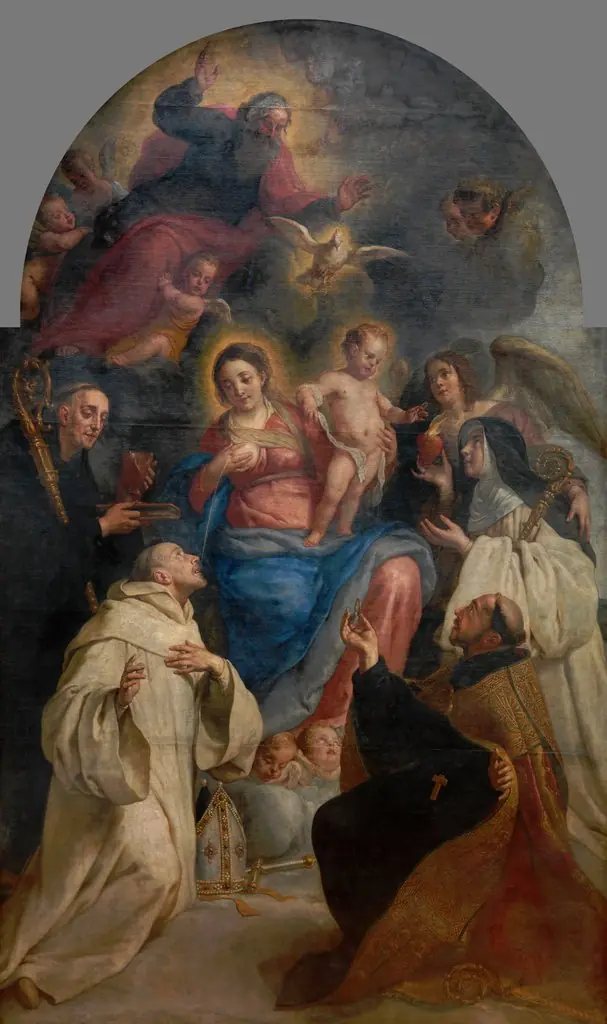 Lactatio of Saint Bernard of Clairvaux
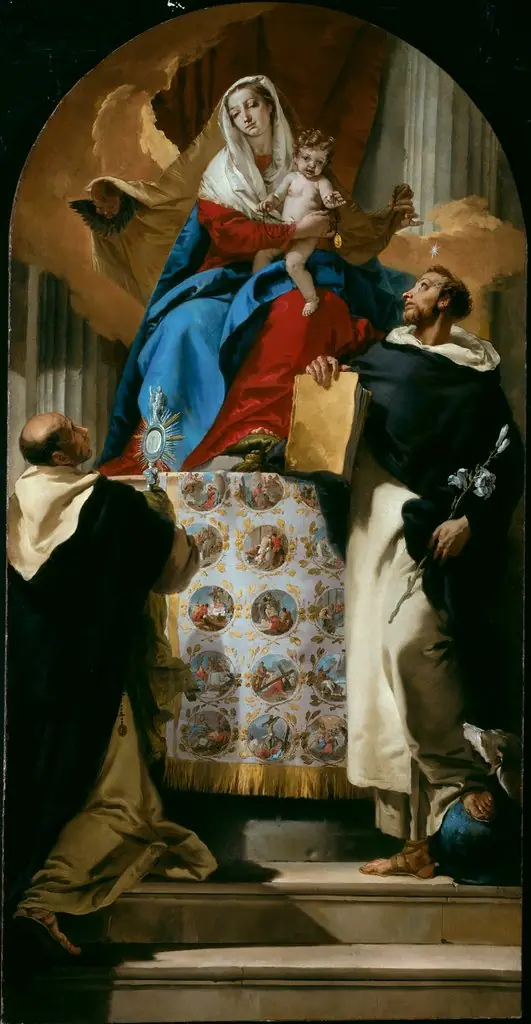 Virgin and Child with Saints Dominic and Hyacinth
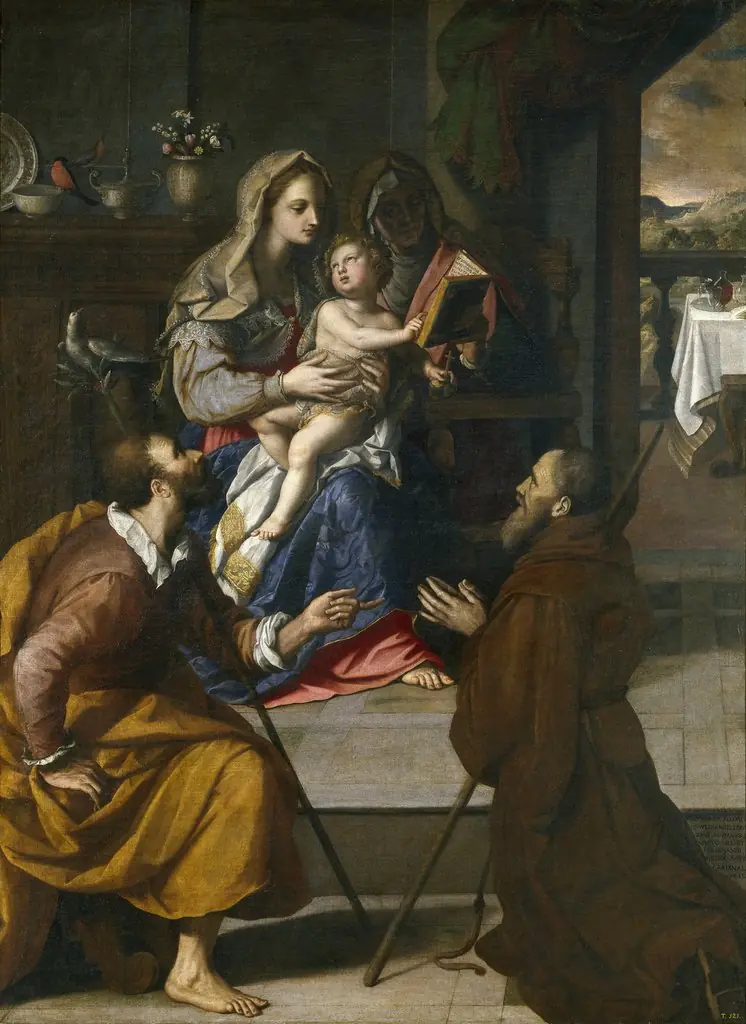 The Holy Family of Cardinal Fernando de’ Medici
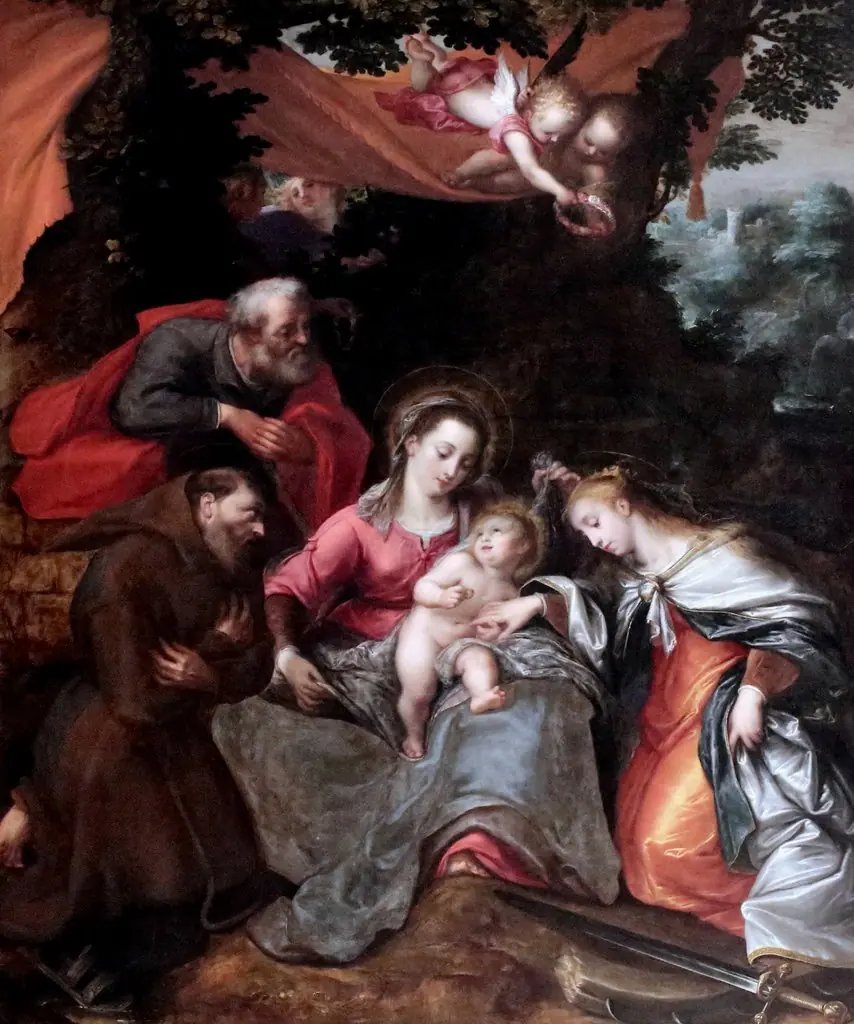 The Mystic Marriage of St. Catherine
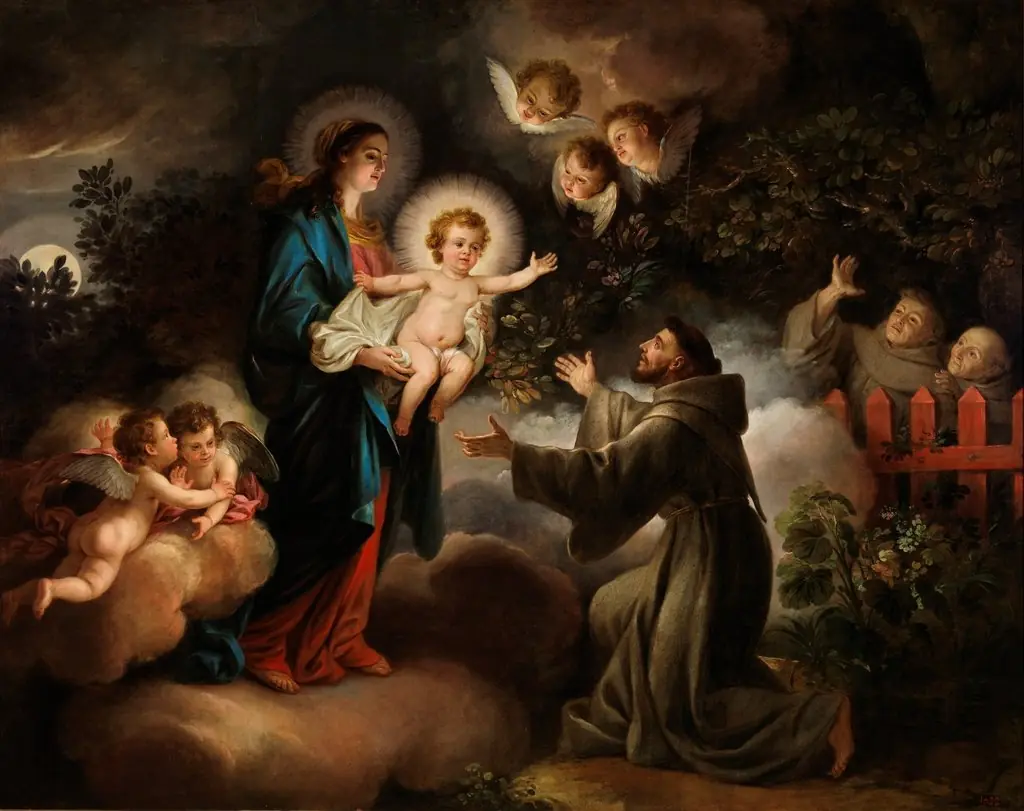 La Aparición de la Virgen a San Francisco
 The Virgin and Child Appearing to Saint Francis of Assisi