Artwork
Abstract painting in water-colour
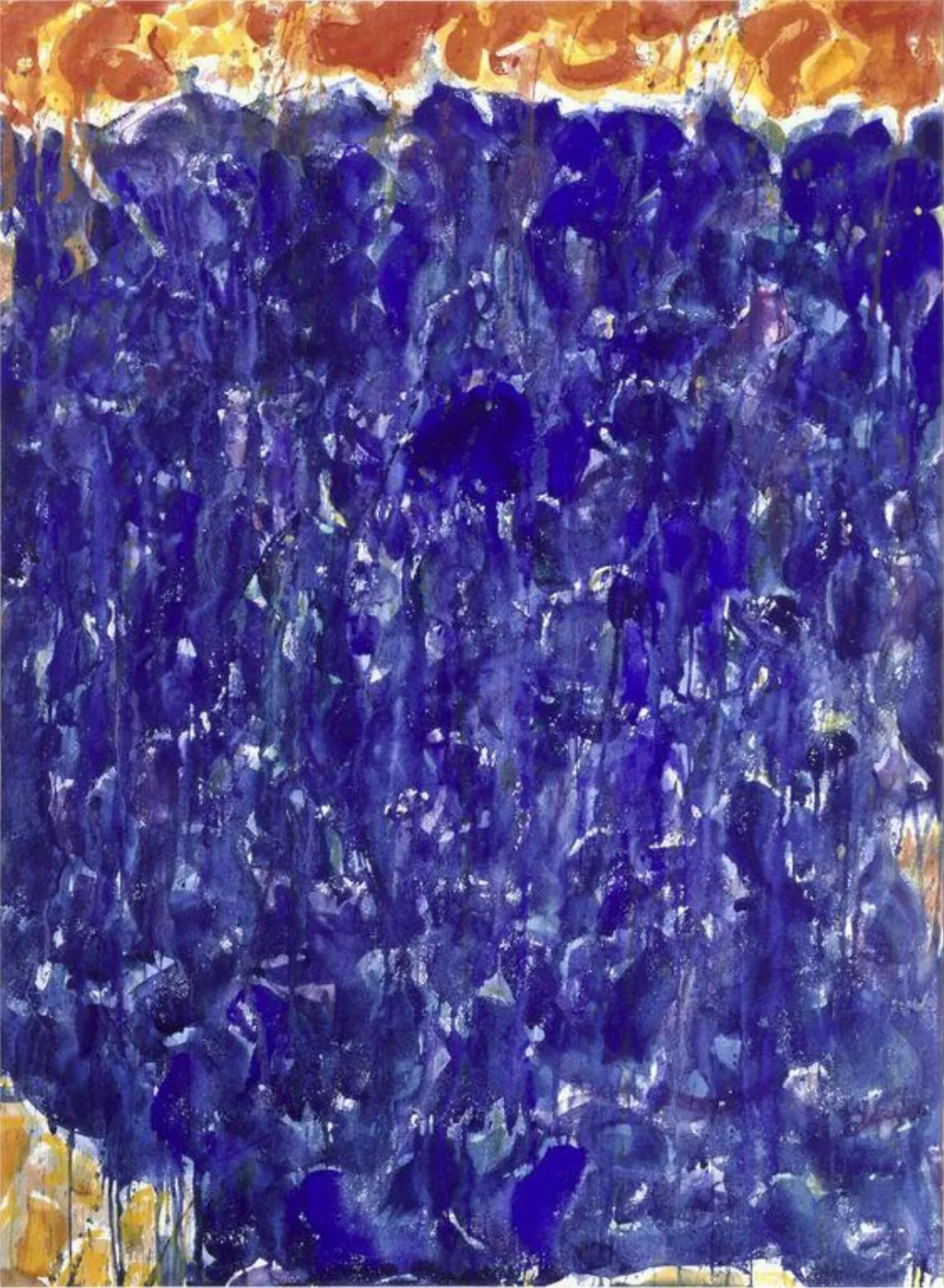
Abstract painting in water-colour is a paint painting by the Abstract Expressionist artist Sam Francis. It dates from 1952 and is held in the collection of the Victoria and Albert Museum.
About this work
Overview
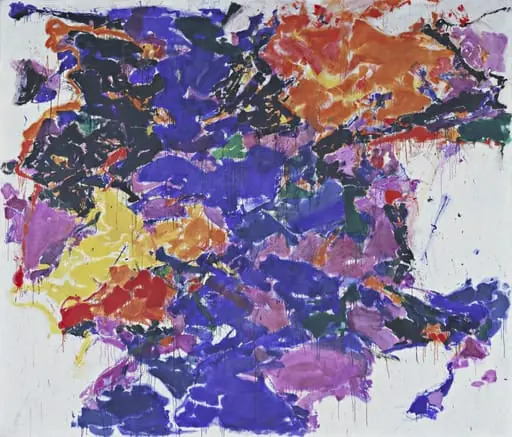
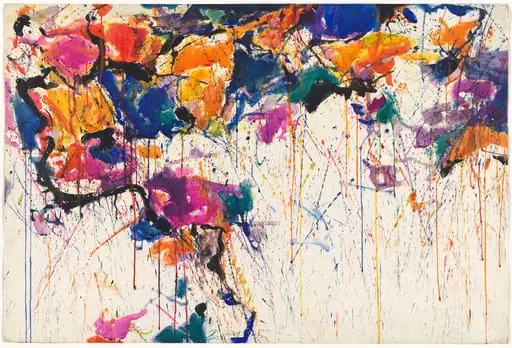
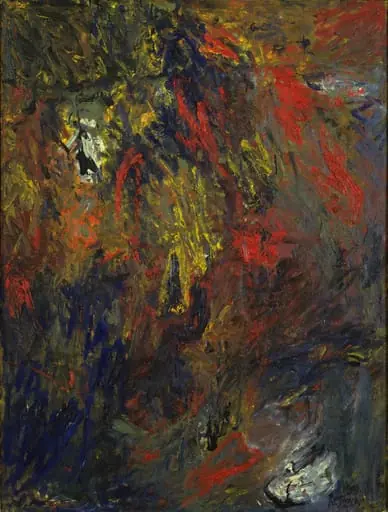
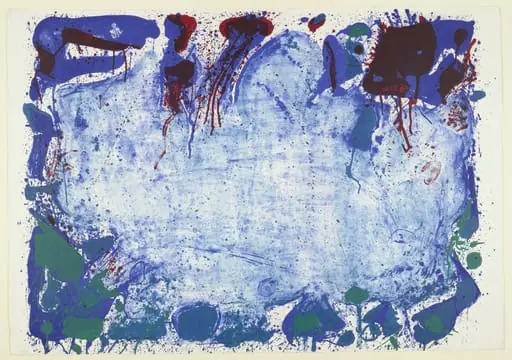
Created in 1952, this watercolor by Sam Francis is an abstract composition dominated by deep blue tones, accented by streaks of orange, yellow, and green.
Created in 1952, this watercolor by Sam Francis is an abstract composition dominated by deep blue tones, accented by streaks of orange, yellow, and green. Executed with rapid, unrefined strokes, the paint appears applied with urgency, its wet, uneven surfaces suggesting physical engagement with the paper. The work, cataloged as P.9-1959, entered the Contemporary Art Society’s collection after being exhibited at Gimpel Fils Gallery in 1957.
Subject & Meaning
The painting avoids representational forms, focusing instead on the emotional resonance of color and gesture. No figures, landscapes, or objects are suggested; meaning emerges from the interaction of saturated hues and raw brushwork. The contrast between the broad blue field and the thin, sharp orange line at the top introduces tension without narrative, inviting contemplation of material presence over symbolic content.
Technique & Style
Francis applied watercolor with a force uncommon to the medium, using broad, gestural strokes that resemble impasto. The paint pools and bleeds unpredictably across the paper, creating textured, irregular edges. Fingers or tools may have been used to spread pigment, resulting in a tactile surface that emphasizes process over precision. The work challenges traditional watercolor delicacy through its physicality and spontaneity.
History & Provenance
The painting was first publicly shown in May 1957 at Gimpel Fils Gallery in London, listed as the fifth work in the exhibition catalogue. It was subsequently acquired by the Contemporary Art Society, an organization dedicated to supporting modern British and international art through public collections. Its transition from gallery to institutional custody reflects its recognition within postwar abstract circles.
Context
Painted during Francis’s time in Paris, this work aligns with the transatlantic exchange between American Abstract Expressionism and European Tachisme. Artists in both movements prioritized spontaneous gesture and material intensity over composition. Francis’s use of watercolor, typically seen as restrained, subverts expectations, echoing the energy of contemporaries like Pollock and Fautrier while adapting it to a more fragile medium.
Legacy
This painting exemplifies Francis’s early experimentation with non-traditional applications of watercolor, influencing later artists who explored the medium’s potential for abstraction. Its inclusion in the Contemporary Art Society’s collection helped legitimize watercolor as a vehicle for serious modernist expression, broadening perceptions of what the medium could achieve beyond conventional boundaries.
Artist & collection