Artwork
No One has Seen Us, Plate 79
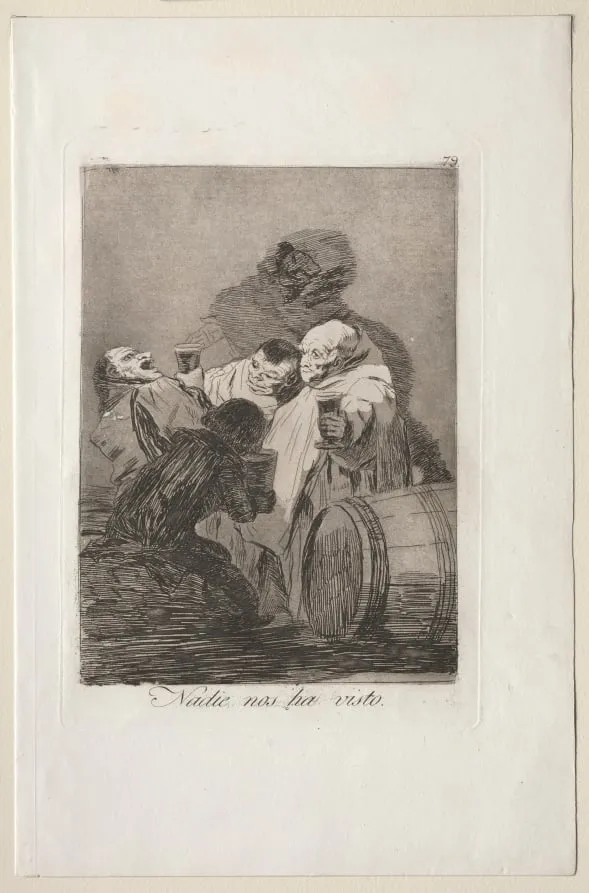
No One has Seen Us, Plate 79 is a print by the Romanticist artist Francisco de Goya. It dates from 1799 and is held in the collection of the Cleveland Museum of Art.
- Accession no.
- 1922.674
- Credit line
- Dudley P. Allen Fund
About this work
Overview
' This etching and aquatint depicts two figures concealed in shadow, their identities obscured by worn garments and posture.
Created around 1799, 'No One has Seen Us, Plate 79' is one of eighty prints in Francisco de Goya's series 'Los Caprichos.' This etching and aquatint depicts two figures concealed in shadow, their identities obscured by worn garments and posture. The work belongs to a broader investigation of human behavior, social hypocrisy, and hidden truths in late 18th-century Spain, rendered with psychological subtlety rather than overt satire.
Subject & Meaning
The two figures, huddled and averted, suggest secrecy or fear of exposure. Their anonymity invites speculation: are they fleeing judgment, engaging in illicit acts, or simply marginalized by society? Goya avoids narrative clarity, instead emphasizing the tension between visibility and concealment.
The image reflects broader anxieties about moral ambiguity and the fragility of social standing in a rigidly hierarchical world.
Technique & Style
Goya employed etching and aquatint to achieve deep, velvety shadows and gradations of tone, a hallmark of chiaroscuro. The contrast between the dark, indistinct figures and the faintly rendered background heightens the sense of isolation. Loose, expressive lines convey movement and unease, while the absence of fine detail forces the viewer to confront ambiguity. The medium’s capacity for atmospheric depth enhances the psychological weight of the scene.
History & Provenance
The print was originally published in 1799 as part of Goya’s 'Los Caprichos' series, which he privately circulated before offering for sale. It entered The Cleveland Museum of Art’s collection through the bequest of John L. Severance in 1937. The museum holds one of the earliest known impressions, printed before the edition’s full release, preserving the work’s original tonal richness and delicate surface.
Context
Produced during Spain’s Enlightenment era, 'Los Caprichos' responded to widespread social unrest, religious orthodoxy, and the decline of aristocratic power. Goya, once a court painter, turned critical, exposing superstition, corruption, and hidden vices. 'No One has Seen Us' aligns with this shift, portraying individuals outside the public gaze, those erased or ignored by official narratives of progress and morality.
Legacy
This print contributed to the evolution of modern printmaking as a vehicle for social critique. Goya’s unflinching portrayal of hidden lives influenced later artists, from Daumier to Picasso, who adopted his blend of realism and psychological depth. The work endures not for its technical novelty alone, but for its enduring resonance with themes of invisibility, surveillance, and the cost of silence.
Artist & collection
Artist
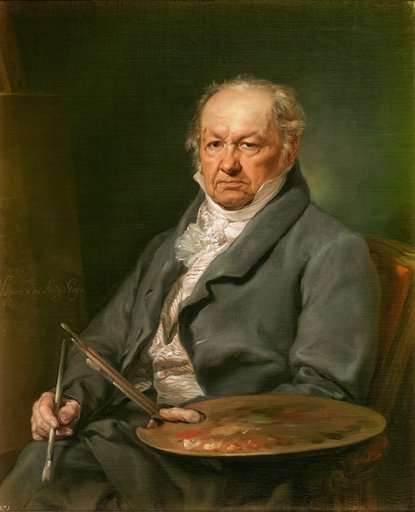
Francisco José de Goya y Lucientes was a Spanish romantic painter and printmaker.

 What One Does to Another, Plate 77
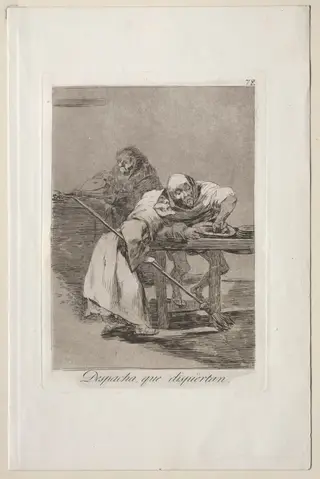 Be Quick, They are Waking Up, Plate 78
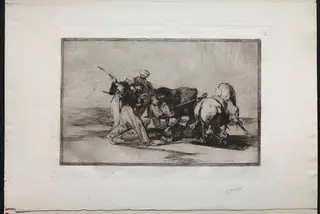 Bullfights: The Moors Settled in Spain, Giving Up the Superstitions of the Qur’an, Adopted this Art of Hunting, and Spear a Bull in the Open
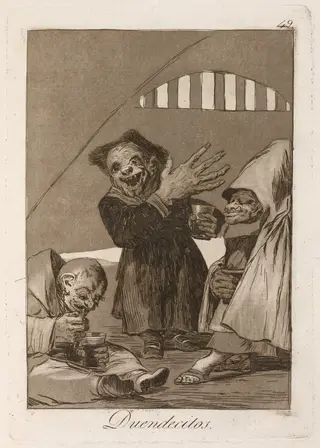 Duendecitos (Hobgoblins)
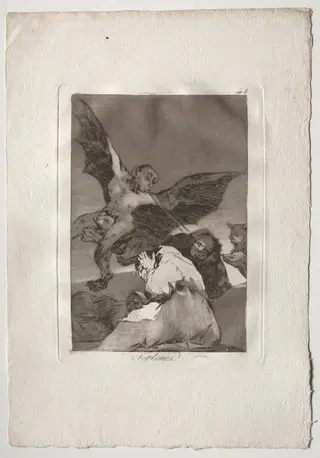 Tale-Bearers - Blasts of Wind, Plate 48
 The Proverbs: General Folly
 Estan Calientes (They Are Hot)