Artwork
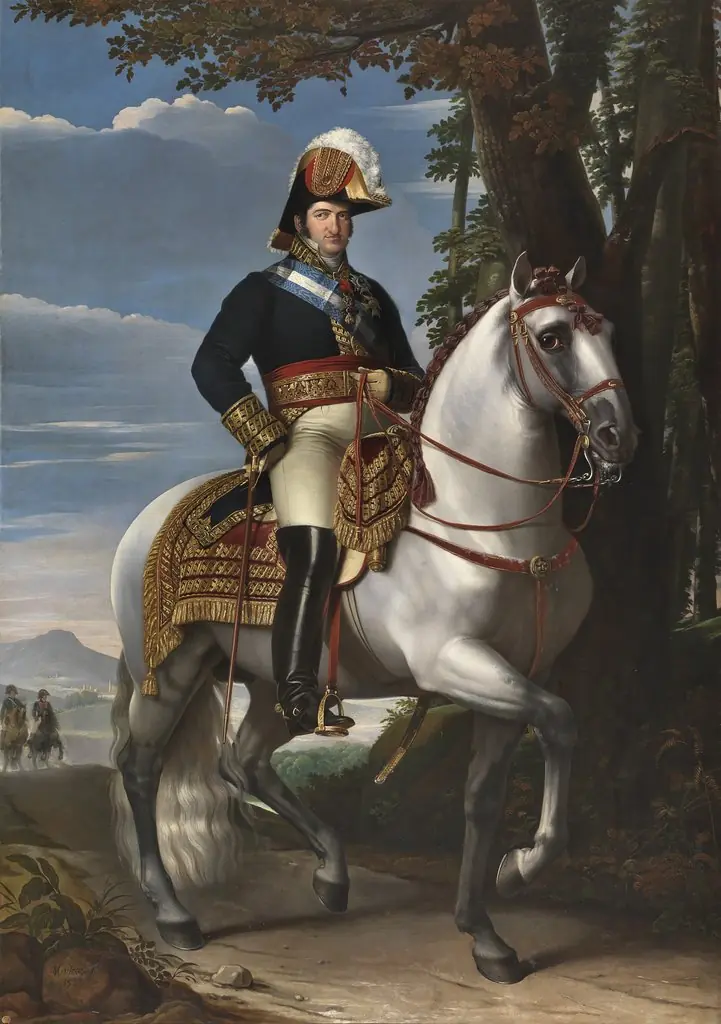
Ferdinand VII at an Encampment
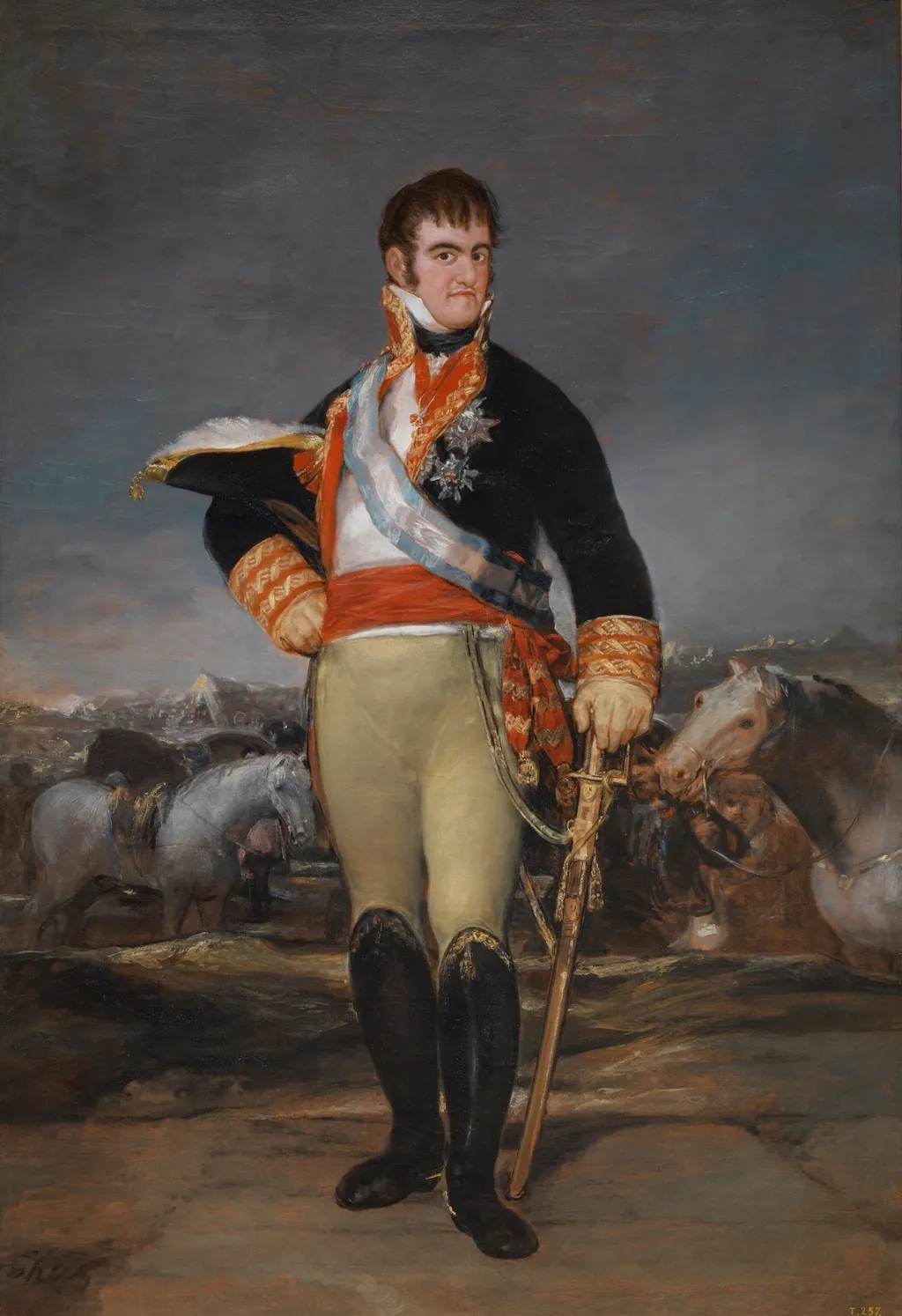
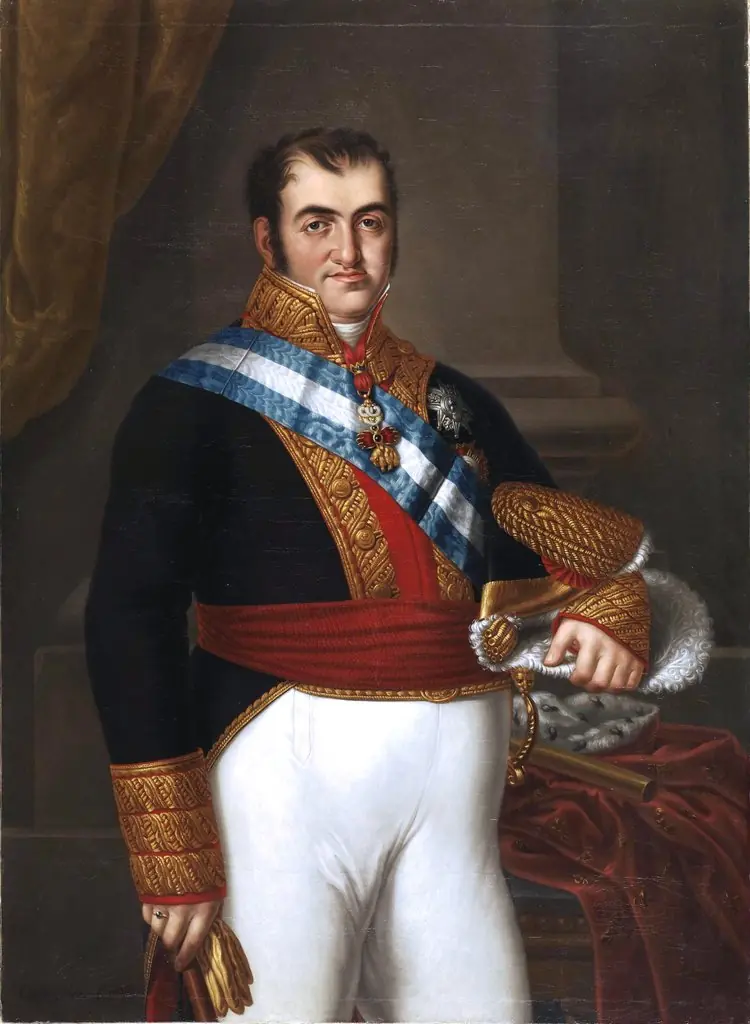
Ferdinand VII at an Encampment is an oil painting by Francisco de Goya. It dates from 1815 and is held in the collection of the Museo del Prado.
About this work
Subject & Meaning
Painted in 1815, the composition aligns with the Bourbon restoration after Napoleon’s defeat, presenting the monarch as a legitimate and martial sovereign.
The work depicts King Ferdinand VII of Spain standing at a military encampment, dressed in a blue uniform with red cuffs and a sash, and wearing the insignia of the Order of Charles III and the Golden Fleece. The sword at his side signals his role as commander-in-chief, while the encampment background underscores his presence at a wartime headquarters. Painted in 1815, the composition aligns with the Bourbon restoration after Napoleon’s defeat, presenting the monarch as a legitimate and martial sovereign.
The insignia and regalia emphasize royal authority and continuity, while the setting evokes the king’s direct oversight of military affairs during a period of political restoration.
Technique & Style
The painting is executed in oil on canvas, measuring 207 cm in height and 140 cm in width. Goya’s handling emphasizes the monarch’s ceremonial presence: the figure is rendered with controlled, polished brushwork that delineates the uniform’s textures and insignia, particularly the Order of Charles III and the Golden Fleece, while the encampment background is treated with broader, atmospheric touches to convey distance and light. The composition balances rigid hierarchy with anecdotal detail, subordinating the military setting to the central figure’s authoritative stance. No specific condition report is provided in the sources.
History & Provenance
Francisco Goya created the oil-on-canvas painting Ferdinand VII at an Encampment in 1815. The work measures 207 cm in height and 140 cm in width. It is currently held in the collection of the Museo del Prado.
The painting depicts King Ferdinand VII wearing the Order of Charles III and the Golden Fleece, accompanied by a saber.
Ferdinand VII at an Encampment is held in the collection of the Museo del Prado in Madrid. The oil on canvas work, measuring 207 cm by 140 cm, has been part of the museum's holdings since its creation in 1815. While the painting depicts the monarch with specific regalia such as the Order of Charles III and the Golden Fleece, the available records do not list specific inventory numbers or detail a history of loan exhibitions outside the institution.
Context
Ferdinand VII at an Encampment emerged within Goya's late royal portraiture produced during the artist's final years of official commissions. Contemporary documentation indicates the work was painted shortly after the monarch's restoration in 1814 and reflects the ceremonial display of Bourbon legitimacy through military regalia. Art historical analysis positions this canvas alongside other late royal portraits as part of Goya's complex negotiation of political allegiance amid post-Napoleonic uncertainty.
The painting's formal qualities demonstrate the artist's evolving approach to courtly symbolism during a transitional period in Spanish art history.
Scholarship emphasizes its significance as a deliberate statement of dynastic continuity rather than mere representation, with recent studies highlighting how Goya encoded subtle critiques within ostensibly celebratory imagery. The work's placement in the Museo del Prado collection since its acquisition underscores its recognized importance in the canonical understanding of Goya's oeuvre and the development of Spanish portraiture in the nineteenth century.
Overview
Ferdinand VII at an Encampment is an oil painting created by Francisco Goya in 1815. It portrays Ferdinand VII in a military setting.
Own this work as a print
Artist & collection
Artist
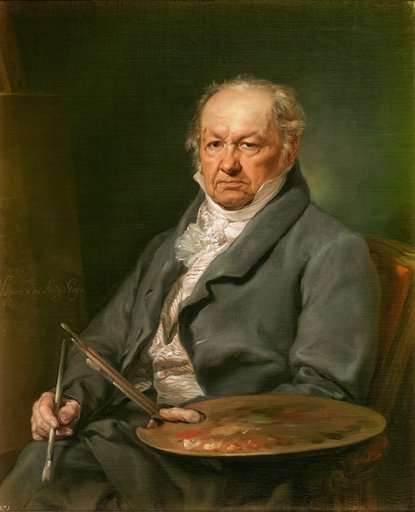
Francisco José de Goya y Lucientes was a Spanish romantic painter and printmaker.