Artwork
Josefa Bayeu
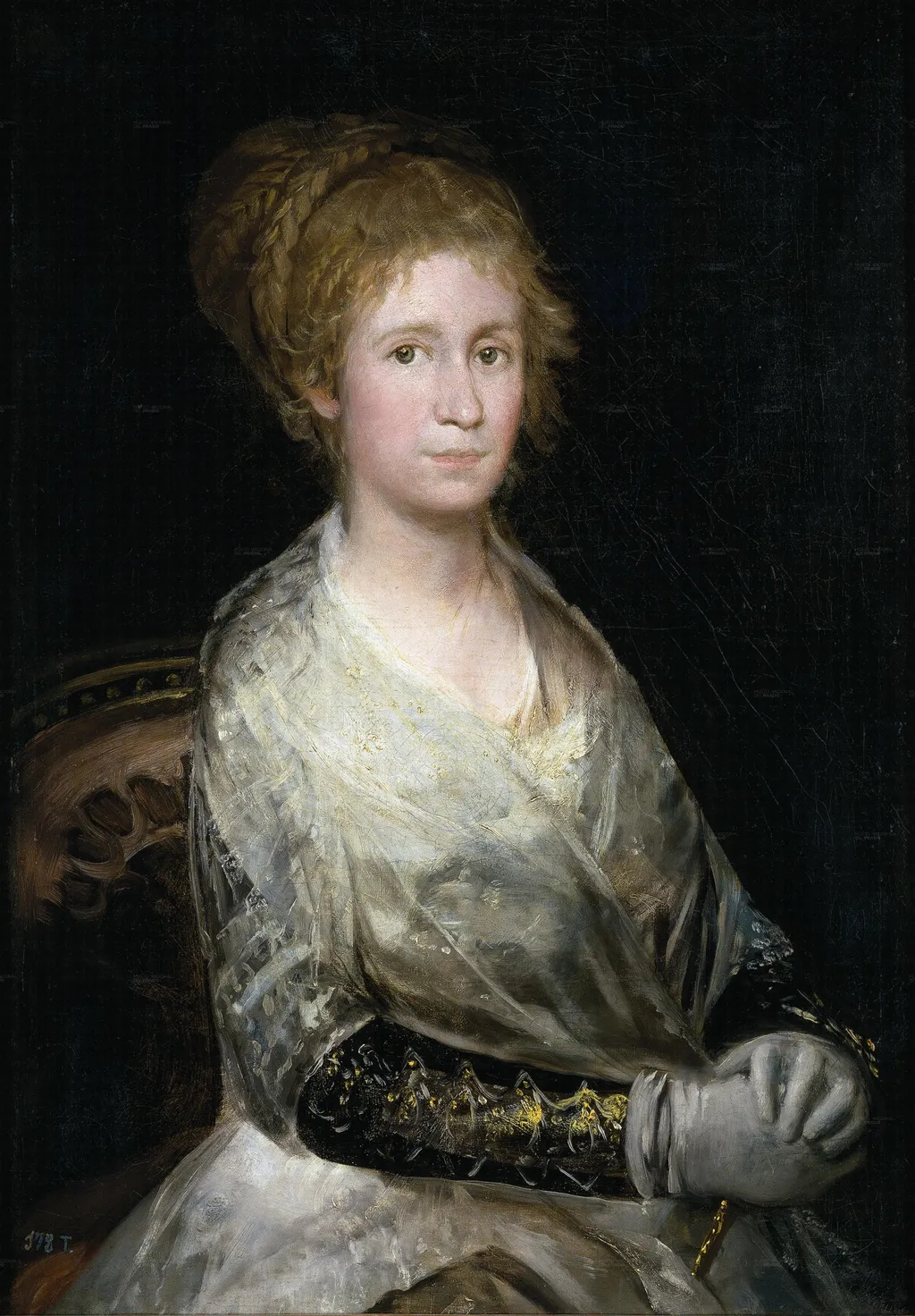
Josefa Bayeu is an oil painting by Francisco de Goya. It dates from 1814 and is held in the collection of the Museo del Prado. This oil portrait, attributed to Francisco Goya, is part of the Prado Museum collection.
About this work
Subject & Meaning
The work is considered a private piece rather than a formal commission, capturing an intimate figure from the artist's close circle.
The portrait depicts a young, affluent woman, approximately thirty years old, holding a hand fan and wearing a glove. While traditionally identified as Josefa Bayeu, the artist's wife, this attribution is now widely disputed because the subject's youthful features and simple braided hairstyle contradict known images of Bayeu, who was older and wore different attire. Current scholarship from the Museo del Prado suggests the sitter is likely Leocadia Zorrilla de Weiss, Goya's companion following his wife's death, whose age aligns with the visual evidence.
The work is considered a private piece rather than a formal commission, capturing an intimate figure from the artist's close circle. The subject's enigmatic smile has led to comparisons with the Mona Lisa. The painting's style, including its specific use of light and the model's post-Peninsular War fashion, reinforces the interpretation of a later date and a personal connection rather than a conventional societal portrait.
Technique & Style
The work is an oil painting on canvas executed in a half-length format, measuring 82.5 cm by 58.2 cm. Technical examination reveals that the artist painted directly over a previous composition, a practice likely driven by the scarcity of materials following the Peninsular War. The handling of light and color demonstrates an advanced technique characteristic of the artist's later period, specifically resembling works from 1815. Stylistically, the portrait features a restrained elegance with specific attention to the model's natural hairstyle, consisting of simple braids pinned back with framing strands, which contrasts with earlier powdered fashions.
The subject's enigmatic smile and delicate physiognomy are rendered with a sophistication that diverges from the artist's known sketch of his wife, supporting arguments for a creation date between 1814 and 1816.
History & Provenance
The painting entered the Museo de la Trinidad in 1866 as Portrait of the Painter’s Wife, Doña Josefa Bayeu, purchased from Goya’s heirs. It was transferred to the Museo del Prado in 1872 when the two institutions merged, retaining the same title in early catalogues.
The work’s dating has been contested. Early inventories, including Antonio Brugada’s 1828 list of Goya’s holdings, recorded a half-length portrait of Josefa Bayeu but lacked dimensions or technique, leaving identification uncertain. Traditional dating to 1798 was later questioned; Prado scholars now propose c. 1814–1816 based on stylistic and technical evidence.
The canvas was reused, a practice Goya adopted after 1814 when materials became scarce post-war. The sitter’s hairstyle aligns with French Restoration fashion (1814–1830), and the palette and handling resemble Goya’s 1815 works, including Self-Portrait at 69 and Portrait of Rafaela Esteve Vilell.
The painting is currently housed in the Museo del Prado in Madrid. It was originally acquired in 1866 from the artist's heirs and entered the collection of the Museo de la Trinidad under the title Portrait of the Painter's Wife, Doña Josefa Bayeu. Following the merger of the Museo de la Trinidad with the Museo del Prado in 1872, the work remained in the combined institution's holdings.
The piece was previously listed as position number 14 in the 1828 inventory of Goya's works compiled by Antonio Brugada. While the museum cataloged it for over a century as a portrait of Josefa Bayeu, modern scholarship has cast doubt on this identification, proposing instead that the sitter is Leocadia Zorrilla de Weiss.
Context
The painting's reception and scholarly interpretation are deeply tied to debates over its subject and dating. Early inventories, such as Antonio Brugada's 1828 catalog, listed it as 'Portrait of the Painter's Wife, Doña Josefa Bayeu' (position no. 14), reinforcing the traditional identification of the sitter as Goya's first wife, Josefa, who died in 1812. However, discrepancies in age and attire, particularly the sitter's youthful appearance, natural hairstyle reminiscent of the French Restoration period, and fashion trends post-Peninsular War (1807–1814), led art historians at the Museo del Prado to question this attribution.
By the 1920s, doubts emerged regarding both the subject's identity and the work's creation date, with current scholarship favoring Leocadia Zorrilla de Weiss, Goya's companion after 1805, as the likely model. Stylistic analysis, including brushwork comparable to Goya's 1815 works and evidence of the portrait being painted over another image, supports a creation window of 1814–1816, aligning with post-war material constraints and the sitter's age of 26–28.
Legacy
The painting's legacy stems from its contested identification and stylistic significance. Early catalogues listed it as 'Portrait of the Painter's Wife, Doña Josefa Bayeu,' but analysis of the sitter's age, attire, and hairstyle, characteristic of French Restoration fashion post-1814, led Prado historians to reject the 1798 date and Josefa Bayeu's identification. Instead, they propose a creation window of 1814–1816, aligning with Goya's relationship with Leokadia Zorrilla de Weiss, who managed him after his wife's death.
The portrait's enigmatic quality earned the nickname 'Goya's Mona Lisa,' while its technique, including painting over an earlier work, reflects post-war material constraints. Today, it is recognized as a pivotal, albeit ambiguously attributed, piece within Goya's portraiture, housed at the Museo del Prado.
Overview
This oil portrait, attributed to Francisco Goya, is part of the Prado Museum collection. It shows a young woman of about thirty, presented against a dark backdrop that accentuates her light skin, white dress, and delicate lace collar. The composition is intimate, suggesting a personal rather than a public commission.
Own this work as a print
Artist & collection
Artist
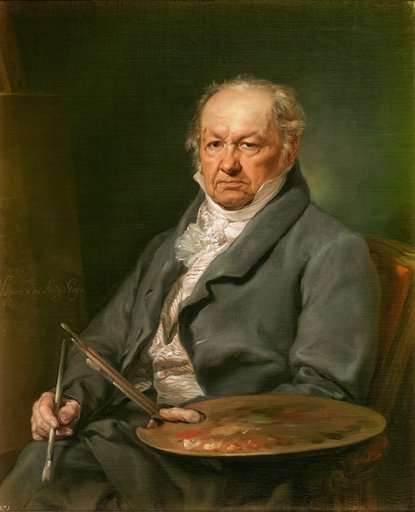
Francisco José de Goya y Lucientes was a Spanish romantic painter and printmaker.

- Mrs. George Hill
 Portrait of Mrs Helen (Dorothea Daniel) (d.1806)
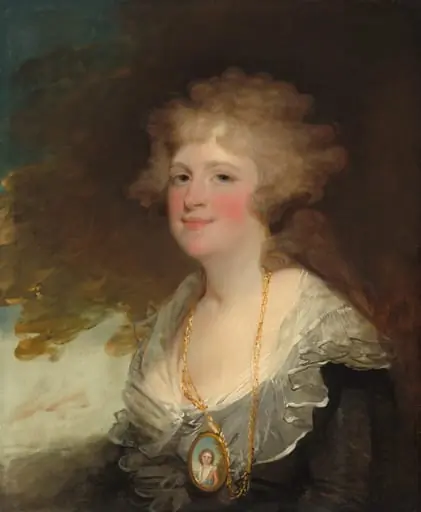 Sarah Shippen Lea (Mrs. Thomas Lea)
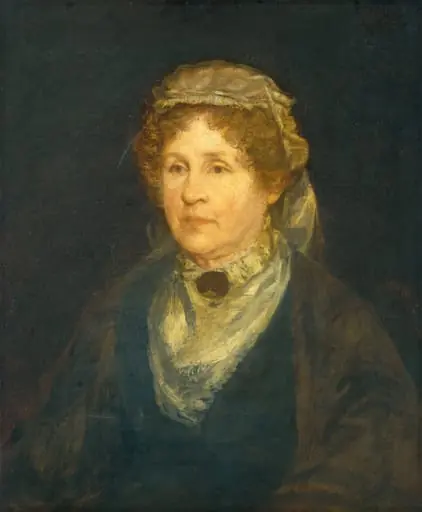 Agnes Gordon Cochran Higginson (Mrs. Stephen Higginson)
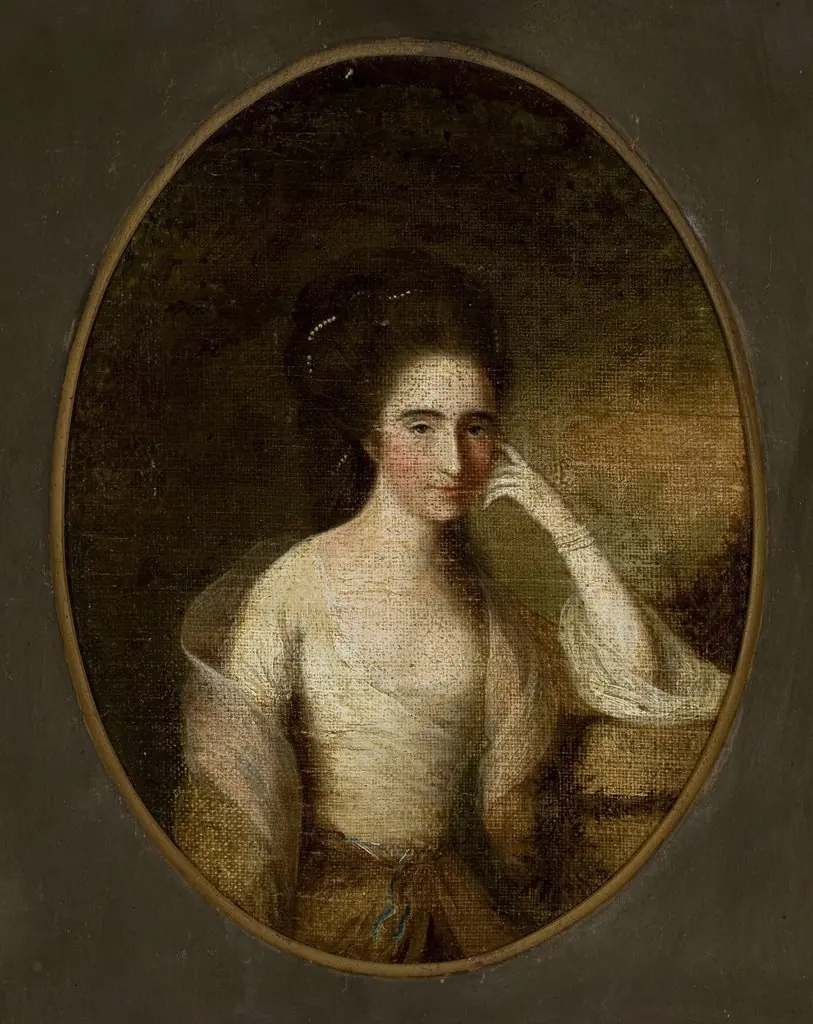 Self-portrait
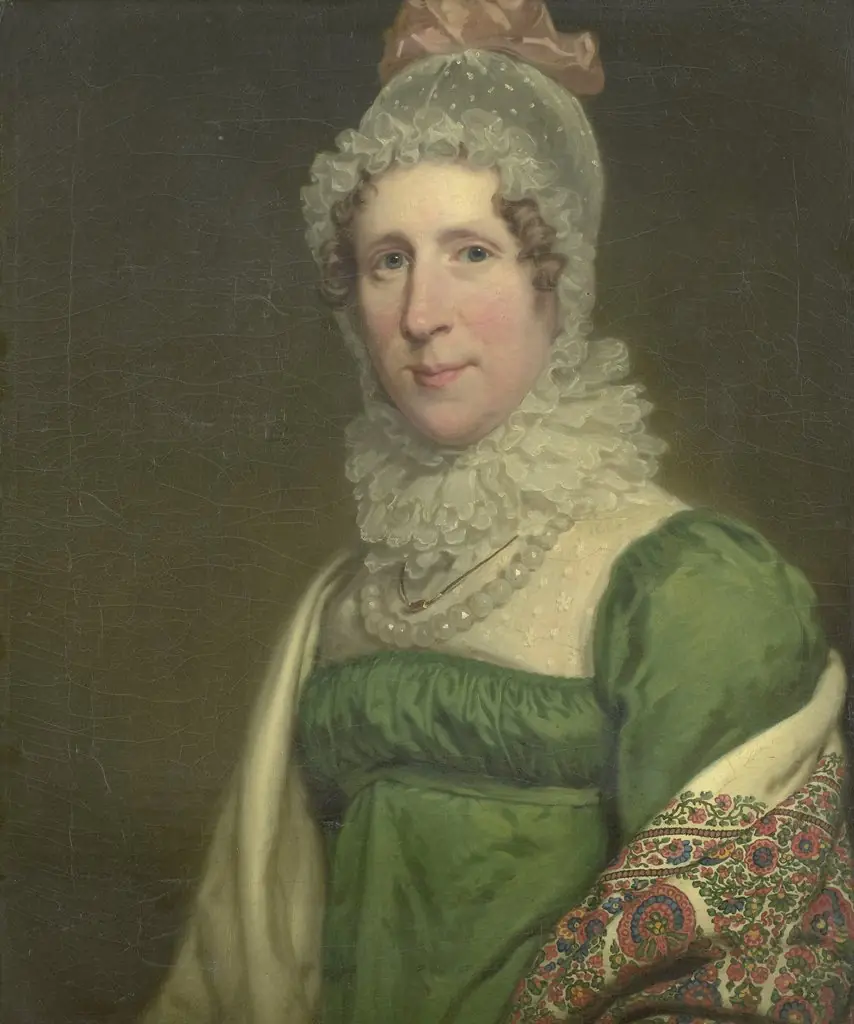 Portrait of Suzanna Maria Crommelin, Wife of Egbert Johannes Koch
 Maria Bartlett (Mrs. Joseph Hall, Jr.)
 Sally Bass (Mrs. Enoch Bartlett)
 Mrs. Thornton
 Portrait of Wiktoria Madalińska née Skotnicka (1762–1808), wife of general Józef Antoni Madaliński
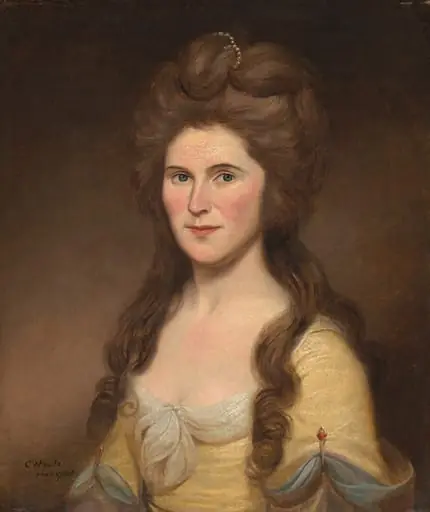 Rebecca Bryan White (Mrs. John White)
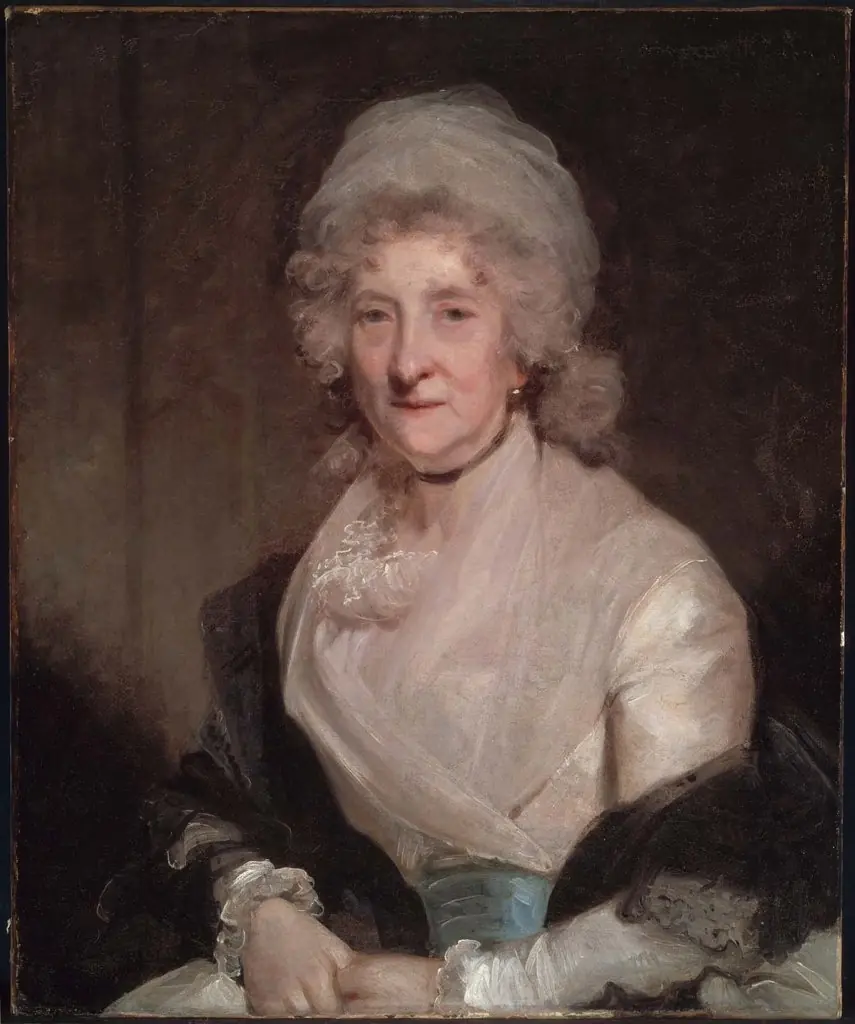 Dorcas, Lady Blackwood (Dorcas Stevenson), Baroness