Artwork
The Water Bearer
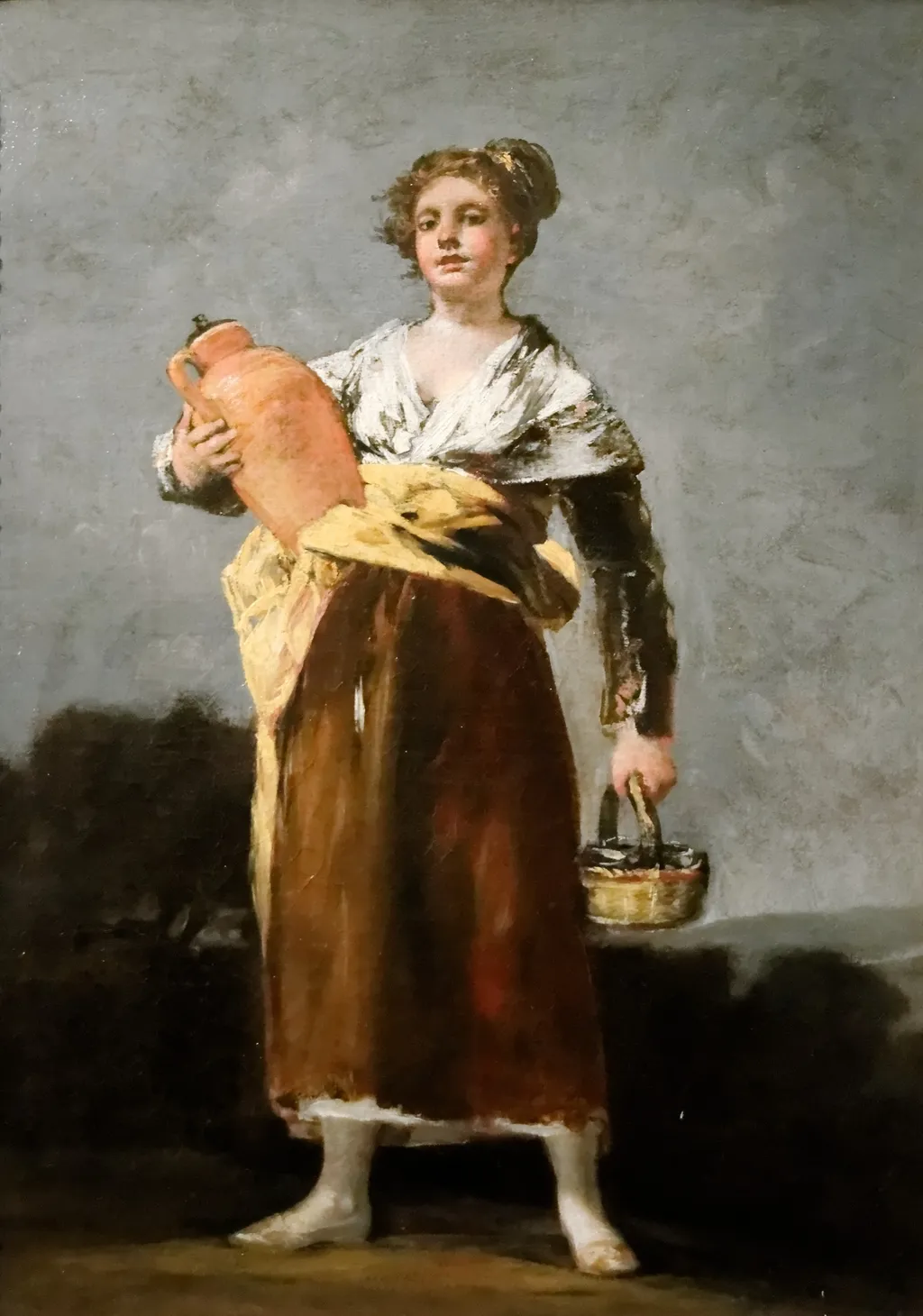
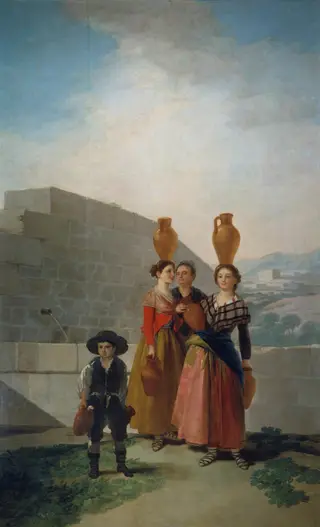
The Water Bearer is an oil painting by the Naturalist artist Francisco de Goya. It dates from 1808 and is held in the collection of the Museum of Fine Arts, Budapest.
About this work
Overview
The Water Bearer (La Aguadora) is an oil-on-canvas painting by Francisco de Goya, housed in the Museum of Fine Arts, Budapest. Depicting a woman with a jug and basket, the work transitions Goya from courtly rococo to genre scenes of everyday life.
Subject & Meaning
The painting portrays a working-class woman, possibly a servant or water bearer, set against a somber backdrop. Her attire and props (clay jug and basket) define her role, situating the piece within Goya's exploration of common life, potentially reflecting Spanish resilience during the War of Independence.
Technique & Style
Goya employs chiaroscuro to dramatic effect, juxtaposing light and dark to create depth and emphasize the subject. This technique, characteristic of his later style, draws attention to the woman's figure amidst the shadows.
History & Provenance
Originally in Goya's Madrid residence, the painting remained with him until at least 1812. It was later acquired by Alois Wenzel von Kaunitz-Rietberg, Austrian ambassador to Spain (1815-17), before entering the Budapest museum's collection.
Context
Created after Goya's period producing rococo-inspired tapestry cartoons for the Royal Factory, The Water Bearer marks a shift towards depicting ordinary people, aligning with the broader cultural mood of Spanish resistance to French occupation.
Own this work as a print
Artist & collection
Artist
Francisco José de Goya y Lucientes was a Spanish romantic painter and printmaker.