Artwork
Saint Rufina
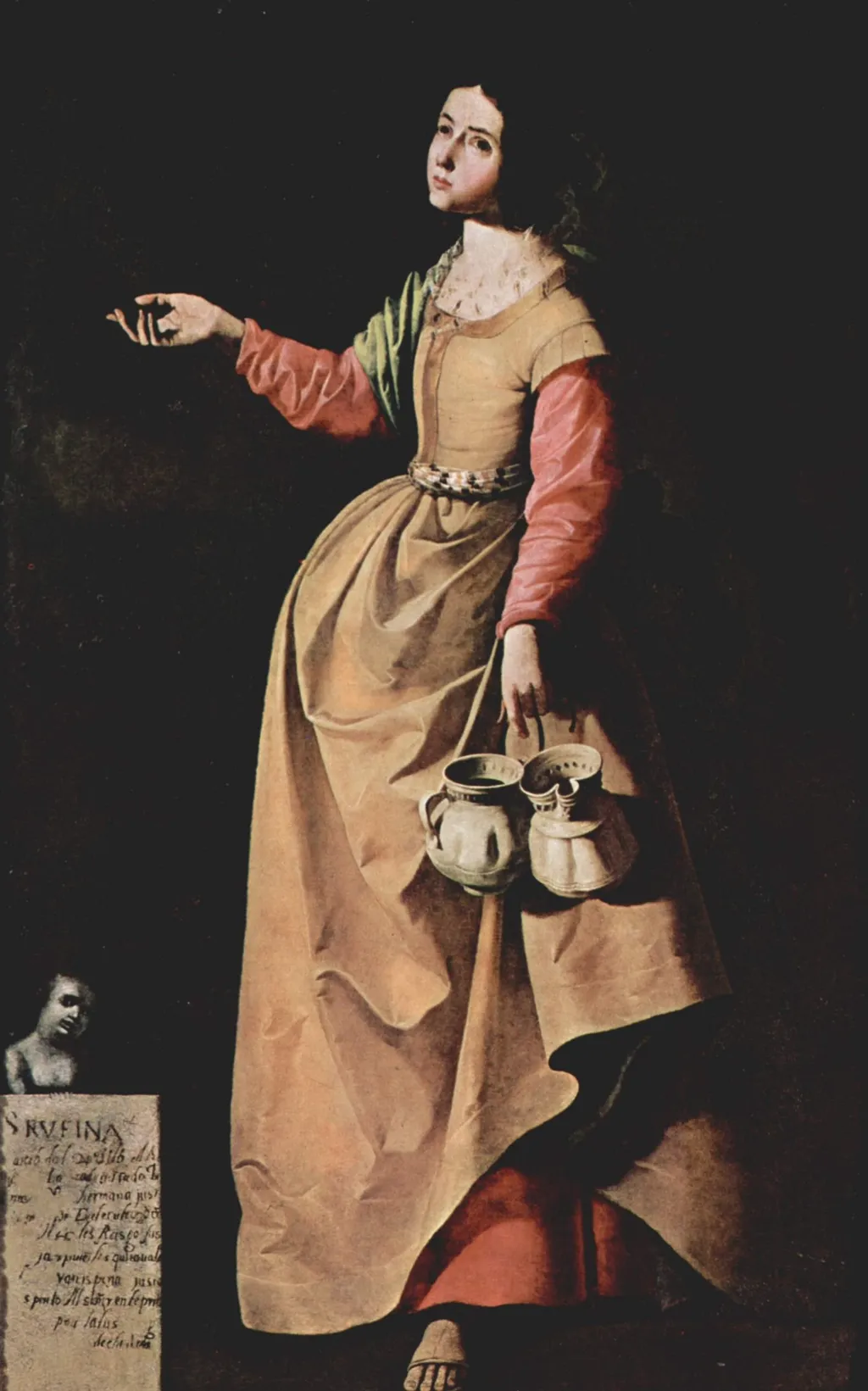
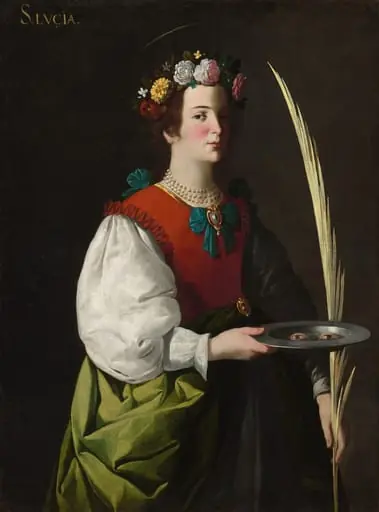
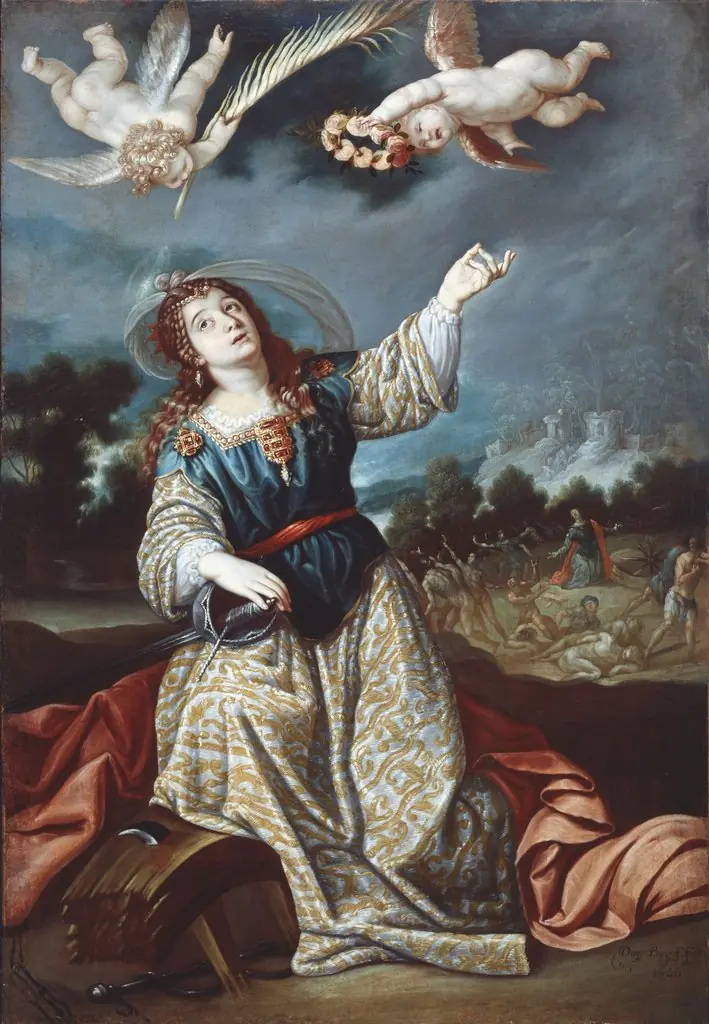
Saint Rufina is an oil painting by the Spanish Baroque Tenebrist artist Francisco de Zurbarán. It dates from 1637 and is held in the collection of the National Gallery of Ireland.
About this work
Subject & Meaning
The inclusion of these attributes aligns with Counter-Reformation devotional imagery, aiming to inspire veneration and emulation of the saints’ steadfast faith.
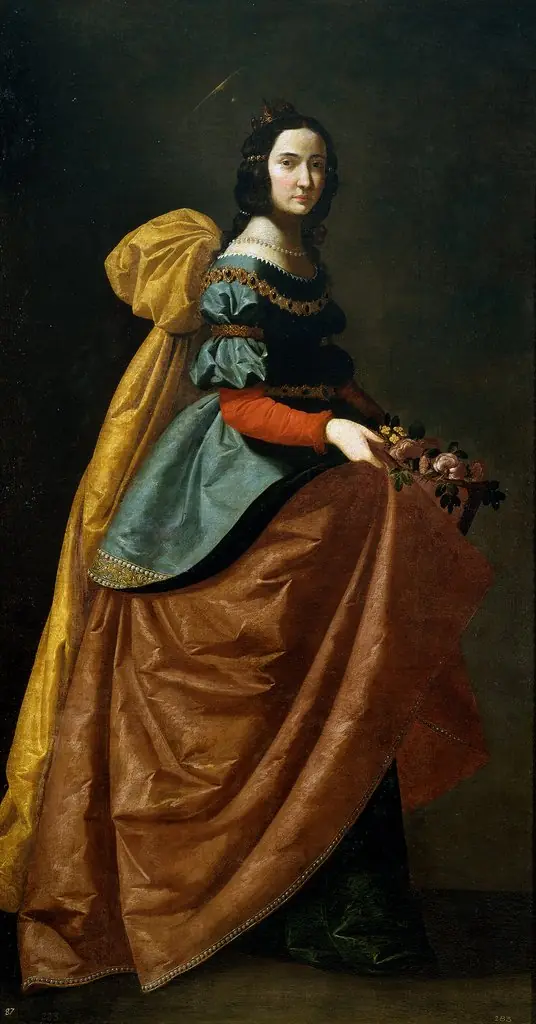
The painting depicts Saint Rufina, a Christian martyr traditionally associated with Seville. She is shown holding a palm frond, a common attribute signifying martyrdom and victory over death in Christian iconography. Rufina is further identified by the vessel she carries, which alludes to the broken vessels for which she and her sister, Saint Justa, were martyred after refusing to sacrifice to Roman deities.
Her modest dress and serene expression emphasize her piety and fortitude in the face of persecution. The inclusion of these attributes aligns with Counter-Reformation devotional imagery, aiming to inspire veneration and emulation of the saints’ steadfast faith.
Technique & Style
Saint Rufina is executed in oil paint on canvas, a medium Zurbarán favored for its capacity to render rich tonal depth and tactile surface qualities. The canvas support measures 176 cm in height and 107.5 cm in width, yielding a markedly vertical format suited to the standing figure of the saint.
Stylistically, the work belongs to the religious genre and reflects Zurbarán's mature Sevillian manner of the 1630s, characterized by sober realism, sculptural modeling of drapery, and a restrained palette that emphasizes the dignified presence of the holy figure. The depiction of a vessel, woman, dress, and saint indicates an iconographic program built around carefully described attributes and costume, treated with the meticulous handling of light and shadow typical of the artist's devotional paintings.
History & Provenance
The work was created in 1637 by Francisco de Zurbarán as an oil painting on canvas. It entered the collection of the National Gallery of Ireland, where it remains on display.
The painting was executed for devotional purposes within a Spanish religious context, reflecting Counter-Reformation artistic commissions. Its dimensions are 176 cm in height and 107.5 cm in width.
The work is documented in scholarly sources as part of Zurbarán’s mature period, characterized by naturalistic rendering and intense spiritual focus. It was likely produced for a private or ecclesiastical patron before entering the National Gallery of Ireland’s collection.
The provenance is straightforward, with the painting’s presence in the National Gallery of Ireland confirmed by catalog records and its accession following institutional acquisition.
Saint Rufina, painted by Francisco de Zurbarán in 1637, is held by the National Gallery of Ireland. The work is catalogued within that institution's collection as an oil-on-canvas religious painting measuring 176 cm in height and 107.5 cm in width.
No exhibition history is documented in the available sources.
Context
Saint Rufina, painted by Francisco de Zurbarán in 1637, exemplifies Spanish Baroque religious art through its devotional focus and restrained realism. The work, housed in the National Gallery of Ireland, depicts a saintly figure holding a vessel, rendered in oil on canvas with dimensions of 176 cm by 107.5 cm. Zurbarán's mastery of chiaroscuro and spiritual intensity situates this piece within his broader exploration of monastic devotion and Counter-Reformation themes, reflecting the stylistic influence of earlier Spanish mystics like St. John of the Cross. Art historians note its significance as a mature example of Zurbarán's mature period, characterized by austere compositions that emphasize tactile texture and emotional gravity over narrative spectacle.
The painting's attribution and dating align with documented activity in Seville during the 1630s, contextualizing it within the city's vibrant artistic milieu.
Scholarly analysis emphasizes its technical precision and thematic resonance with Spanish Counter-Reformation aesthetics, where material simplicity conveys theological depth. The National Gallery of Ireland's acquisition underscores its recognized cultural value, positioning it within institutional collections that highlight Spanish Golden Age painting. Comparative studies with Zurbarán's other saints, such as those in the Prado Museum, reveal consistent stylistic markers, stark backgrounds, tactile fabric rendering, and psychological stillness, that define his contribution to Baroque sacred art. This work remains a key reference for understanding 17th-century Spanish painting's evolution toward introspective piety.
Legacy
Saint Rufina, painted by Francisco de Zurbarán in 1637, exemplifies his mature religious style and continues to be studied for its devotional intensity and compositional clarity. The work is part of the National Gallery of Ireland's collection, where it is recognized as a significant example of Spanish Baroque art. Its enduring reputation stems from the powerful portrayal of saintly figures within intimate domestic settings, influencing later interpretations of female saints in European painting.
The painting's legacy is reflected in scholarly discussions of Zurbarán's impact on Spanish mysticism and Baroque visual culture, with the artwork frequently cited in analyses of religious narratives in 17th-century Spanish art.
Overview
Francisco de Zurbarán’s oil on canvas, dated 1637, portrays a solitary female figure identified as Saint Rufina. The composition is set against an austere dark backdrop, allowing the illuminated figure and the objects she holds to dominate the visual field. The work is part of the collection of the National Gallery of Ireland.
Own this work as a print
Artist & collection
Artist
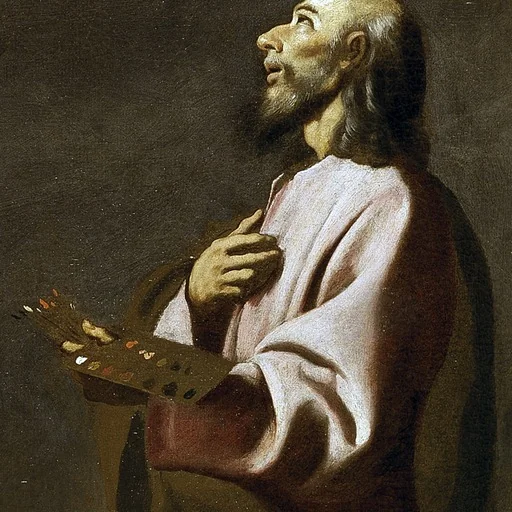
Francisco de Zurbarán was a Spanish Baroque painter. He is known primarily for his religious paintings depicting monks, nuns, and martyrs, and for his still-lifes. Zurbarán gained the nickname "Spanish Caravaggio",…