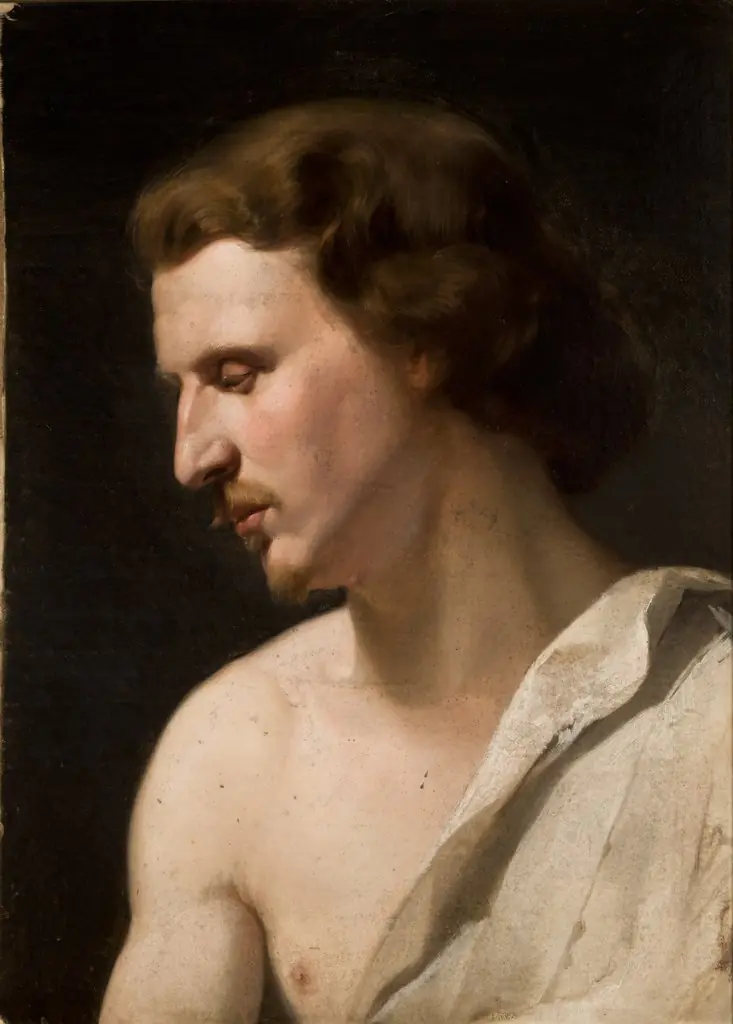
Artwork
Self-portrait
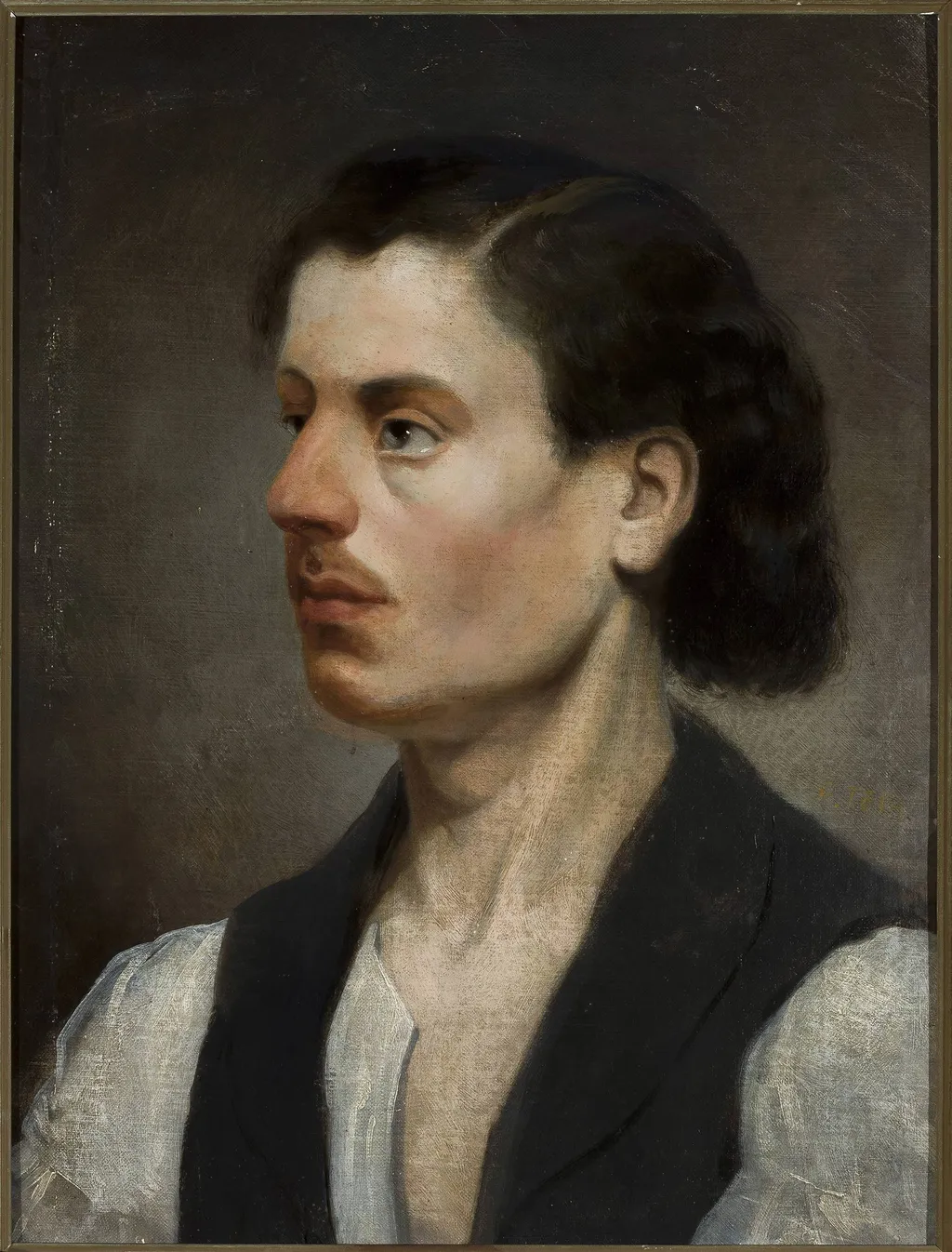
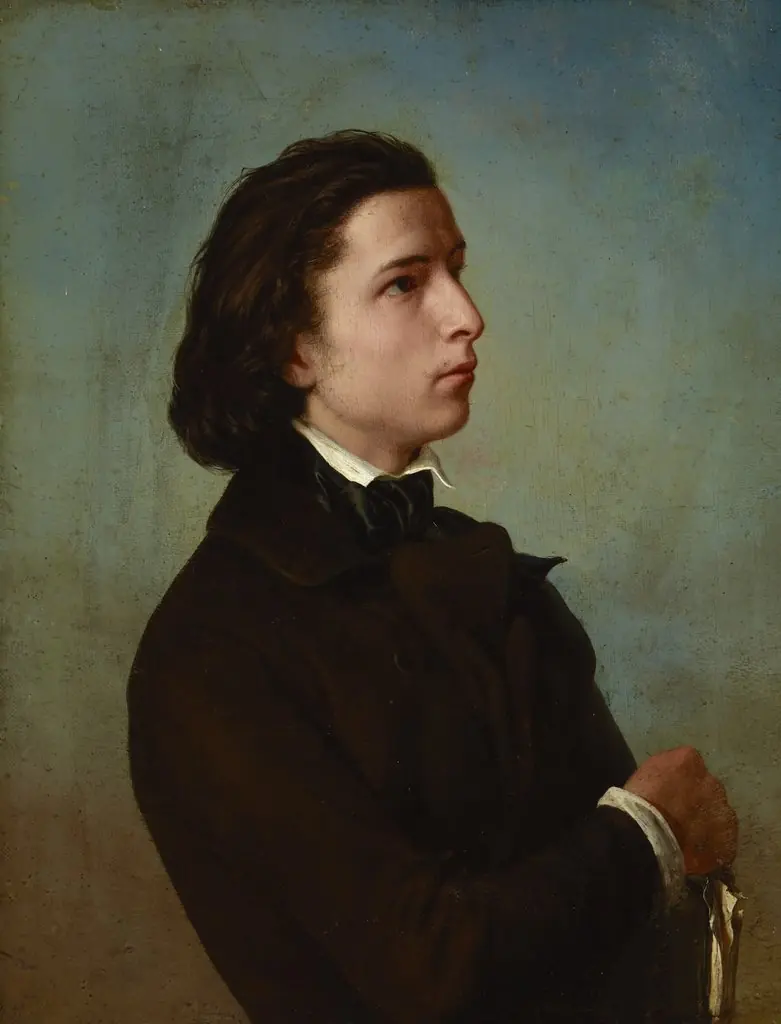
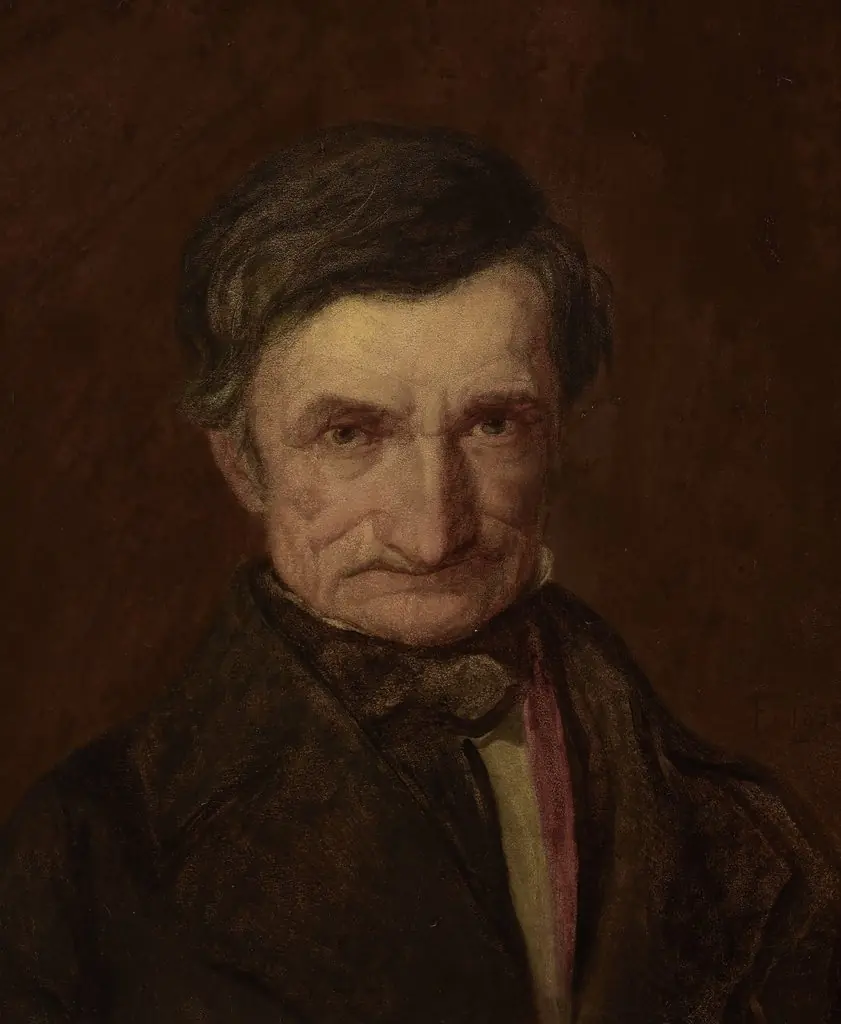
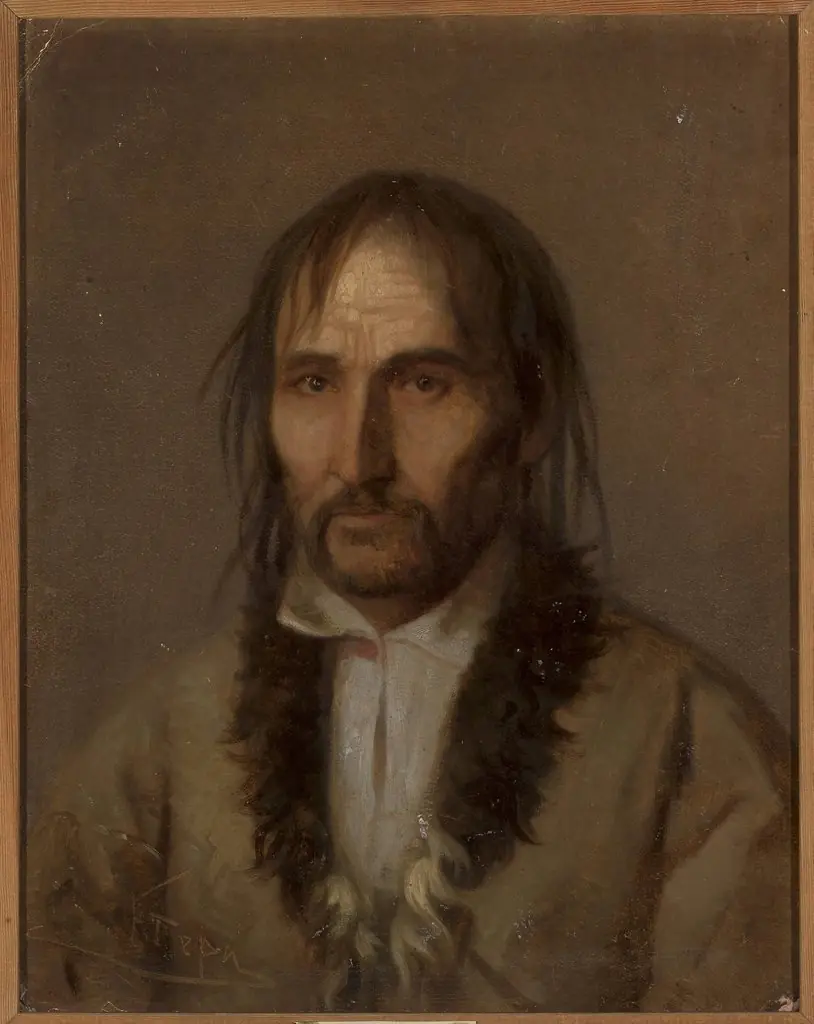
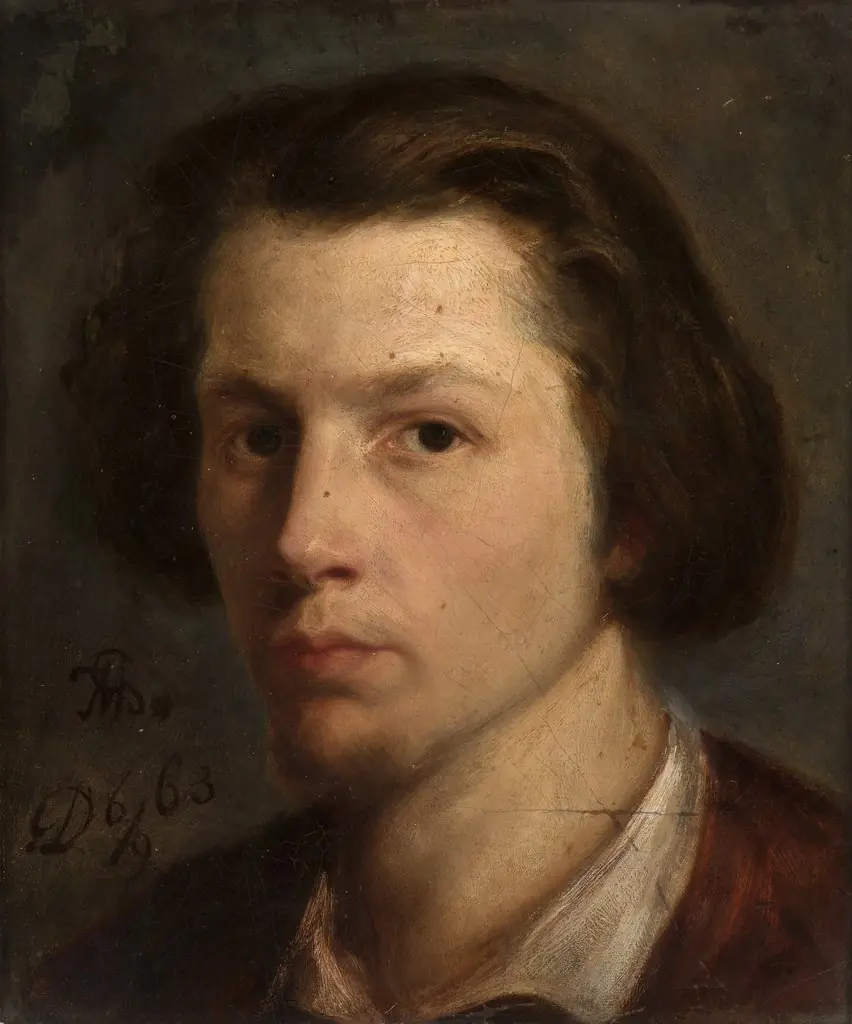
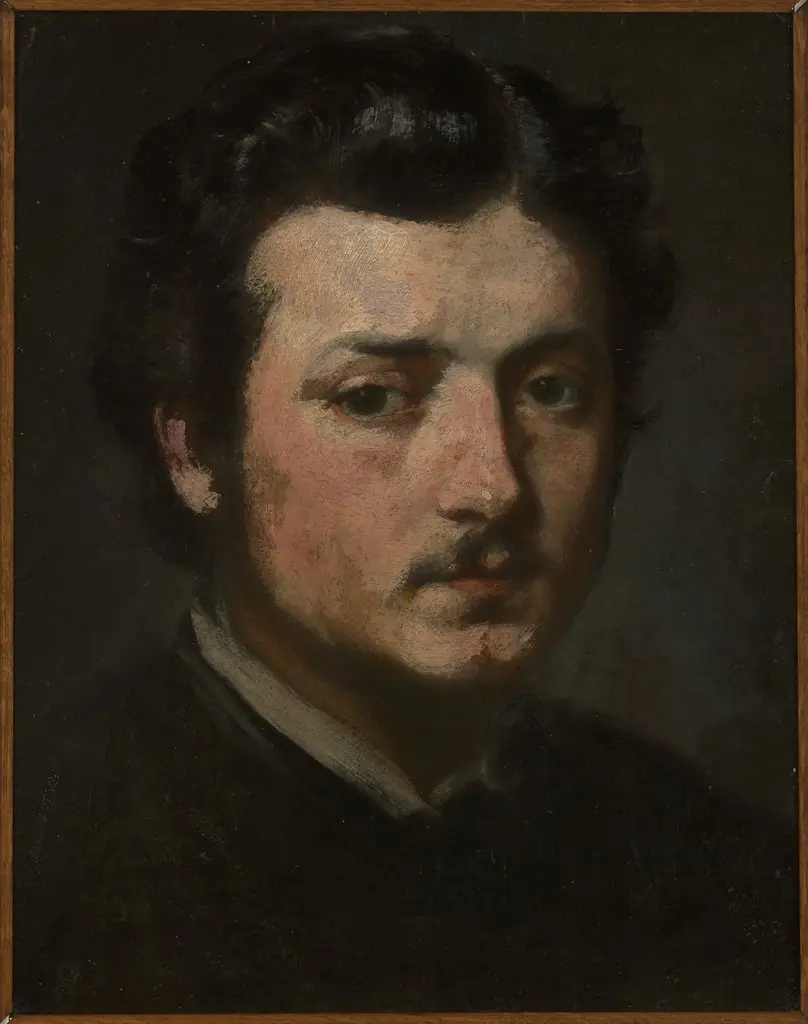
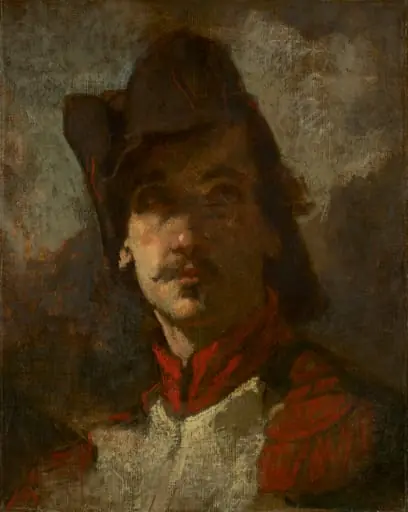
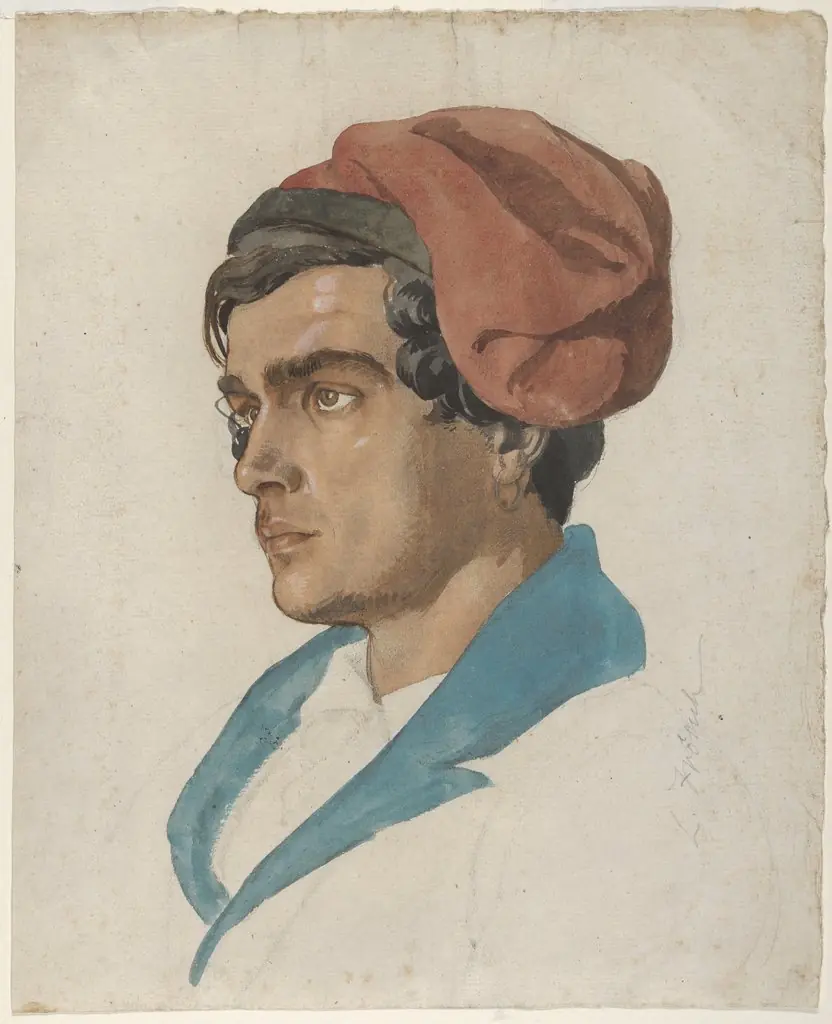
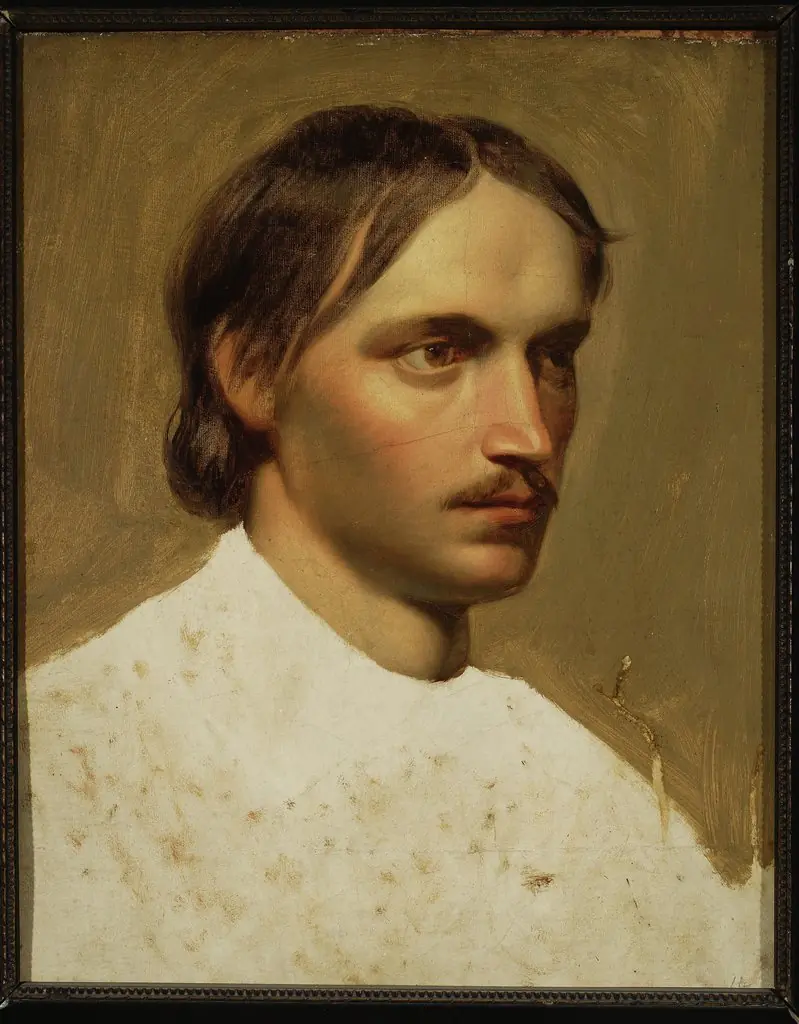
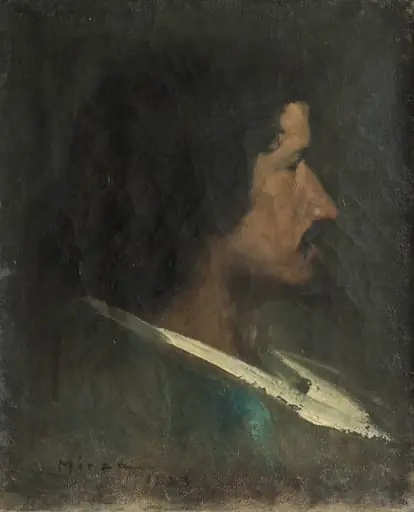
Self-portrait is an unspecified painting by the Biedermeier artist Franciszek Tepa. It dates from 1860 and is held in the collection of the National Museum in Warsaw.
About this work
Overview
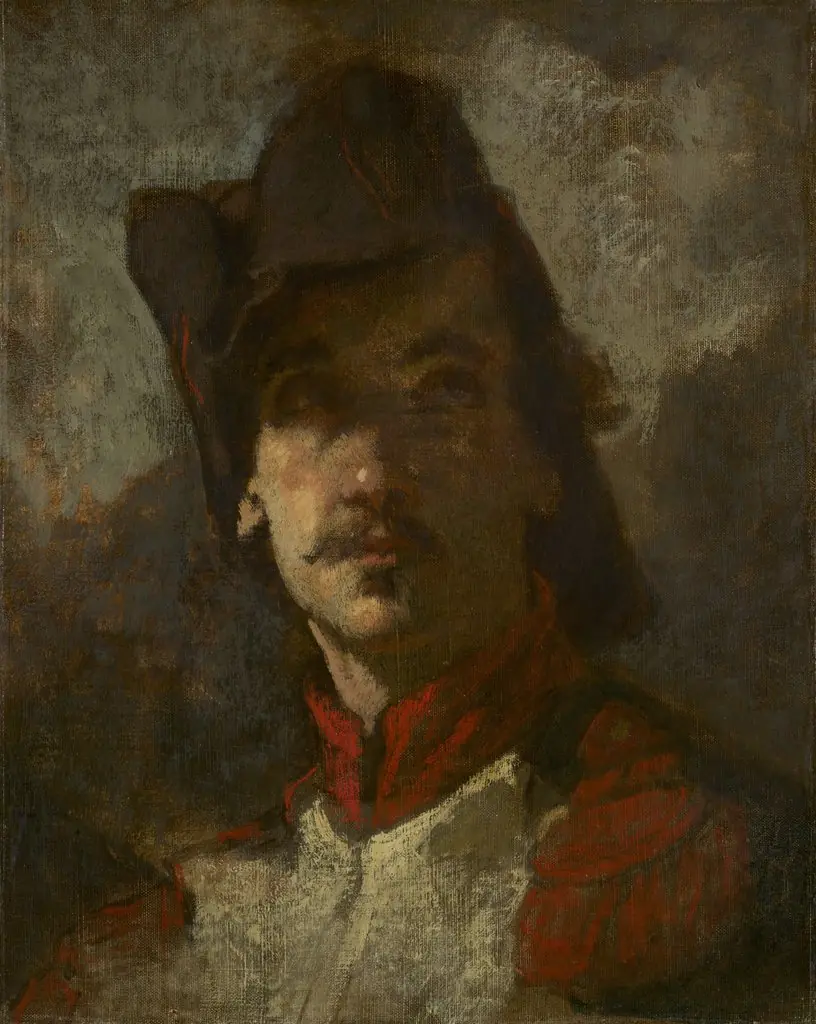
Self-portrait is an 1860 oil painting by the Polish realist artist Franciszek Tepa.
Self-portrait is an 1860 oil painting by the Polish realist artist Franciszek Tepa. The work measures 45.3 by 34 centimeters and is held in the collection of the National Museum in Warsaw. As a bust-length depiction of the artist, the painting captures Tepa at the age of thirty, in the same year he returned from Paris and settled permanently in Lwów. It is a significant example of mid-nineteenth century Polish portraiture, reflecting both the artist's academic training and his engagement with realist principles.
Subject & Meaning
The painting depicts the artist himself in a bust-length, three-quarter profile facing left. Tepa presents himself as a serious young man with dark, wavy, medium-length hair and a thin mustache, his eyes gazing away from the viewer to the left. He wears a dark vest or jacket with wide lapels over a light gray or off-white shirt with an open collar. The averted gaze and open collar suggest a Romantic sensibility, while the unidealized, direct presentation of his features aligns with the realist movement he helped define in Polish art. The portrait serves as a personal statement of identity from an artist deeply involved in the Polish independence movement.
Technique & Style
Tepa employed a restrained palette of browns, grays, black, and muted flesh tones to model the figure against a plain, dark brownish-gray background that lightens slightly behind the head. Light falls from the left, illuminating the left side of the face, neck, and shirt while casting the right side in softer shadow. The brushwork is visible and somewhat loose in the rendering of the clothing and background, demonstrating a painterly approach, while the face features smoother blending. This combination of precise facial modeling and broader handling of secondary elements reflects the academic realist style Tepa developed through his extensive studies across Europe.
History & Provenance
The painting was created in 1860, a pivotal year in Tepa's life when he completed his studies in Paris under Ary Scheffer and Léon Cogniet and returned to settle in Lwów. The canvas is signed in the lower right area. The specific ownership chain prior to its institutional acquisition is not documented in the available sources, but the work ultimately entered the collection of the National Museum in Warsaw, where it remains today as part of the museum's collection of Polish painting.
Context
Franciszek Tepa was a central figure in mid-nineteenth century Polish art, recognized for his portraits and role in pioneering Polish Orientalism. His artistic education was exceptionally broad, spanning institutions in Lwów under Jan Maszkowski, Vienna under Ferdinand Waldmüller, Munich under Wilhelm Kaulbach, and Paris under Ary Scheffer and Léon Cogniet. Beyond his artistic output, Tepa was politically active during the Revolutions of 1848, producing portraits of November Uprising leaders like Joachim Lelewel and Józef Dwernicki, which led to his imprisonment in Vienna. A formative 1852 trip through Greece, Egypt, and Palestine with Adam Józef Potocki yielded early examples of Polish Orientalism and antiquities later displayed in the Ossolineum.
Legacy
After returning to Lwów in 1860, Tepa became a leading local artistic figure, producing folk-life and landscape studies for Count Włodzimierz Dzieduszycki and declining a professorship at the Kraków Academy of Fine Arts to remain in the city. He was renowned for his miniatures on ivory and taught students, most notably Franciszek Żmurko. The geopolitical shifts following World War II caused many of his works to remain in Lwów when the area passed to Ukrainian control. His self-portrait in Warsaw survives as a key record of his likeness and an important artifact of Polish realist portraiture from the period.
Own this work as a print
Artist & collection
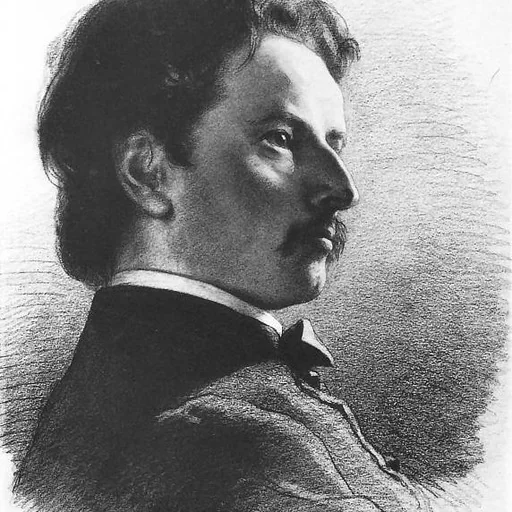
Artist
Franciszek Tomasz Tepa (17 September 1829, in Lwów – 23 December 1889, in Lwów) was a Polish mid-19th century realist painter who specialized in portraits and Orientalist themes.