Artwork
Eteocles and Polynices
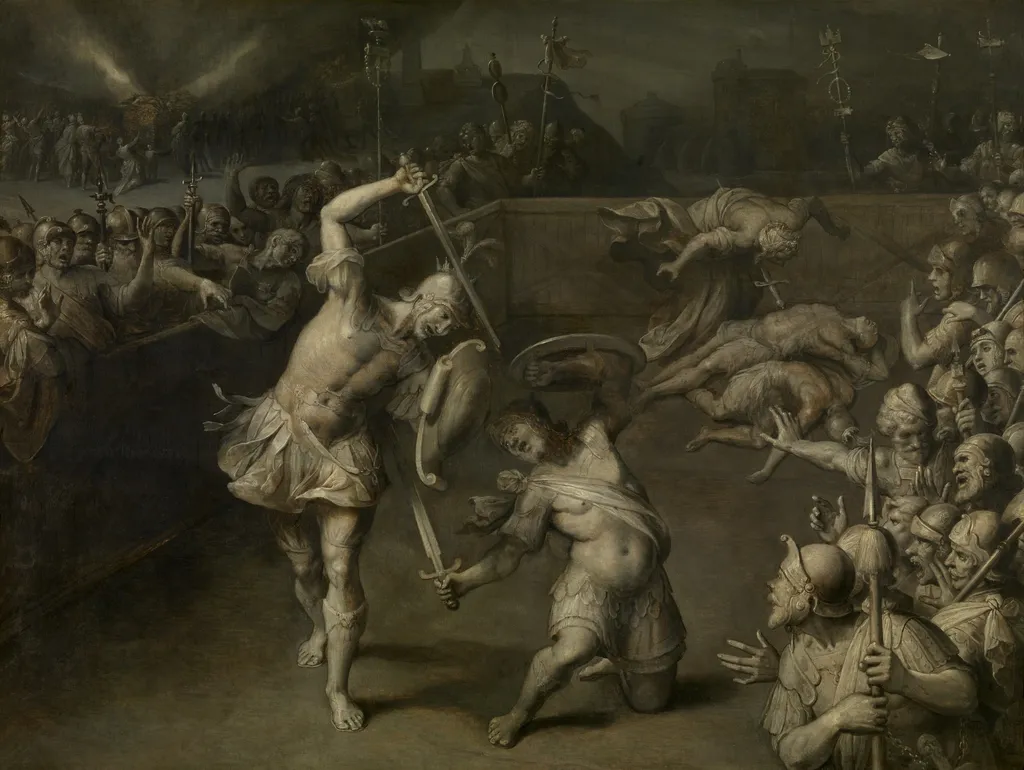
Eteocles and Polynices is an oil painting by the Flemish Baroque painting artist Frans Francken the Younger. It dates from 1621 and is held in the collection of the Royal Museum of Fine Arts Antwerp.
About this work
Overview
It is a self-contained composition, emphasizing narrative intensity over religious or allegorical function.
Painted around 1621 by Frans Francken the Younger, this oil-on-canvas work depicts a moment from Greek myth in which the brothers Eteocles and Polynices kill each other in single combat. Created during Francken’s active years in Antwerp, the painting reflects his engagement with classical narratives, distinct from his more common collaborative altar pieces. It is a self-contained composition, emphasizing narrative intensity over religious or allegorical function.
Subject & Meaning
The scene illustrates the tragic climax of the Theban legend, in which the twin brothers, divided by a curse and competing for the throne, meet in mortal combat. Their mutual destruction fulfills their father Oedipus’s prophecy, symbolizing the ruin wrought by familial strife and ambition. The painting captures not just violence, but the inevitability of fate, with the onlookers in the background serving as silent witnesses to a doomed outcome.
Technique & Style
Francken employs chiaroscuro to heighten the drama, isolating the brothers’ muscular forms against a shadowed backdrop. Their contorted bodies, bare torsos, and tangled limbs convey violent motion, while the faint illumination draws focus to the clash of swords. The background crowd is rendered with looser brushwork, contrasting the detailed anatomy of the central figures. This interplay of precision and suggestion aligns with Flemish Baroque tendencies toward emotional immediacy and theatrical composition.
History & Provenance
The painting has remained in the collection of the Royal Museum of Fine Arts Antwerp since at least the 19th century, likely acquired as part of the city’s broader effort to preserve regional artistic heritage. Its attribution to Francken the Younger is consistent with his known output of mythological subjects during the early 1620s. No significant alterations or reworkings are recorded, and its condition reflects careful preservation over centuries.
Context
In early 17th-century Antwerp, mythological themes were popular among collectors seeking intellectual and moral narratives. Francken’s work responded to this demand, blending classical sources with contemporary visual language. While many artists focused on grand historical cycles, Francken often chose pivotal, intimate moments, like this fratricidal duel, to convey complex human consequences within a compact, emotionally charged frame.
Legacy
Though less widely known than his religious works, this painting exemplifies Francken’s skill in translating myth into visceral drama. It stands as a representative example of Flemish Baroque narrative painting, influencing later artists interested in psychological tension and classical tragedy. Its continued presence in Antwerp’s public collection ensures its role as a reference for the region’s engagement with ancient stories through early modern art.
Own this work as a print
Artist & collection
Artist
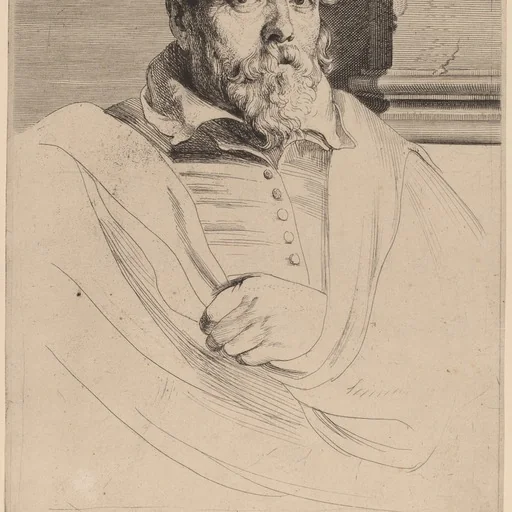
Frans Francken the Younger (1581, Antwerp – 6 May 1642, Antwerp) was a Flemish painter and the best-known and most prolific member of the large Francken family of artists.

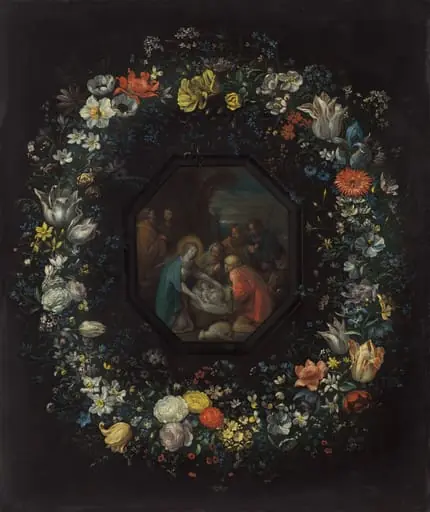
- Samson and the Philistines
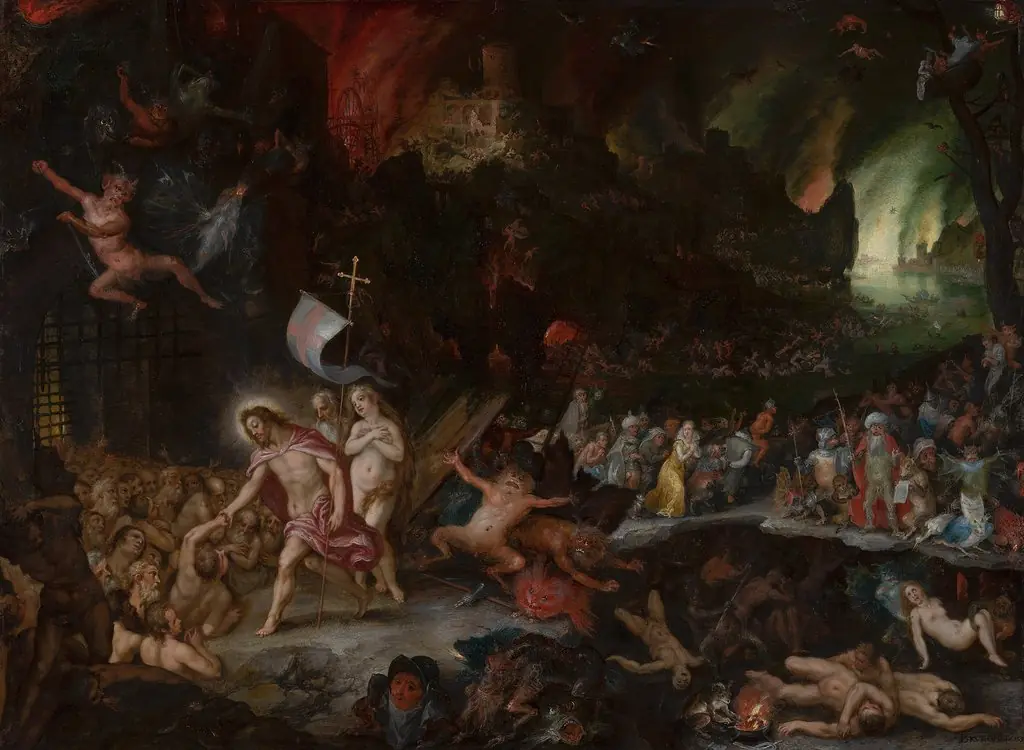 Christ's Descent into Limbo
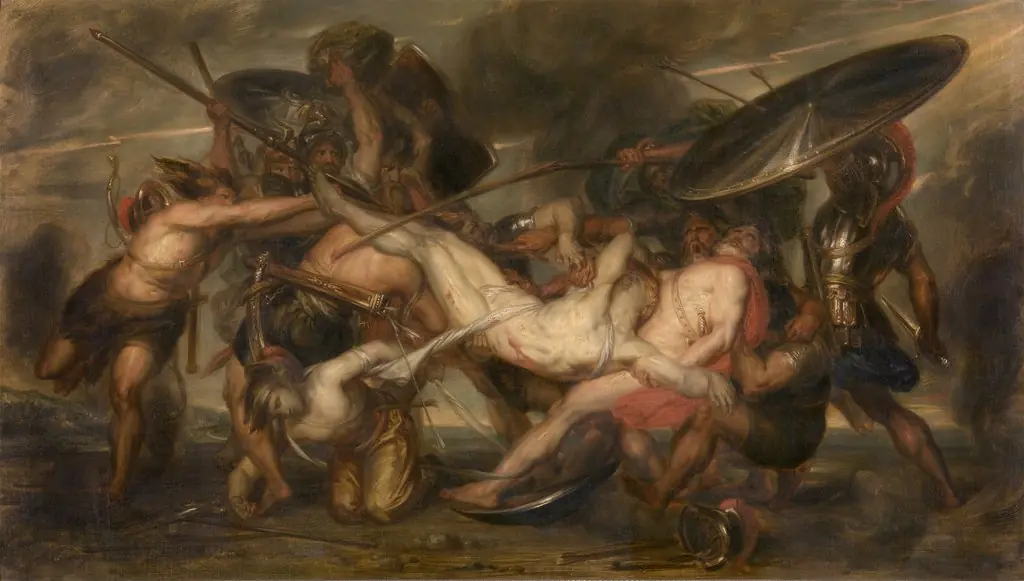 The Greeks and the Trojans Fighting over the Body of Patroclus
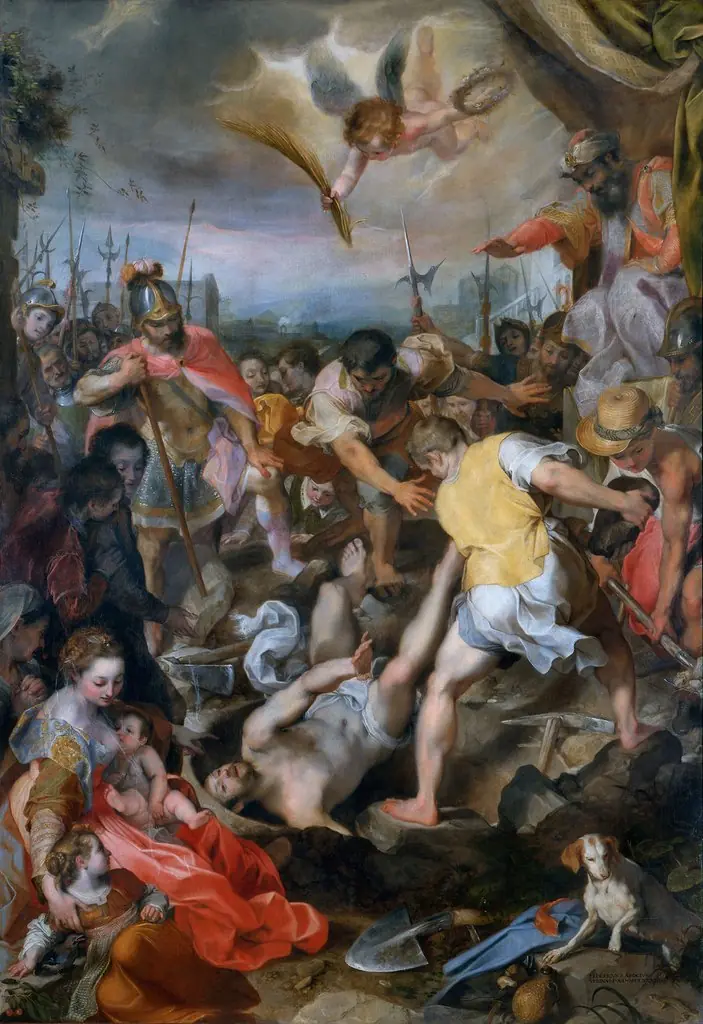 Martirio di san Vitale
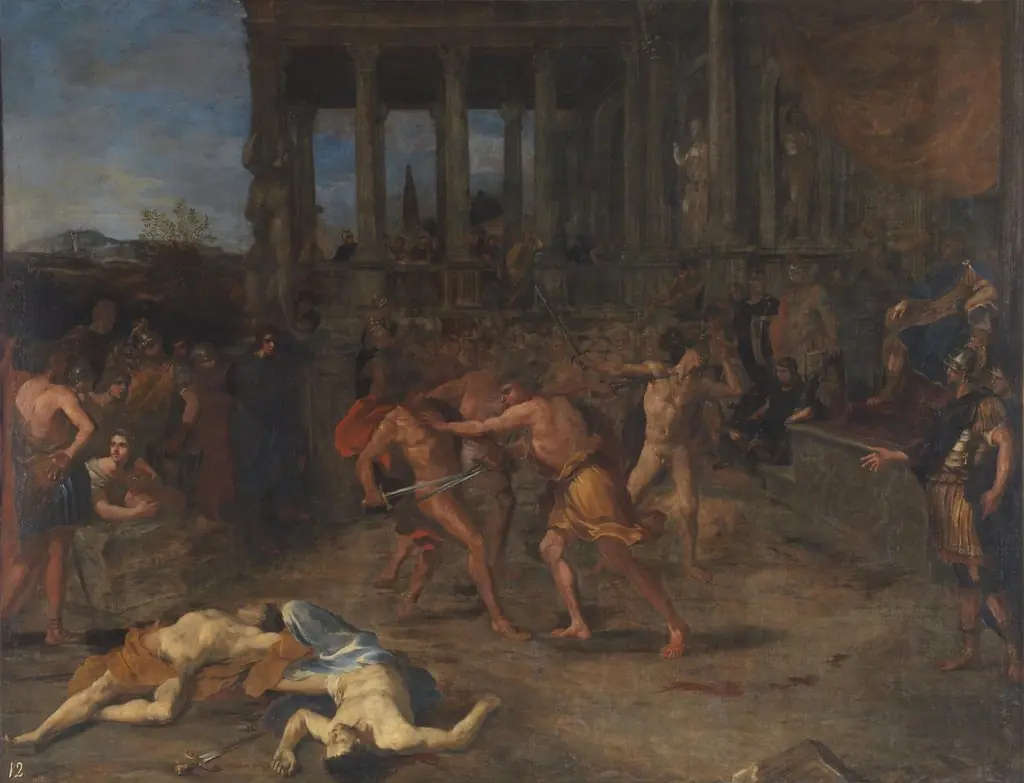 Gladiators Fighting
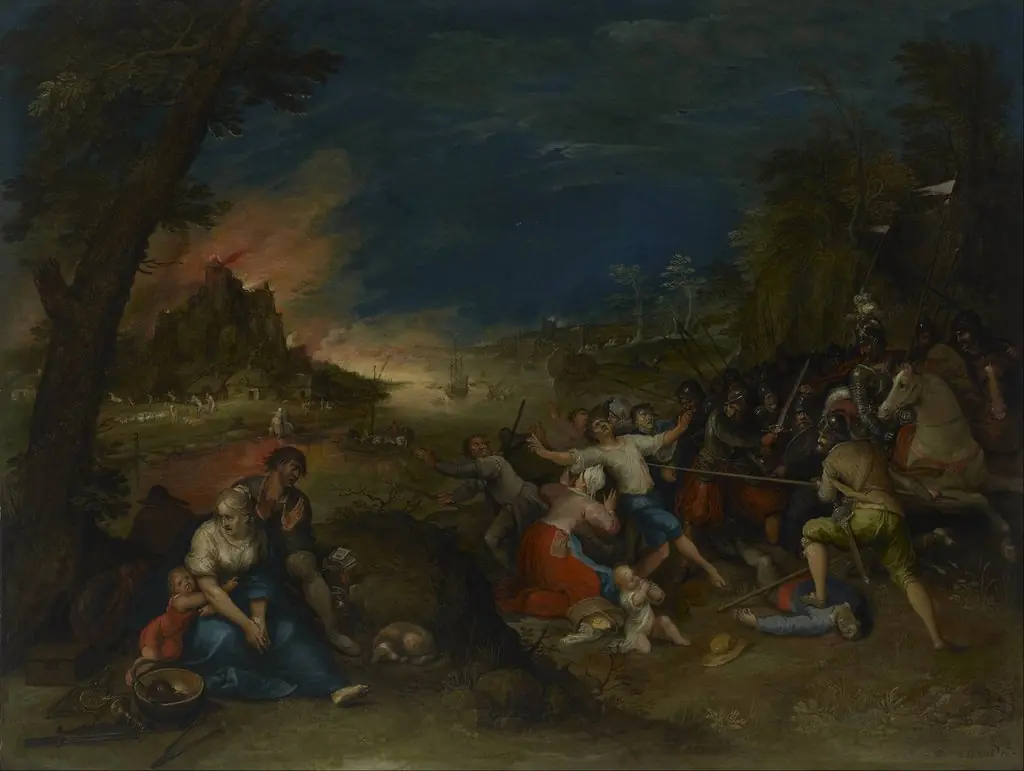 Allegory of War
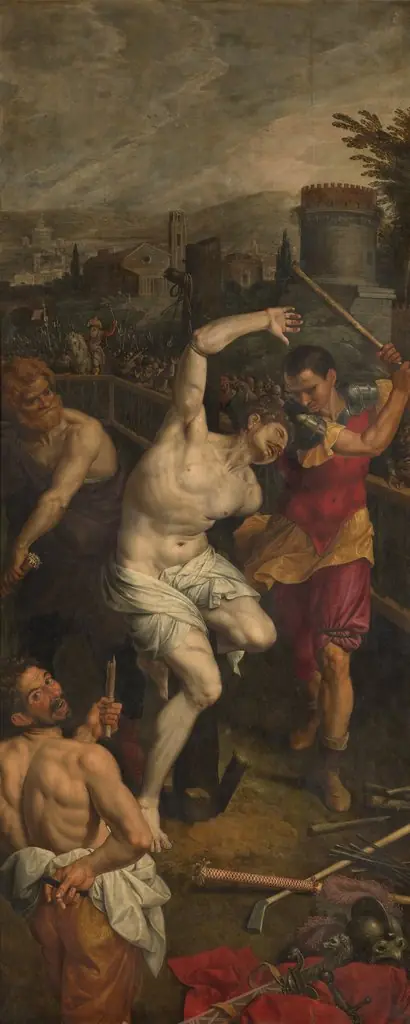 The Martyrdom of Saint Sebastian of Rome
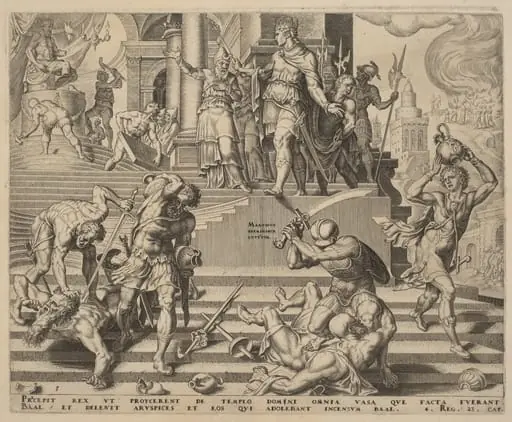 The Destruction of the Temple of Baal and the Slaughter of His Priests
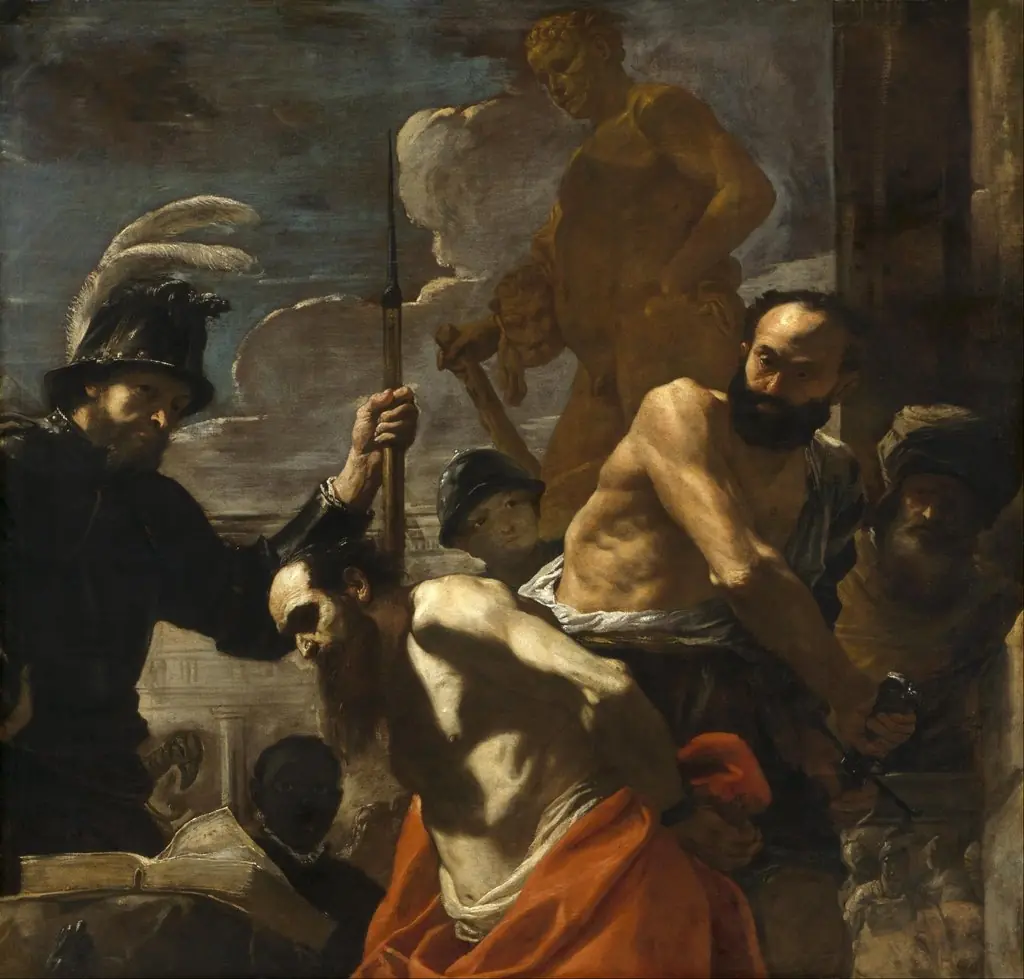 The Martyrdom of Saint Paul
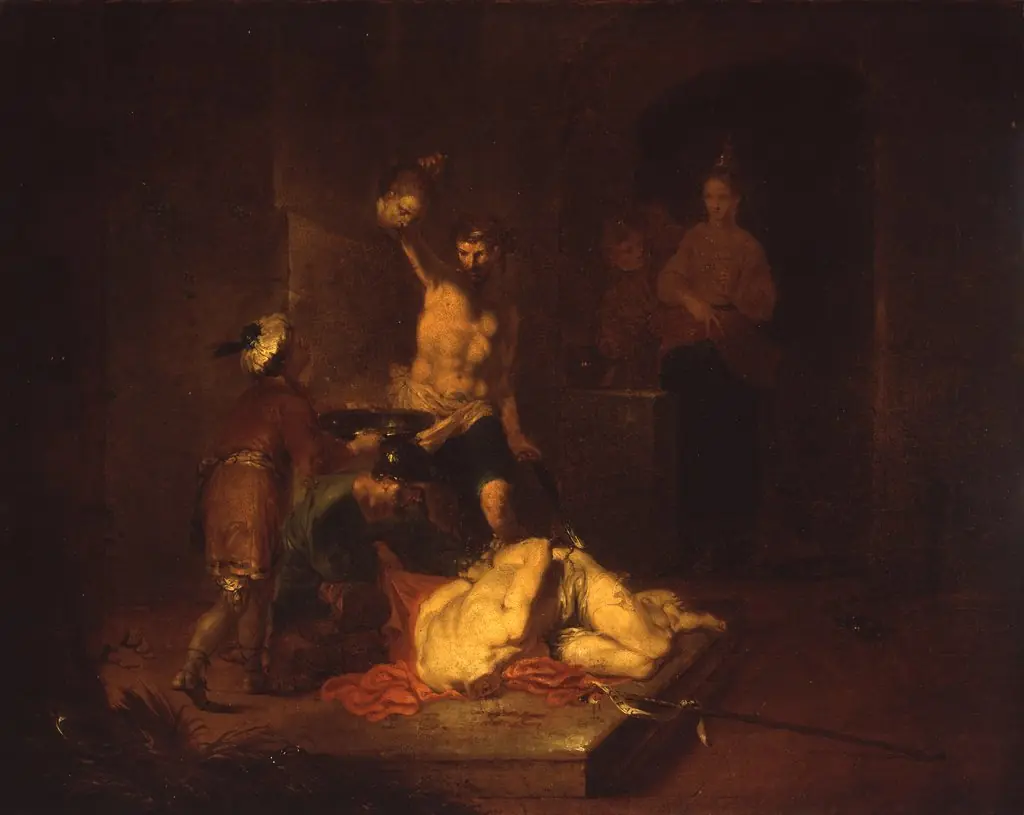 The Beheading of John the Baptist
 The Meeting of David and Abigail
 Die “Dulle Griet” unternimmt einen Raubzug vor der Hölle