Artwork
Allegory on the Abdication of Emperor Charles V in Brussels
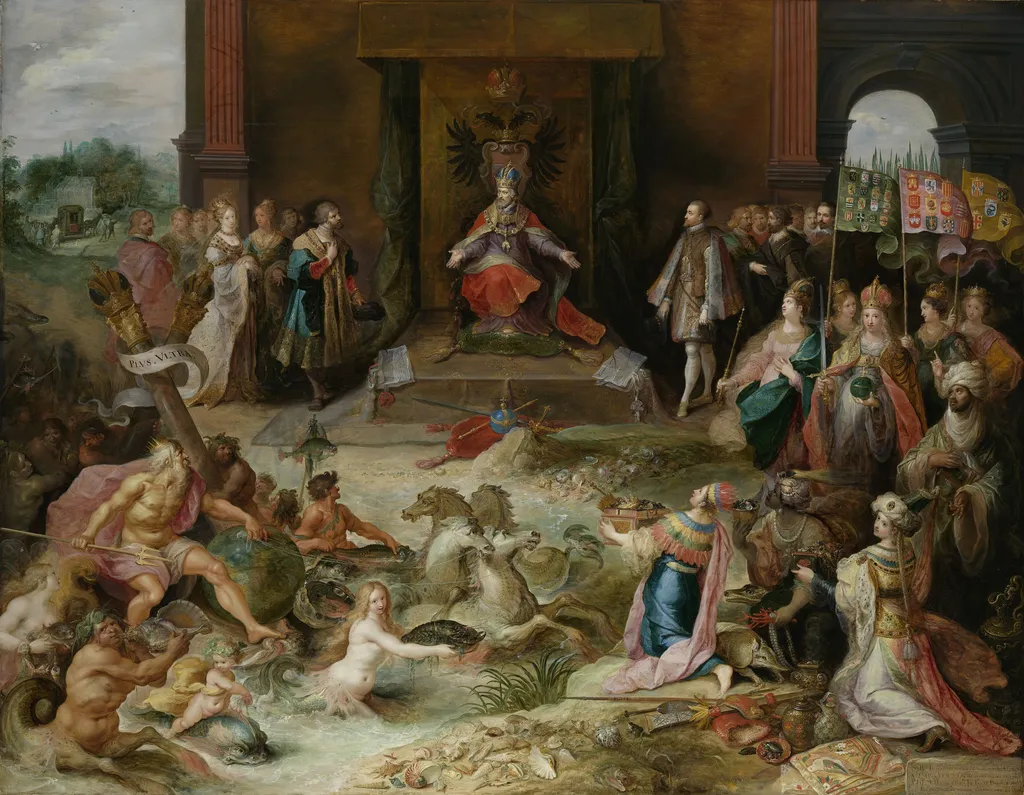
Allegory on the Abdication of Emperor Charles V in Brussels is an oil painting by the Flemish Baroque painting artist Frans Francken the Younger. It dates from 1635 and is held in the collection of the Rijksmuseum.
About this work
Subject & Meaning
Created in 1635 by Frans Francken the Younger, this oil painting serves as an allegory representing the abdication of Emperor Charles V in Brussels.
Created in 1635 by Frans Francken the Younger, this oil painting serves as an allegory representing the abdication of Emperor Charles V in Brussels. The work visually interprets the historical event where the emperor relinquished his imperial powers. While the specific iconographic details of the figures are not described in the provided sources, the classification as an allegory indicates that the scene uses symbolic representation to convey the significance of this political transition rather than offering a literal documentary record of the ceremony.
Technique & Style
Created in 1635, this allegorical painting by Frans Francken the Younger is executed in oil paint on a panel support. The work measures 134 cm in height and 172 cm in width, reflecting the substantial scale typical of significant historical allegories from the Antwerp school. As an allegory, the composition utilizes symbolic figures to depict the abdication of Emperor Charles V, adhering to the genre conventions of the period.
The medium of oil on panel was a standard and durable choice for high-quality Flemish painting of the seventeenth century.
History & Provenance
The painting was created in Antwerp in 1635 as an allegorical representation of Emperor Charles V's abdication in Brussels. It was produced by Frans Francken the Younger, who specialized in allegorical subjects, and is executed in oil on panel. The work entered the collection of the Rijksmuseum and the National Art Gallery of the Netherlands, where it remains on display.
The piece measures 172 cm in width and 134 cm in height, reflecting its substantial scale for a 17th-century allegory.
The painting is part of the Rijksmuseum's collection in Amsterdam, where it is catalogued under inventory number SK-A-1855. It has been displayed in the museum's permanent exhibition of Dutch Golden Age works and featured in the special exhibition 'Masters of the Golden Age' in 2015.
Overview
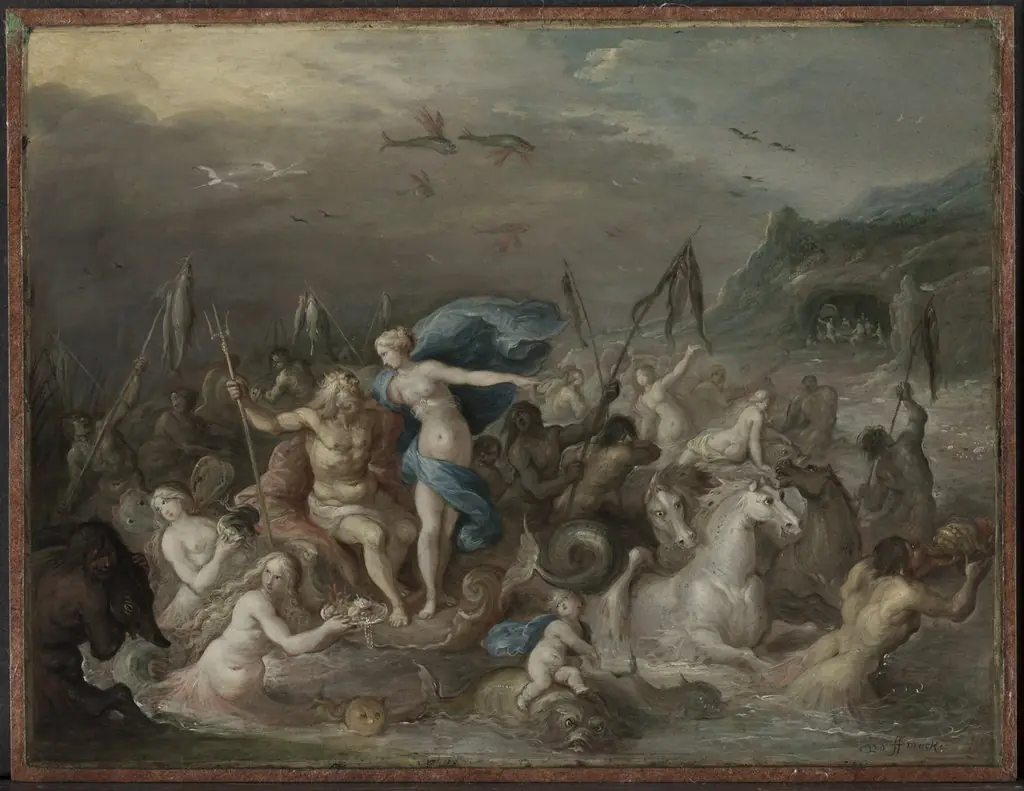
Created in 1635 by Frans Francken the Younger, this oil painting belongs to the Flemish Baroque tradition and is presently housed in the Rijksmuseum. It presents an allegorical interpretation of the abdication of Emperor Charles V, juxtaposing regal ceremony with a turbulent marine tableau.
Context
The painting reflects the political upheaval surrounding Charles V’s abdication in 1555, a moment that reshaped the Habsburg dominions. By portraying the emperor’s relinquishment as a split between ordered governance and chaotic aftermath, Francken engages contemporary concerns about the stability of imperial power.
Own this work as a print
Artist & collection
Artist
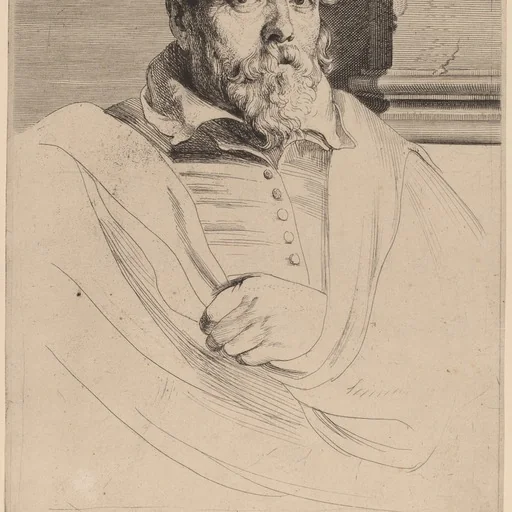
Frans Francken the Younger (1581, Antwerp – 6 May 1642, Antwerp) was a Flemish painter and the best-known and most prolific member of the large Francken family of artists.

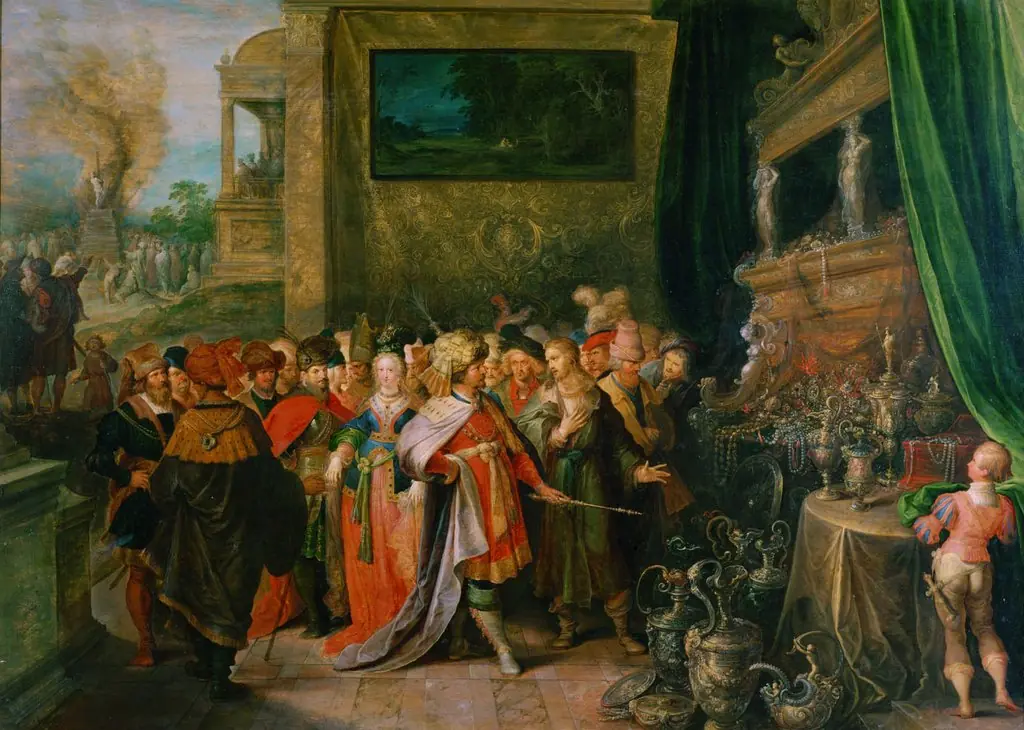 Croesus displays his treasures to Solon
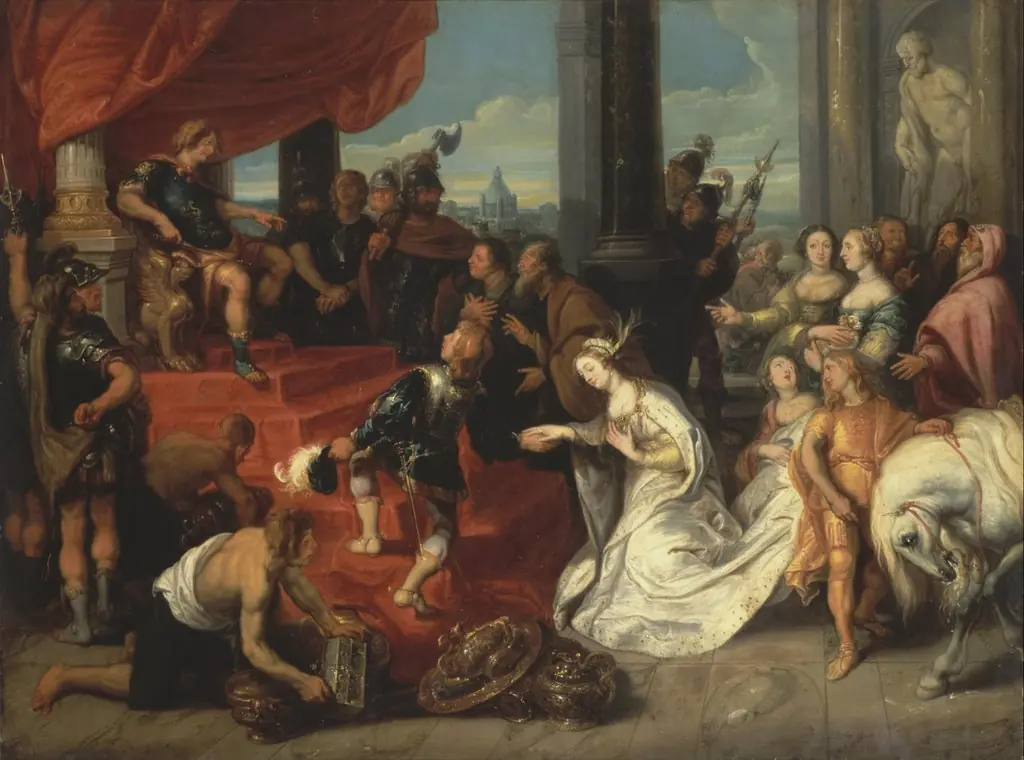 The Magnanimity of Scipio Africanus
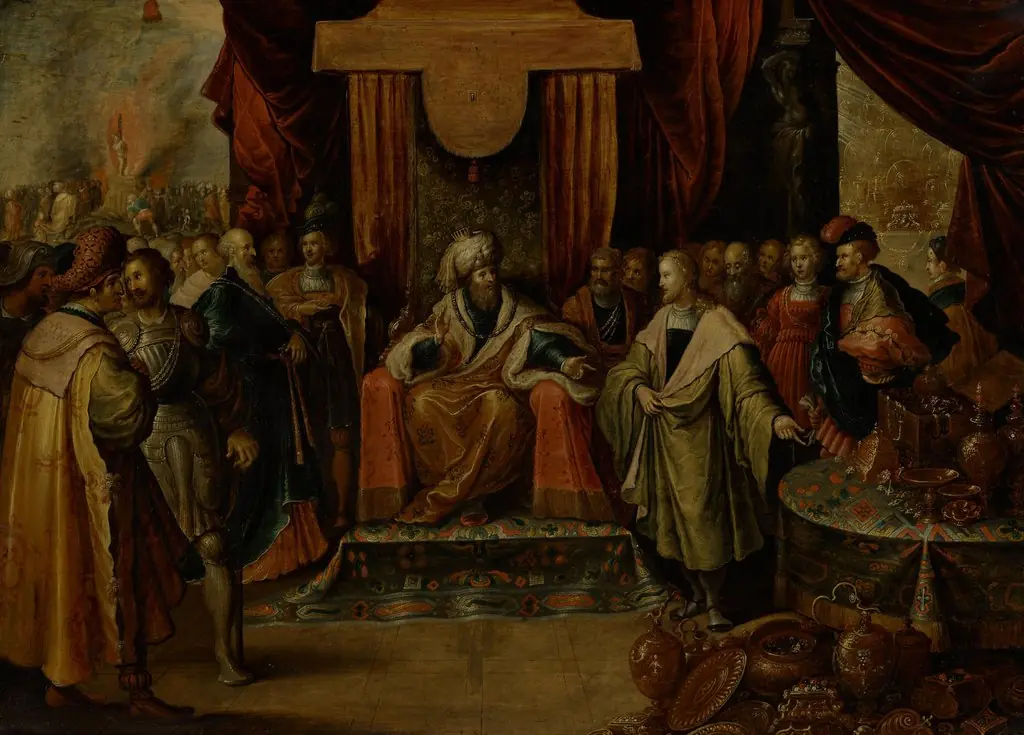 Solon und Krösus
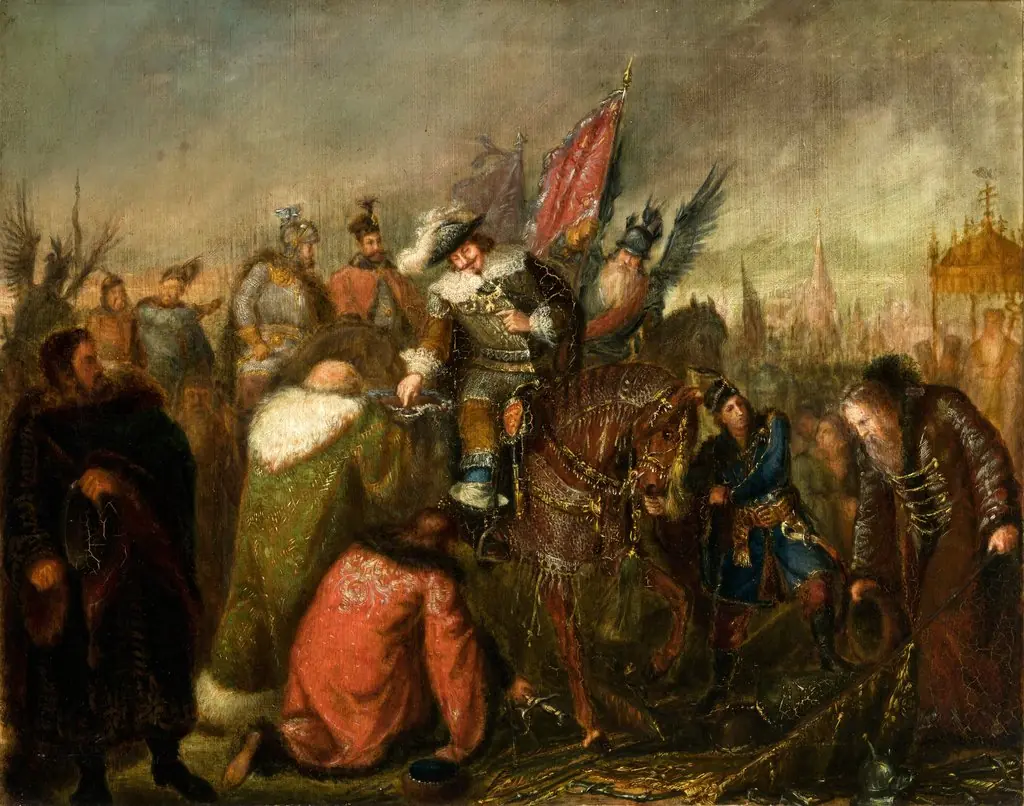 Władysław IV after the Battle of Smoleńsk
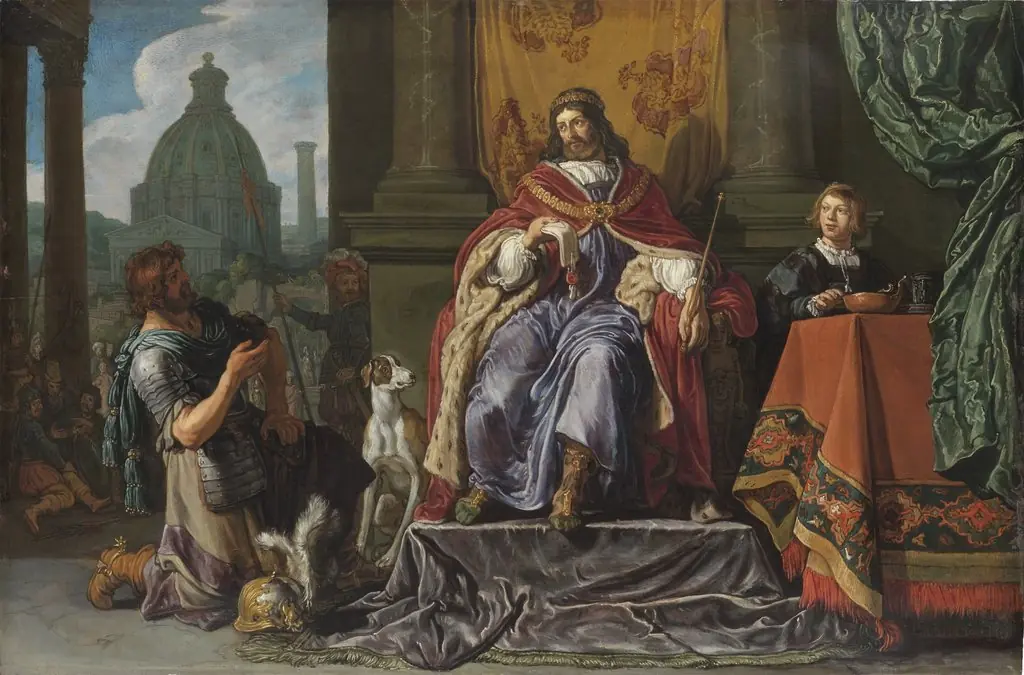 David Gives Uriah a Letter for Joab
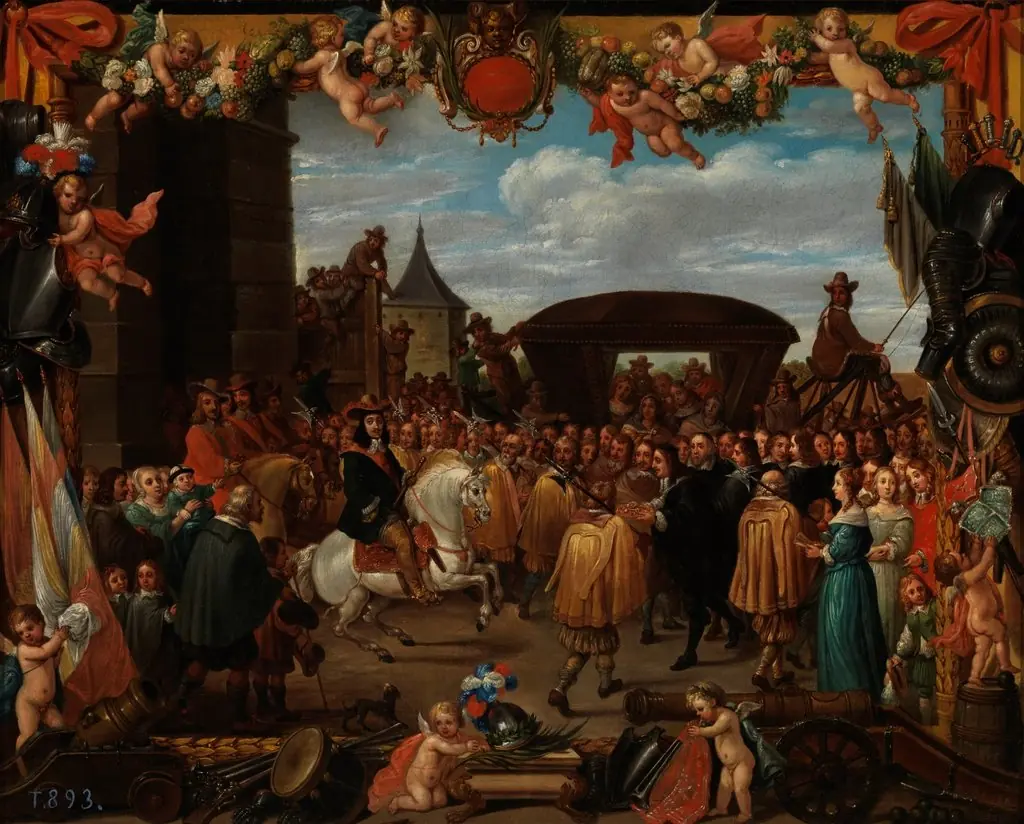 Entrada triunfal de don Juan José de Austria (?)
 The Worship of the Golden Calf
 Alexander en Diogenes
 Alboin   and  Rosamunde
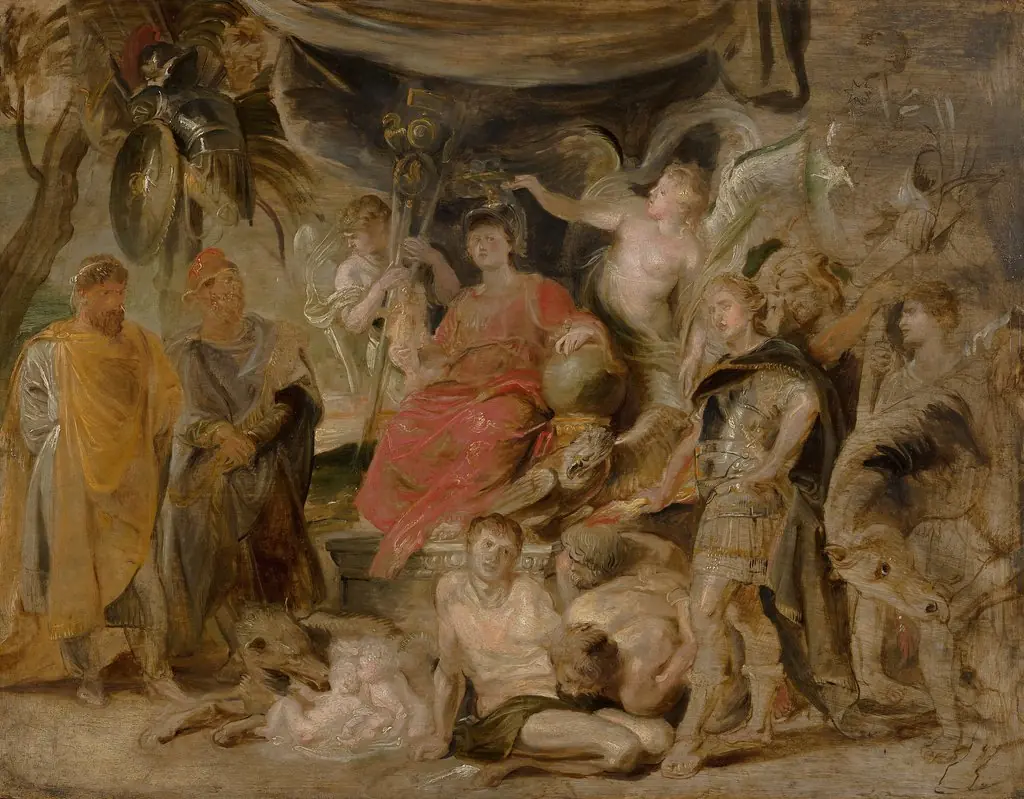 The Triumph of Rome: The Youthful Emperor Constantine Honouring Rome
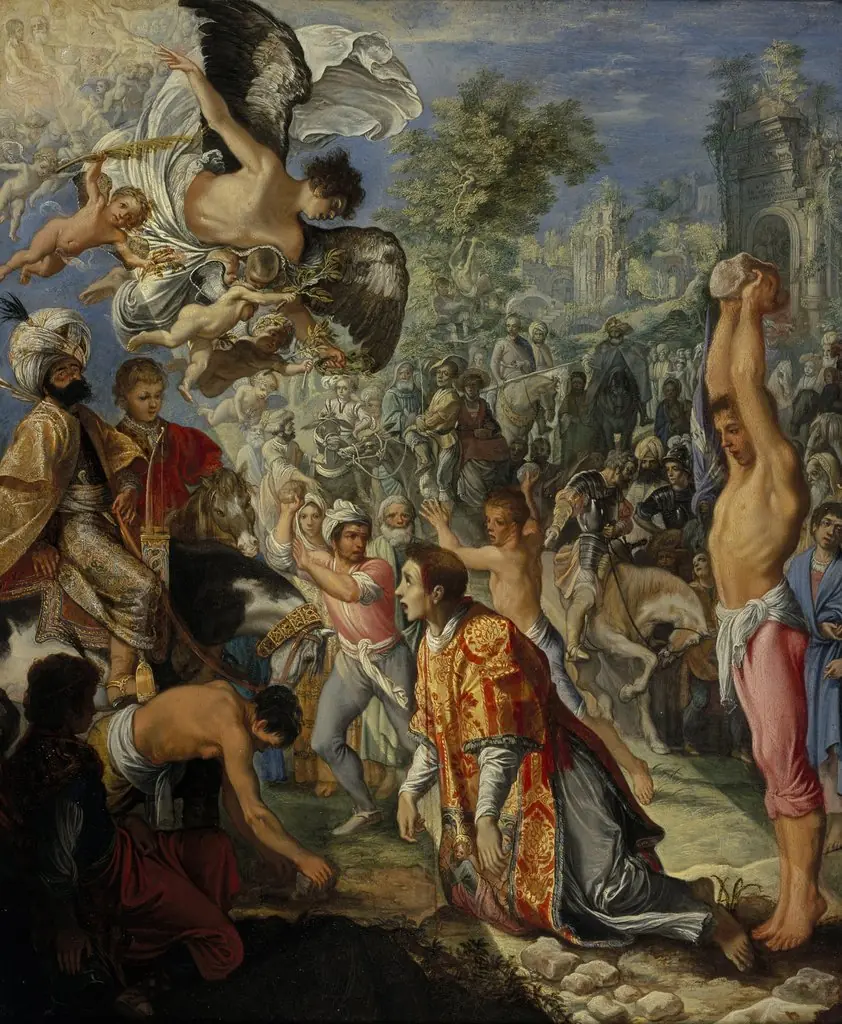 The Stoning of Saint Stephen
- Allegory of the wedding of Archduke Ferdinand Karl and Anna de' Medici