Artwork
Brothel Scene
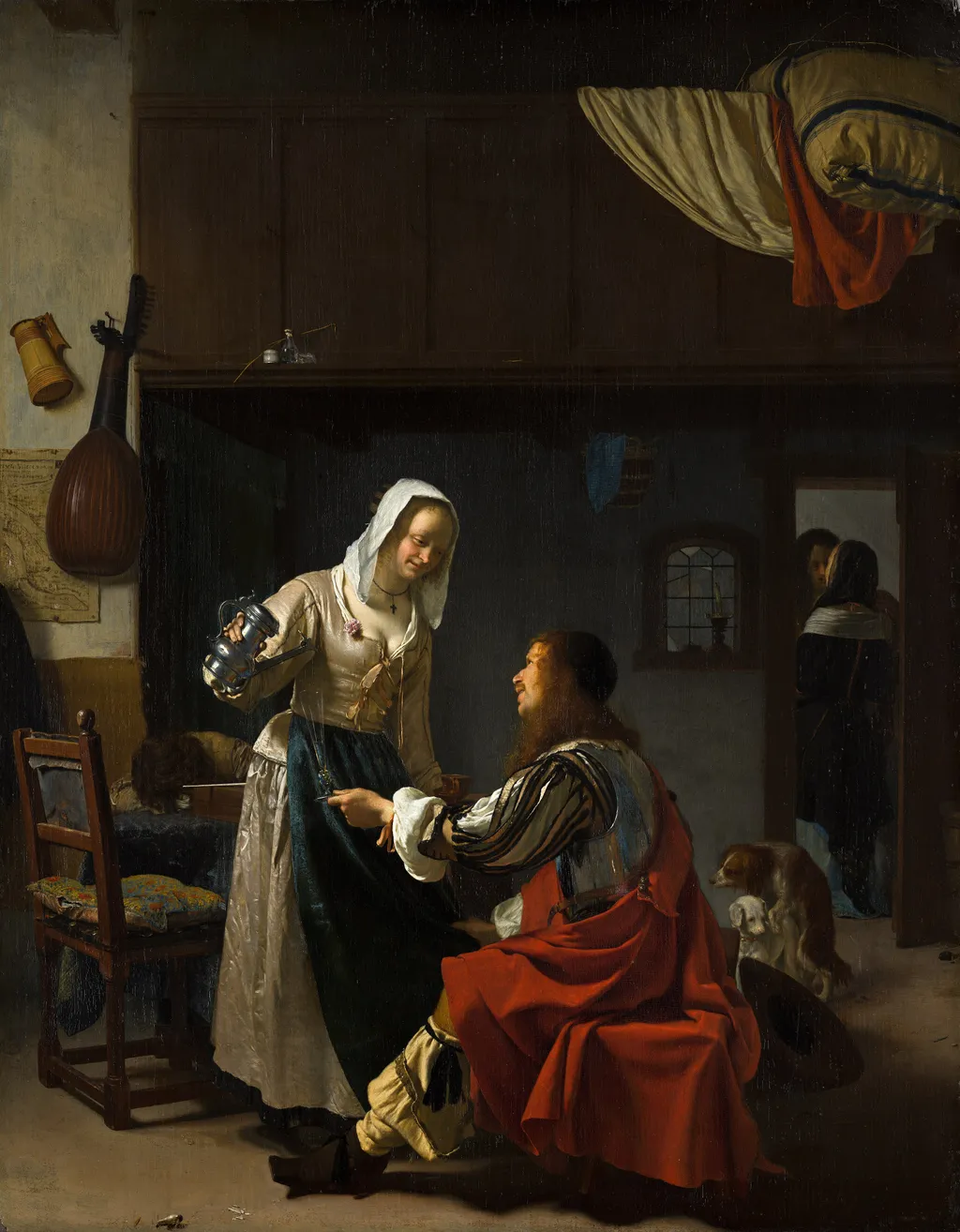
Brothel Scene is an oil painting by the Dutch Golden Age artist Frans van Mieris the Elder. It dates from 1659 and is held in the collection of the Mauritshuis.
About this work
Brothel Scene is a painting by Frans van Mieris the Elder, dated around 1659. It’s an oil work on a wooden panel, typical of the Dutch Golden Age.
The piece was completed in the late 1650s and entered the Mauritshuis collection on 29 January 1960. It shows the kind of intimate interior genre that van Mieris often explored.
If you’re curious to see more, check out the museum: Mauritshuis.
Subject & Meaning
Despite the licentious subject, the woman wears a cross necklace, a detail often used in Dutch genre scenes to juxtapose earthly vice with moral reminders.
Frans van Mieris the Elder's painting depicts a soldier in armor and a prostitute sharing an intimate moment in a brothel. The woman, characterized by a plunging neckline, pours wine for the man while he grasps her apron. The setting is identified as a house of ill repute through various symbolic details: a lute hanging on the wall represents love or lust, while sleeping figures, disheveled bedding, and a broken chair suggest moral decay.
A second couple visible through a doorway likely includes a self-portrait of the artist alongside a madame. The most explicit symbol is a pair of mating dogs in the foreground, which were painted over during the modest nineteenth century before being revealed again in the 1960s. Despite the licentious subject, the woman wears a cross necklace, a detail often used in Dutch genre scenes to juxtapose earthly vice with moral reminders.
Technique & Style
The work is executed in oil paint on a wooden panel support. Van Mieris employed the smooth, 'gladde' technique typical of the Leiden fijnschilders, rendering brushstrokes nearly invisible while achieving meticulous detail in textures, reflections on metal vessels, and even a straw protruding from a mattress. Stylistically, the painting combines high realism with genre symbolism, the lute, the copulating dogs, and the intimate interaction of the central couple, all characteristic of his fine-art approach.
Condition notes indicate that the male dog was overpainted in the prudish nineteenth century and was revealed again only after a restoration in the 1960s.
History & Provenance
Executed circa 1658–1659 by Frans van Mieris the Elder, this oil-on-panel work first appears in records within the collection of Lady Seaforth. Ownership subsequently passed to Ch. Bredel until May 1875, followed by A. Devy of London until June 1876.
The Earl of Dudley acquired the piece next, selling it to dealer E. Steinkopf in June 1892. By 1935 the painting was held by Duits and Company before entering the Amsterdam collection of Fritz Mannheimer in 1940. In 1941 the Dienststelle Mühlmann purchased the work for Adolf Hitler's planned Führermuseum in Linz.
Following the war the painting was transferred to the Stichting Nederlands Kunstbezit and later the Dienst Verspreide Rijkscollecties. It officially entered the Mauritshuis collection in The Hague on 29 January 1960, where it remains. It was later included in the exhibition 'Vermeer and the Masters of Genre Painting: Inspiration and Rivalry.'
Context
Brothel Scene is regarded as a hallmark of Frans van Mieris the Elder's genre output, exemplifying the meticulous finish of the Leiden fine-painting tradition pioneered by Gerard Dou. Art historians note its sophisticated symbolic program, including the lute, the cross-adorned collar, and the previously overpainted coupling dogs, as indicators of a brothel setting. The work's provenance, which includes its intended destination for the Führermuseum and transfer to the Mauritshuis in 1960, has been cited in scholarship on the wartime dispersal of looted art.
Its inclusion in the exhibition 'Vermeer and the Masters of Genre Painting: Inspiration and Rivalry' underscores its significance within Dutch Golden Age genre painting.
Legacy
The painting is widely recognized as a benchmark of Dutch Golden Age genre scenes, noted for its meticulous detail and technical finesse that exemplify the 'fijnschilder' style of the Leiden school. Scholars cite it as a seminal example of the period's nuanced portrayal of leisure and eroticism, and its inclusion in major exhibitions such as Vermeer and the Masters of Genre Painting underscores its standing in art history. The work's symbolism, particularly the lute, the drinking vessels, and the previously hidden canine coupling, has been extensively analyzed in scholarship, reinforcing its reputation as a richly encoded narrative of 17th-century tavern life.
Since its acquisition by the Mauritshuis in 1960, the piece has remained a focal point of scholarly discourse and public display, shaping contemporary understanding of van Mieris's legacy.
Overview
Frans van Mieris the Elder painted Brothel Scene, also known as Scene in an Inn, around 1658–1659. This oil on panel work is characteristic of the Dutch Golden Age, depicting an intimate interior genre scene. The painting has been part of the Mauritshuis collection in The Hague since January 29, 1960, where it contributes to the museum's representation of 17th-century Dutch art.
Own this work as a print
Artist & collection
Artist
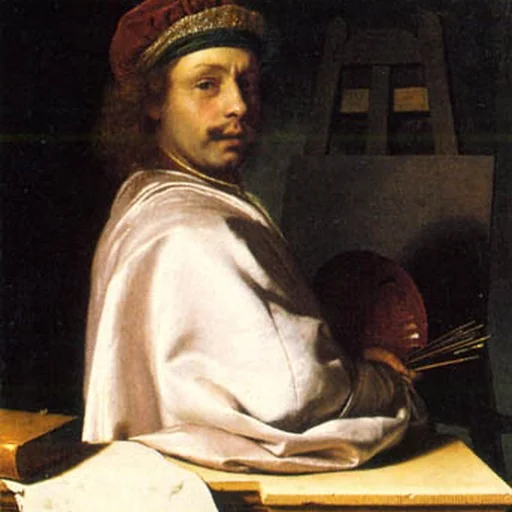
Frans van Mieris the Elder (16 April 1635 – 12 March 1681), was a Dutch Golden Age genre and portrait painter.

- Officer in a Cloth Shop
 The Wedding Contract
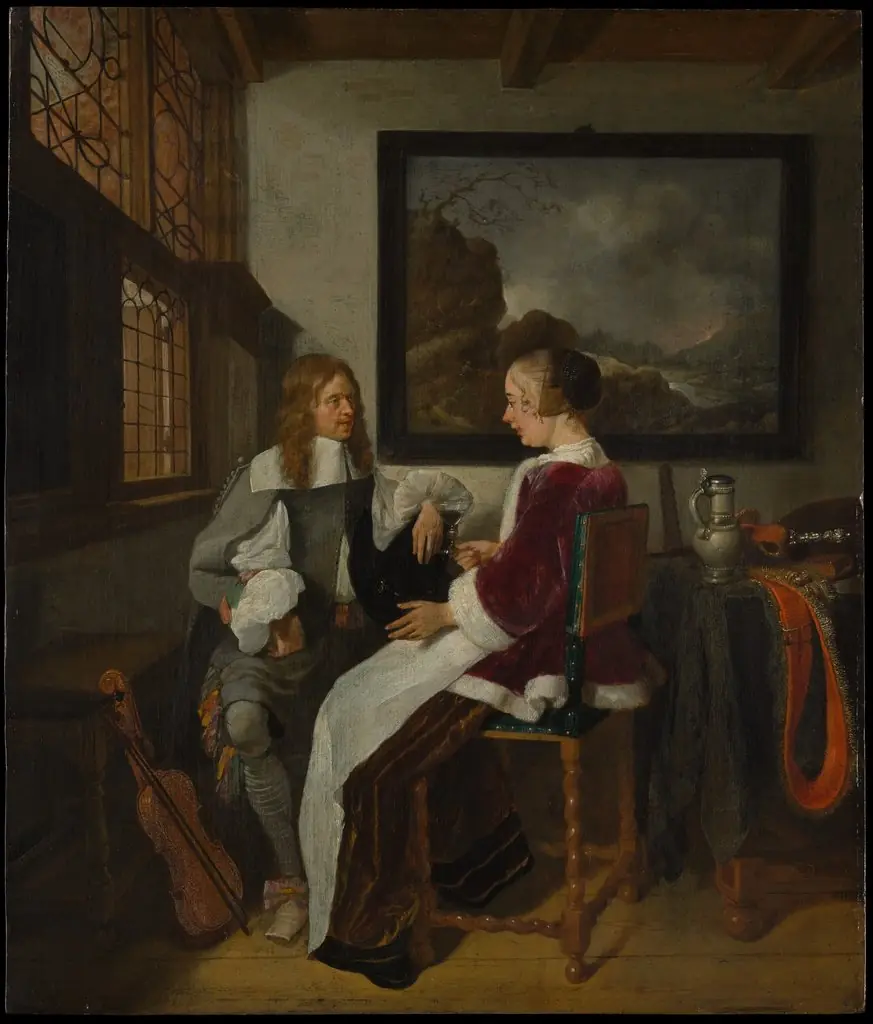 Sentimental Conversation
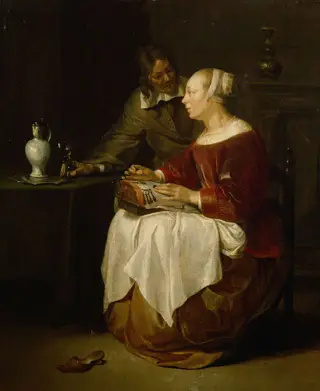 The Lace Maker
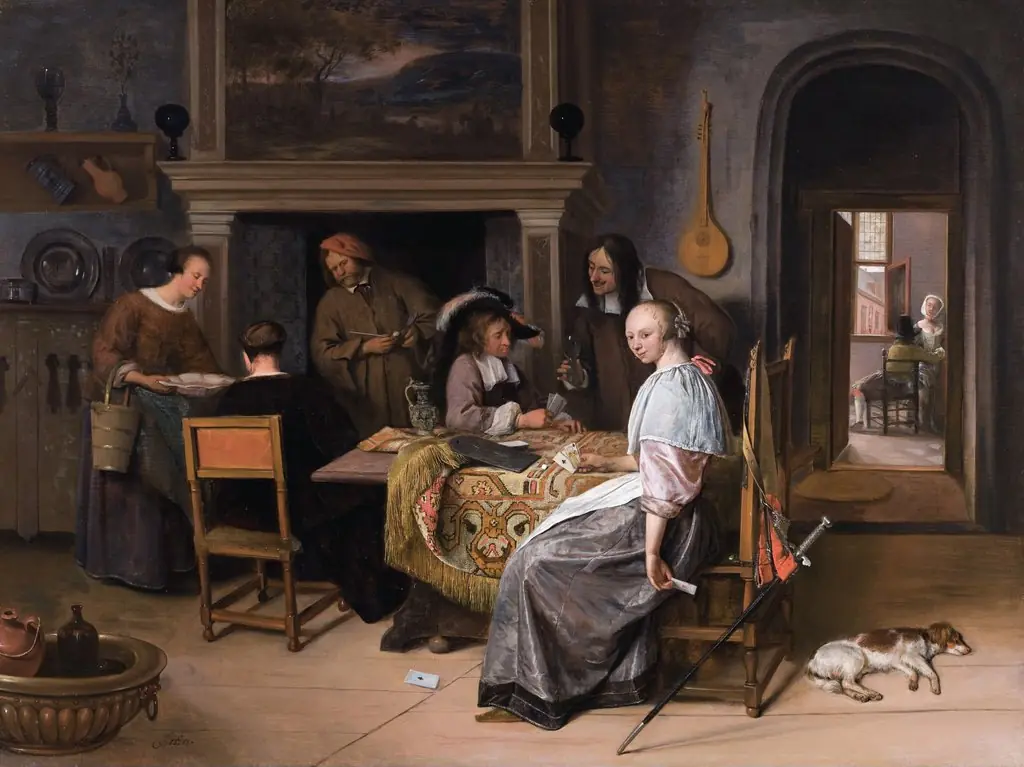 The Card Players in an Interior
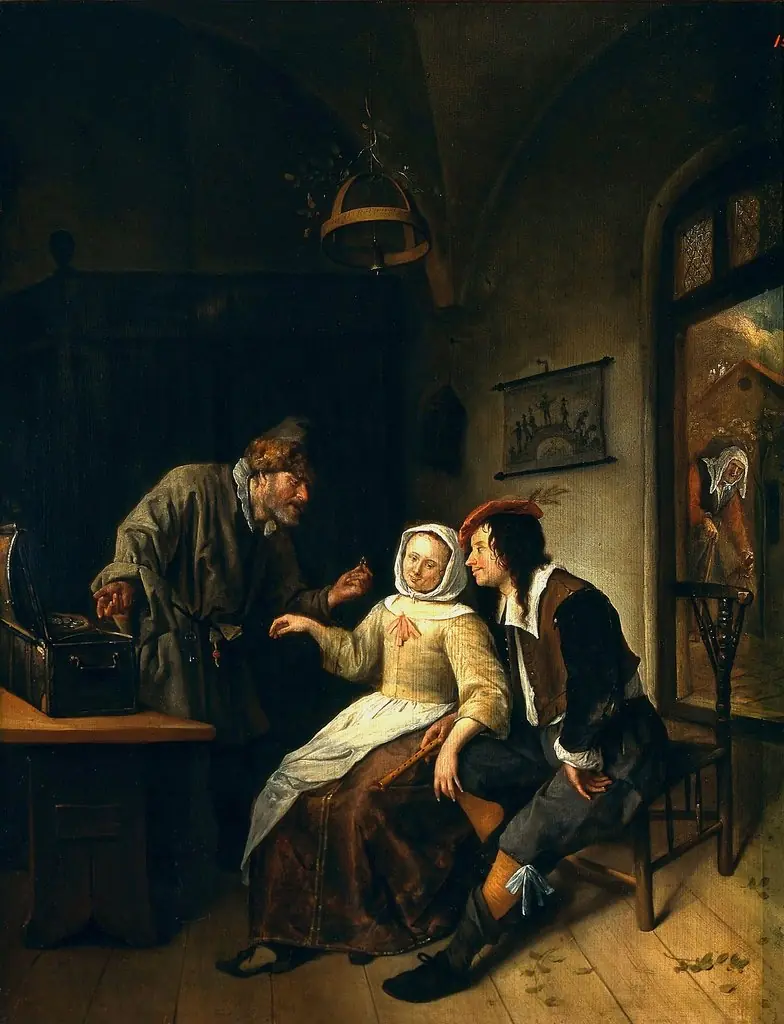 Choice between richness and youth
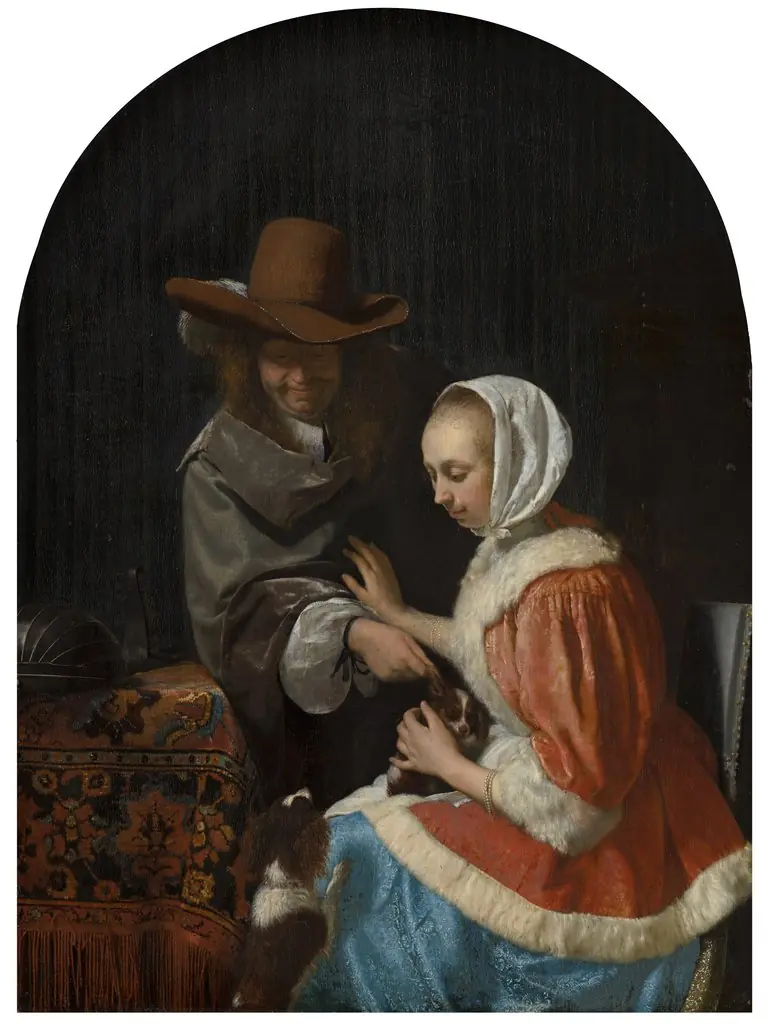 Man and Woman with Two Dogs, known as 'Teasing the Pet'
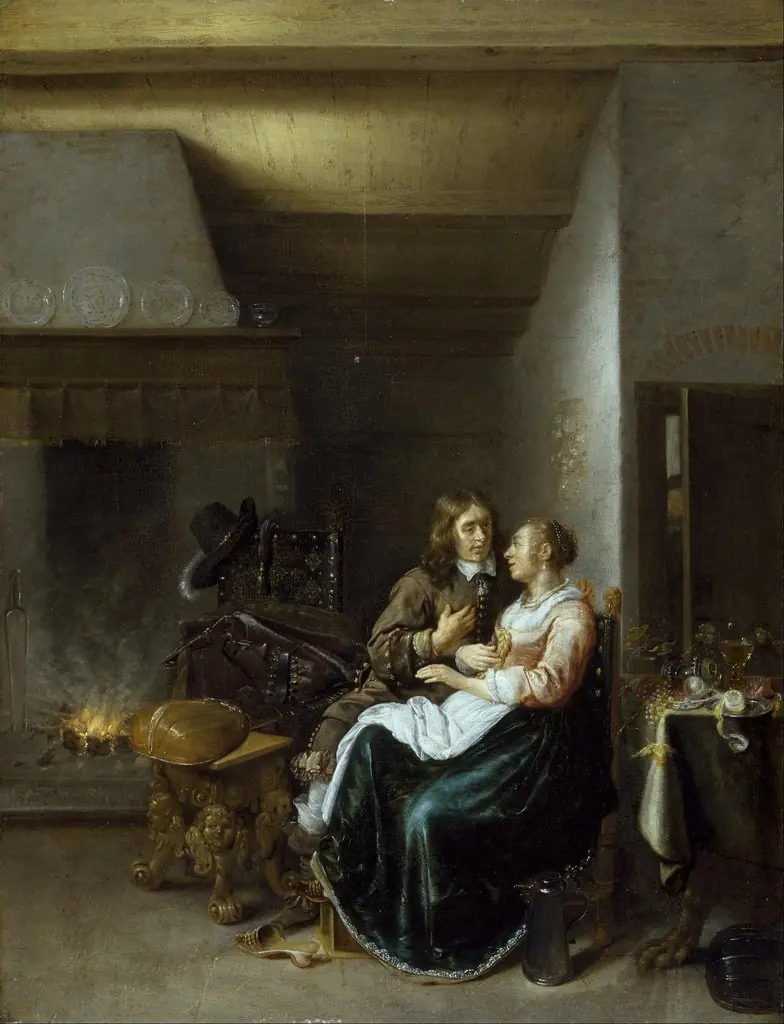 A Couple in an Interior
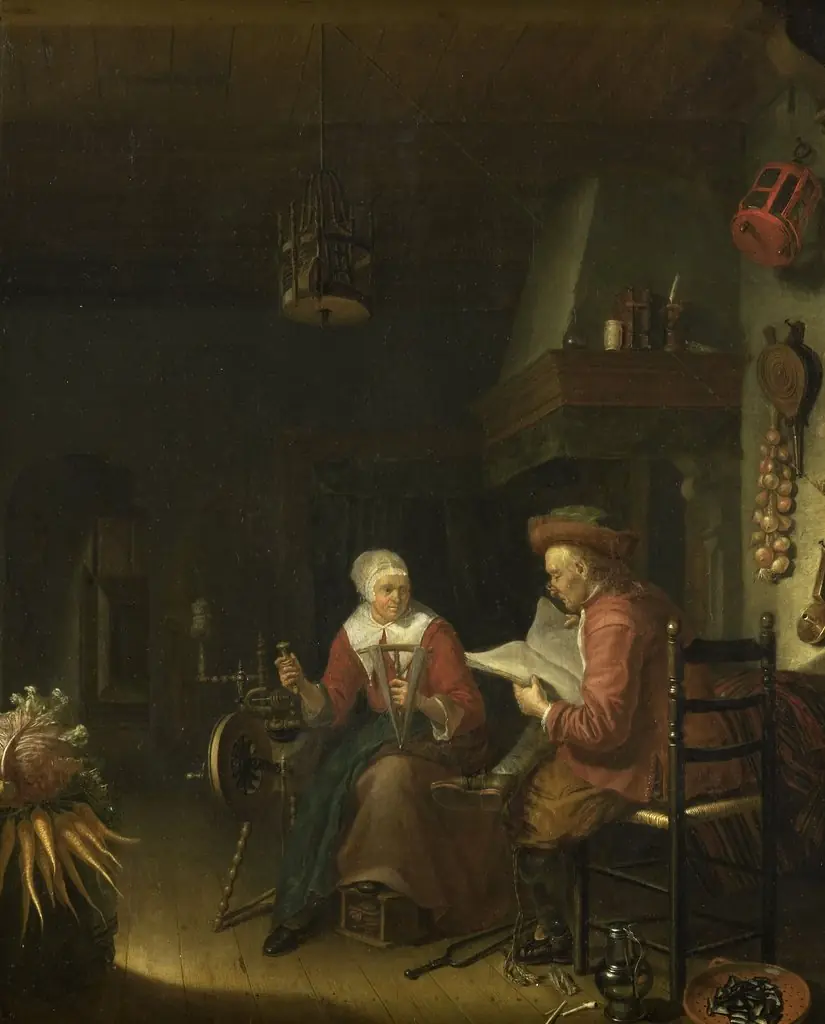 Interior with a man reading and a woman spinning yarn
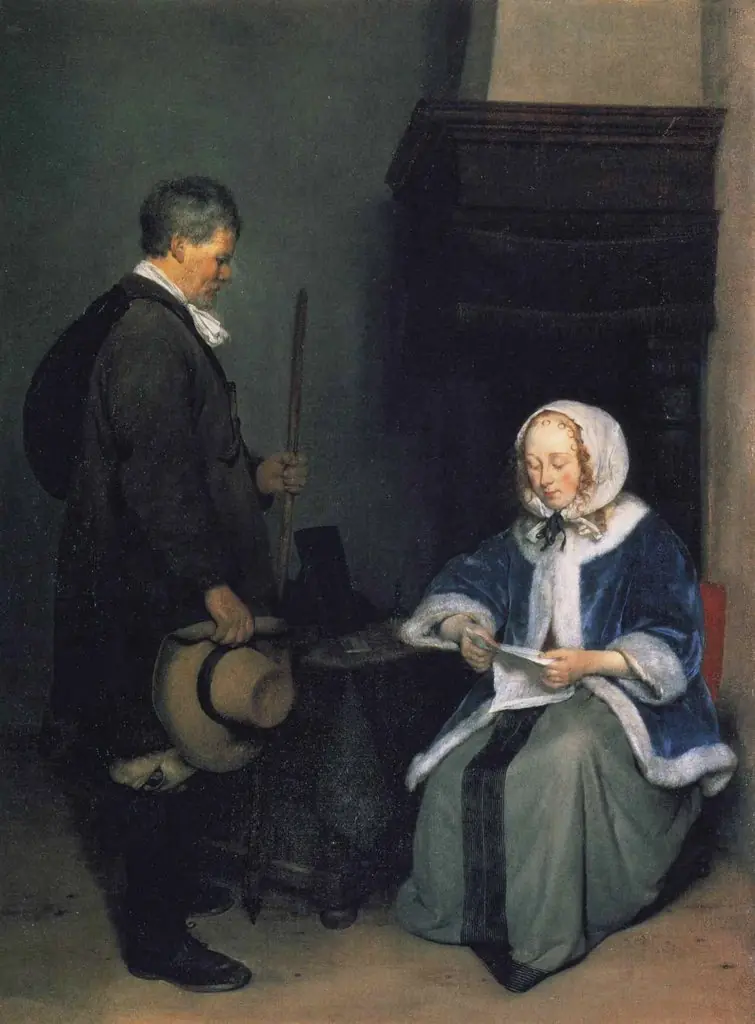 Sitting Lady Reading a Letter with a man
 Interior of an Inn, with Figures in Seventeenth-Century Costume
 A Glass Of Lemonade