Artwork
Tuning the lute
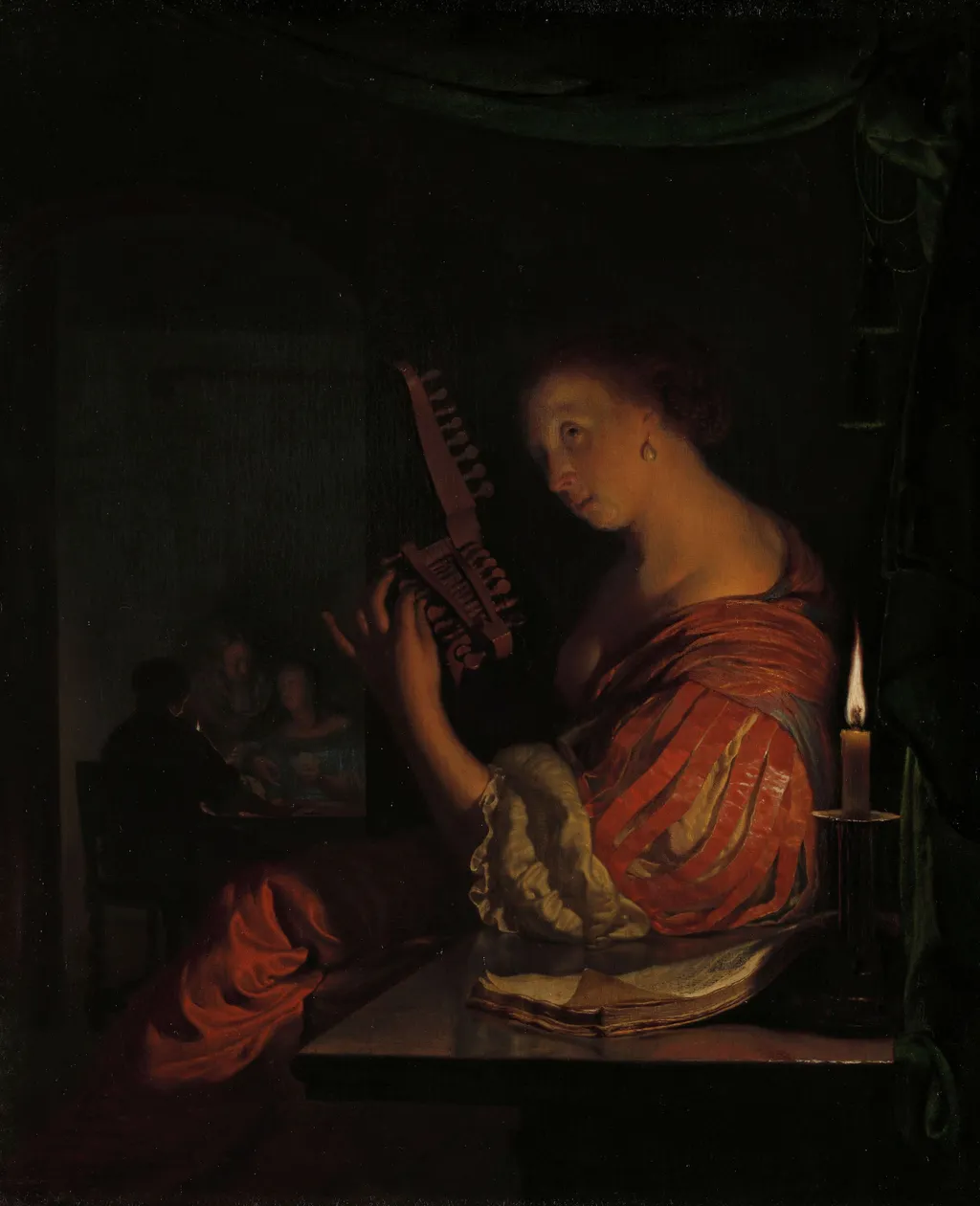
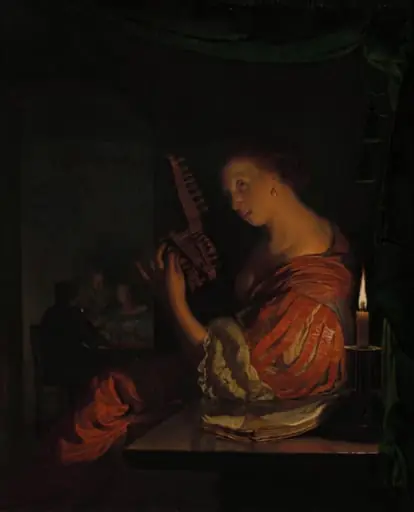
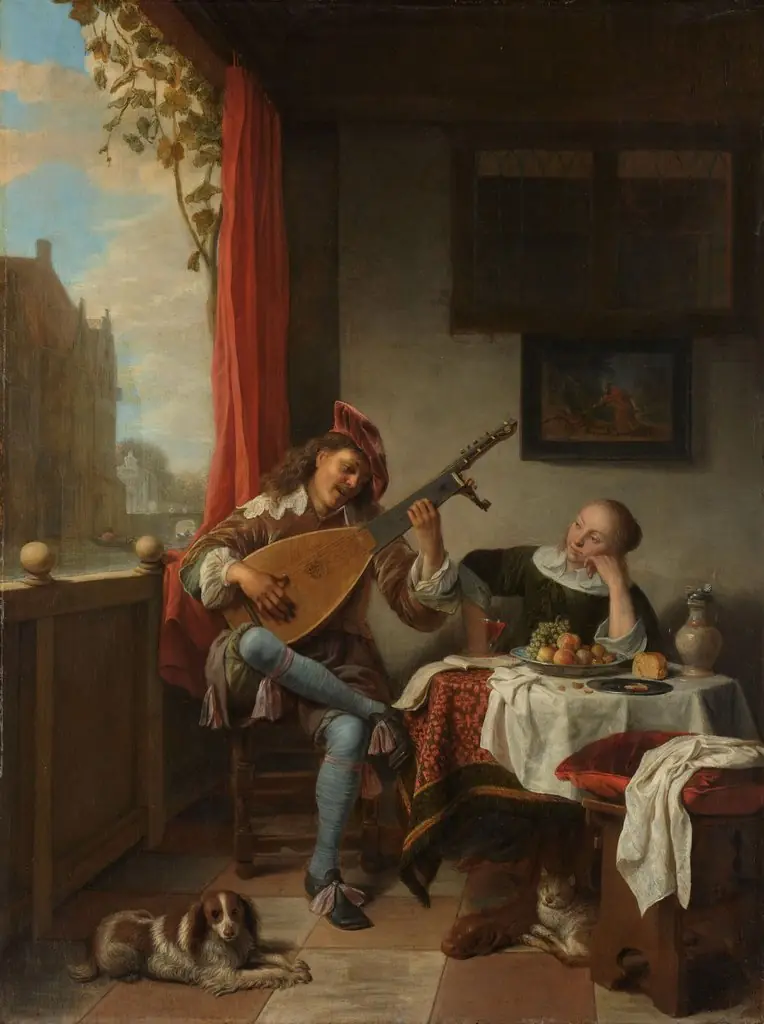
Tuning the lute is an oil painting by the Dutch Golden Age artist Frans van Mieris the Elder. It dates from 1665 and is held in the collection of the Rijksmuseum.
About this work
Subject & Meaning
The composition highlights the instrument itself alongside a candle, elements that define the visual narrative within the domestic interior.
Frans van Mieris the Elder's 1665 oil painting presents a genre scene focused on the intimate act of tuning a lute. The composition highlights the instrument itself alongside a candle, elements that define the visual narrative within the domestic interior.
In the context of Dutch Golden Age genre art, the lute frequently served as a symbol of harmony, love, or the senses, while the inclusion of a candle often alluded to the passage of time or the transience of life. By depicting a figure engaged in the precise adjustment of the instrument, the work captures a moment of quiet concentration that invites interpretation regarding the balance of earthly pleasures and moral reflection.
Technique & Style
Frans van Mieris the Elder’s Tuning the lute (1665) is executed in oil paint on a wood panel, measuring 22 × 17.5 cm. The support’s small scale allowed Van Mieris to deploy his characteristic fine-painting technique, marked by almost imperceptible brushstrokes and meticulous attention to minute details such as the sheen of silk or the delicate flicker of a candle flame.
Stylistically, the work exemplifies the Leiden fijnschilders’ emphasis on illusionistic precision and restrained, luminous color. The composition is tightly controlled, with every element, from the lute’s polished wood to the figure’s reflective satin garment, rendered with a smooth, enamel-like finish that suppresses visible texture. This handling reinforces the intimate, almost jewel-like quality of the genre scene.
History & Provenance
Frans van Mieris the Elder painted Tuning the lute in 1665, as established by its inception date. The work was executed in oil on panel, measuring 22 by 17.5 centimeters. Though no specific commission records survive, the painting entered notable private collections early in its history.
Ownership began with Gerard Bicker (II) van Zwieten, followed by Henrica Cunera Lormier-van Olden and her nephew Willem Lormier. Later, it passed to Thomas de Fraula before being acquired by Adriaan Leonard van Heteren Gevers. In 1809, the painting was bequeathed to the Rijksmuseum, where it remains in the Kabinet van Heteren Gevers.
The painting is held by the Rijksmuseum, Amsterdam. It entered the collection through the Kabinet van Heteren Gevers and is recorded with inventory number SK-C-1739.
It was exhibited at the exhibition "Frans van Mieris" held at the Mauritshuis, The Hague, in 1965–1966.
Overview
Frans van Mieris the Elder, a noted Dutch Golden Age painter, completed the oil painting Tuning the Lute in 1665. The work is part of the Rijksmuseum’s collection and exemplifies the artist’s focus on intimate domestic scenes.
Own this work as a print
Artist & collection
Artist
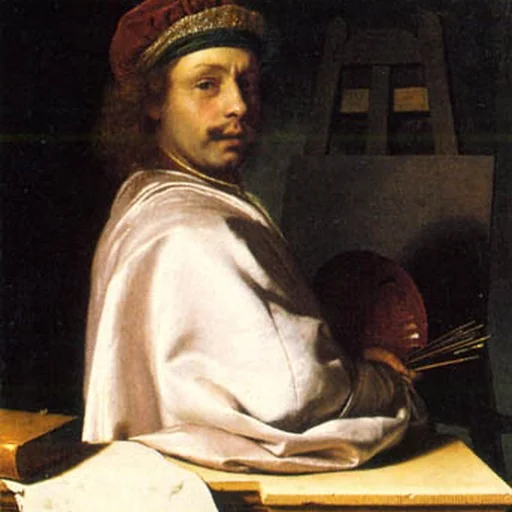
Frans van Mieris the Elder (16 April 1635 – 12 March 1681), was a Dutch Golden Age genre and portrait painter.