Artwork
Christ on a Goldsmith's Cross
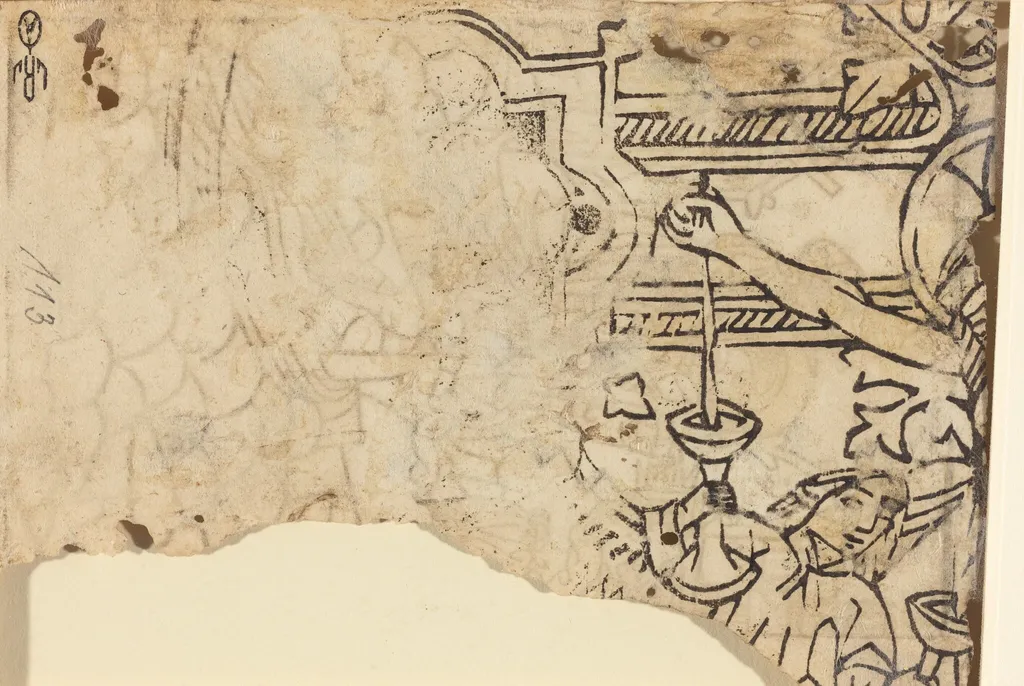
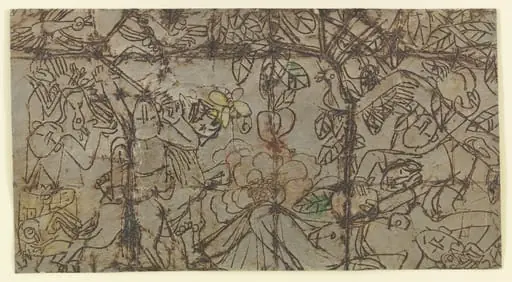
Christ on a Goldsmith's Cross is an ink print by the Renaissance artist French 15th Century. It dates from 1460 and is held in the collection of the National Gallery of Art. Christ on a Goldsmith’s Cross is a woodcut print executed on laid paper.
About this work
Overview
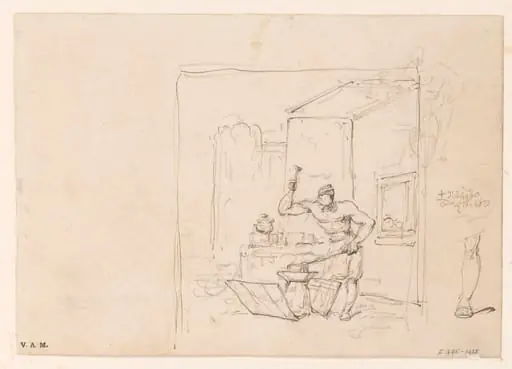
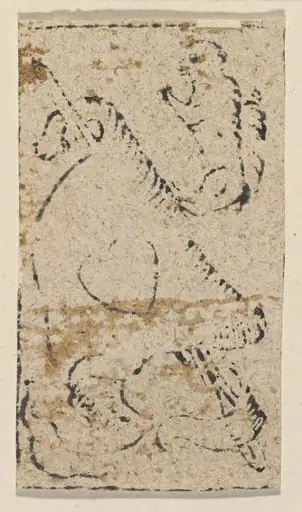
Christ on a Goldsmith’s Cross is a woodcut print executed on laid paper. The image presents a stark monochrome composition: a cross bearing a small figure, likely representing Christ, is flanked below by two standing figures, one grasping a hammer and the other a pot. The work’s lines are clean yet retain the roughness characteristic of woodcut carving, and the paper shows signs of age and wear.
Subject & Meaning
The central figure on the cross suggests a depiction of the crucifixion, while the accompanying laborers, identified by their tools, may allude to the everyday life of a goldsmith’s workshop. This juxtaposition could reflect a medieval motif linking sacred sacrifice with the honest toil of craftsmen, emphasizing the spiritual significance of ordinary work.
Technique & Style
Created by carving a design into a wooden block, the artist transferred the image onto laid paper by pressing ink onto the carved surface and then onto the paper. The resulting print displays the high-contrast black lines typical of the medium, with a relatively flat rendering and minimal shading, underscoring the graphic clarity prized in early woodcut production.
History & Provenance
The print’s material, laid paper, and its weathered condition indicate an early modern origin, though no specific date or artist is recorded. Its survival in a damaged state suggests it was likely part of a larger collection of devotional images used in domestic or workshop settings, eventually entering a museum or archival collection.
Artist & collection

Artist
An anonymous French hand glued vivid woodcuts into the lids of wooden boxes meant to ride on horseback, like secret postcards from God.