Artwork
Untitled
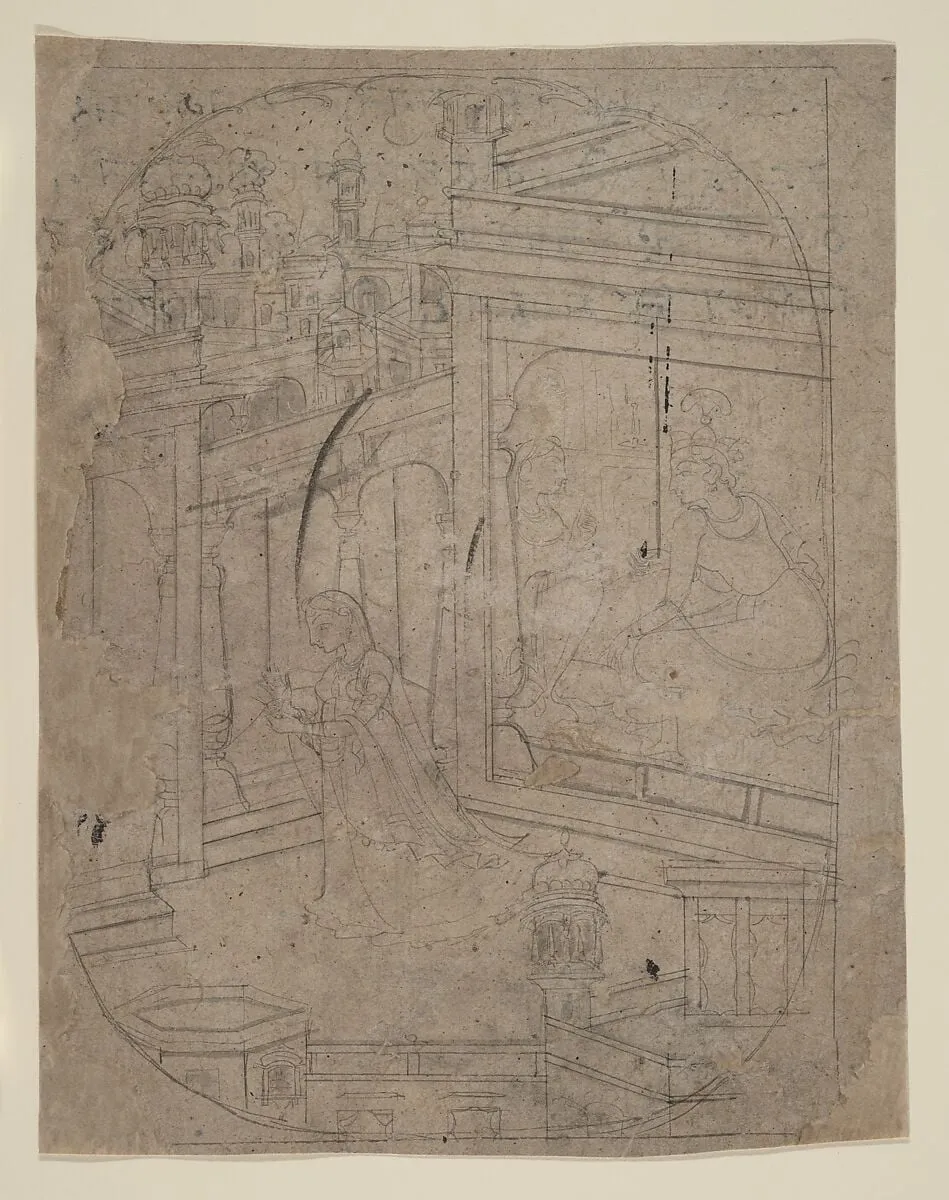
Untitled is an ink painting. It dates from 1805 and is held in the collection of the Metropolitan Museum of Art.
About this work
If you like this, look up more paintings tagged women, men, india (pahari hills, kangra or guler), man.
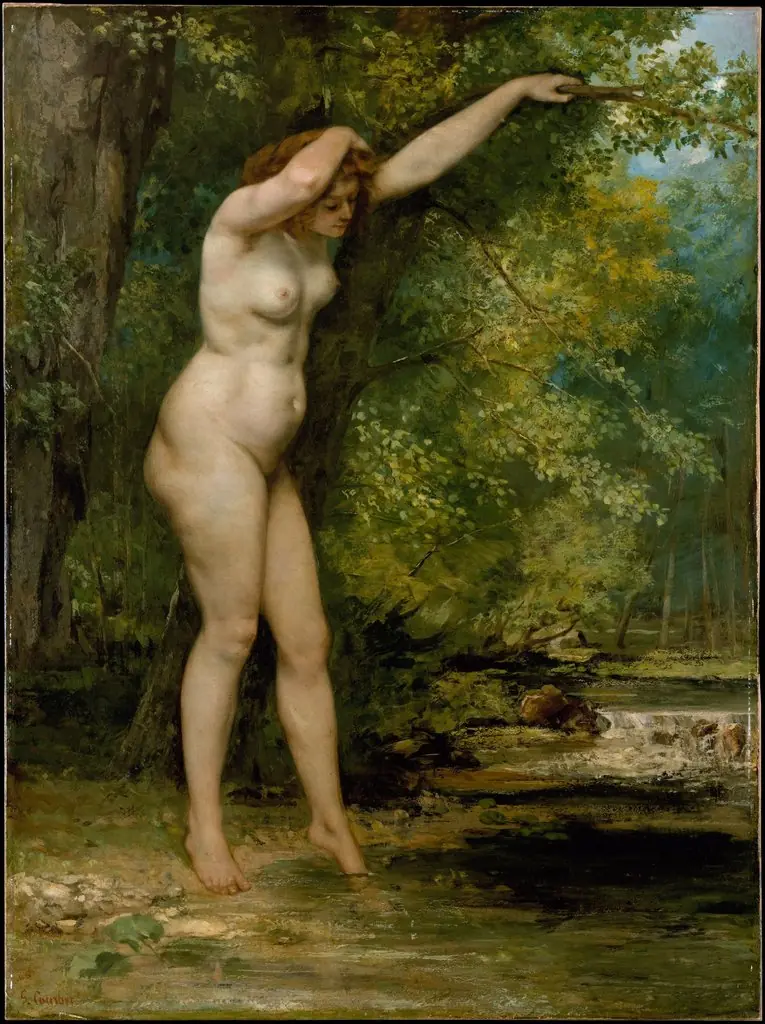
A woman in a red sari leans against a tree while a man in white sits beside her. They’re surrounded by rolling green hills under a pale sky.
This painting comes from a small workshop in the Pahari hills, where artists worked for local rulers. The ink washes, thin layers of diluted ink, give the scene a soft, dreamy look. No one knows who made it, but the style was common in Kangra or Guler around 1800.
If you like this, look up more paintings tagged women, men, india (pahari hills, kangra or guler), man.
Subject & Meaning
Untitled (1805) is an ink and wash painting on paper that portrays a man and a woman, as recorded in the work’s catalogue entry and corroborated by its Wikidata entry. The figures are presented without accompanying narrative attributes, and the sources do not specify additional iconographic elements or symbolic meaning. Consequently, the subject is understood simply as a representation of two individuals, leaving the work’s interpretive significance unspecified in the available documentation.
Technique & Style
This untitled work is executed in ink and wash on paper, a combination suited to fluid line work and tonal modulation characteristic of South Asian drawing traditions of the early nineteenth century. The small-scale format, measuring approximately 24.1 by 19.1 centimeters, places it within the intimate range of portable works on paper rather than large-scale mural or canvas painting. The use of monochrome ink with wash suggests an emphasis on contour and graduated shading rather than polychromatic coloration.
Classified within the Metropolitan Museum of Art's paintings holdings and depicting a man and a woman, the piece is catalogued as a genre scene, indicating a focus on everyday subject matter rendered through the artist's handling of the ink medium.
History & Provenance
The work entered the collection of the Metropolitan Museum of Art in New York, where it is currently held. No documented commission or early ownership history has been established; the artist remains anonymous. Technical analysis and stylistic comparison situate its creation around 1805 in India, aligning with the date inscribed on the sheet.
The medium, ink and wash on paper, supports the proposed dating within the early nineteenth century, a period marked by similar works produced in South Asian ateliers.
The anonymous ink and wash painting titled Untitled, dated 1805, is held in the collection of the Metropolitan Museum of Art. Created in India, the work depicts a man and a woman and measures 24.1 cm in height by 19.1 cm in width. While the museum currently houses the piece, the provided sources do not specify a unique inventory or accession number for the artwork.
Furthermore, the available documentation contains no record of the painting's exhibition history, leaving its public display timeline undocumented in the current references.
Context
The untitled ink‑wash painting dated 1805, credited to an anonymous Indian artist, functions as a genre scene that portrays a man and a woman. Its classification as a genre scene and inclusion in the Metropolitan Museum of Art’s collection underscore its significance as an early‑colonial example of indigenous draftsmanship. Scholarship treats the work as illustrative of how anonymous creators adapted European compositional conventions while retaining local subject matter, situating it within the broader trajectory of Indian art before systematic attribution emerged.
The piece’s material, ink and wash on paper, and its Indian provenance further inform discussions of artistic exchange during the period.
Legacy
The work titled Untitled (1805), an ink and wash painting on paper depicting a man and a woman, is recognized as an early example of Indian genre painting. Its inclusion in the Metropolitan Museum of Art’s collection has made it a reference point for scholars studying anonymous 19th‑century Indian art, and its genre‑scene classification informs broader narratives about artistic practices in the region. The attribution to an anonymous painter highlights the anonymity common in that period, shaping later interpretations of unsigned works.
Overview
This untitled work, executed in ink and wash on paper, depicts a serene landscape scene. It originates from a small workshop in the Pahari hills of India, a region known for its artistic patronage by local rulers. The painting's soft aesthetic, achieved through diluted ink applications, reflects the distinctive style prevalent in the Kangra or Guler schools around the turn of the 19th century.
Artist & collection

- Untitled
 Album of Daoist and Buddhist Themes: Kings of Hells: Leaf 30
 Album of Daoist and Buddhist Themes: Kings of Hells: Leaf 34
 Untitled
 Album of Daoist and Buddhist Themes: Kings of Hells: Leaf 31
 Album of Daoist and Buddhist Themes: Kings of Hells: Leaf 32
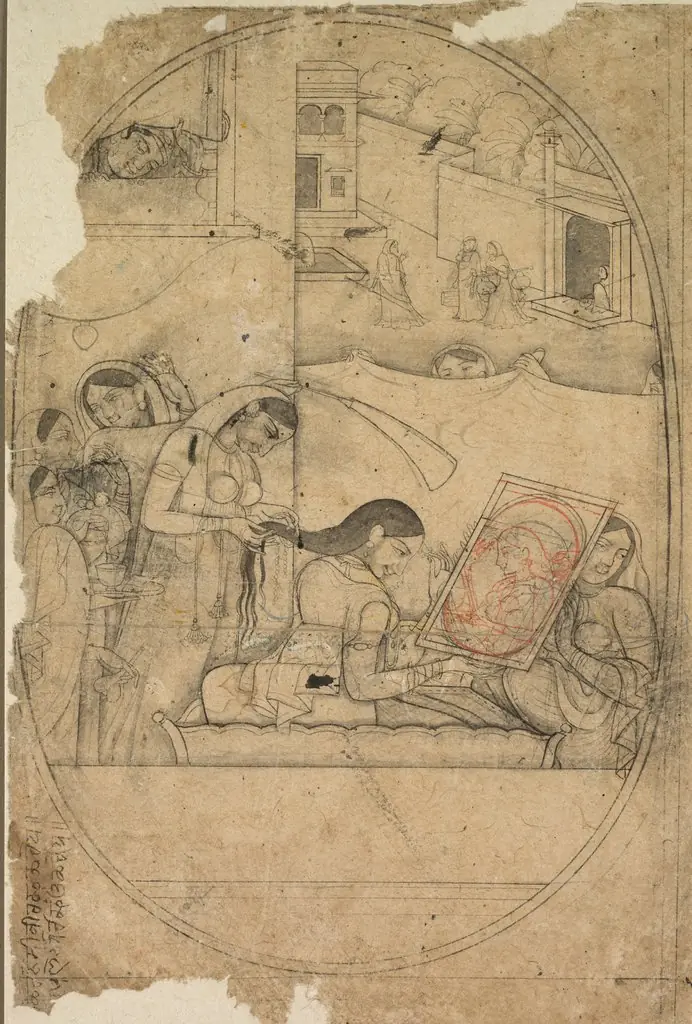 Radha's Hair Being Dressed
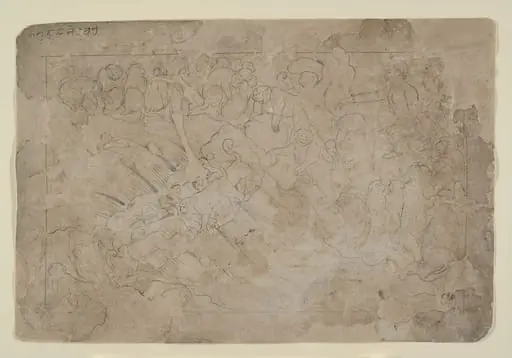 Untitled
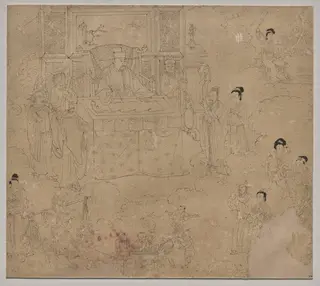 Album of Daoist and Buddhist Themes: Kings of Hells: Leaf 28
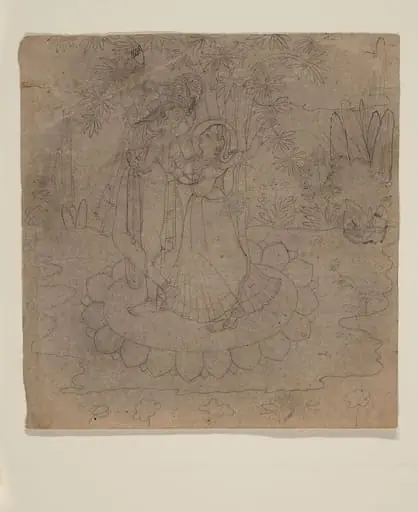 Untitled
 Studies by Alfred Stevens
 Album of Daoist and Buddhist Themes: Kings of Hells: Leaf 37