Artwork
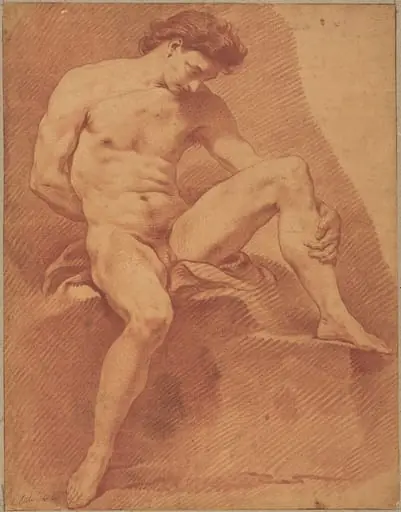
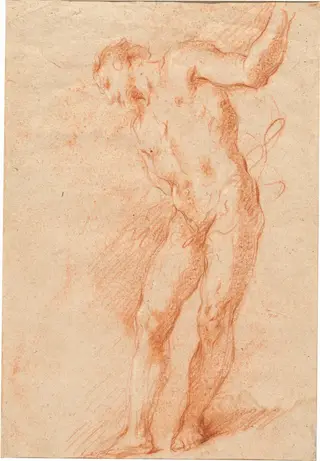
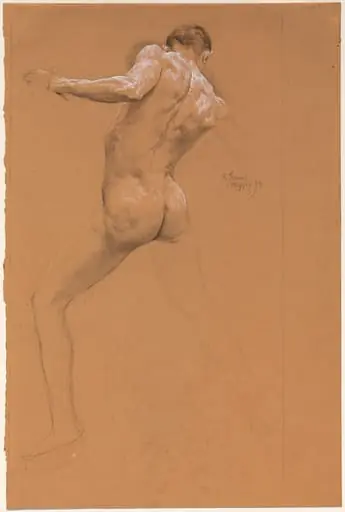
A Male Nude Seen from Behind
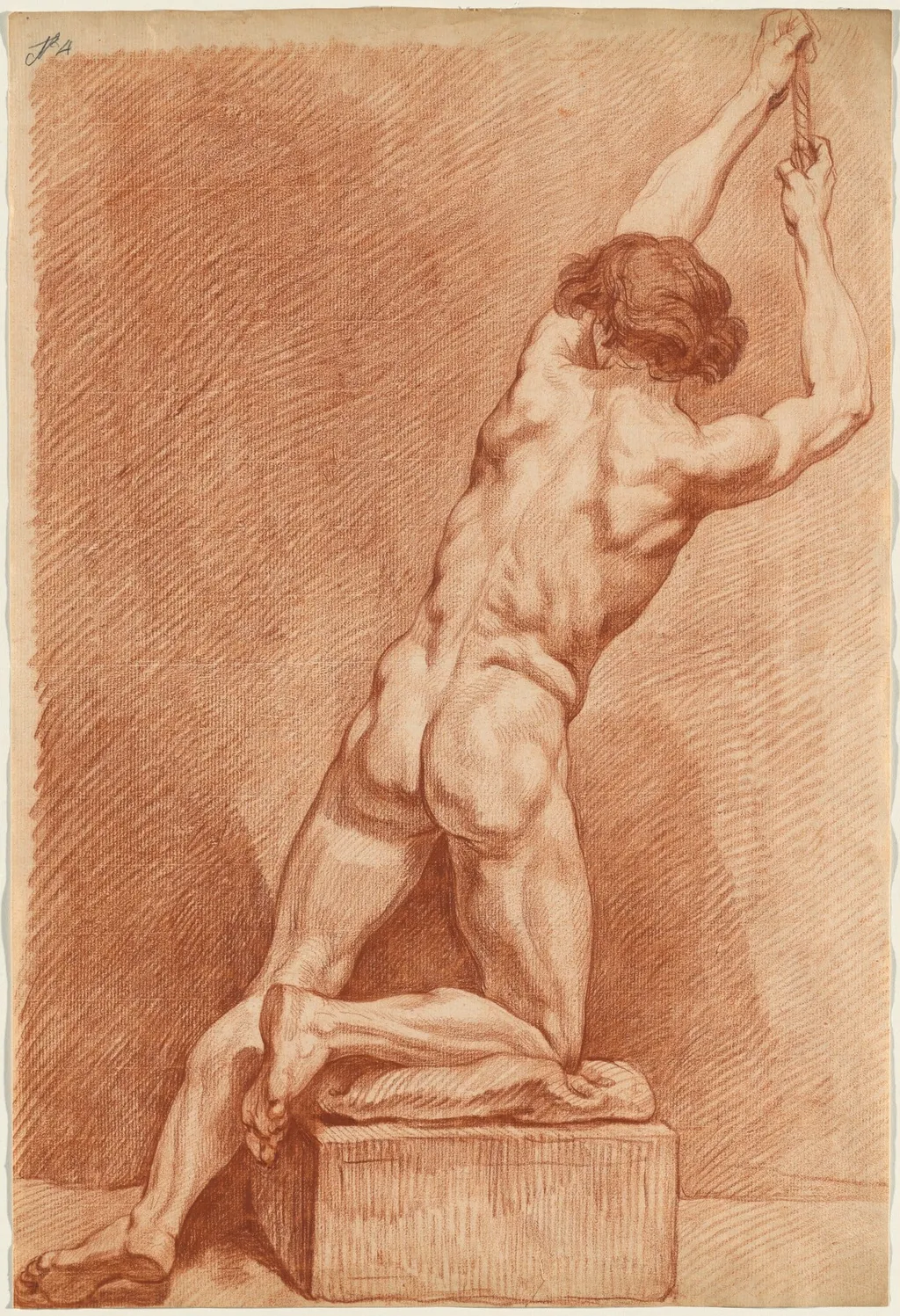
A Male Nude Seen from Behind is a chalk drawing by the Romanticist artist French 18th Century. It dates from 1760 and is held in the collection of the National Gallery of Art.
- Inscription
- Inscribed:by unknown hand, upper left in graphite: No.4 [?]
About this work
Overview
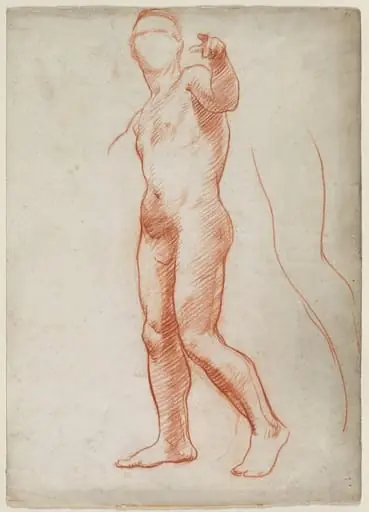
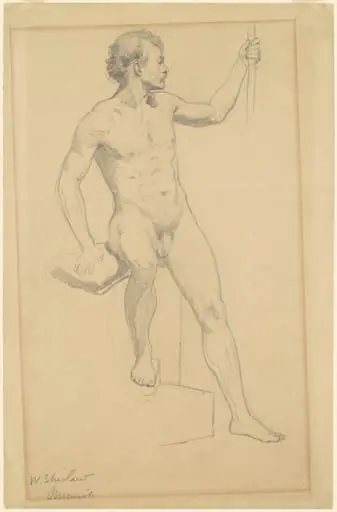
A Male Nude Seen from Behind is a red chalk drawing on laid paper, portraying a male figure in a contrapposto stance on a pedestal. The composition emphasizes the play of light and shadow on the figure's muscles.
Subject & Meaning
The subject, a male nude, is depicted in a classical pose, with his left arm raised holding a rope/cord and right arm resting on his hip. The focus is on the athletic physique rather than narrative context.
Technique & Style
The drawing utilizes chiaroscuro, a strong contrast between light and dark, to create a sense of depth and volume, highlighting the figure's musculature. Red chalk on laid paper adds warmth to the anatomical study.
Context
The work reflects Renaissance interests in classical poses and detailed anatomical studies, common in artistic training during the period.
Legacy
While specific legacy details are not provided, the piece contributes to the broader tradition of nude figure studies in Western art, influencing subsequent generations of artists in anatomy and chiaroscuro techniques.
Artist & collection

Artist
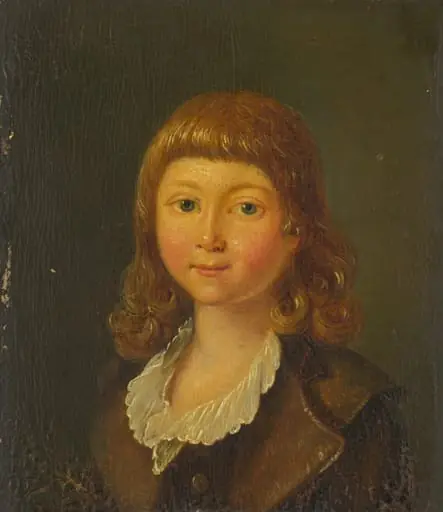
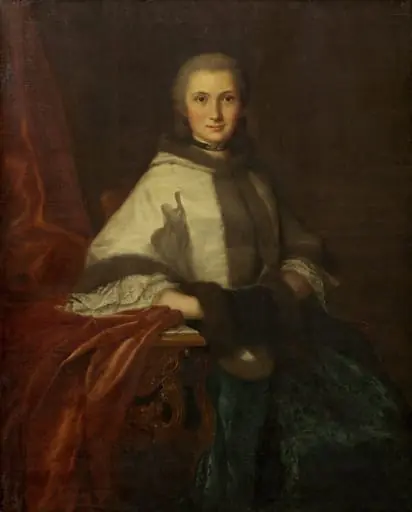
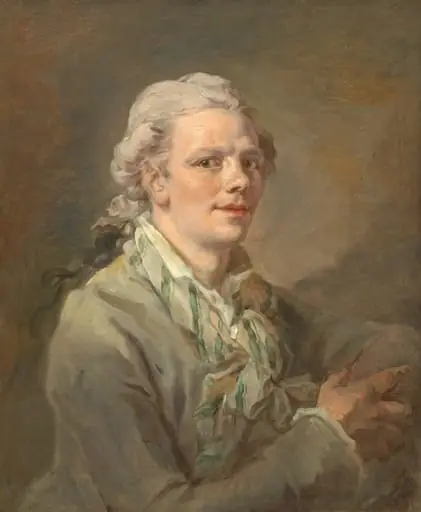
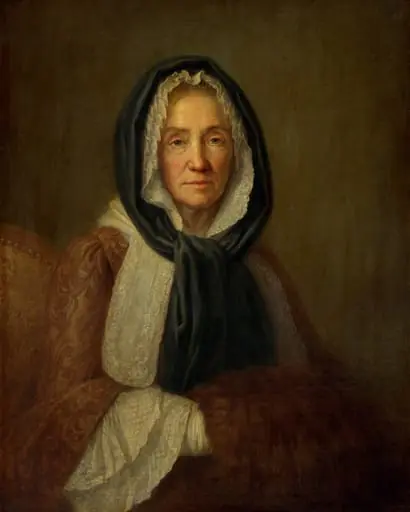
An anonymous French hand of the late 18th century made portrait paintings and etched prints.


![Nude Man Seen from Behind [verso], by Palma il Giovane](https://artifactworldgallery.com/img/palma-il-giovane--nude-man-seen-from-behind-verso--2de266ff199c839b-w320.webp)