Artwork
Hyacum, et Lues Venerea (Guaiacum and Venereal Infection)
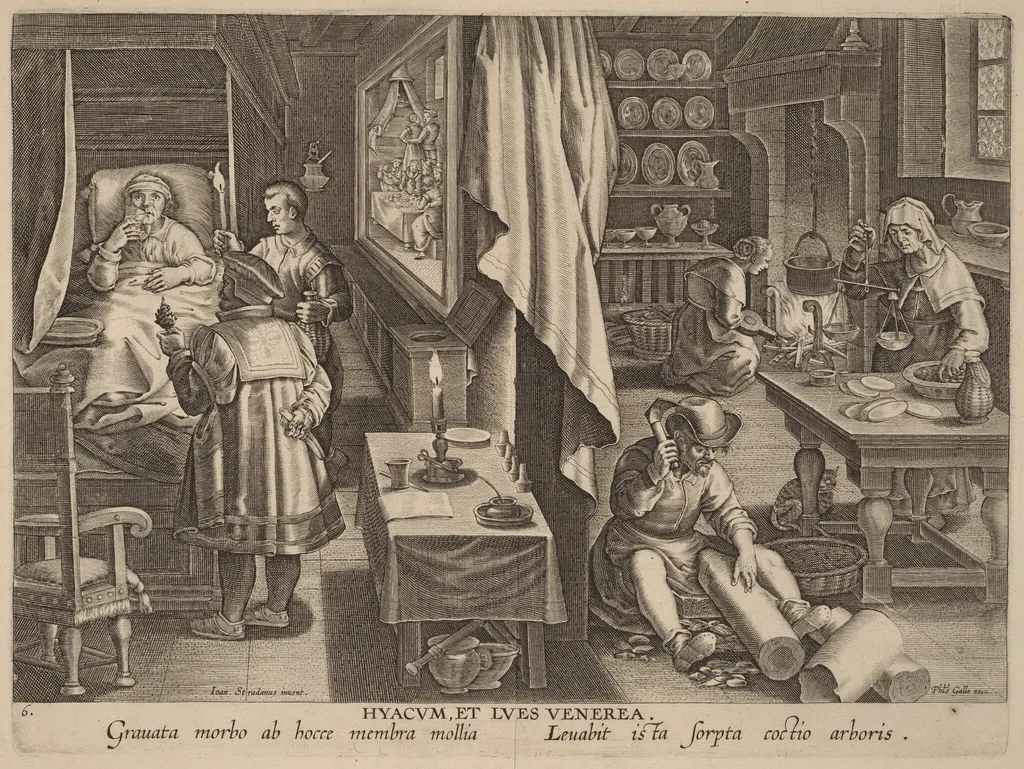
Hyacum, et Lues Venerea (Guaiacum and Venereal Infection) is an ink print by the Renaissance artist Philip Galle. It dates from 1592 and is held in the collection of the National Gallery of Art.
About this work
Overview
Created around 1592, this engraving by Philip Galle explores the medical and moral concerns surrounding venereal disease in late 16th-century Europe.
Created around 1592, this engraving by Philip Galle explores the medical and moral concerns surrounding venereal disease in late 16th-century Europe. Rendered in fine lines on laid paper, the image presents a domestic interior where treatment, observation, and ritual converge. Galle, known for reproductive prints and original designs, here combines allegory with observational detail to convey a cautionary message about health and vice.
Subject & Meaning
The scene juxtaposes the use of guaiacum wood, a then-popular remedy for syphilis, with symbols of indulgence and neglect. A man lounges with a pipe, suggesting the lifestyle linked to infection, while another holds a small painting of a mother and child, possibly evoking lost innocence or the consequences of disease. The cluttered room and scattered objects imply moral disorder, reinforcing the idea that physical illness stems from social and ethical transgression.
Technique & Style
Galle employed precise engraving techniques to render texture and depth, using fine, controlled lines to define fabric, wood grain, and smoke. The composition is densely packed, with every surface, shelves, table, floor, filled with small, deliberate details: jars, a birdcage, spilled vessels. The interplay of light and shadow, achieved through cross-hatching, draws attention to the figures’ postures and the symbolic objects, enhancing the narrative tension without overt dramatization.
History & Provenance
The print emerged during a period when syphilis was widely feared and debated in medical and religious circles. Galle, based in the Netherlands, circulated such images through his publishing network, targeting educated audiences familiar with emerging medical theories. Though no early ownership records are documented, its survival in institutional collections suggests it was valued as both a medical curiosity and a moral allegory in early modern Europe.
Context
In the late 1500s, guaiacum, imported from the Americas, was promoted as a cure for syphilis, though its efficacy was contested. Simultaneously, moralists linked the disease to sexual immorality, often depicting it as divine punishment. This engraving reflects that dual discourse, medical experimentation coexisting with religious judgment, capturing a society grappling with new treatments and enduring stigma.
Legacy
The print endures as a document of early modern medical culture, illustrating how visual art mediated scientific and moral debates. Though not widely reproduced, its intricate detail and symbolic complexity influenced later genre scenes that blended clinical observation with social critique. It remains a quiet but potent record of how disease was visually framed before the rise of modern epidemiology.
Own this work as a print
Artist & collection
Artist
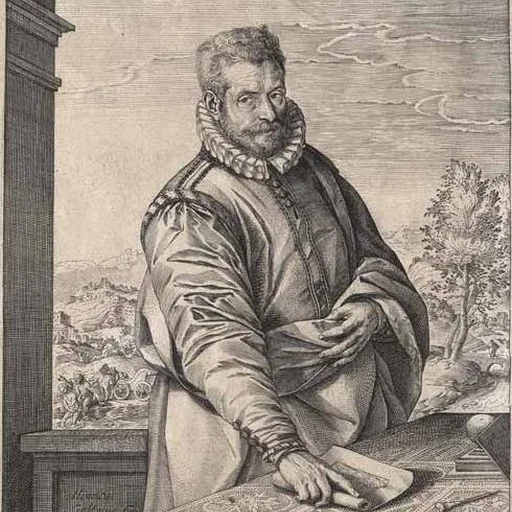
Philip (or Philips) Galle (1537 – March 1612) was a Dutch publisher, best known for publishing old master prints, which he also produced as designer and engraver. He is especially known for his reproductive engravings of paintings.

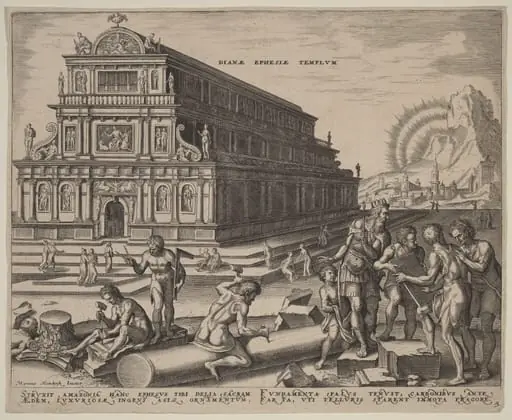 Dianae Ephesiae Templum (The Temple of Diana at Ephesus)
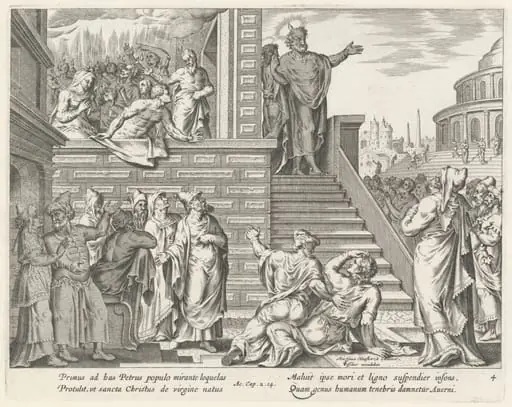 Saint Peter Speaks to the People about Christ
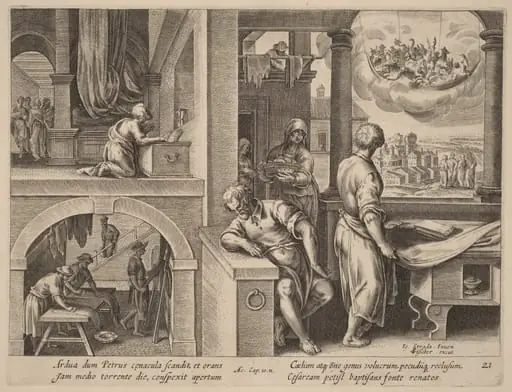 The Vision of Saint Peter
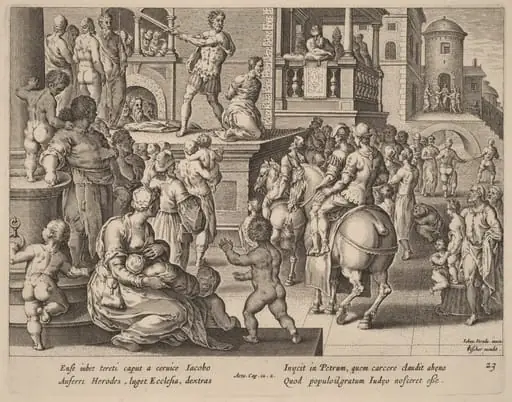 Beheading of Saint James
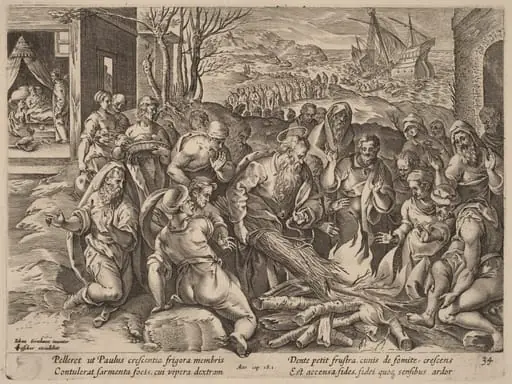 Saint Paul Shipwrecked on the Island of Melita
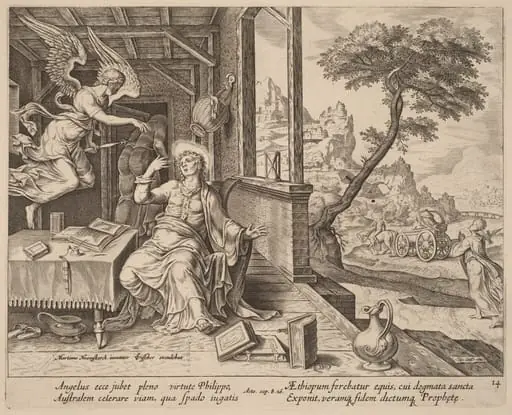 The Angel Orders Saint Philip to Accompany the Ethiopian Eunuch
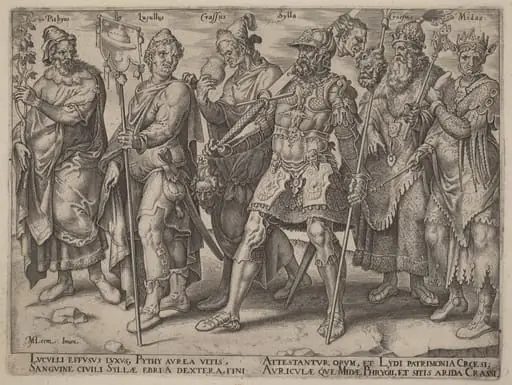 Notorious Examples of Wealth from Antiquity
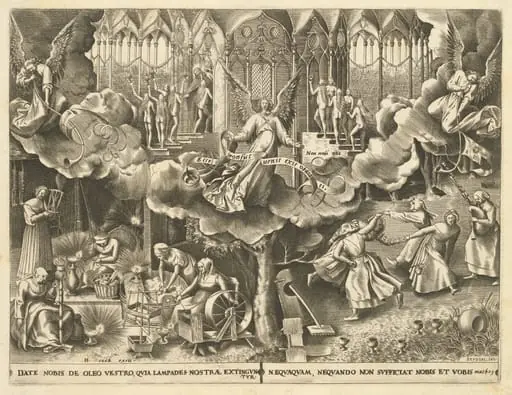 The Parable of the Wise and Foolish Virgins
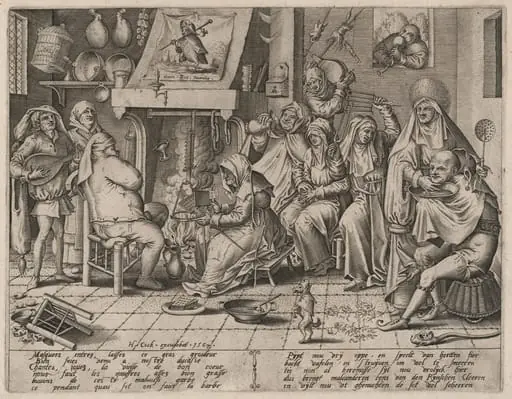 Shrove Tuesday
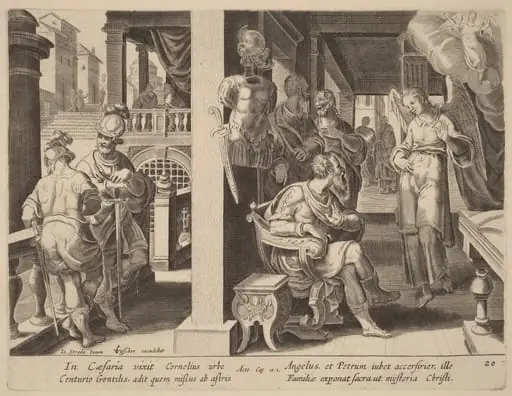 The Angel Commands Cornelius to Fetch Saint Peter
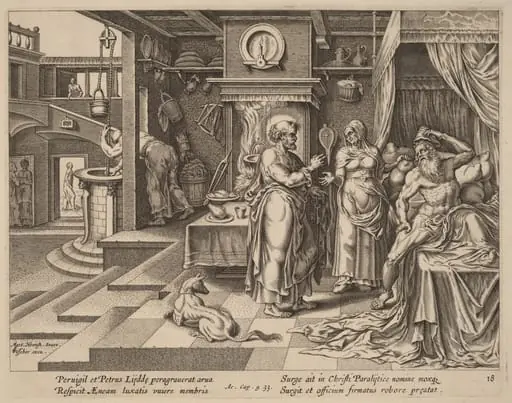 The Healing of Eneas by Saint Peter
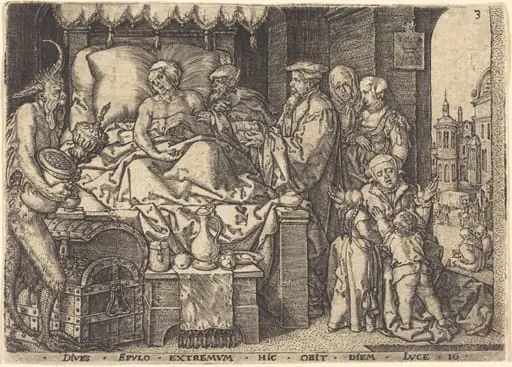 The Rich Man on His Death Bed
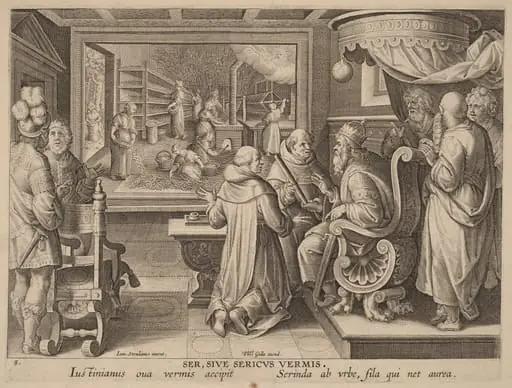 Ser, Sive Sericus Vermis (Silk, or the Silkworm)
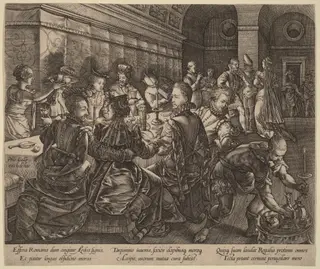 Banquet at the House of Tarquinius Collatinus
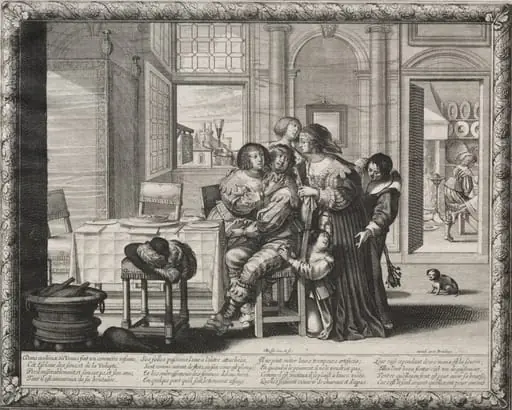 The Prodigal Son: Riotous Living
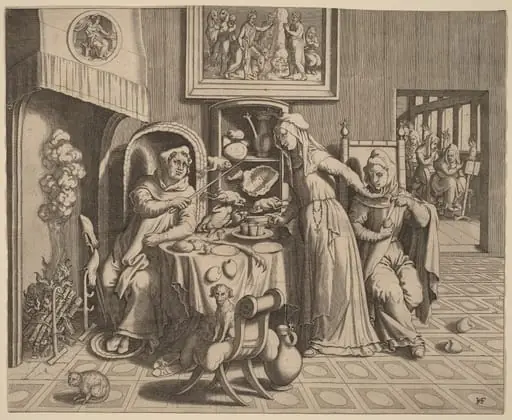 The Amorous Nun between the Abbot and the Monk
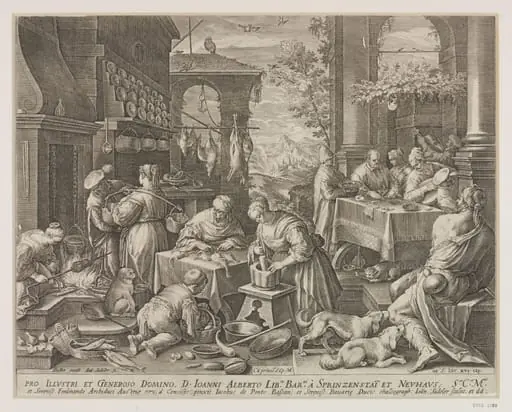 The Rich Man and Lazarus
 The Dissolute Household
 The Prodigal Son in a House of Ill-Repute
- Night