Artwork
Saint Paul Escapes from Damascus
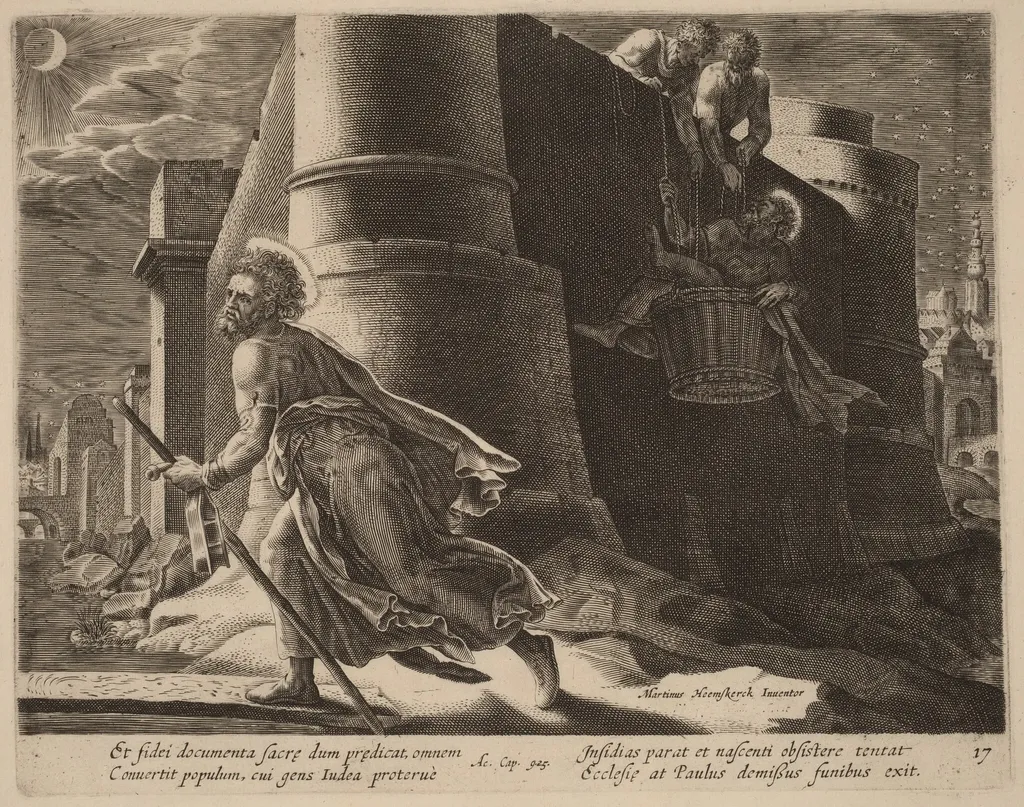
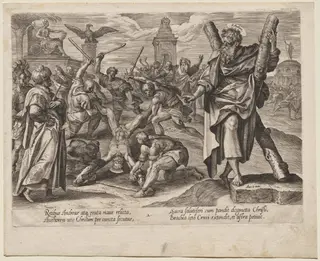
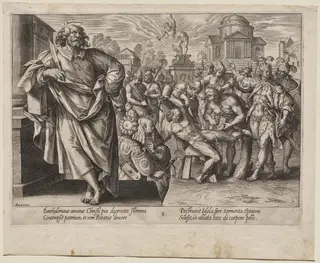
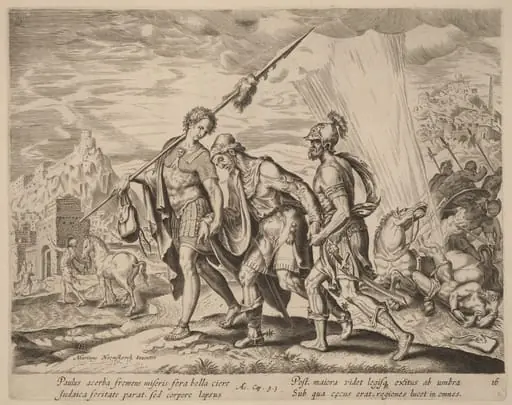
Saint Paul Escapes from Damascus is an ink print by the Renaissance artist Philip Galle. It dates from 1574 and is held in the collection of the National Gallery of Art.
About this work
Overview
Galle’s technique translates narrative urgency into fine linear detail, using cross-hatching to model form and shadow across a compact, crowded composition.
Philip Galle’s 1574 engraving captures the moment Saint Paul escapes Damascus by being lowered in a basket through a window in the city wall. Created as a reproductive print in the Low Countries, the work reflects the era’s demand for accessible religious imagery. Galle’s technique translates narrative urgency into fine linear detail, using cross-hatching to model form and shadow across a compact, crowded composition.
Subject & Meaning
The scene illustrates Paul’s flight from persecution, as recounted in Acts 9:23–25. His halo and staff identify him as a sacred figure, while his hurried posture and the dangling basket convey imminent danger. The structure behind him, likely a fortified tower, symbolizes the hostile city he abandons.
The image underscores divine protection amid human peril, a theme resonant in Protestant and Catholic devotional contexts of the time.
Technique & Style
Galle employed engraving on copper, using fine, controlled lines to render texture and depth. Cross-hatching defines the folds of Paul’s robe, the stonework of the wall, and the clouded sky. The composition is tightly framed, directing attention to the fleeing figure and the basket’s taut rope. The absence of color emphasizes line and contrast, typical of reproductive prints meant for wide dissemination.
History & Provenance
Produced in Antwerp, the engraving was part of a broader market for religious prints in the late 16th century. Galle’s workshop specialized in reproducing compositions by established painters, making biblical scenes available to private collectors and clergy. This print likely circulated across Northern Europe, serving both devotional and educational purposes in households and seminaries.
Context
In the decades after the Reformation, visual depictions of biblical narratives became vital tools for religious instruction. Galle’s work emerged amid intense theological debate, where images helped reinforce scriptural stories for audiences with limited access to texts. His prints often adapted Italian and Flemish paintings, bridging regional styles and spreading visual motifs across confessional lines.
Legacy
Galle’s engraving contributed to the standardization of biblical iconography in print culture. Though not an original composition, its clarity and precision influenced later printmakers. The scene of Paul’s escape became a recurring motif in Northern European art, preserved in collections and used in devotional manuals well into the 17th century.
Own this work as a print
Artist & collection
Artist
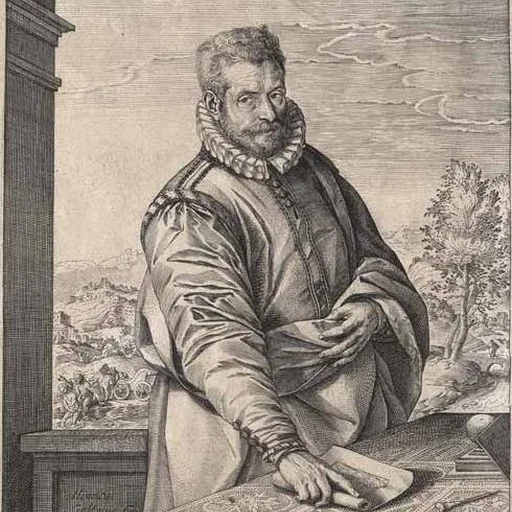
Philip (or Philips) Galle (1537 – March 1612) was a Dutch publisher, best known for publishing old master prints, which he also produced as designer and engraver. He is especially known for his reproductive engravings of paintings.

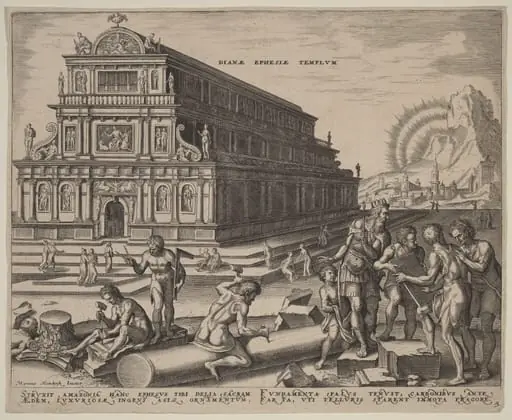 Dianae Ephesiae Templum (The Temple of Diana at Ephesus)
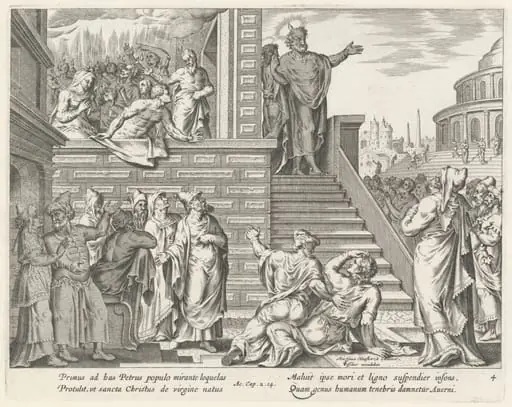 Saint Peter Speaks to the People about Christ
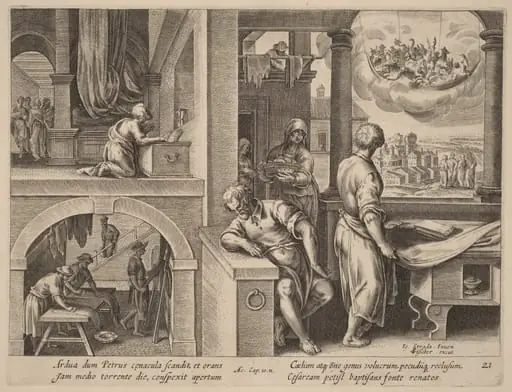 The Vision of Saint Peter
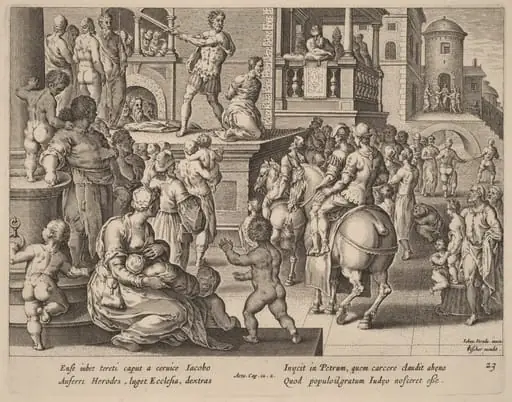 Beheading of Saint James
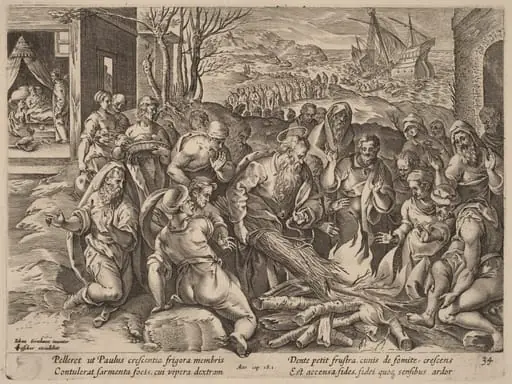 Saint Paul Shipwrecked on the Island of Melita
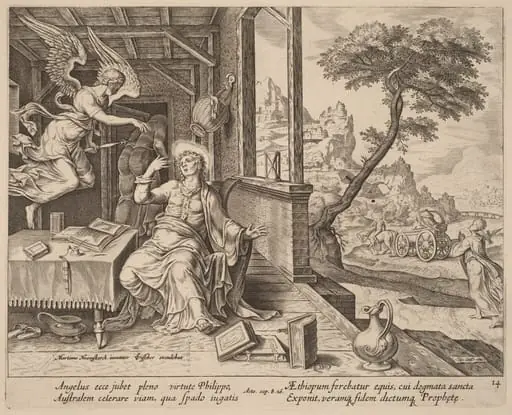 The Angel Orders Saint Philip to Accompany the Ethiopian Eunuch
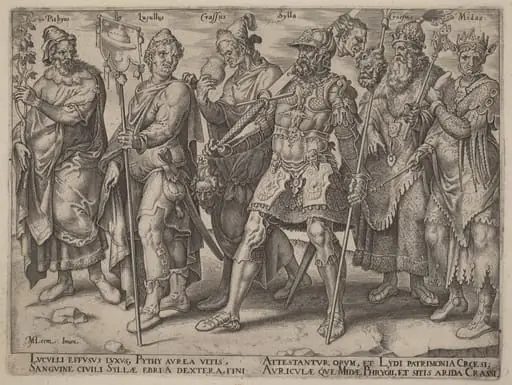 Notorious Examples of Wealth from Antiquity
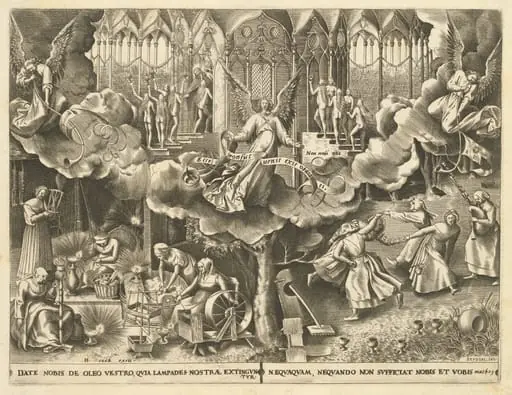 The Parable of the Wise and Foolish Virgins