Artwork
Spieler (Stevenson) [Gambler (Stevenson)]
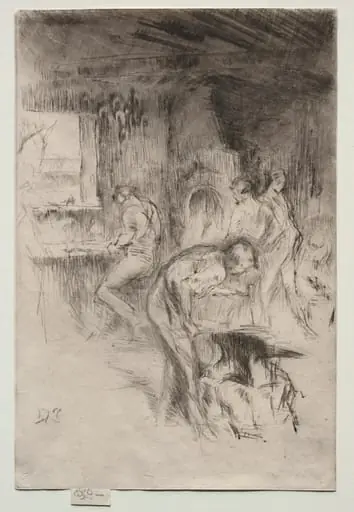
![Spieler (Stevenson) [Gambler (Stevenson)], by Paul Gangolf, ink, 1926](https://artifactworldgallery.com/img/paul-gangolf--spieler-stevenson-gambler-stevenson--f70150b624c87158-w1024.webp)
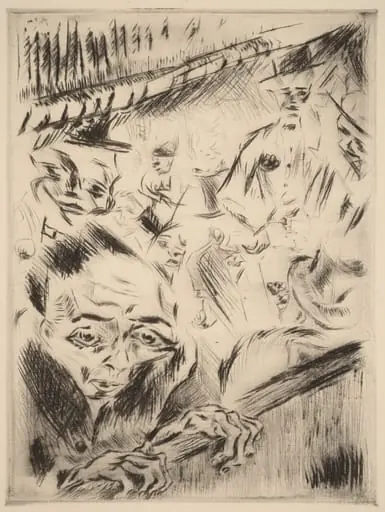
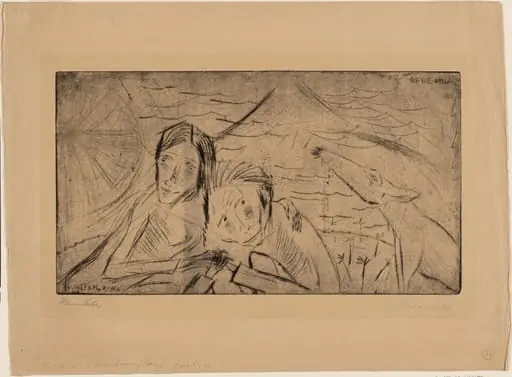
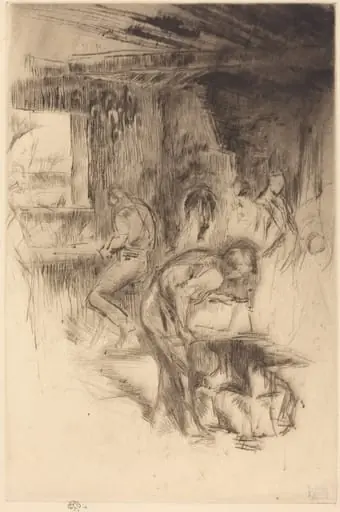
Spieler (Stevenson) [Gambler (Stevenson)] is an ink print by Paul Gangolf. It dates from 1926 and is held in the collection of the National Gallery of Art.
- Inscription
- Inscribed:lower right in plate: SPIELER; lower center in plate: STEVENSON; signed by artist, lower right under platemark, in graphite: Gangolf; by later hand, verso lower margin, in graphite: Die Spieler (Stevenson) G- 246/300-21324; by later hand, verso lower left, in blue pen and ink: 25 [circled]
About this work
Overview
The artist’s signature appears alongside the names 'Stevenson' and 'Spieler,' hinting at personal or symbolic references embedded in the imagery.
Paul Gangolf created this etching around 1926, depicting a tense interior scene titled Spieler (Stevenson). Executed on wove paper, the work belongs to the printmaking tradition of the early 20th century. Its raw, gestural lines and compressed composition suggest an immediate, emotionally charged moment rather than a polished narrative.
The artist’s signature appears alongside the names 'Stevenson' and 'Spieler,' hinting at personal or symbolic references embedded in the imagery.
Subject & Meaning
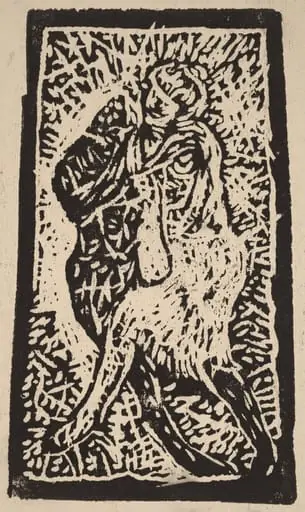
The scene centers on a shirtless man, his expression strained, surrounded by figures in states of distress: a woman shielding her face, a curled figure on the floor, and a shadowed croucher. The title and inscribed names suggest a connection to a specific individual or story, possibly drawn from lived experience. The composition conveys psychological tension without clear resolution, evoking isolation, conflict, or aftermath rather than action.
Technique & Style
Gangolf employed etching to achieve a dense, textured surface through sharp, irregular lines. The plate was incised with aggressive strokes, creating a sense of urgency and instability. Ink was applied unevenly, enhancing contrasts between light and shadow.
The roughness of the lines mimics sketchbook immediacy, prioritizing emotional impact over formal refinement. The wove paper’s subtle texture further absorbs the ink, deepening the somber tone.
History & Provenance
The work’s early history is undocumented beyond its creation date of approximately 1926. No exhibition records or collector histories are publicly known. The inclusion of the names 'Stevenson' and 'Spieler' may indicate a personal or local reference, possibly tied to Gangolf’s circle, but no verified biographical links have been established. The piece survives as a singular, unattributed example of his graphic work.
Context
Created in the interwar period, the etching reflects broader European artistic trends toward expressive, psychologically charged imagery. While not aligned with major movements like Expressionism, its raw technique and emotional intensity resonate with contemporaneous printmakers exploring inner turmoil. Urban alienation and the fragility of human relationships were recurring themes in German-speaking art circles during this time.
Legacy
Gangolf’s Spieler remains a minor but evocative example of early 20th-century German graphic art. It has not been widely studied or reproduced, and its influence on later artists is unrecorded. Nevertheless, its unvarnished depiction of emotional strain offers a quiet counterpoint to more celebrated works of the era, preserving a personal, unmediated moment in printmaking’s broader narrative.
Artist & collection