Artwork
John the Baptist in the Wilderness
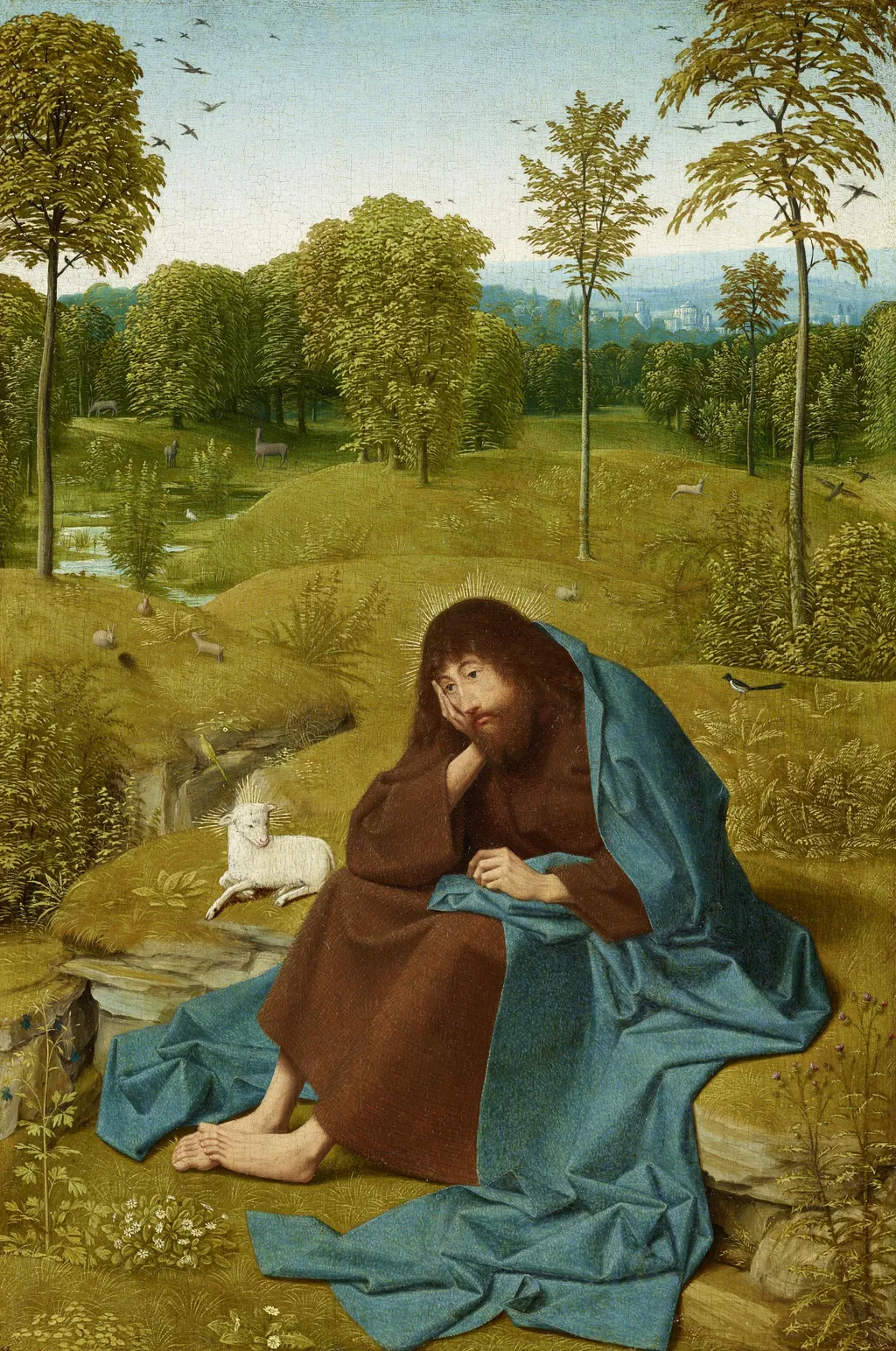
John the Baptist in the Wilderness is an oil painting by the Northern Renaissance artist Geertgen tot Sint Jans. It dates from 1490 and is held in the collection of the Gemäldegalerie Berlin.
About this work
John the Baptist in the Wilderness is a painting by Geertgen tot Sint Jans. It was made around 1480.
The painting is an oil paint work. It was used as a meditation aid for pilgrims, which gives us an idea of its intended purpose.
To learn more about the artist behind this work, look up the artist: Geertgen tot Sint Jans.
Overview
John the Baptist in the Wilderness is an Early Netherlandish oil painting on oak panel created by Geertgen tot Sint Jans around 1480 to 1490.
John the Baptist in the Wilderness is an Early Netherlandish oil painting on oak panel created by Geertgen tot Sint Jans around 1480 to 1490. Measuring 41.5 cm in height and 27.9 cm in width, the work depicts its titular saint seated in deep meditation within a verdant landscape. The painting is widely recognized as a significant milestone in the history of European landscape painting and serves as an important example of private devotional art from the late Middle Ages. It is currently held in the Gemäldegalerie in Berlin, where it is cataloged with inventory number 1631.
Subject & Meaning
The painting portrays John the Baptist seated on a grassy, rocky shelf, his head propped on his right hand in a melancholic, contemplative pose. He wears a brown camel hair robe draped with a blue cloth, and a haloed white lamb, the Lamb of God, rests beside him. While the brown garment and the wilderness setting align with the Gospel of Matthew, John's profound isolation and introspection derive not from the Gospels but from later traditions, such as Ludolph of Saxony's Vita Christi, which cast John as a forerunner of hermits. John's slightly crossed feet have been interpreted either as a naturalistic detail of someone deep in thought or as a symbolic reference to the crucifixion of Jesus or the Last Judgment. The surrounding flora, including dark blue aquilegia and thorny thistles, along with the lamb, direct John's meditation toward the Passion of Christ and the forgiveness of sins. The lush, summery setting may also resonate with John's summertime birth and his words, "He must increase, I must decrease," linking the saint's tragic end with the death of Christ.
Technique & Style
Executed in oil paint on an oak panel, the composition features precise, smooth, and detailed brushwork that renders foliage, animal textures, and fabric with equal clarity. The palette is dominated by lush greens, golds, and the vivid blue of the saint's drapery. Light falls evenly across the scene with soft shadows, employing diffuse and naturalistic illumination rather than dramatic chiaroscuro. The surface exhibits fine craquelure throughout. Geertgen masterfully orchestrates layered atmospheric depth, leading the eye from the hilly terrain and a meandering brook to distant blue mountains enveloped in haze. The drapery of the blue cloth seems to melt against the curves of the landscape, formally linking the seated figure with his surroundings. This rendering of the natural world represents a hitherto unmatched artistic innovation, establishing the work as an incunabulum of European landscape painting.
History & Provenance
The exact date of the panel's creation is unknown, though stylistic similarities with two securely attributed Geertgen panels often dated around 1485 place its origin in that same period. The painting may have been mentioned in 17th century documents as residing in the monastery of the Jansheren in Haarlem, but subsequent documentation is absent. The panel resurfaced at the end of the 19th century in the possession of the English painter Charles West Cope. Initially misattributed to Joachim Patinir, the work was correctly attributed to Geertgen tot Sint Jans in 1902. It was subsequently acquired from Percy Macquoid in 1902 by the Kaiser Friedrich Museumsverein. The painting was later exhibited at the Exposition des primitifs flamands à Bruges and is now permanently housed in the Gemäldegalerie, Staatliche Museen zu Berlin, in the German paintings 13th to 16th century room 4.
Context
Geertgen tot Sint Jans, active in Haarlem, was closely associated with the Knights of Saint John, for whom he produced numerous works. This depiction of the order's patron saint likely served as a meditation aid for a knight or pilgrim of the Haarlem Commandery. The painting marks a pivotal moment in Northern Renaissance art, where the secular spirit and the inner life of the individual began to take precedence. Geertgen's approach ventures into a mysticism and fantasy closer to German painters, emphasizing personal thought and spiritual solitude. The juxtaposition of John's silent melancholy with the vibrant, paradise like landscape creates a mysterious, lyrical, yet dramatic atmosphere. This focus on private devotion and the innovative treatment of the natural world highlight the early Dutch love for landscape and the shifting priorities of late medieval religious experience.
Legacy
John the Baptist in the Wilderness is regarded as the incunabulum of European landscape painting, celebrated for its unprecedented and innovative rendering of the natural environment. The work established a profound precedent for the development of landscape as a primary vehicle for narrative and emotion in Northern European art. Its poetic and crystal clear articulation of psychological depth, showing how an individual can be overcome by elusive sorrow even within a paradise like setting, has resonated through art history. The painting's influence extended to subsequent generations of Dutch artists, who built upon Geertgen's foundational techniques of atmospheric perspective and naturalistic detail, cementing his role as a decisive figure in the shaping of painting in the northern Netherlands.
Own this work as a print
Artist & collection
Artist
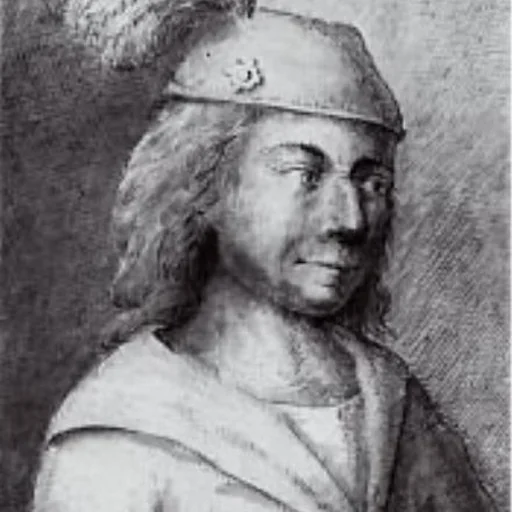
Geertgen tot Sint Jans (c. 1465 – c. 1495), also known as Geertgen van Haarlem, Gerrit van Haarlem, Gerrit Gerritsz, Gheertgen, Geerrit, Gheerrit, or any other diminutive form of Gerald, was an Early Netherlandish…