Artwork
St. John on Patmos
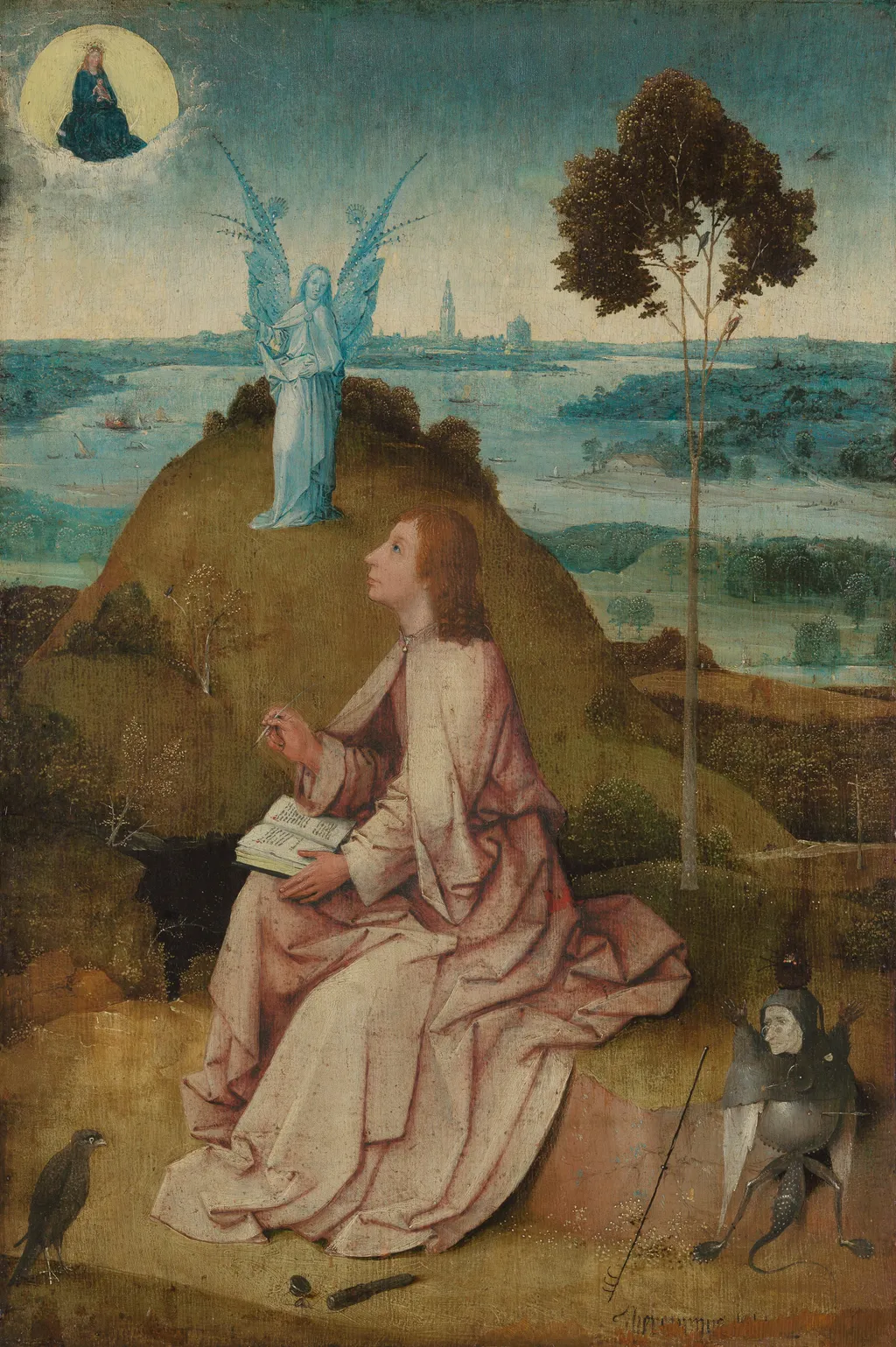
St. John on Patmos is an oil painting by the Northern Renaissance artist Hieronymus Bosch. It dates from 1495 and is held in the collection of the Gemäldegalerie Berlin. St.
About this work
Subject & Meaning
Additionally, a small devil attempts to steal John's pen holder, representing the temptation of the scribe or the recording of sins.
The painting depicts Saint John the Evangelist on the island of Patmos, where he received the revelation of the Apocalypse. Bosch portrays the saint writing while gazing upward at a vision of the Virgin Mary with the Christ Child, who sits upon a crescent moon and is indicated by an angel. The composition integrates specific symbols: an eagle, the traditional attribute of John, appears as a bird in the lower foreground, while an inkwell signifies his authorship. A surreal, half-demonic creature with an insect body and human head references the apocalyptic nature of the text. Additionally, a small devil attempts to steal John's pen holder, representing the temptation of the scribe or the recording of sins. Although the setting is traditionally the Greek island, the landscape reflects a Dutch river environment, grounding the mystical vision in a familiar cultural context.
Technique & Style
The painting is executed in oil on oak panel, measuring 63 cm in height and 43.3 cm in width. It depicts Saint John on the island of Patmos in a composition characteristic of Early Netherlandish religious art, with formal stylistic elements including symbolic figures such as the pelican and the eagle representing John, as well as a reverse side painted in grisaille showing scenes from the Passion of Christ and a pelican motif. The work was likely created as part of a polyptych, possibly for the Lieve-Vrouwe-Broederschap altar in 's-Hertogenbosch, and reflects Bosch's use of symbolic narrative and intricate detail. The handling of the medium demonstrates his typical support preparation and layered application typical of Early Netherlandish oil painting practice.
The painting's condition and material integrity are noted through its dual-sided execution, with the reverse panel featuring grisaille figures and symbolic imagery consistent with polyptych conventions. The formal composition includes a central vision of John receiving revelation, flanked by Marian imagery and apocalyptic symbols such as demons and hybrid creatures, all rendered in oil on panel with characteristic Boschian attention to symbolic detail and spatial complexity.
The technique employs oil paint on wood support, with the panel's dimensions and material consistency aligning with Bosch's known working methods in the late 15th century, including underdrawings and layered glazing that contribute to the work's enduring visual and structural integrity.
History & Provenance
The double-sided panel is generally accepted as the upper outside wing of the Lieve-Vrouwe-Broederschap’s Mariaretabel installed in the Sint-Janskathedraal, ’s-Hertogenbosch, completed in 1477 by Adriaen van Wesel. Dendrochronology places the oak support’s earliest possible paint date around 1489, though the wood’s extended seasoning suggests painting likely occurred closer to 1495 or slightly later.
The work was commissioned by Jan van Vladeracken, sworn brother and provost of the Lieve-Vrouwe-Broederschap, and may include portraits of members among its figures. After dismantling of the retable in the seventeenth century, the panel entered English ownership and was purchased by the Gemäldegalerie, Berlin in 1907 from William Fuller-Maitland.
Hieronymus Bosch's *St. John on Patmos* is held in the Gemäldegalerie in Berlin, Germany. The museum acquired the panel in 1907 from the London collector William Fuller-Maitland. The work was exhibited in Amsterdam in 1958 as part of *Medieval Art of the Northern Netherlands* and later appeared in the 2001 retrospective *Jheronimus Bosch* at the Museum Boijmans Van Beuningen in Rotterdam.
Context
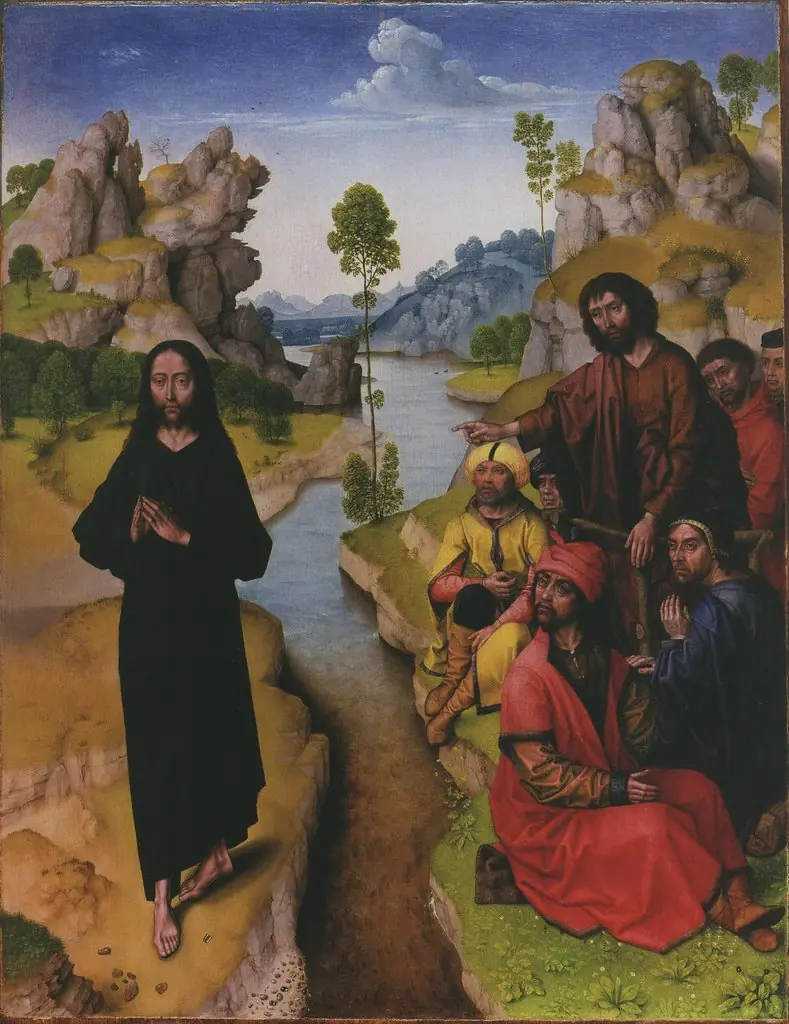
Scholars debate whether this panel and its companion, St. John the Baptist in the Wilderness, originally served as wings for an altarpiece commissioned for St. John's Cathedral in 's-Hertogenbosch. This hypothesis, first advanced in the 1940s, explains the grisaille painting on the reverse, a characteristic feature of closed polyptychs. While dendrochronological analysis supports a creation date around 1489, some experts argue for a later date near 1495 based on wood usage patterns.
Art historian Charles de Tolnay traced the composition's origins to earlier prints by the Master E.S. and Martin Schongauer. Jos Koldeweij further contextualized the work within the Lieve-Vrouwe-Broederschap, noting that the depiction of John on Patmos was the brotherhood's primary symbol. The painting's separation from the original ensemble occurred in the 17th century, with the Berlin panel eventually acquired from William Fuller-Maitland in 1907.
Legacy
The pairing of St. John on Patmos with St. John the Baptist in the Wilderness has long shaped its reception as part of a dismantled altarpiece from ’s‑Hertogenbosch’s St. John’s Cathedral, a hypothesis supported by dendrochronology placing the oak panel around 1489-1495. Bosch’s imagery, including the surreally hybrid "Tytinillus" and the grisaille Passion scenes on the reverse, became emblematic of the Lieve‑Vrouwe‑Broederschap, recurring in their vestments, prints, and chapel art. The work’s apocalyptic vision and iconography influenced later Northern artists, notably through engravings by the Master E.S. and Martin Schongauer, whose compositions Bosch adapted. After its 1907 acquisition by Berlin’s Gemäldegalerie from William Fuller‑Maitland, the panel entered international exhibitions (Amsterdam, 1958; Rotterdam, 2001), consolidating its status within Early Netherlandish canon.
Own this work as a print
Artist & collection
Artist
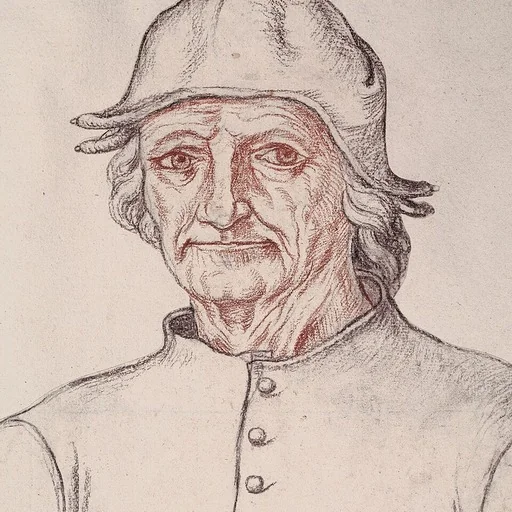
Hieronymus Bosch (; Dutch:; born Jheronimus van Aken; c. 1450 – 9 August 1516) was a Dutch painter from Brabant. He is one of the most notable representatives of the Early Netherlandish painting school. His work,…

 John the Baptist in the Wilderness
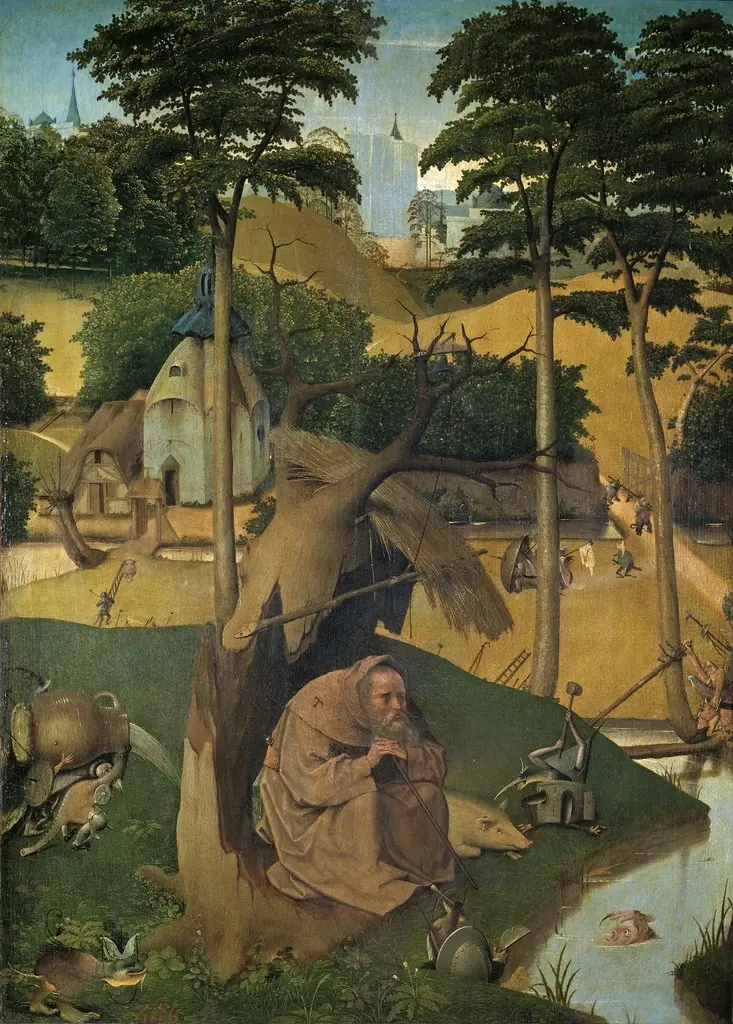 The Temptation of St Anthony
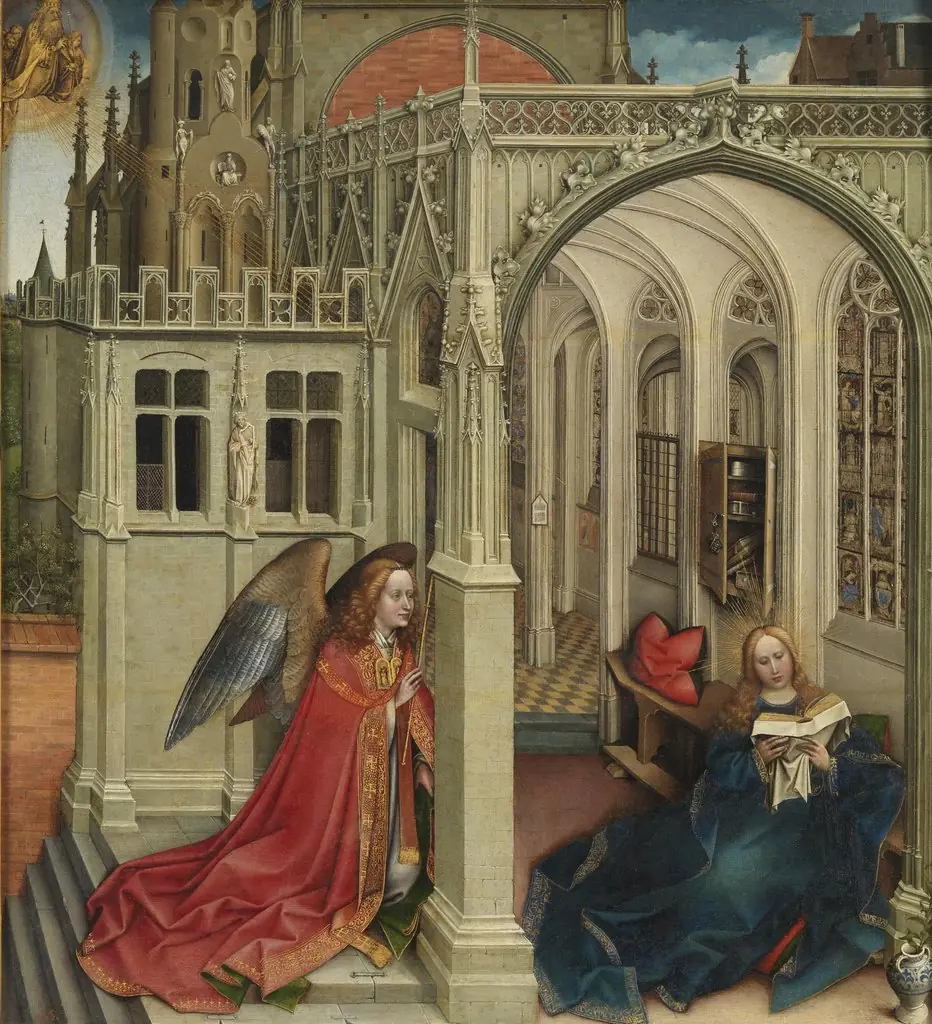 Annunciation
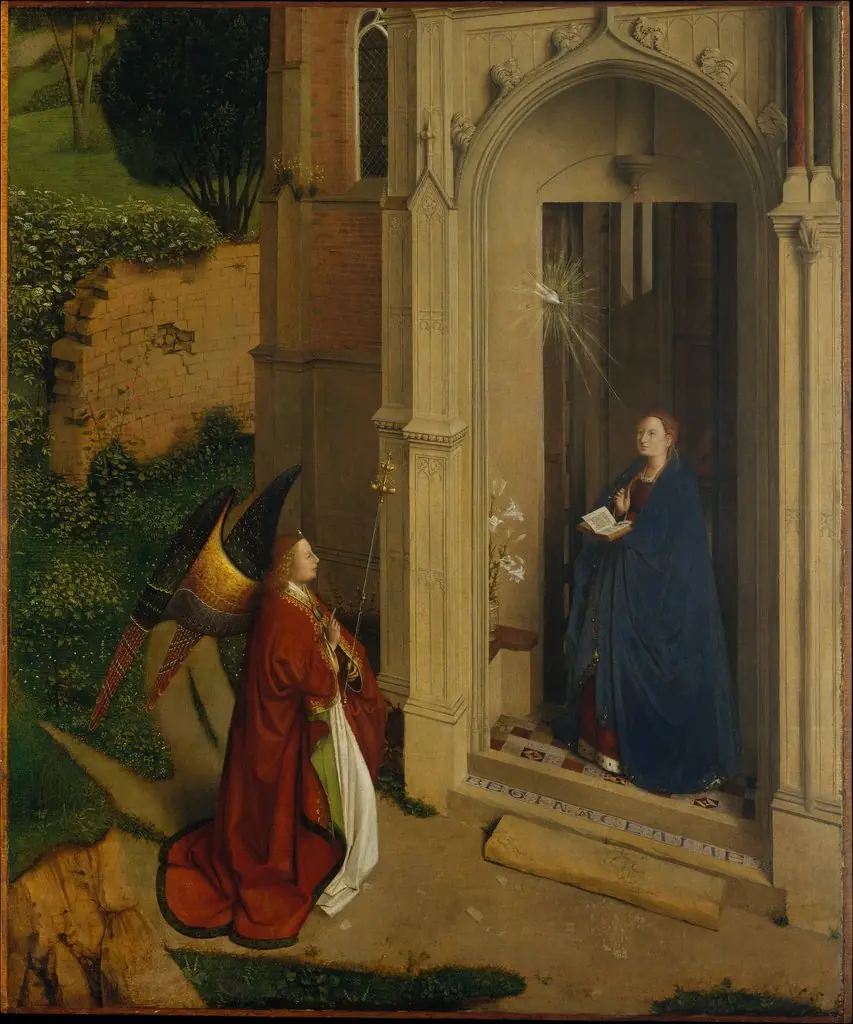 The Annunciation
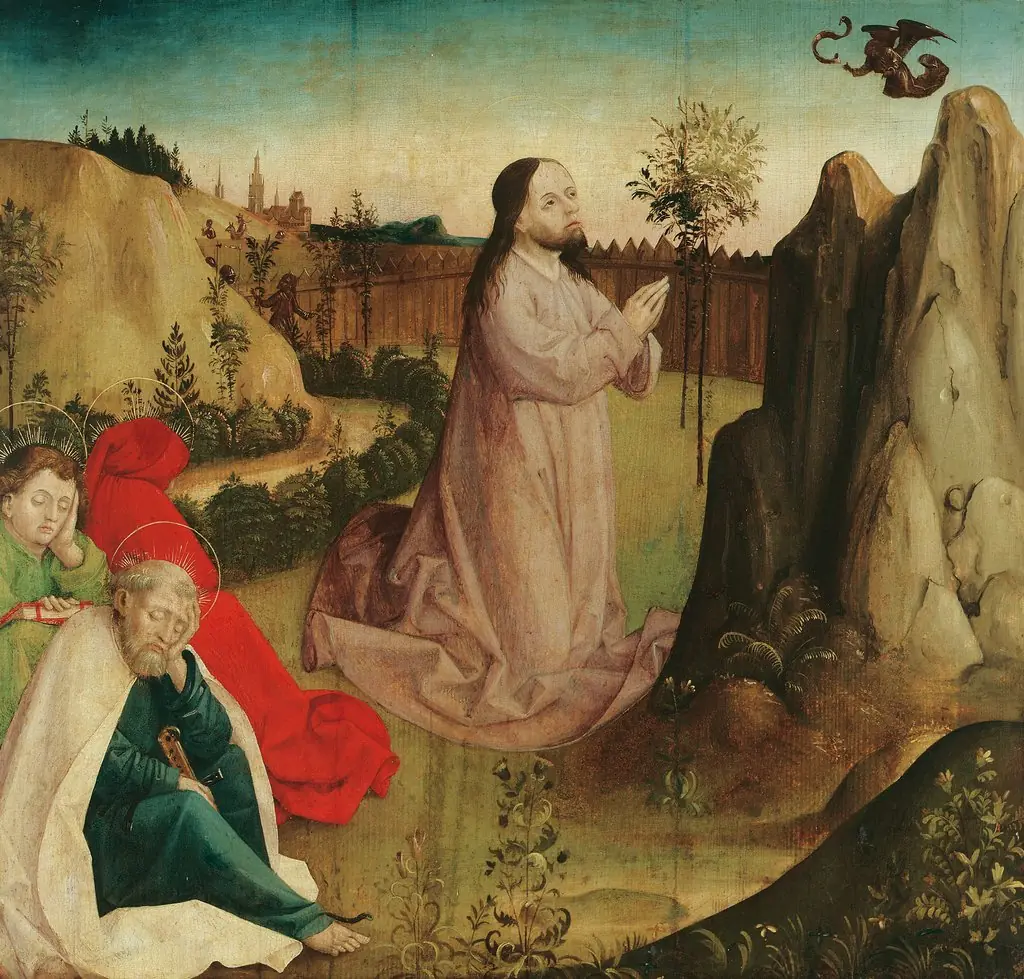 Christus am Ölberg
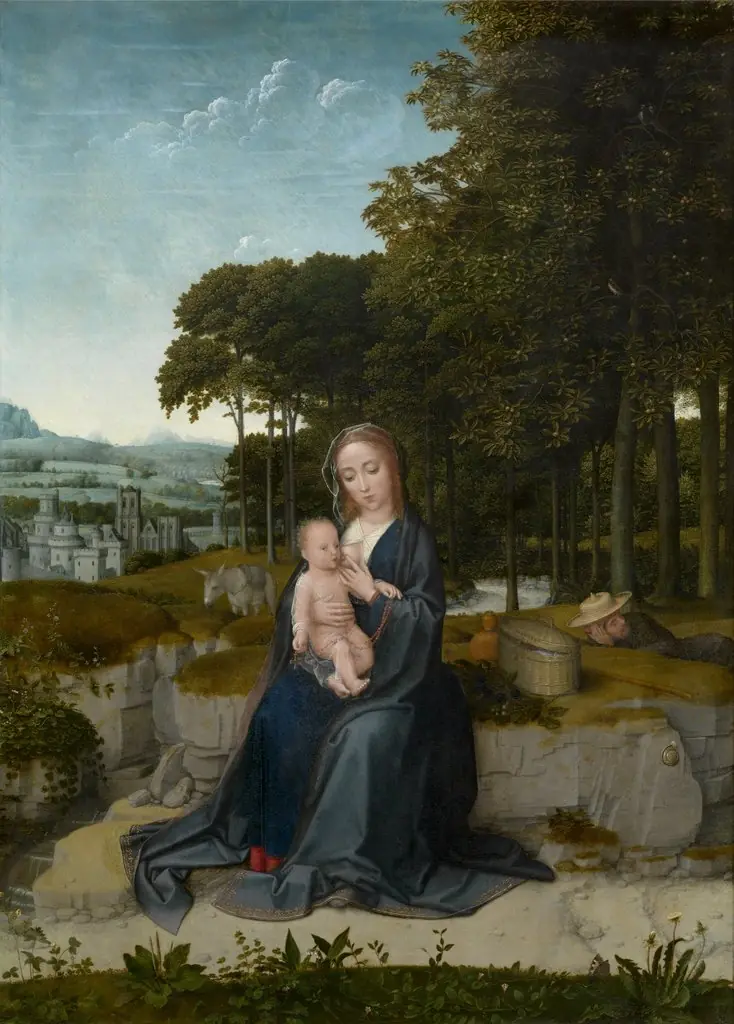 Rest on the Flight into Egypt
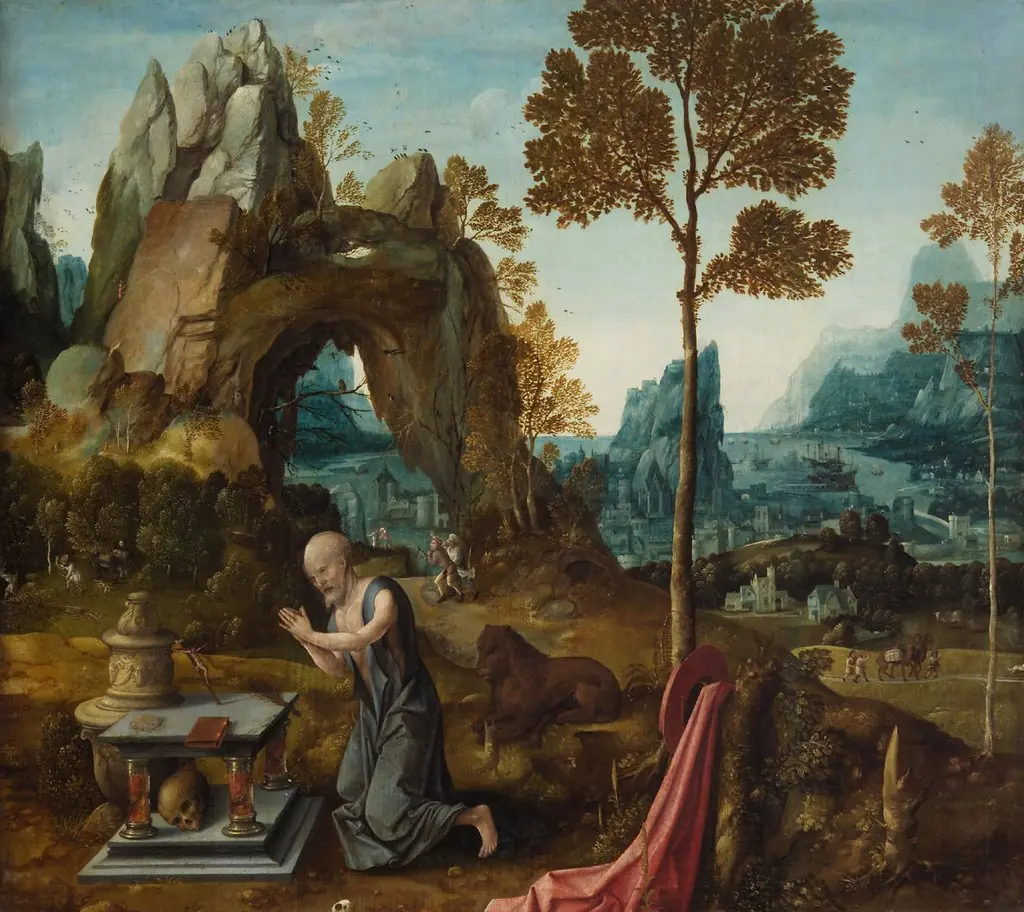 St. Jerome as penitent in a landscape
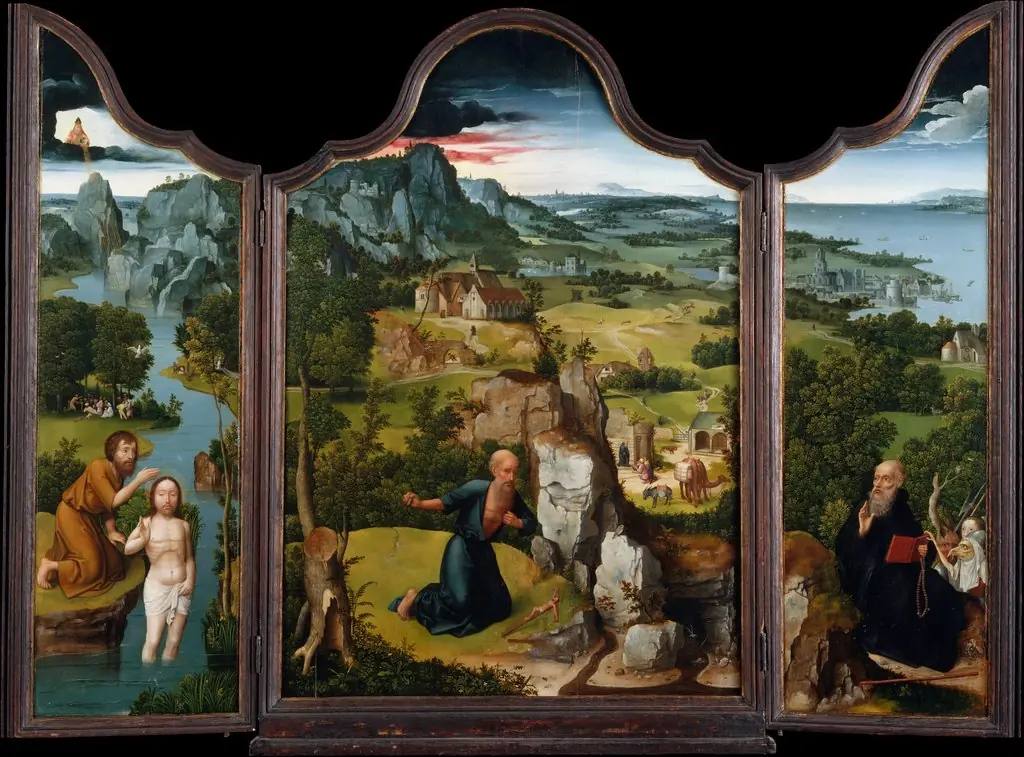 The Penitence of Saint Jerome
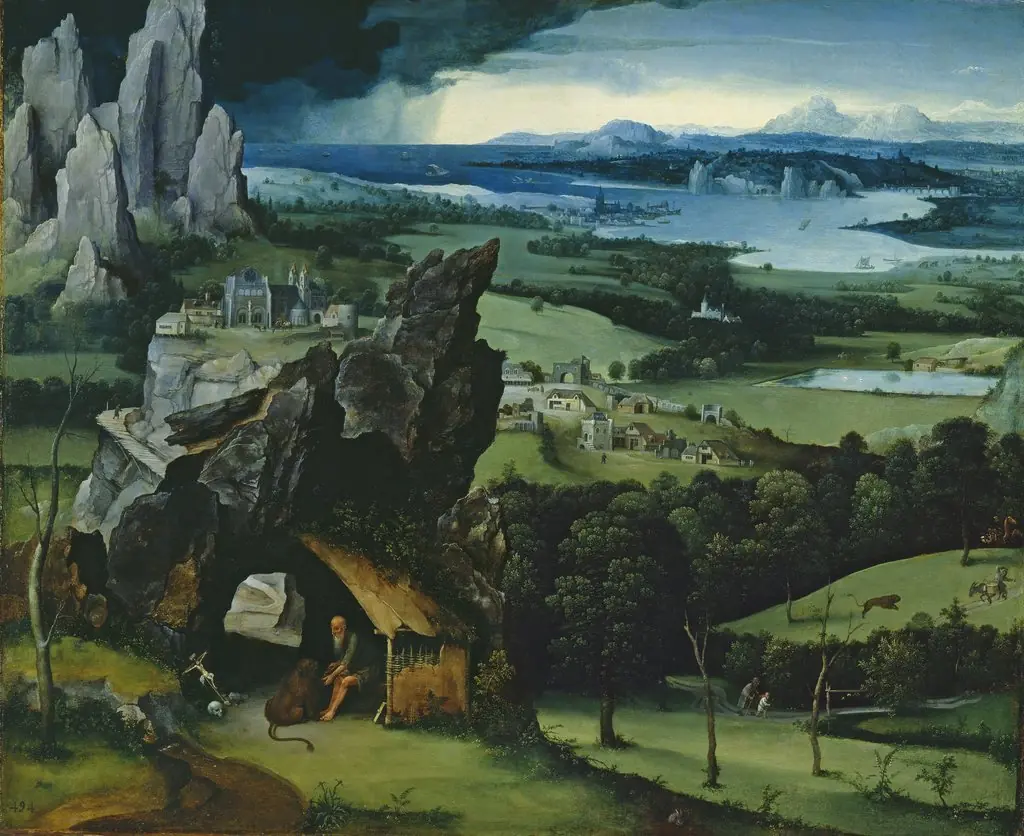 Landscape with St Jerome
 The Annunciation
 Die Predigt Johannes des Täufers / Ecce Agnus Dei
- St. John on the Island of Patmos