Artwork
Adoration of the Kings
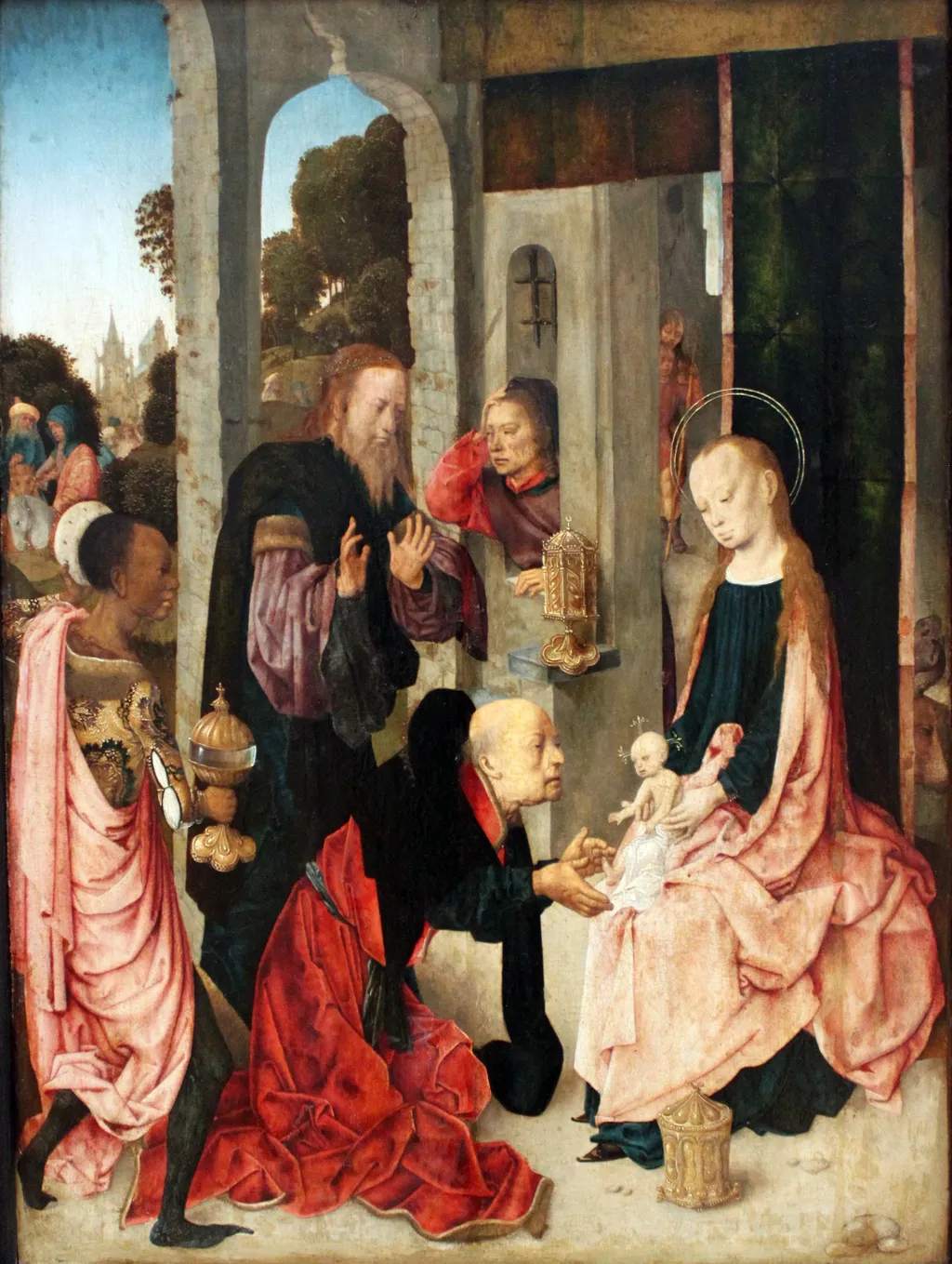
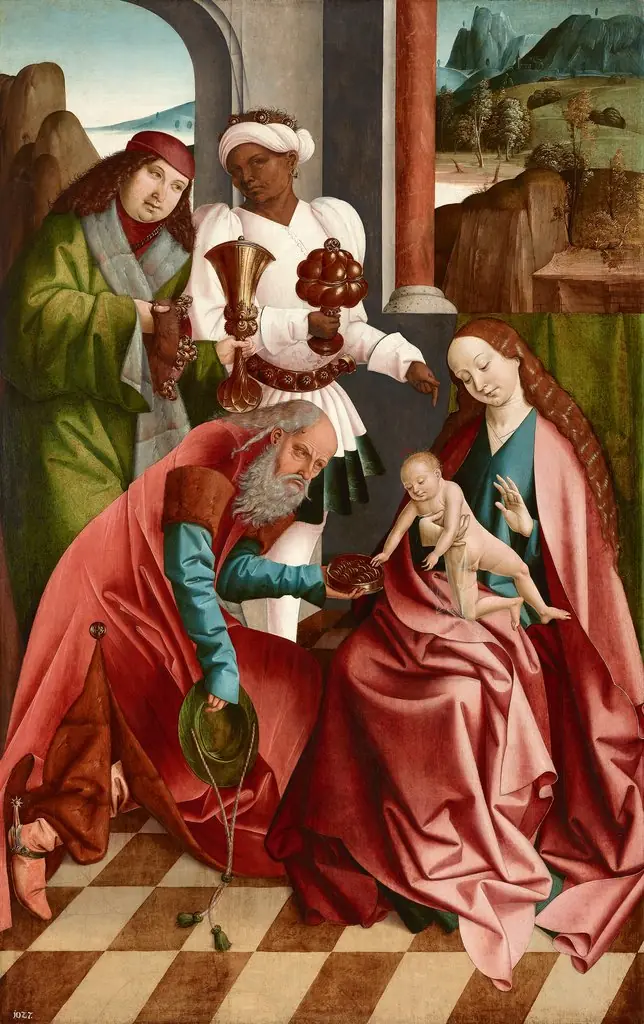
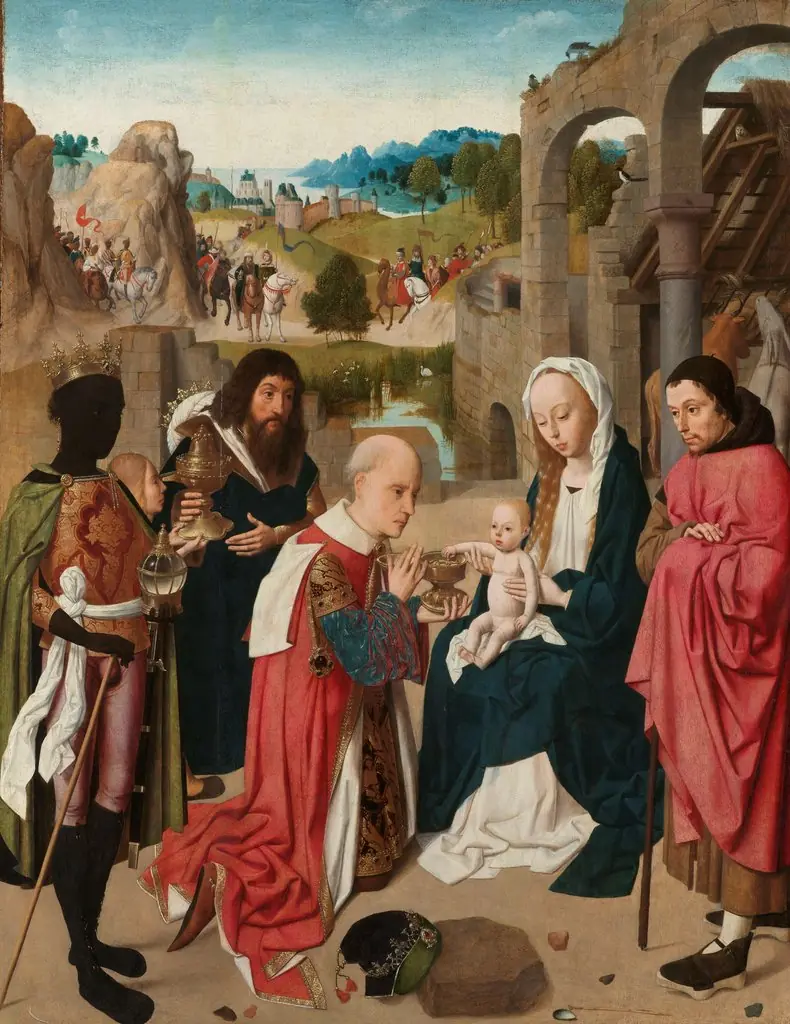
Adoration of the Kings is an oil painting by the Northern Renaissance artist Master of the Virgo inter Virgines. It dates from 1496 and is held in the collection of the Gemäldegalerie Berlin.
About this work
Overview
Executed in oil paint on an oak panel, the work measures 63 by 48 centimeters.
The Adoration of the Kings is a religious painting created around 1485 to 1490 by the anonymous Early Netherlandish artist known as the Master of the Virgo inter Virgines. Executed in oil paint on an oak panel, the work measures 63 by 48 centimeters. It is currently held in the Gemaldegalerie der Staatlichen Museen zu Berlin. The painting is a quintessential example of the master's output, showcasing his distinctive approach to religious narrative, characterized by intense emotional expression and a highly individualized treatment of the human figure.
Subject & Meaning
The artwork depicts the traditional biblical scene of the Adoration of the Magi. The Virgin Mary, shown with a halo and draped in pink and dark blue garments, sits holding the naked Christ Child on her lap within a stone architectural setting with arches. Before them, the three Magi present their gifts. The oldest king, kneeling in black and red robes, extends his hands toward the child. Beside him, a bearded figure in a dark fur-lined cloak raises his hands in reverence, while a third figure in ornate gold and pink robes holds a covered golden cup. A second golden vessel rests on the ground near Mary. In the background, a landscape unfolds with trees, distant buildings, and small mounted figures approaching, and a younger figure leans through an archway holding a lantern-like object. The scene emphasizes the profound religious tension and devotion of the figures witnessing the nativity.
Technique & Style
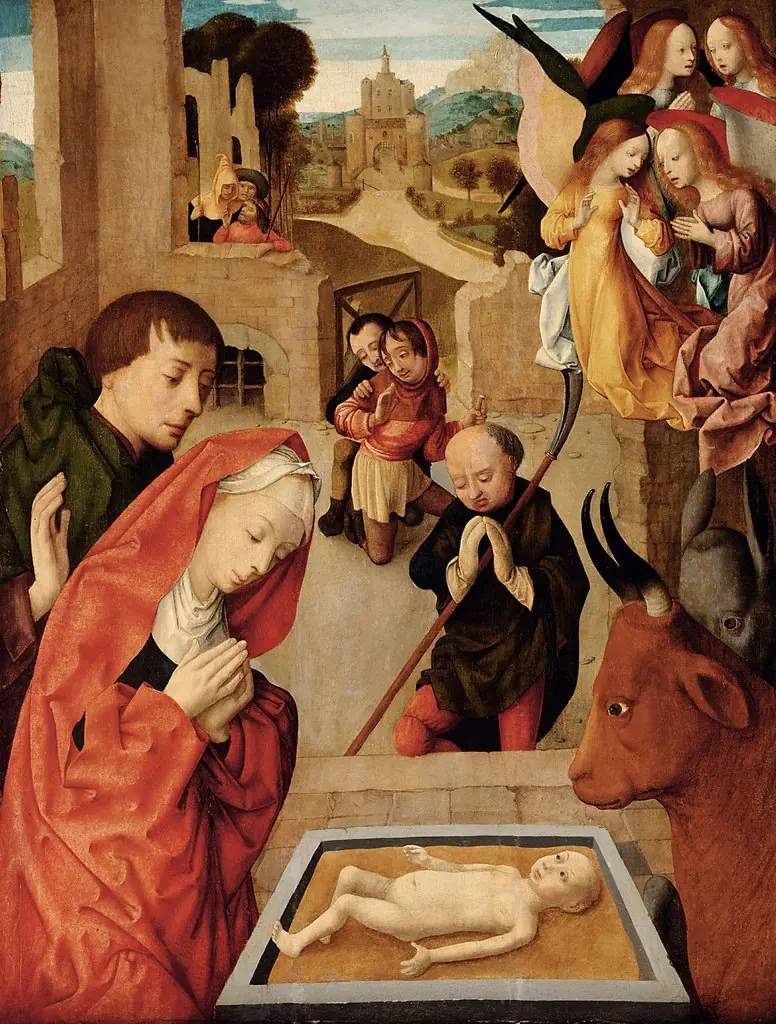
The painting is executed in oil on an oak panel support. The artist employed fine, smooth brushwork with careful attention to the textures of fabric, metal, and stone. Light falls evenly across the figures, modeling faces and drapery with soft shadows. The palette is dominated by pinks, deep reds, blacks, and gold accents, creating a delicate, finely balanced coloring. Stylistically, the work is distinguished by a lively use of line and dainty, somewhat theatrical gestures. The figures appear fragile, with highly individualized facial features. They look ill and exhausted, marked by sunken cheeks, high foreheads, and receding hairlines. This striking physical appearance conveys the inner tension of profound religious feeling, a hallmark of the master's uncompromising realism that prioritized emotional intensity over elegance.
History & Provenance
Created circa 1485 to 1490, the painting was produced during the artist's period of activity in the northern Netherlands. The work was once owned by Jacques Seligmann, a prominent figure in the art trade, before entering the collection of the Staatliche Museen zu Berlin. It is presently housed in the Gemaldegalerie in Berlin, where it remains an accessible part of the museum's collection of Early Netherlandish art.
Context
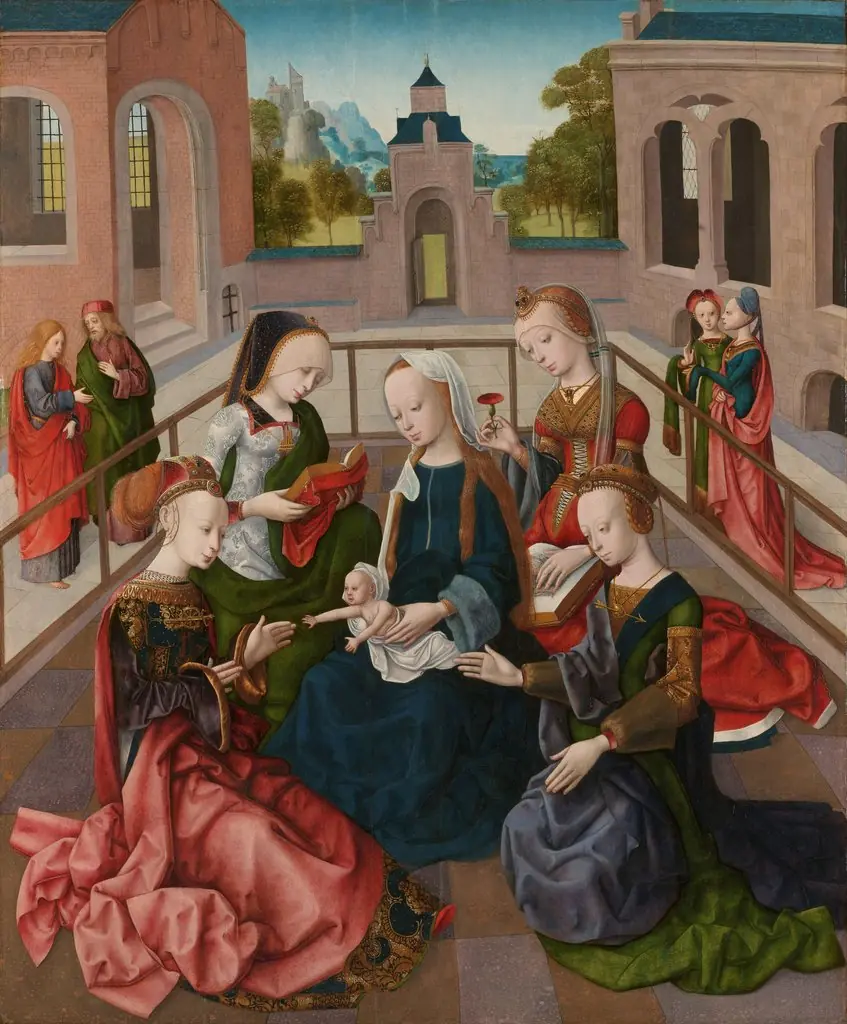
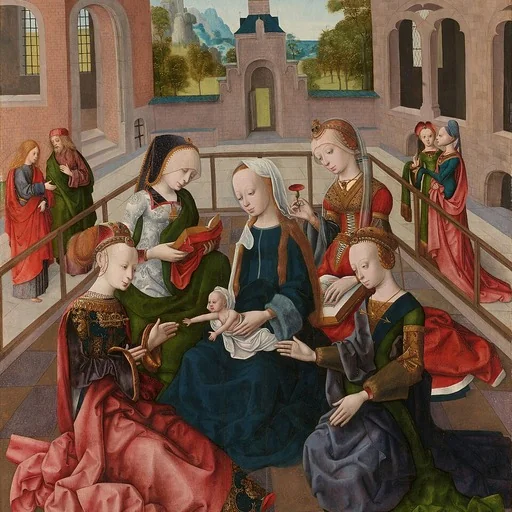
The Master of the Virgo inter Virgines was an Early Netherlandish painter and designer of woodcuts active around Delft between 1483 and 1498, with presumed activity in Gouda as well. His name is derived from his altarpiece of the Virgin and Child with Four Holy Virgins, formerly in the Konigsveld convent and now in the Rijksmuseum in Amsterdam. He was first distinguished as an individual artistic personality in 1903. His style shows the influence of Justus van Gent and Hugo van der Goes, suggesting he likely spent time in the southern Netherlands. Scholars describe him as the most uncompromising realist of his contemporaries, completely unconcerned with elegance, and a forerunner of the Dutch school of painting. He worked in Delft alongside the Master of Delft, whose style shared a root in realism but leaned toward Antwerp Mannerism.
Legacy
The Adoration of the Kings stands as a typical and defining work of the Master of the Virgo inter Virgines, encapsulating his emotionally charged and physically expressive style. His stark realism and departure from idealized elegance positioned him as a significant forerunner to the broader Dutch school of painting. The artist's distinct visual language, particularly his exhausted and intensely devout figures, also translated into his work as a designer of woodcuts, which circulated his idiosyncratic compositions throughout the northern Netherlands at the turn of the sixteenth century.
Own this work as a print
Artist & collection
Artist
Master of the Virgo inter Virgines
The Master of the Virgo inter Virgines was an Early Netherlandish painter and designer of woodcuts active around Delft between 1483 and 1498.