Artwork
The Willow
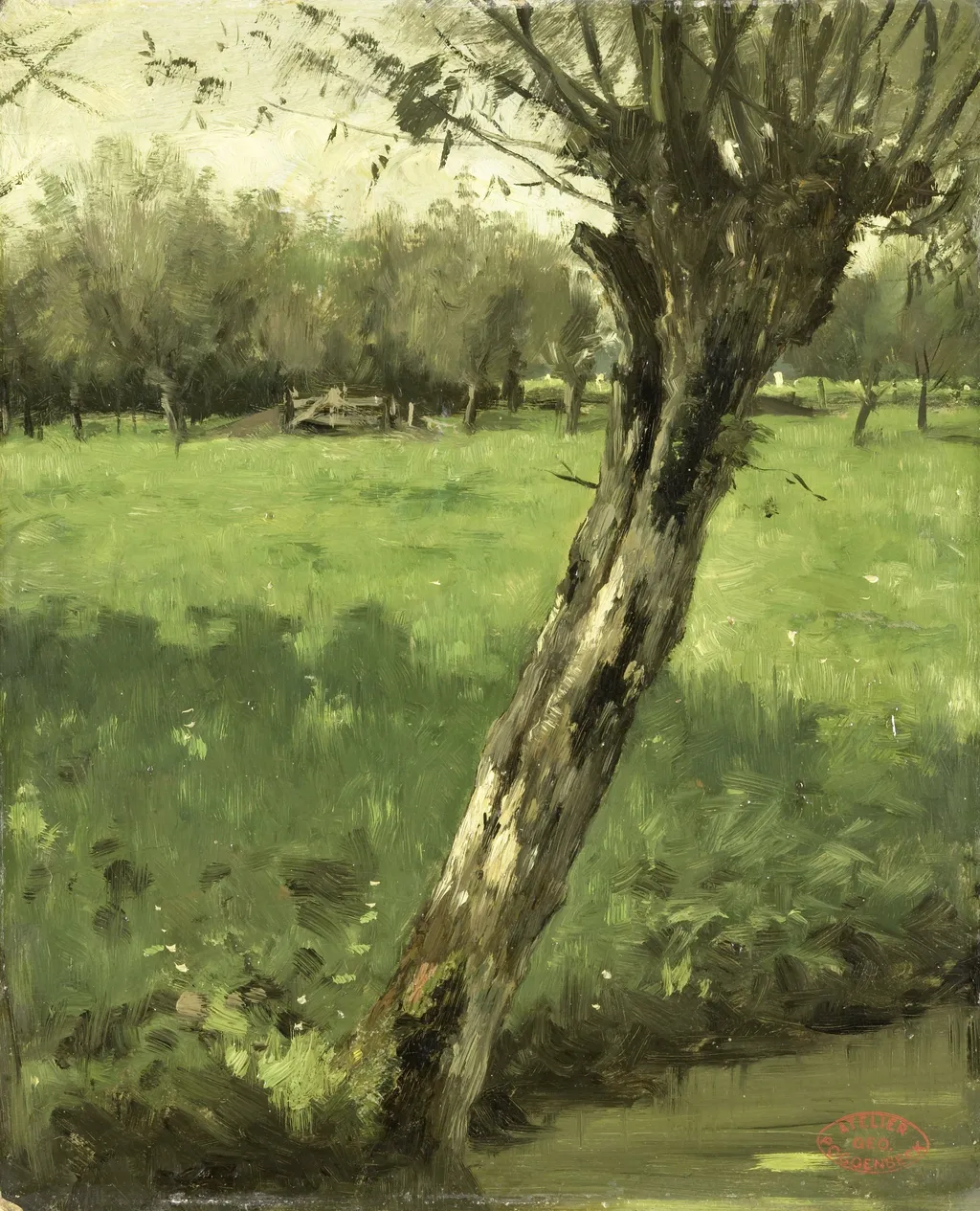
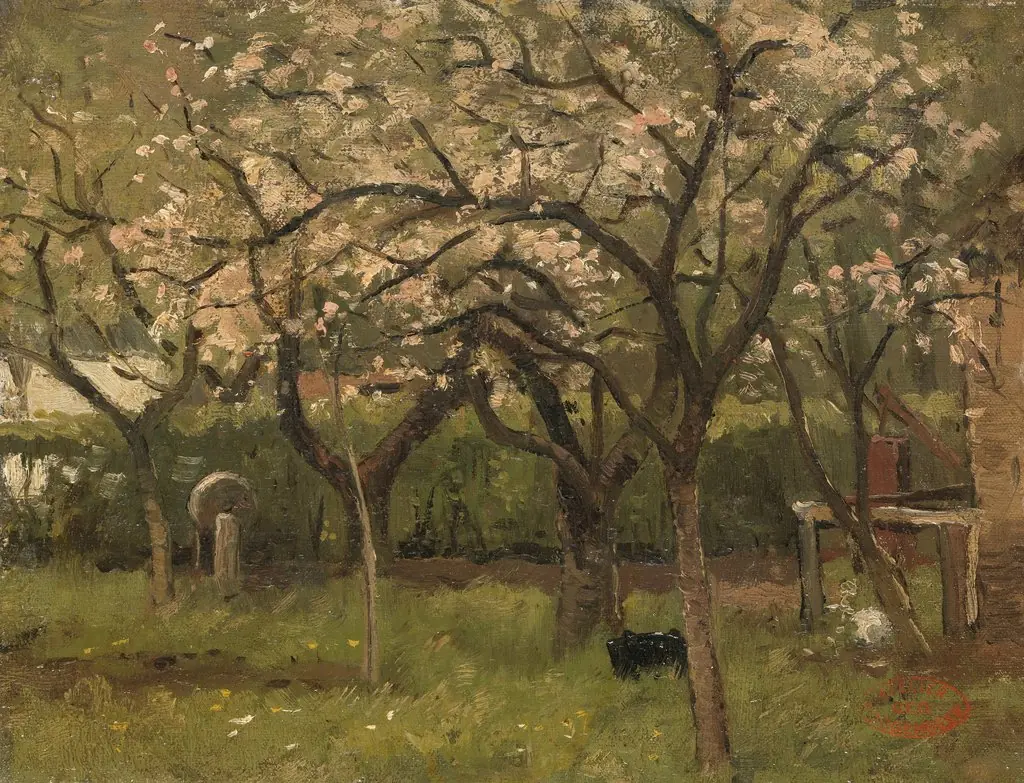
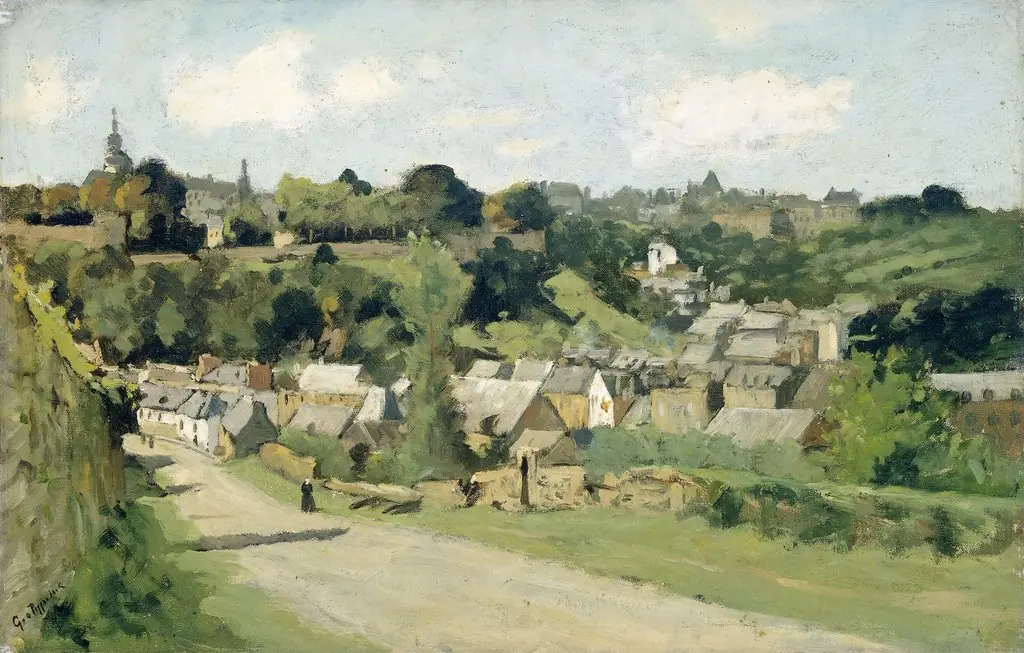
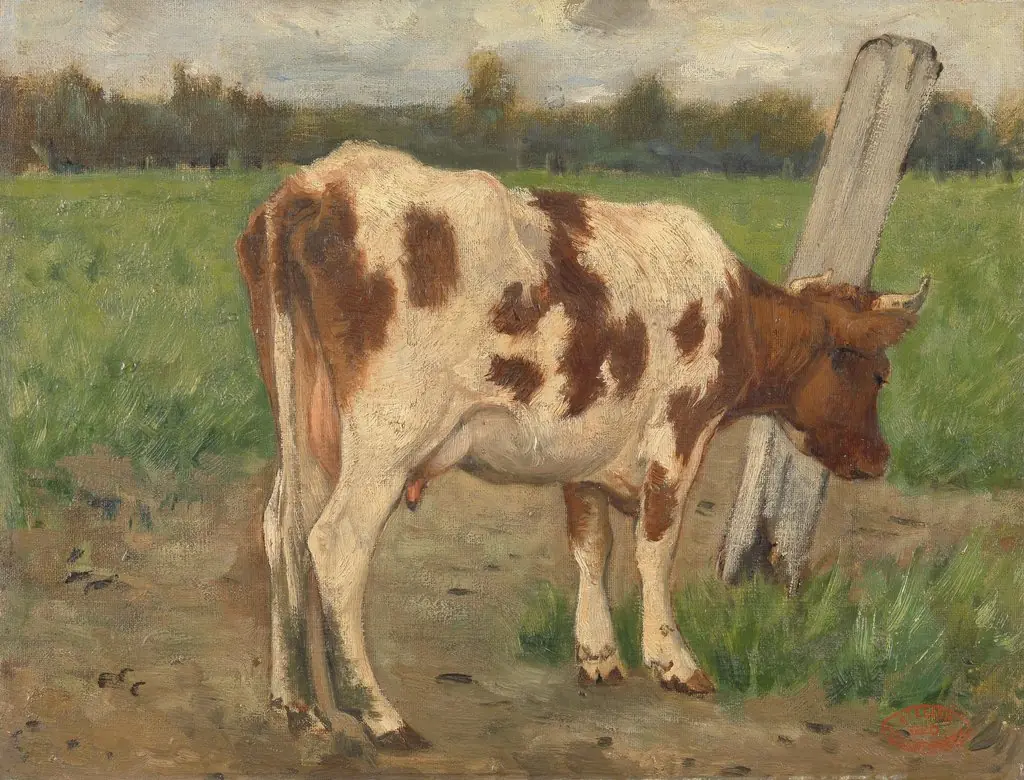
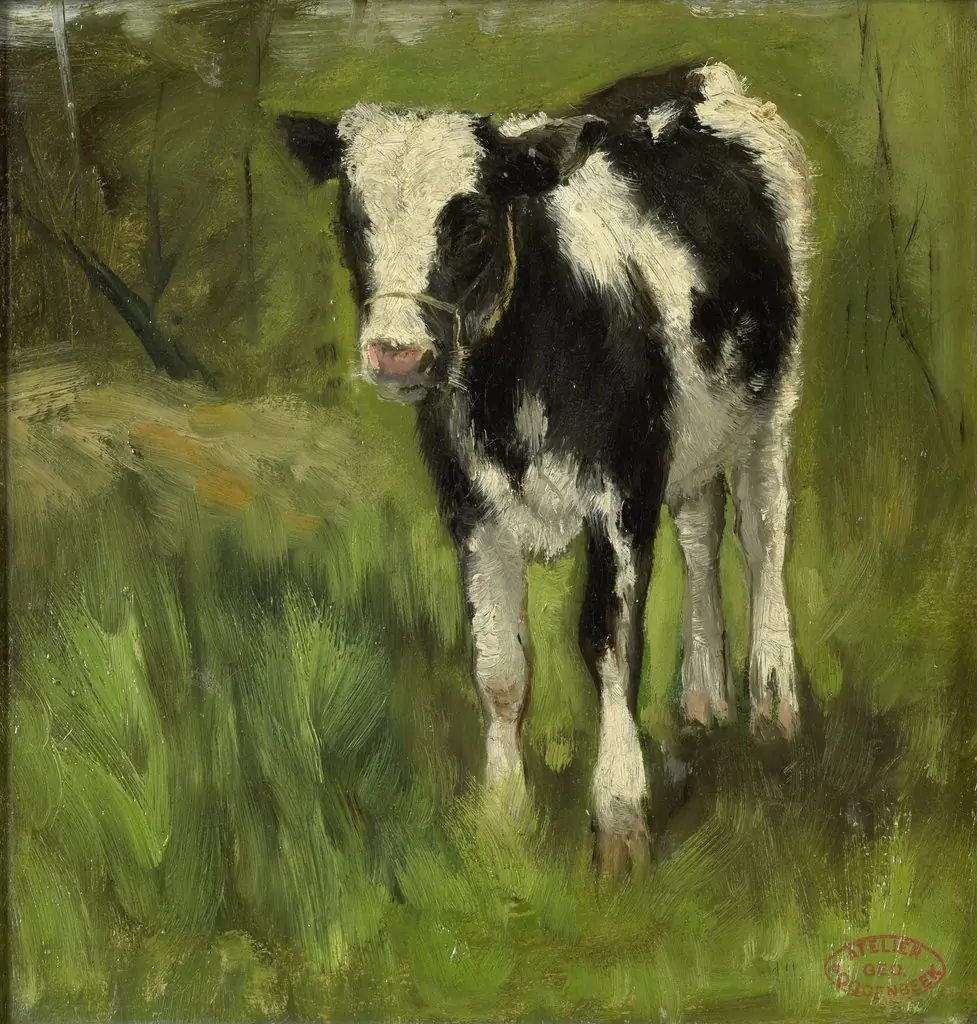
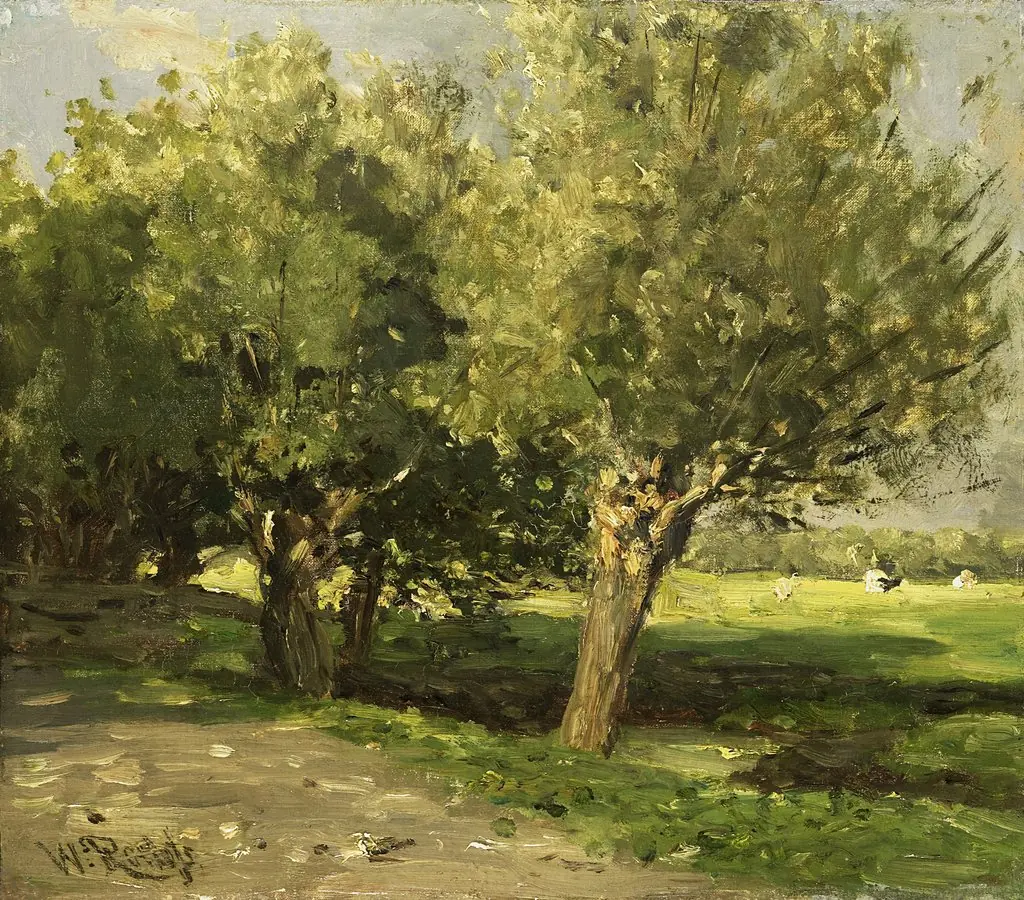
The Willow is an oil painting by the Impressionist artist Geo Poggenbeek. It dates from 1894 and is held in the collection of the Rijksmuseum.
About this work
Subject & Meaning
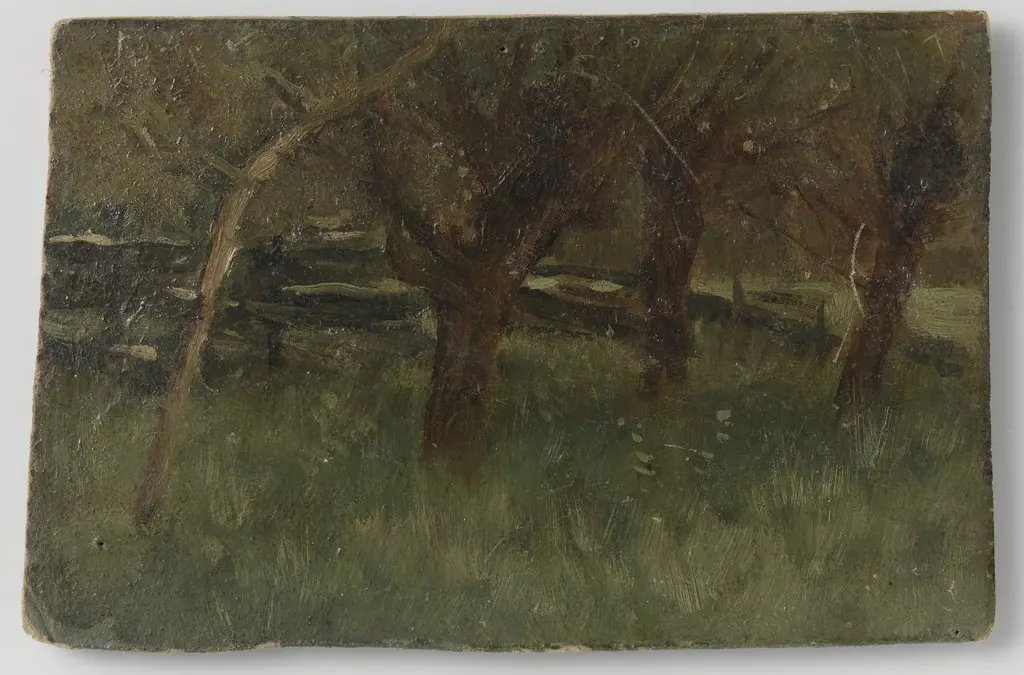
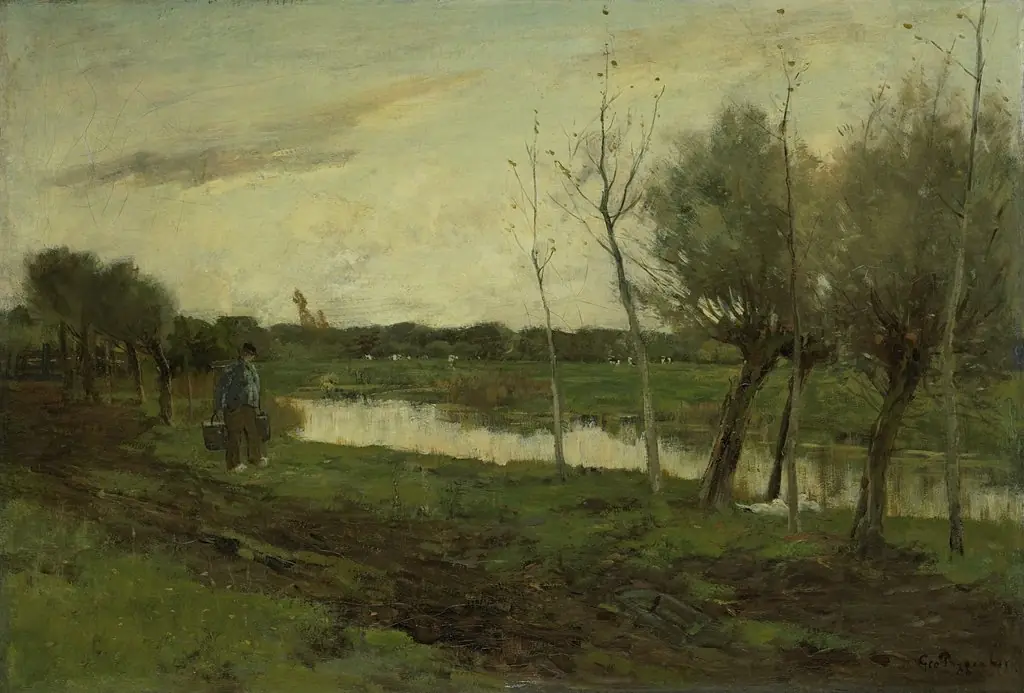
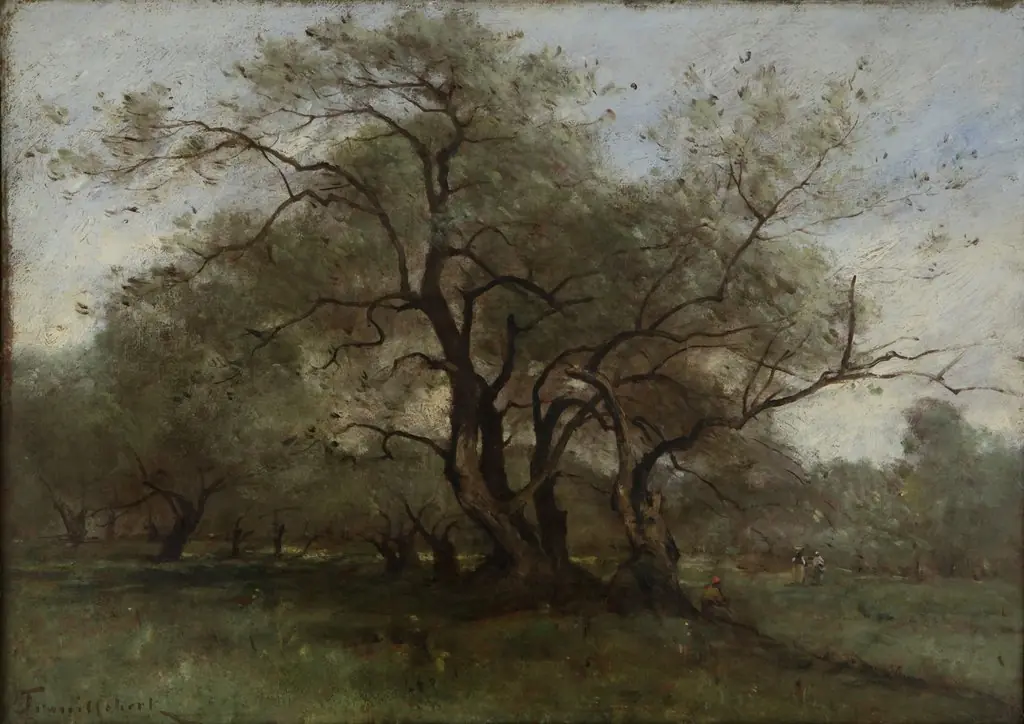
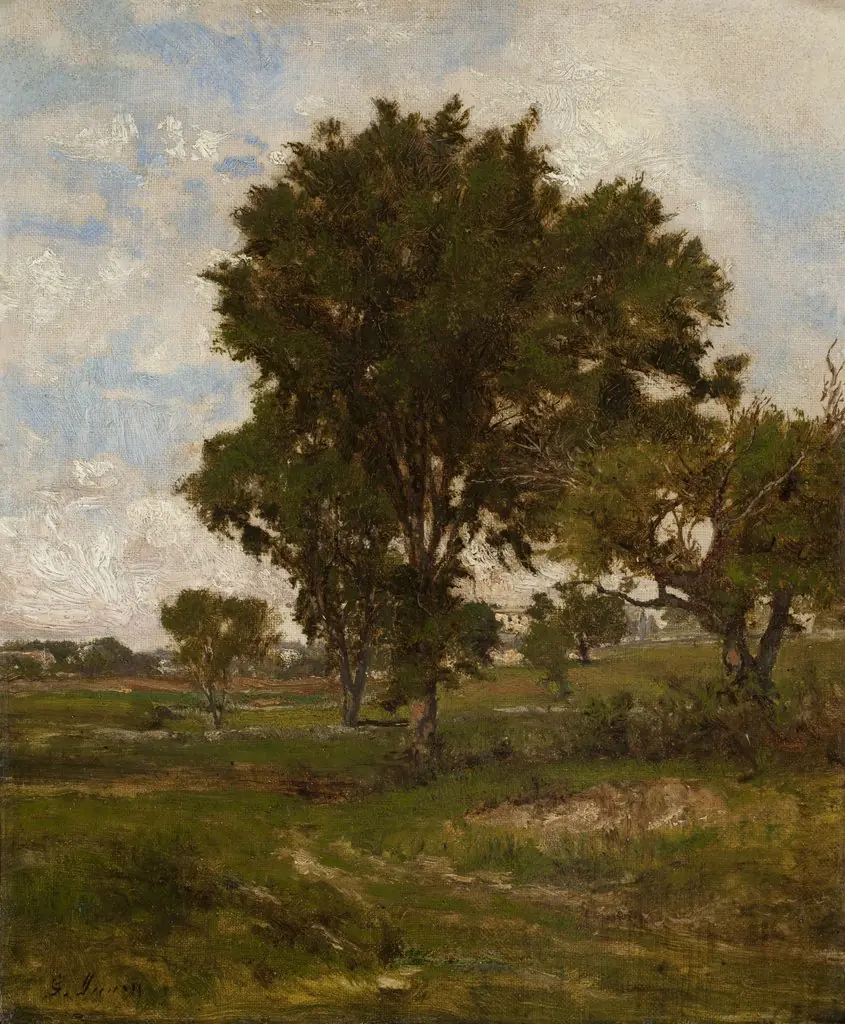
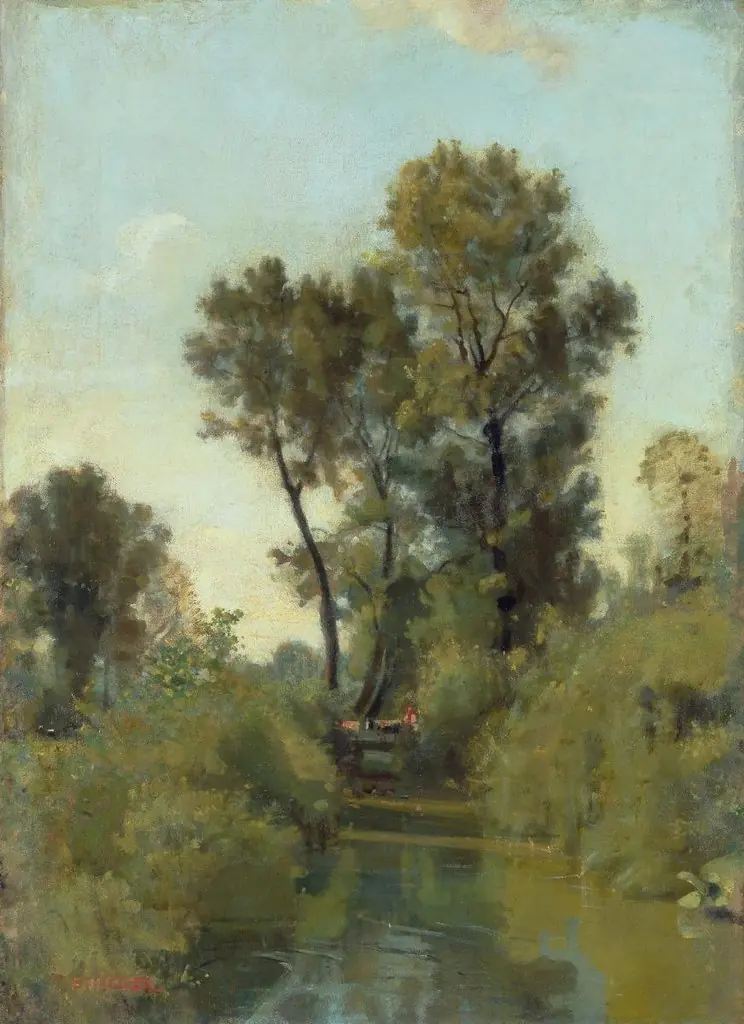
Geo Poggenbeek's 1894 oil painting, The Willow, presents a Dutch landscape centered on a pollard willow situated within a riparian setting.
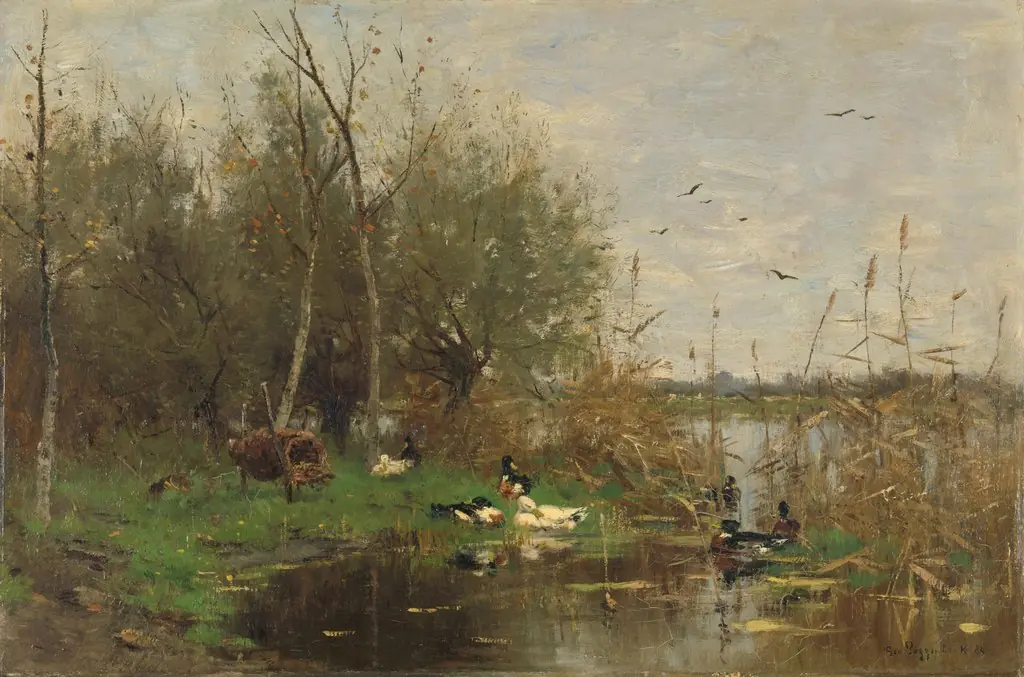
Geo Poggenbeek's 1894 oil painting, The Willow, presents a Dutch landscape centered on a pollard willow situated within a riparian setting. The composition depicts this specific tree alongside a watercourse or stream, surrounded by grass under an open sky, effectively capturing a scene from a rural area in the Netherlands. By focusing on the pollard willow and its immediate watery environment, the work functions as a straightforward representation of the local countryside rather than conveying complex allegorical symbolism.
The subject matter highlights the natural elements of the Dutch terrain, emphasizing the relationship between the distinctive trimmed tree and the adjacent stream.
Technique & Style
The Willow is an oil painting executed on a cardboard support, dated 1894 and created by Geo Poggenbeek in the Netherlands. The work belongs to the Dutch landscape genre and portrays a pollard willow beside a watercourse, with attention to sky, grass and riparian forest. Oil paint is applied directly onto the cardboard, and the painting's modest dimensions (26 × 22 cm) reflect its intimate scale.
Formal qualities include a strong vertical tree silhouette, a balanced composition of sky and water, and a naturalistic rendering of foliage and terrain typical of late-19th-century Dutch landscape painting. The work is held in the Rijksmuseum.
History & Provenance
The painting titled The Willow, executed by Geo Poggenbeek in 1894, is an oil on cardboard work classified as a landscape. It is housed in the Rijksmuseum in the Netherlands, where it forms part of the museum's collection; the accession number is not listed in the available documentation. The sources record its creation in the Netherlands but do not provide details on exhibition history or prior loans. Its dimensions measure 26 cm by 22 cm, as recorded in the catalog.
Overview
The Willow, painted by Geo Poggenbeek in 1894, is an oil-on-canvas landscape that exemplifies the naturalistic approach of the Hague School. This work captures a tranquil rural scene, featuring a prominent pollard willow amidst a green field and riparian forest. Poggenbeek, a 19th-century Amsterdam artist, was closely associated with this Dutch art movement. The painting is currently housed in the collection of the Rijksmuseum.
Context
Geo Poggenbeek, an artist active in 19th-century Amsterdam, maintained strong affiliations with the Hague School, a significant Dutch art movement of his era. This group of painters was renowned for their commitment to portraying the Dutch countryside with a focus on naturalism and atmospheric effects. The Willow stands as a representative example of Poggenbeek's engagement with these artistic principles and the broader movement's visual language.
Own this work as a print
Artist & collection
Artist
George Jan Hendrik (Geo) Poggenbeek (1853–1903) was a 19th-century painter from Amsterdam, the Netherlands who maintained close contact with the Hague School.