Artwork
A Polder Landscape after a Thunderstorm
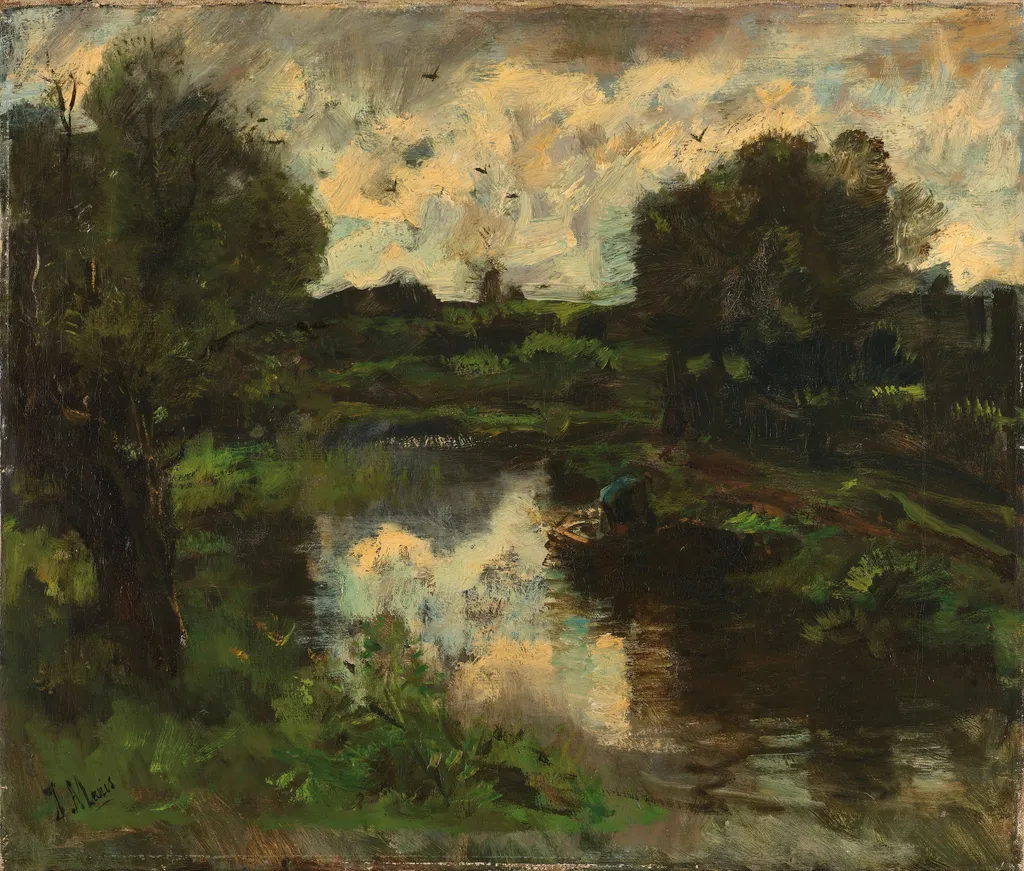
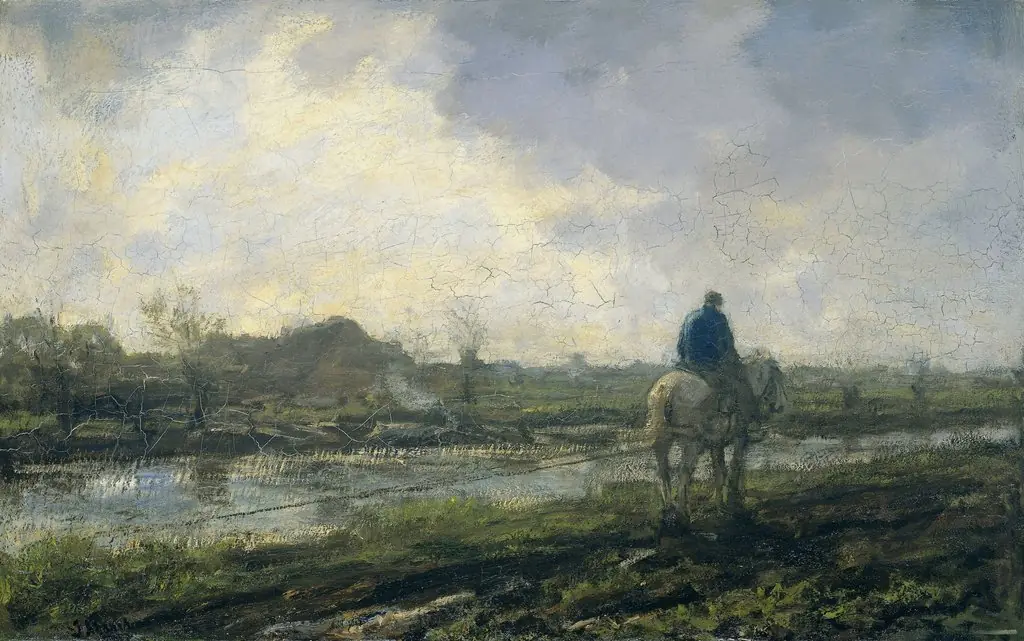
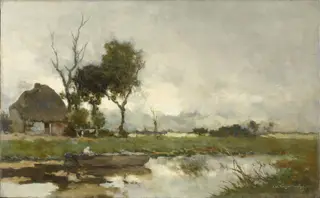
A Polder Landscape after a Thunderstorm is an oil painting by the Impressionist artist Jacob Maris. It dates from 1896 and is held in the collection of the Rijksmuseum.
About this work
Subject & Meaning
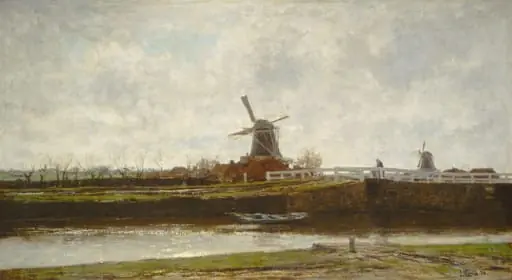
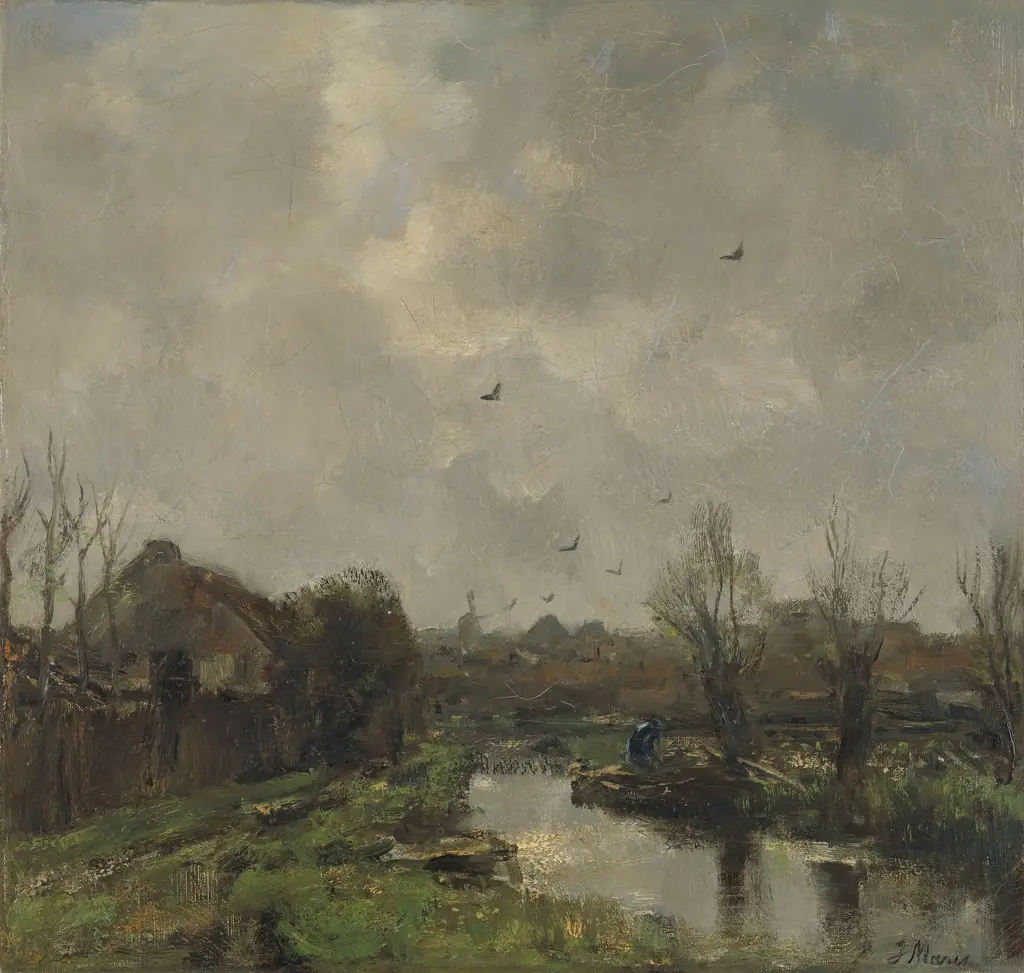
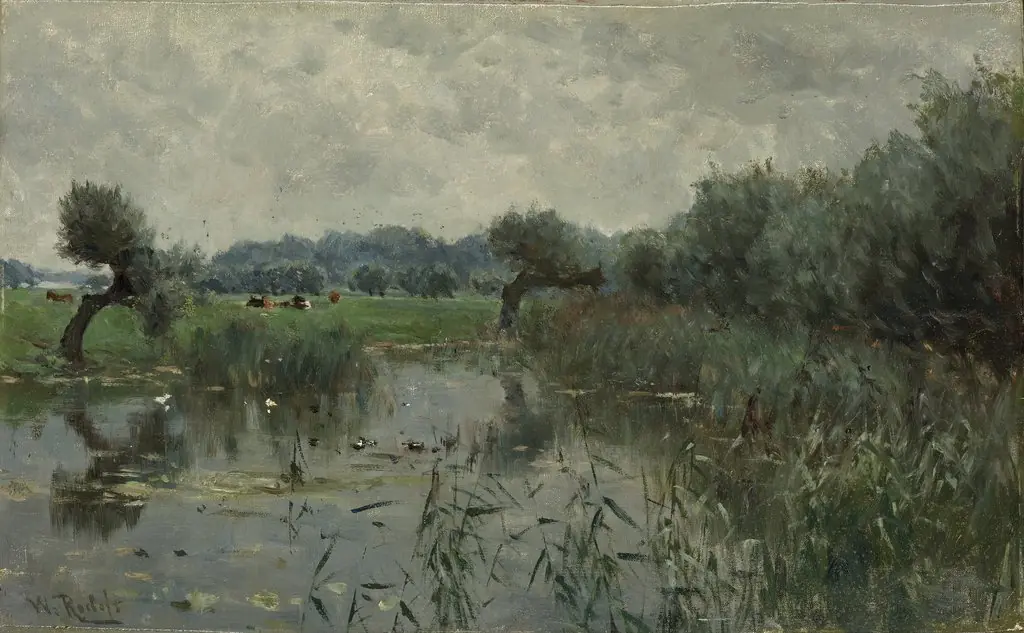
The painting portrays a marshy Dutch landscape receding after a storm, with a brooding sky and drifting clouds that emphasize the fleeting nature of weather and the quiet resilience of the terrain. Maris captures the moment through muted tonal contrasts and a wide, horizontal format, suggesting both the physical expanse of the polder and an emotional stillness following turmoil. The work reflects Symbolist interest in nature’s transitory states and the inner moods they evoke, aligning with late‑19th‑century Dutch landscape concerns about national identity and environmental harmony.
Technique & Style
The painting is executed on a stretched canvas support and remains in good condition, retaining its original color saturation and structural integrity.
Jacob Maris applied oil paint on canvas to achieve a layered surface that captures the fleeting atmosphere of a storm clearing over a Dutch polder. The work measures 54 cm in height and 62 cm in width, using a compositional balance of sky and cloud that emphasizes tonal contrast and loose brushwork characteristic of late 19th‑century Dutch landscape painting. The handling of light and the subtle gradation of color convey a sense of immediacy and emotional resonance, reflecting the artist’s approach to plein‑air observation.
The painting is executed on a stretched canvas support and remains in good condition, retaining its original color saturation and structural integrity.
History & Provenance
Jacob Maris created the oil painting A Polder Landscape after a Thunderstorm in 1892. The work is executed in oil paint on canvas and depicts a landscape scene featuring sky and cloud formations. It is currently held in the collection of the Rijksmuseum. The painting measures 54 cm in height and 62 cm in width.
No specific details regarding the original commission, the initial owner, or the subsequent chain of ownership prior to its arrival at the Rijksmuseum are provided in the available records.
Context
Jacob Maris created A Polder Landscape after a Thunderstorm in 1892, a work exemplifying his contribution to Dutch landscape painting in the late 19th century. The piece, executed in oil on canvas, measures 54 by 62 centimeters and depicts a dramatic sky following a storm, reflecting the atmospheric interest characteristic of the Maris brothers' oeuvre. It is housed in the Rijksmuseum collection, where it is recognized as part of the broader development of Dutch Impressionism and the Hague School's approach to naturalistic landscape representation.
Scholarly attention to Maris' landscapes emphasizes his role in advancing plein-air techniques within Dutch art, though specific critical responses to this particular work remain less documented in accessible sources. The painting's placement within art historical narratives focuses on its formal qualities and its position within Maris' broader landscape corpus rather than isolated contemporary reviews.
Overview
Jacob Maris painted A Polder Landscape after a Thunderstorm in 1896, employing oil on canvas. The composition captures a low‑lying Dutch polder under a sky heavy with lingering clouds, suggesting recent rain. A narrow track cuts across the wet grass, while the muted palette of greens, browns, grays and a distant blue conveys the subdued light of a post‑storm atmosphere. The work is part of the Rijksmuseum’s collection.
Own this work as a print
Artist & collection
Artist
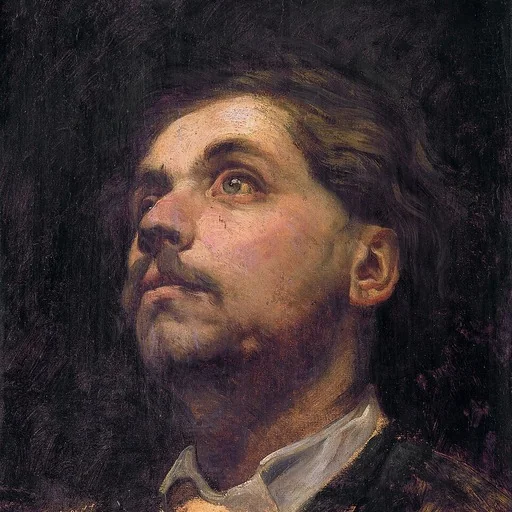
Jacob Henricus Maris (August 25, 1837 – August 7, 1899) was a Dutch painter, who with his brothers Willem and Matthijs belonged to what has come to be known as the Hague School of painters.