Artwork
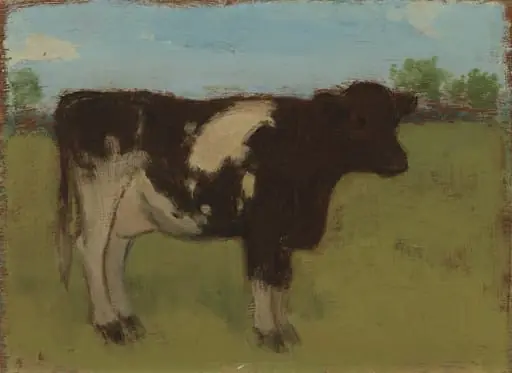
Calf, spotted black and white
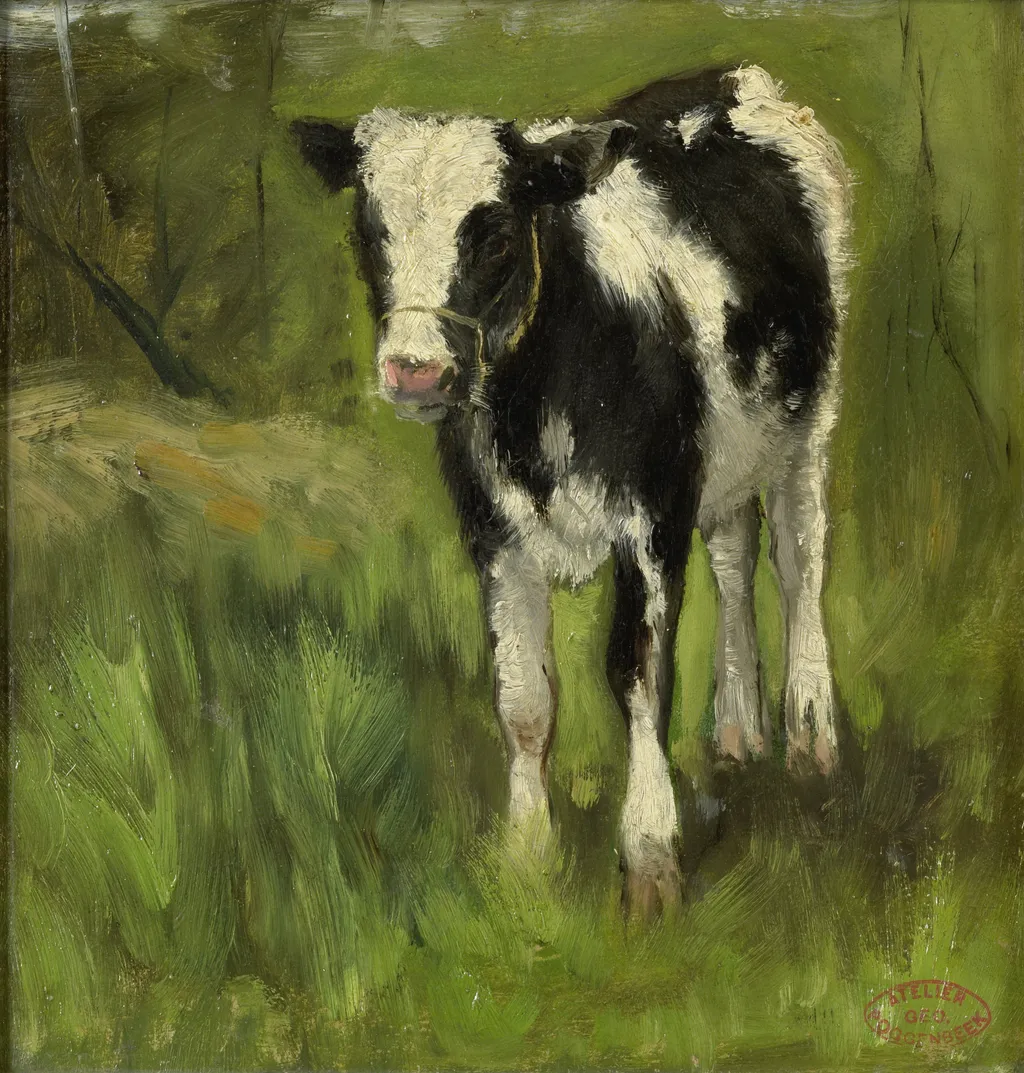
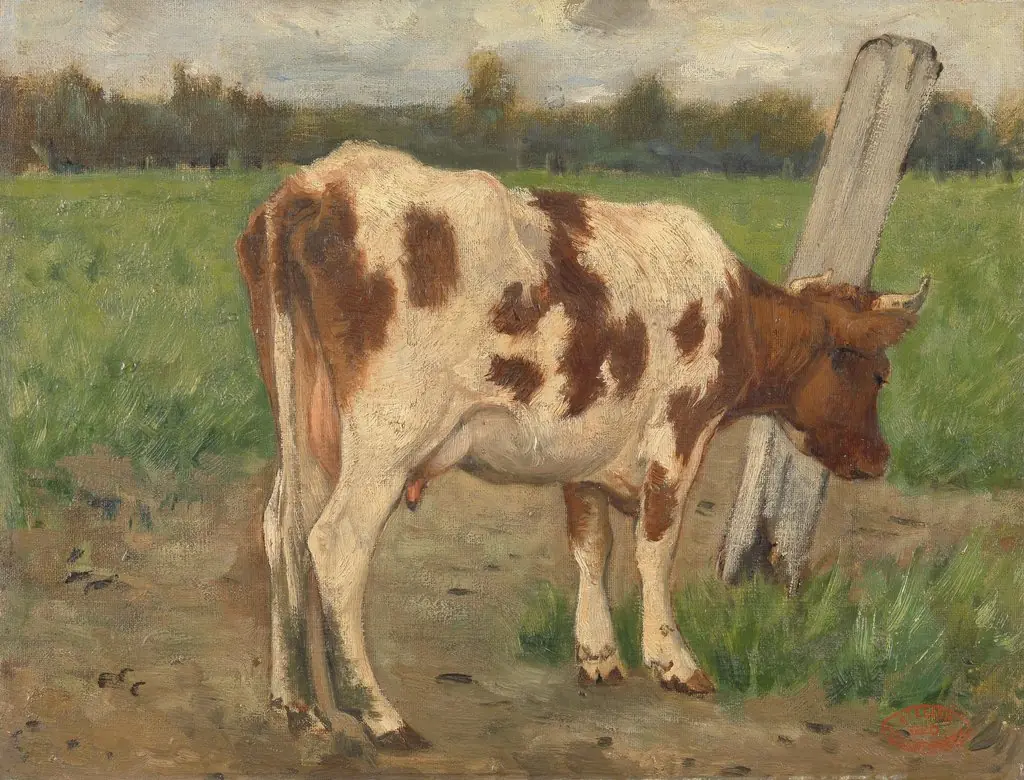
Calf, spotted black and white is an oil painting by the Impressionist artist Geo Poggenbeek. It dates from 1894 and is held in the collection of the Rijksmuseum.
About this work
Subject & Meaning
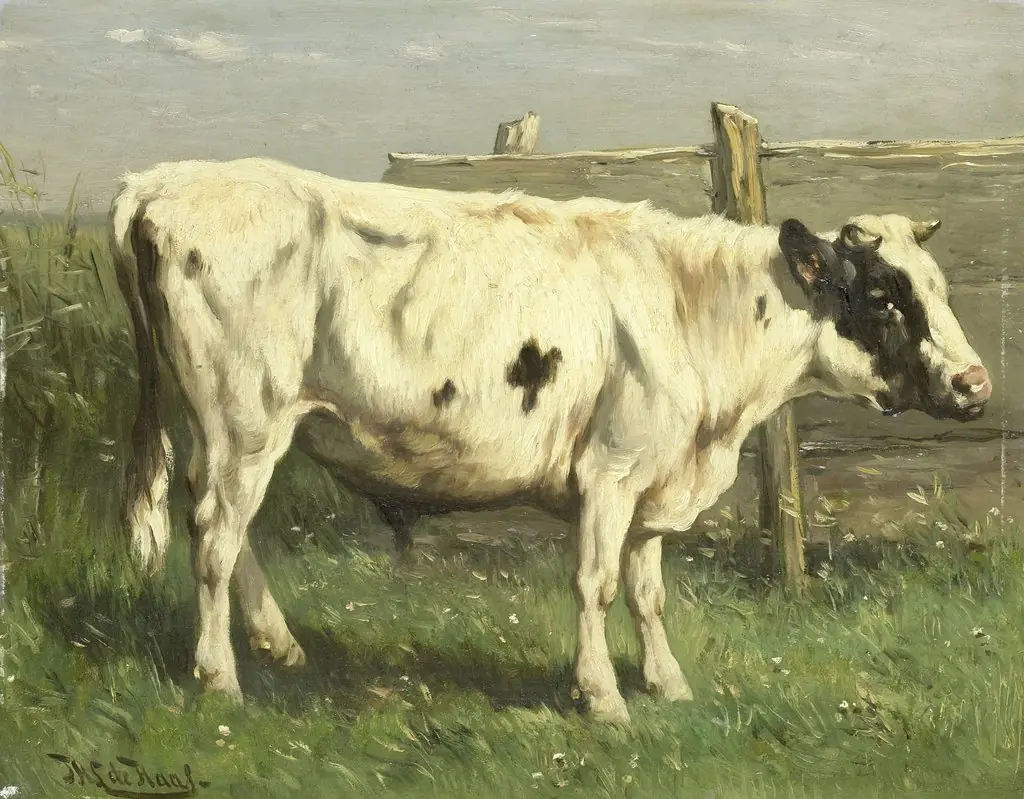
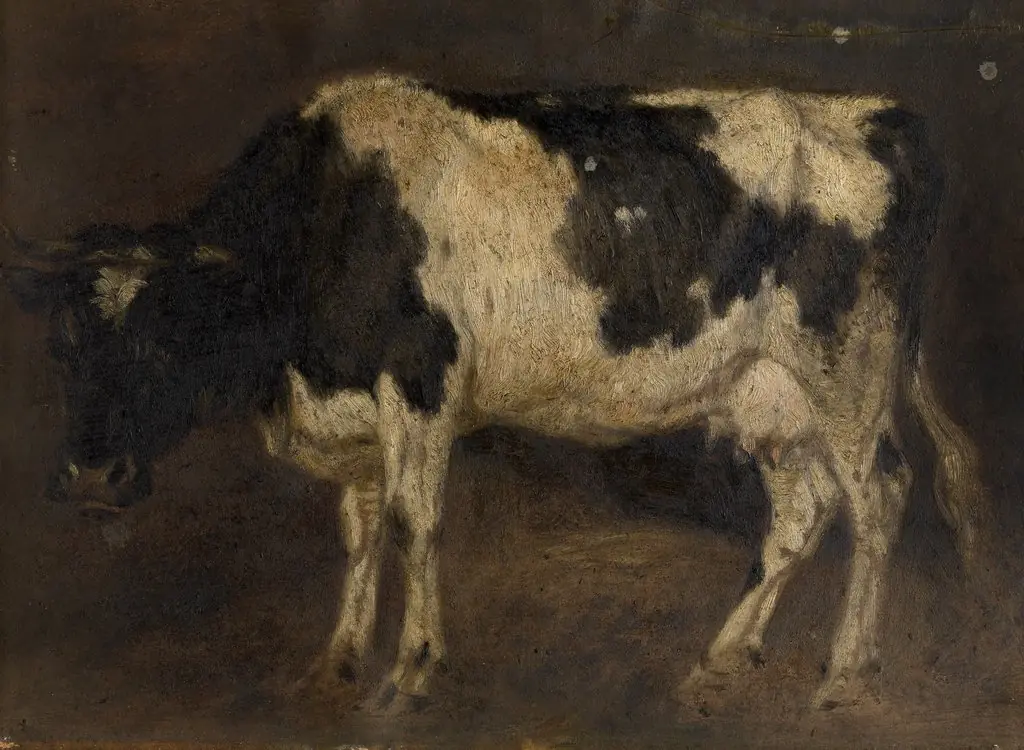
The painting depicts a spotted black-and-white calf standing in a grassy pasture, a motif aligned with 19th-century Dutch animalier traditions.
The painting depicts a spotted black-and-white calf standing in a grassy pasture, a motif aligned with 19th-century Dutch animalier traditions. The calf’s breed is identified as Prim’Holstein, a dairy breed characterized by its piebald coat, reinforcing the work’s focus on rural livestock and agricultural life. Rendered in oil on cardboard, the scene emphasizes the calf’s natural setting rather than overt allegory, aligning with contemporary genre painting practices that celebrated the Dutch countryside and its productive animals.
Within this context, the calf functions as a straightforward representation of pastoral abundance and the virtues of rural industry, rather than a symbolic cipher for deeper religious or moral themes.
Technique & Style
Created in 1888 by Geo Poggenbeek, Calf, spotted black and white is an oil painting executed on a cardboard support. The work measures 22 cm in height and 21 cm in width, classifying it as a small-scale piece within the animal art genre. Stylistically, the painting depicts a Prim'Holstein calf situated in a rural pasture with grass, reflecting a focus on naturalistic detail typical of the period.
The medium of oil paint applied to cardboard suggests a specific handling approach often used for studies or smaller compositions, allowing for a direct rendering of the subject's spotted coat and pastoral setting.
History & Provenance
The painting titled Calf, spotted black and white was created by Geo Poggenbeek in 1888. Executed in oil paint on a cardboard support, the work depicts a black-and-white calf within a rural pasture setting. The piece originates from the Netherlands and is currently held in the collection of the Rijksmuseum.
Calf, spotted black and white is part of the Rijksmuseum's collection in Amsterdam. The painting is catalogued as part of the museum's holdings, though the specific inventory or accession number is not indicated in the documentation examined. It was created in 1888 by Geo Poggenbeek using oil paint on cardboard, measuring 22 cm by 21 cm. The work has not been listed in any documented exhibition records within the supplied sources, suggesting that its public display history is not detailed in the available material.
Overview
This 1894 oil painting by Geo Poggenbeek, a 19th-century Dutch artist, portrays a black-and-white spotted Prim'Holstein calf. The animal stands alone in a simple grassy pasture, its head turned towards the viewer. Rendered with visible brushwork, the piece reflects the artist's engagement with both the Hague School and the broader Impressionist movement, capturing a moment of quiet observation in a rural setting.
Context
Geo Poggenbeek was an Amsterdam-based painter associated with the Hague School, a movement known for its naturalistic depictions of Dutch landscapes and rural life. His approach in Calf, spotted black and white demonstrates an affinity for the light effects and expressive brushwork characteristic of Impressionism, integrating these influences into the Dutch tradition of animal painting during the late 19th century.
Own this work as a print
Artist & collection
Artist
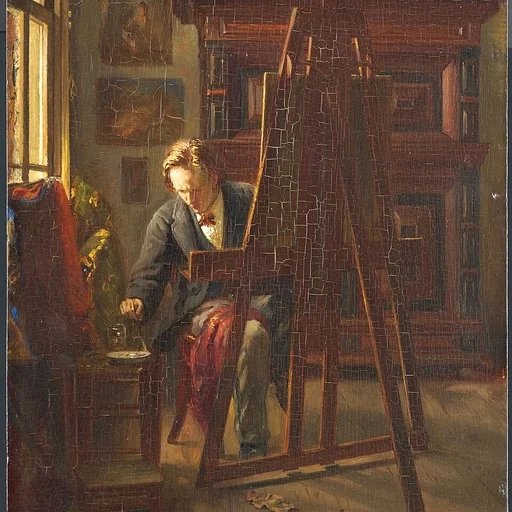
George Jan Hendrik (Geo) Poggenbeek (1853–1903) was a 19th-century painter from Amsterdam, the Netherlands who maintained close contact with the Hague School.