Artwork
Love of Winter, Christmas 1917
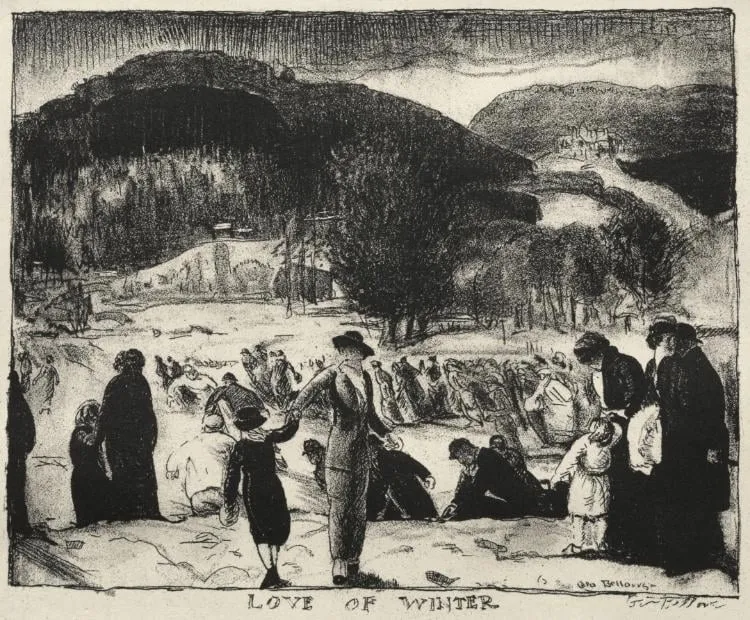
Love of Winter, Christmas 1917 is a print by George Bellows. It dates from 1923 and is held in the collection of the Cleveland Museum of Art.
- Accession no.
- 1937.485
- Credit line
- Gift of Leonard C. Hanna Jr.
About this work
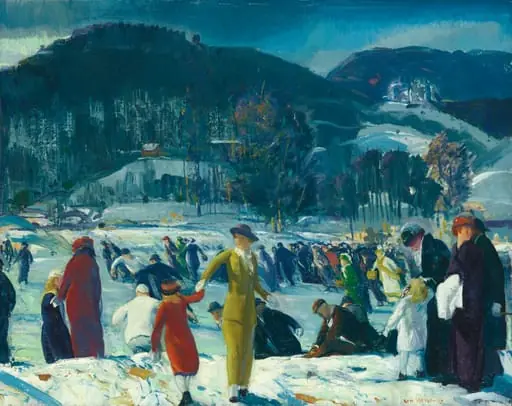
A group of adults and kids stands around a small fire or bonfire, some holding hands or talking.
This black-and-white print shows a snowy village scene with people gathered outside. A group of adults and kids stands around a small fire or bonfire, some holding hands or talking. In the background, there’s a church, a few houses, and a windmill on a hill. The sky looks stormy, and the trees are bare.
The title says Love of Winter, Christmas 1917, but the print was made later, 1923. The artist used loose, sketchy lines to show movement and energy in the crowd.
Check out The Cleveland Museum of Art to see this print in person.
Overview
Created in 1923, Love of Winter, Christmas 1917 is a black-and-white print by American artist George Bellows. Though it references a Christmas scene from 1917, the work was produced several years later as part of Bellows’s exploration of seasonal life in rural America. The print captures a moment of communal gathering in a snow-covered village, rendered with dynamic, expressive lines that convey motion and atmosphere rather than precise detail.
Subject & Meaning
The scene depicts a group of villagers, adults and children, gathered around a small fire in the snow, some holding hands, others conversing. Behind them, a church, modest homes, and a windmill suggest a quiet rural setting. The title evokes seasonal tradition, but the image emphasizes human connection amid winter’s chill rather than religious or festive symbolism. The stormy sky and bare trees reinforce a sense of resilience in everyday life.
Technique & Style
Bellows employed a loose, energetic linework typical of his graphic work, using contrast and fluid strokes to suggest movement and texture. The absence of color focuses attention on form and gesture, with figures rendered in swift, almost sketch-like contours. The background elements are simplified, allowing the crowd’s interaction to dominate the composition. This approach reflects Bellows’s interest in capturing transient moments with immediacy.
History & Provenance
The print was completed in 1923 and entered the collection of The Cleveland Museum of Art, where it remains today. While Bellows is better known for his urban scenes, this work reflects a quieter, more personal phase in his career, possibly influenced by his travels and reflections on American life beyond the city. Its date of creation, six years after the event it references, suggests a retrospective, contemplative intent.
Context
Produced during the early 1920s, the print emerged after World War I, a time when many American artists turned toward themes of community, tradition, and domestic tranquility. Bellows, though associated with gritty city life, here engages with rural nostalgia, perhaps responding to a broader cultural longing for stability. The work aligns with a period of renewed interest in American folk life and seasonal rituals.
Legacy
Though less prominent than Bellows’s New York street scenes, Love of Winter, Christmas 1917 contributes to his broader exploration of American experience across varied settings. It demonstrates his versatility in printmaking and his ability to convey emotional resonance through minimal means. The work remains a quiet testament to his interest in ordinary moments, preserved in the collection of a major American museum.
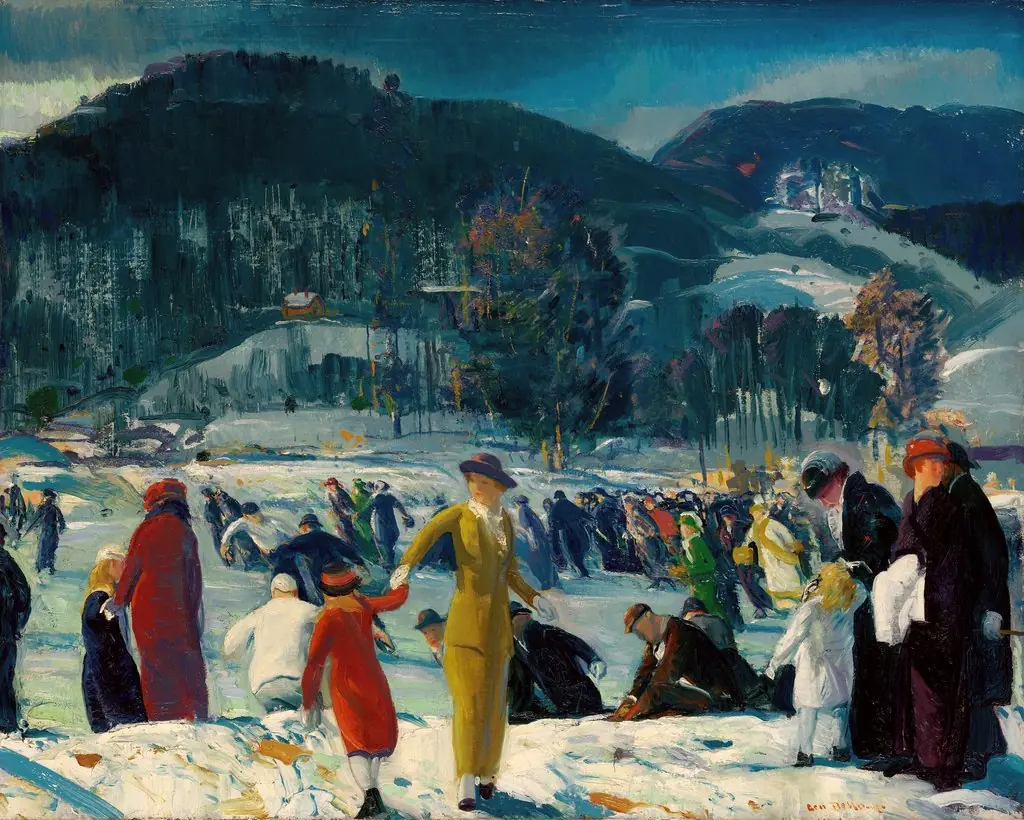
Artist & collection
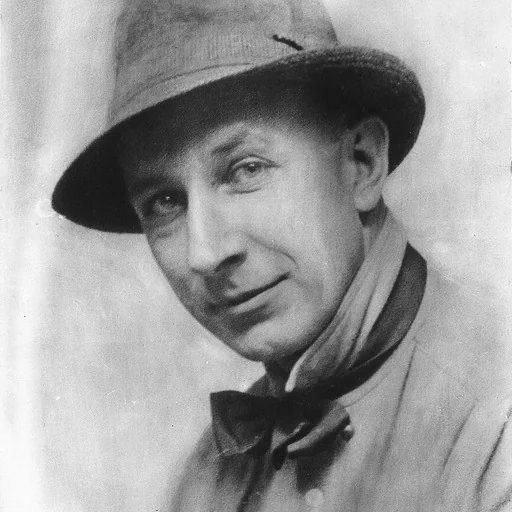
Artist
George Wesley Bellows (August 12 or August 19, 1882 – January 8, 1925) was an American realist painter, known for his bold depictions of urban life in New York City.

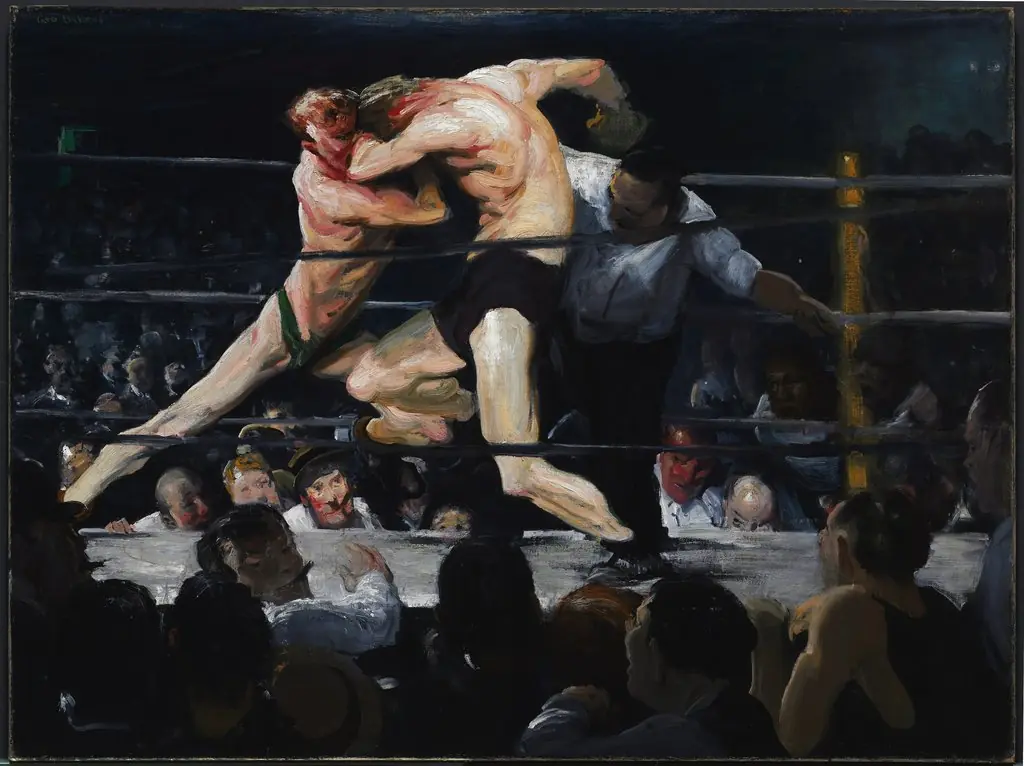
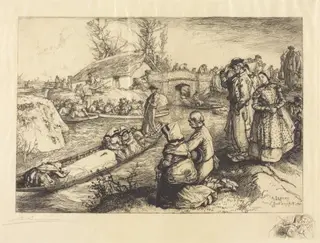 Burial in the Vendeen Marsh (Un enterrement dans le marais Vendeen)
 Sketching, No. 1
 Market at Pontoise (Marché a Pontoise)
 Untitled (Winter Landscape)
 Burial in the Vendeen Marsh (Un enterrement dans le marais Vendeen)
 American Quarries, near Paris (Carrieres d'Amerique, pres Paris)
 Love of Winter
 Pierre Copies the Virgin from the Portal of the Church of Marly (Pierre Copie la Vierge du Portail de L'Église de Marly)
 Untitled
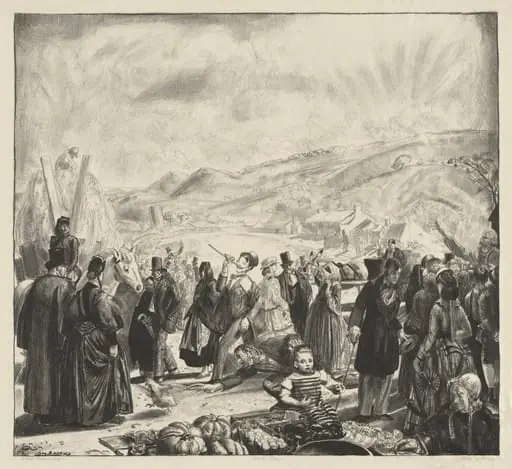 The Irish Fair
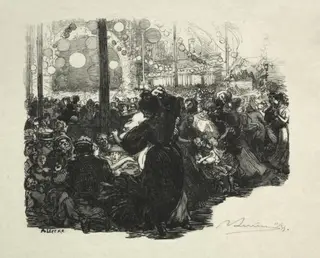 14 Juillet, Rue de Belleville, 10 heures
- Love of Winter