Artwork
Portrait of Filippo (Filipp Osipovich) Paulucci (1779-1849)
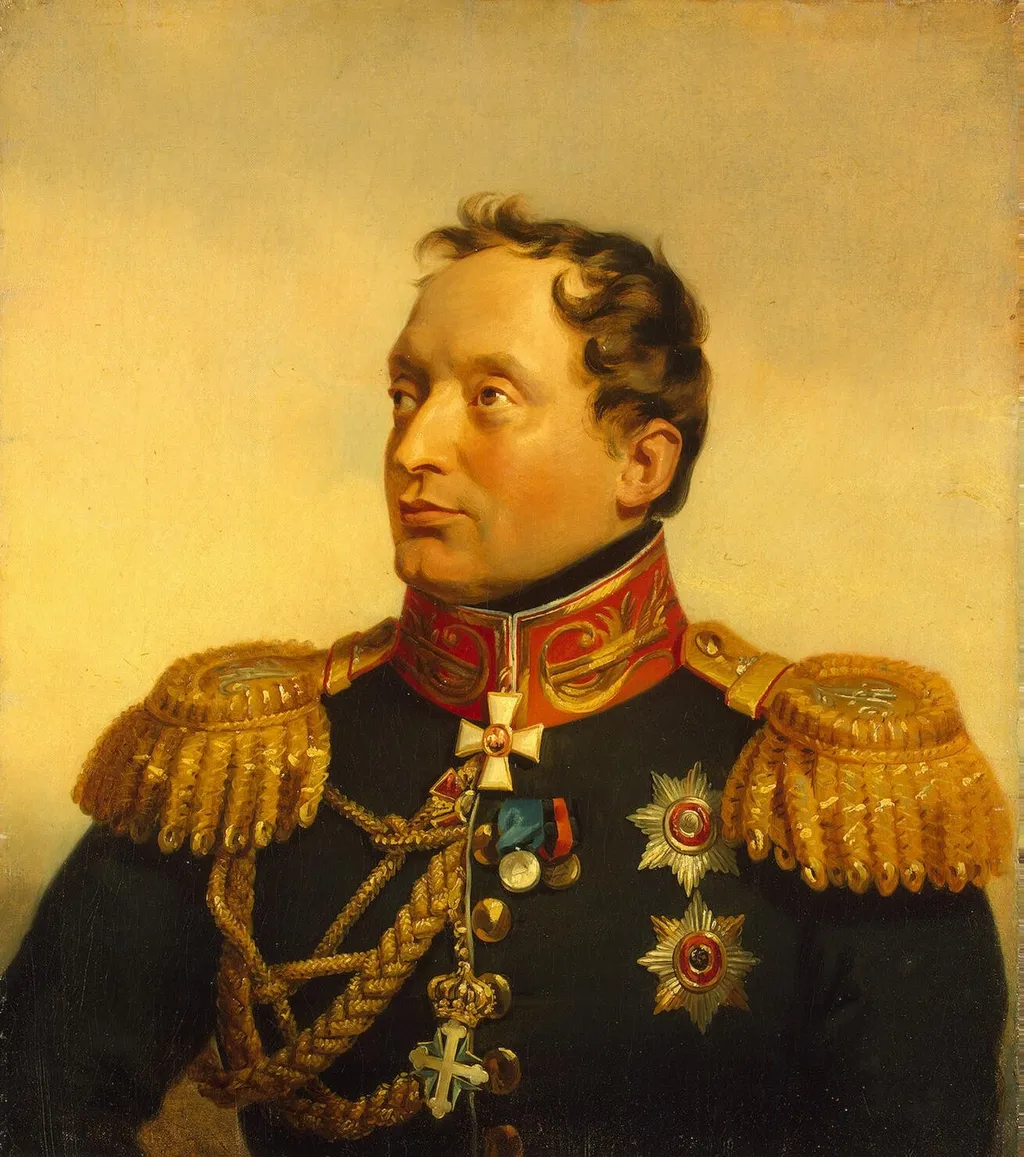
Portrait of Filippo (Filipp Osipovich) Paulucci (1779-1849) is an oil painting by the British Romanticist artist George Dawe. It dates from 1825 and is held in the collection of the Hermitage Museum.
About this work
Overview
5 centimetres, this bust-length portrait depicts a Russian military commander in full regalia and is held in the collection of the State Hermitage Museum in St.
The Portrait of Filippo (Filipp Osipovich) Paulucci (1779-1849) is an oil-on-canvas painting by the English artist George Dawe, dated to 1825. Measuring 70 by 62.5 centimetres, this bust-length portrait depicts a Russian military commander in full regalia and is held in the collection of the State Hermitage Museum in St. Petersburg, where it is catalogued under inventory number GE-7839. The work forms part of Dawe's celebrated series of portraits for the Military Gallery of the Winter Palace, a project that established him as the preeminent portraitist of Russian military heroes in the early nineteenth century.
Subject & Meaning
The sitter, Filippo Paulucci delle Roncole, was a Russian military commander whose career spanned the Napoleonic Wars and subsequent conflicts. In the portrait, Paulucci is shown turned three-quarters to the left, his gaze directed upward and leftward in a pose that conveys authority and aspiration. He wears a dark military coat with a bright red collar adorned with gold embroidery, heavy gold epaulettes with layered fringe, and thick gold aiguillettes braided in an elaborate pattern across his chest. Several decorations signal his distinguished service: a white cross at the throat, two star-shaped medals on the left breast, and additional smaller medals and ribbons clustered at the centre. The upward gaze and rich military insignia combine to present Paulucci as an idealised figure of martial virtue and imperial loyalty, consistent with the propagandistic function of the Military Gallery portraits.
Technique & Style
Dawe executed the portrait in oil on canvas, employing a smooth, highly finished technique characteristic of his academic training and the demands of court portraiture. The paint surface shows careful modelling of the face, with light falling from the upper left to illuminate the forehead, nose, and cheek while casting subtle shadows beneath the chin and along the right side of the face. The metallic textures of the gold embroidery, epaulettes, and aiguillettes are rendered with particular precision, demonstrating Dawe's skill in depicting varied surfaces. The background is plain and warm-toned, shifting from pale yellow to a deeper tone at the edges, a device that focuses attention entirely on the sitter. The hair is short, dark, and curled, painted with the same meticulous attention to detail that governs the whole composition. This polished finish and controlled lighting align the work with contemporary Neoclassical portraiture while serving the commemorative purpose of the Military Gallery.
History & Provenance
The portrait was created as part of Dawe's extensive commission to paint the heroes of the Patriotic War of 1812 and related campaigns for the Military Gallery of the Winter Palace. Source evidence offers two possible dates for its execution: March 1823 or November 1824, though the canonical date of 1825 is most frequently cited. The painting entered the collection of the State Hermitage Museum, St. Petersburg, where it remains today under inventory number GE-7839. Its dimensions are recorded as 70 by 62.5 centimetres. The work has been disseminated through commercial reproduction and museum digital collections, reflecting its continued visibility, though specific exhibition history beyond its permanent installation in the Military Gallery is not documented in the available sources.
Context
George Dawe's position as portraitist to the Russian imperial court was secured through his work on the Military Gallery of the Winter Palace, a vast commemorative project initiated by Tsar Alexander I. Between 1819 and his death in 1829, Dawe produced over three hundred portraits of Russian military commanders, creating a visual pantheon that served both historical record and state ideology. The Paulucci portrait exemplifies this enterprise: it transforms a specific individual into an emblem of Russian martial achievement, part of a systematic programme of national memory. Dawe, who had trained at the Royal Academy in London and exhibited at the British Institution, brought British academic portraiture to Russian imperial service. The Hermitage holding of this work places it at the centre of one of Europe's most significant collections of historical portraiture, where it contributes to the narrative of Russia's resistance to Napoleonic expansion.
Legacy
The Portrait of Filippo Paulucci endures primarily through its function within the Military Gallery of the Winter Palace, where it remains part of one of the most comprehensive visual records of a national military elite ever assembled. The work's afterlife has been shaped by reproduction and digital dissemination, including its appearance on stock photography platforms and museum websites that extend its reach beyond the gallery walls. For scholars, the portrait offers material for study of Dawe's working methods, the iconography of Russian military dress, and the politics of commemoration under Alexander I. The painting also serves as a document of Paulucci's career, preserving the likeness and honours of a figure whose historical significance rests on his military service. As with other works in the Military Gallery, its cultural authority derives from the ensemble rather than individual distinction, though the technical accomplishment of Dawe's handling ensures its value as both historical testimony and artistic achievement.
Artist & collection
Artist
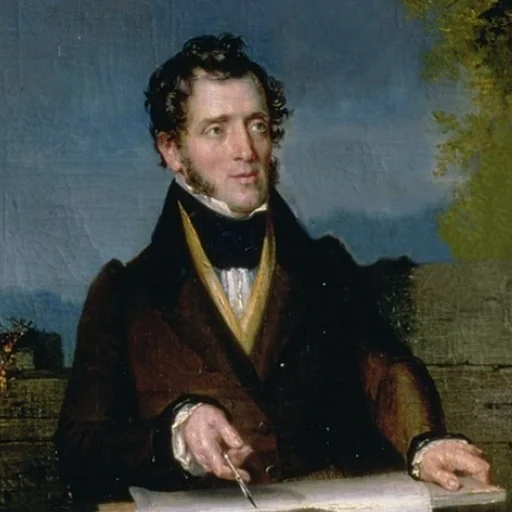
George Dawe (6 February 1781 – 15 October 1829) was an English portraitist who painted 329 portraits of Russian generals active during Napoleon's invasion of Russia for the Military Gallery of the Winter Palace.

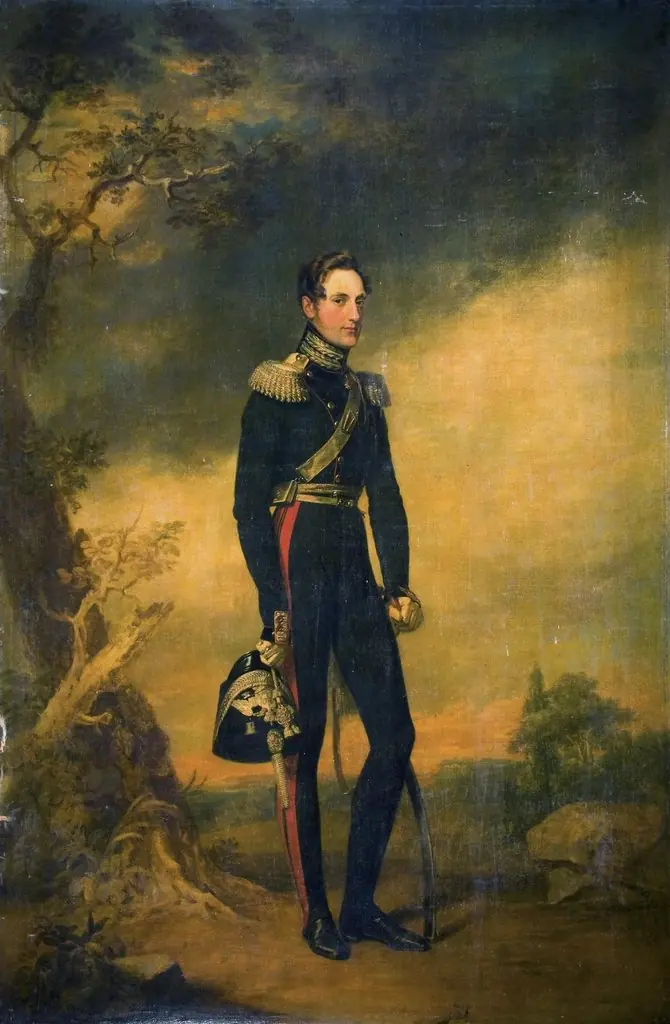 Portrait of Grand Duke Nikolai Pavlovich
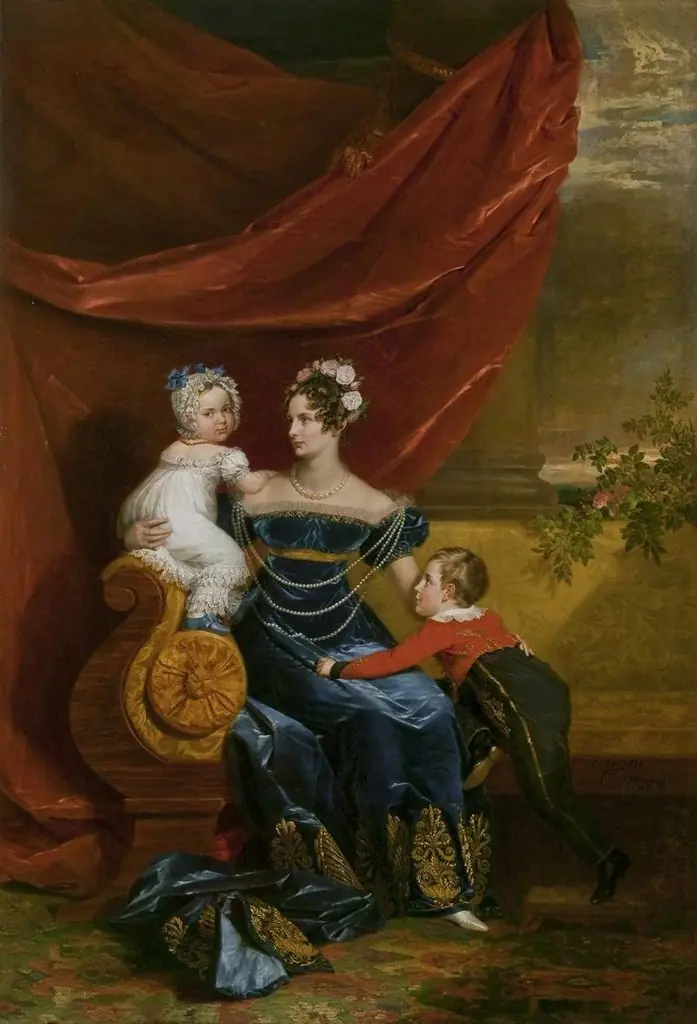 Portrait of Grand Duchess Alexandra Fiodorovna with Children
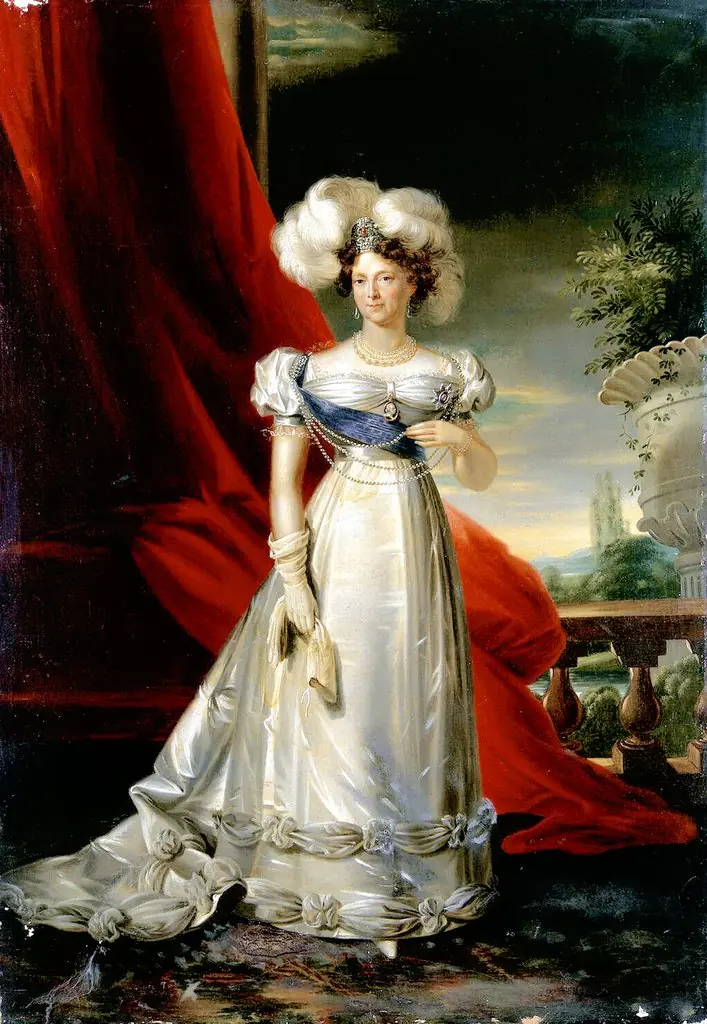 Portrait of the Empress Dowager Maria Feodorovna
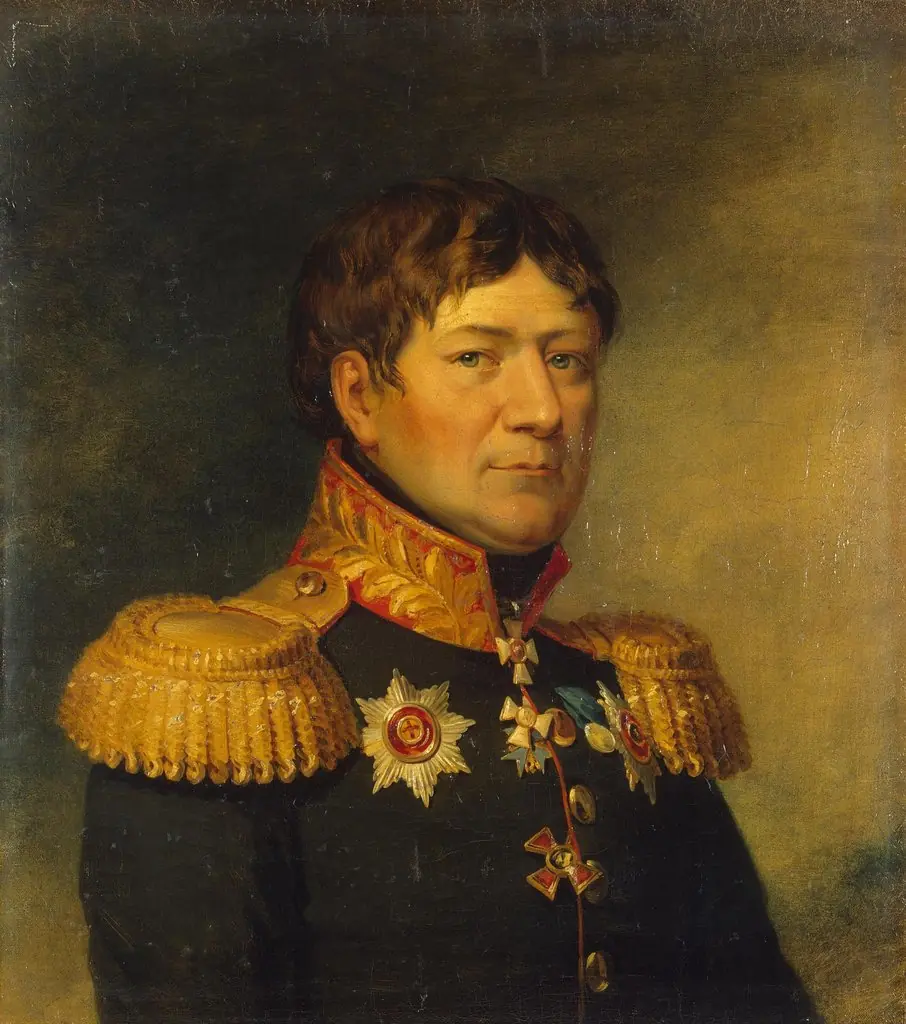 Portrait of Yegor M. Pillar (1767-1830)
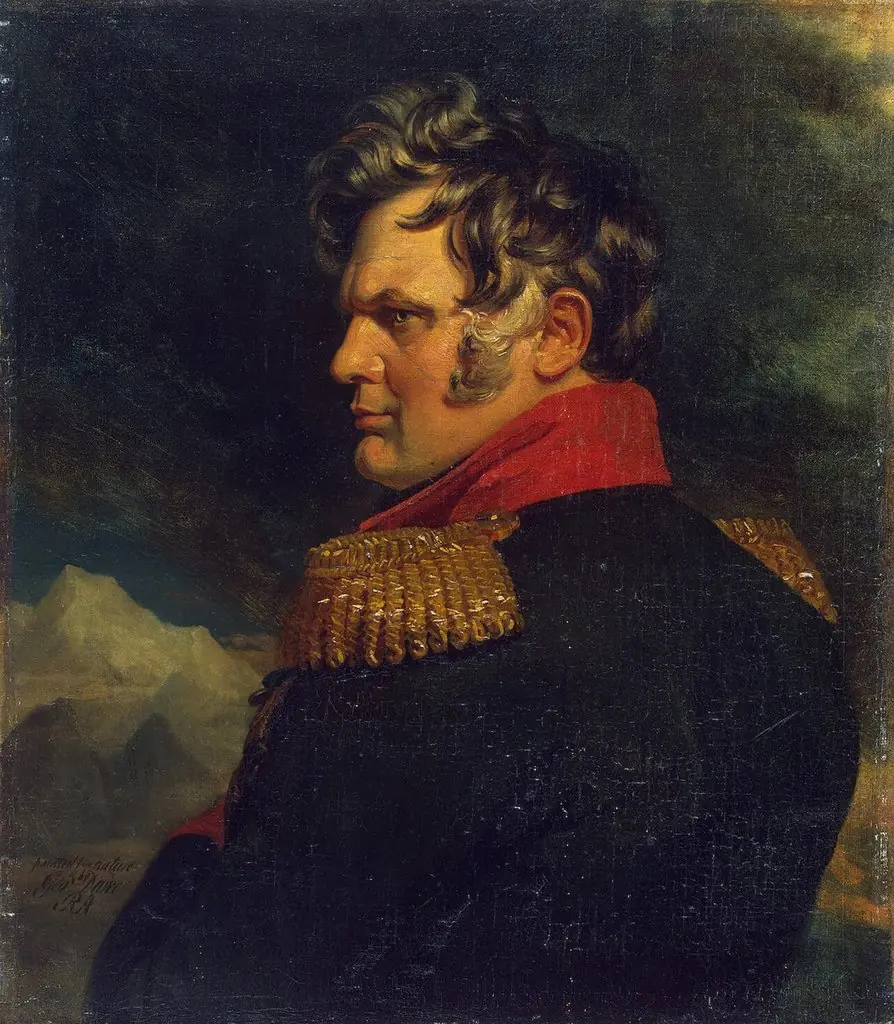 Portrait of Alexei P. Yermolov (1772/77-1861)
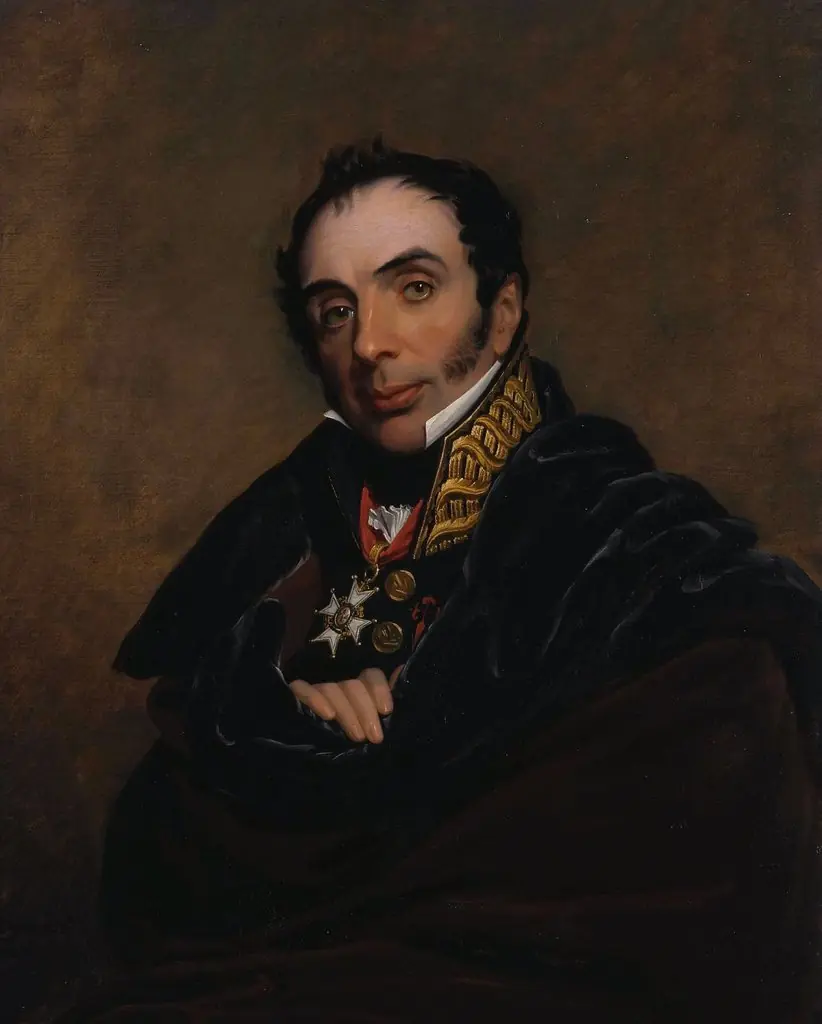 Portrait of Miguel Ricardo de Alava
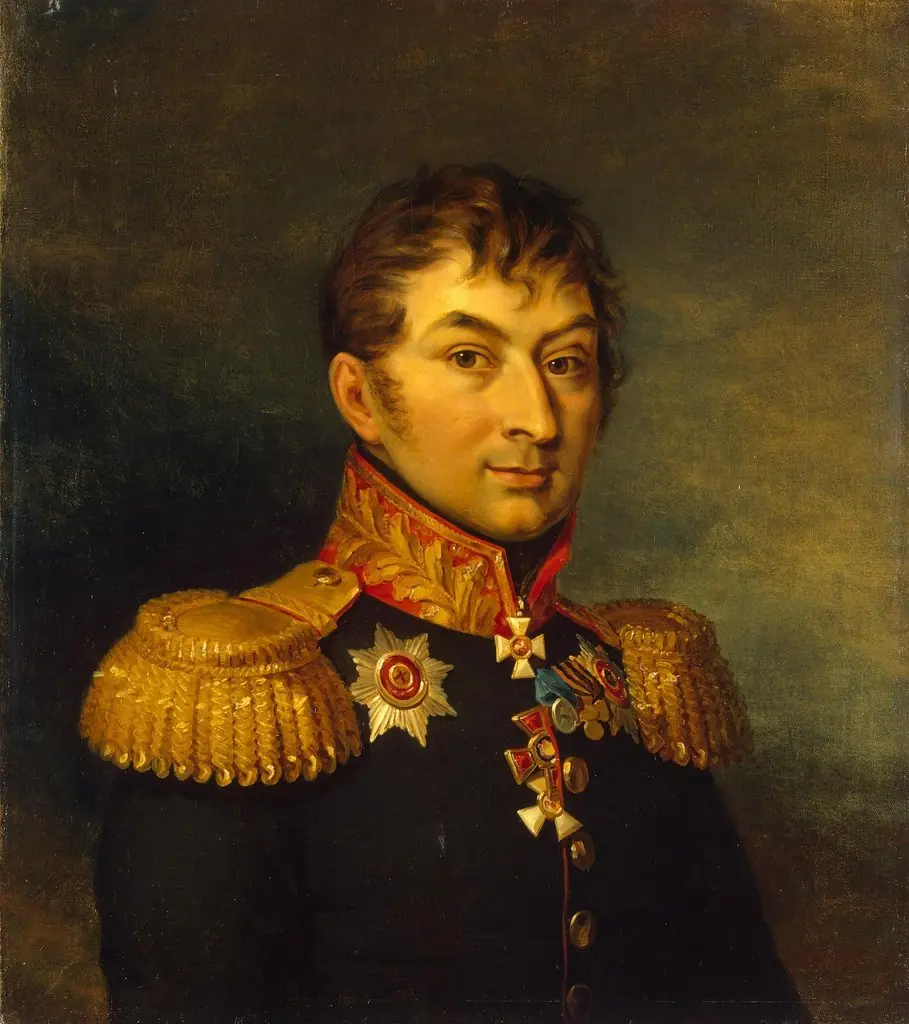 Portrait of Ivan D. Panchulidzev (1759-1815) (1st)
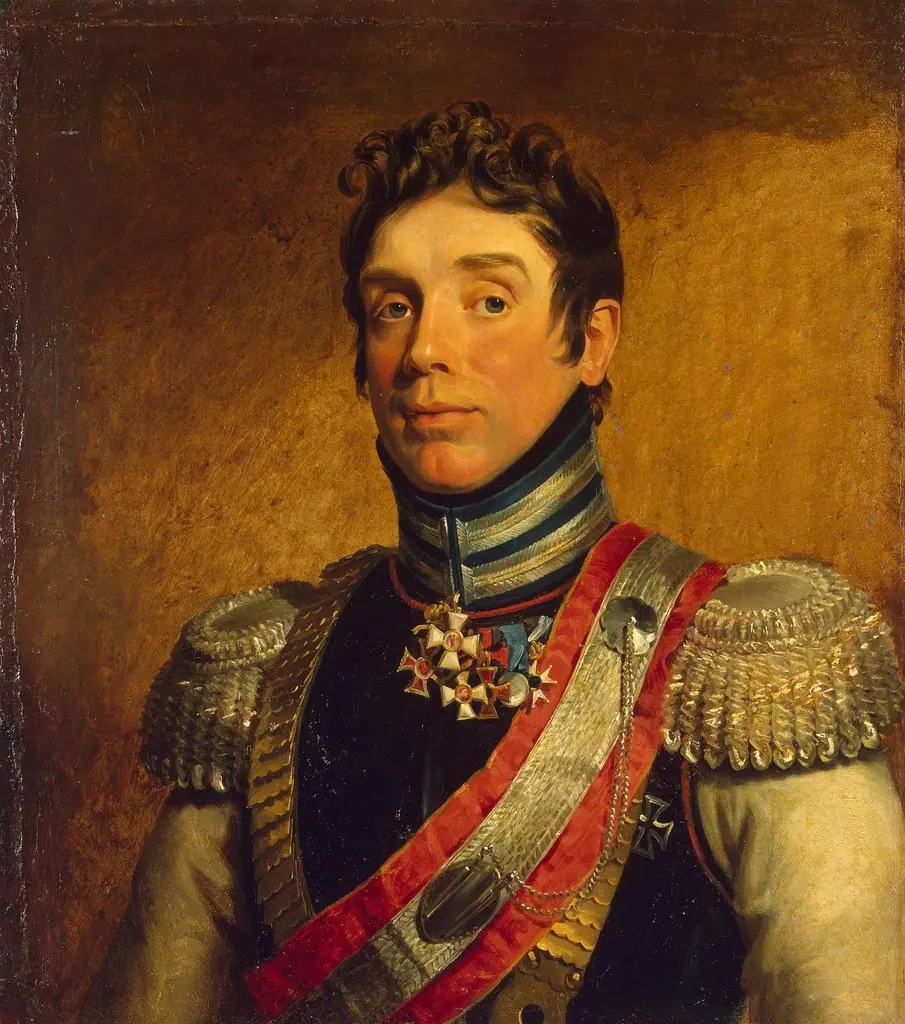 Portrait of Karl V. Budberg (1774-1829)
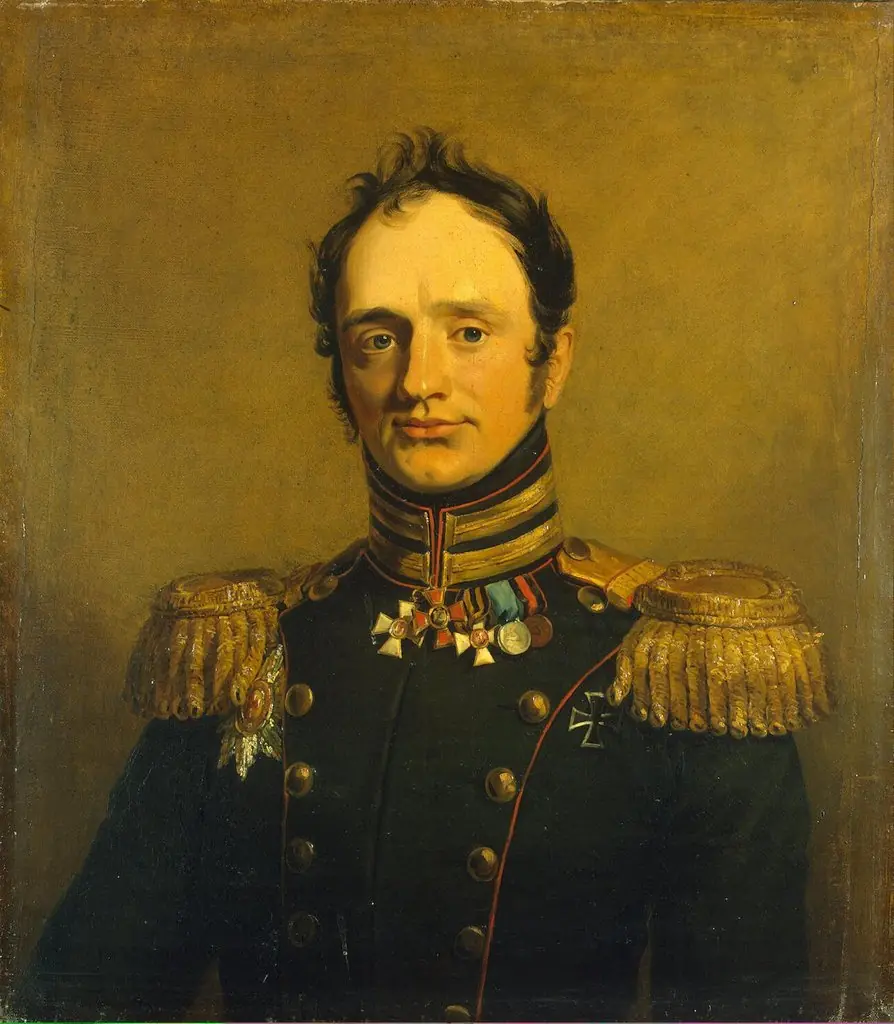 Portrait of Boris Kh. Richter (1782-1832)
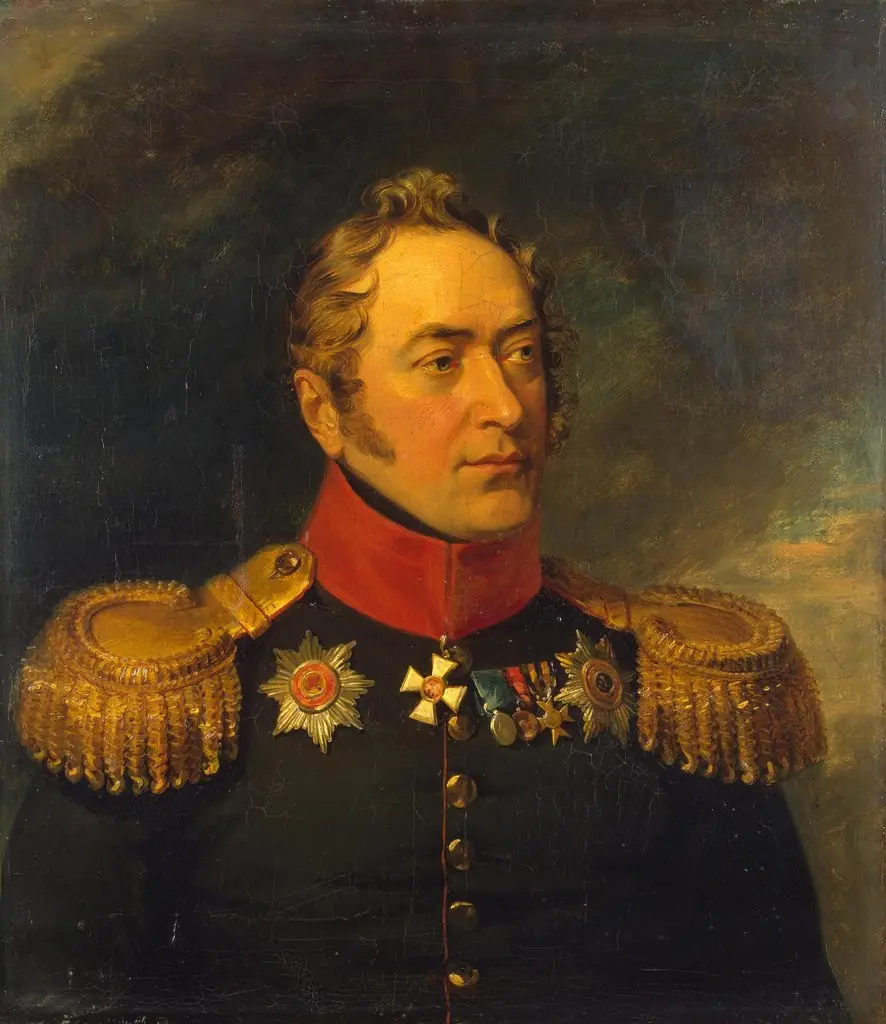 Portrait of Nikolai N. Khovansky (1777-1837)
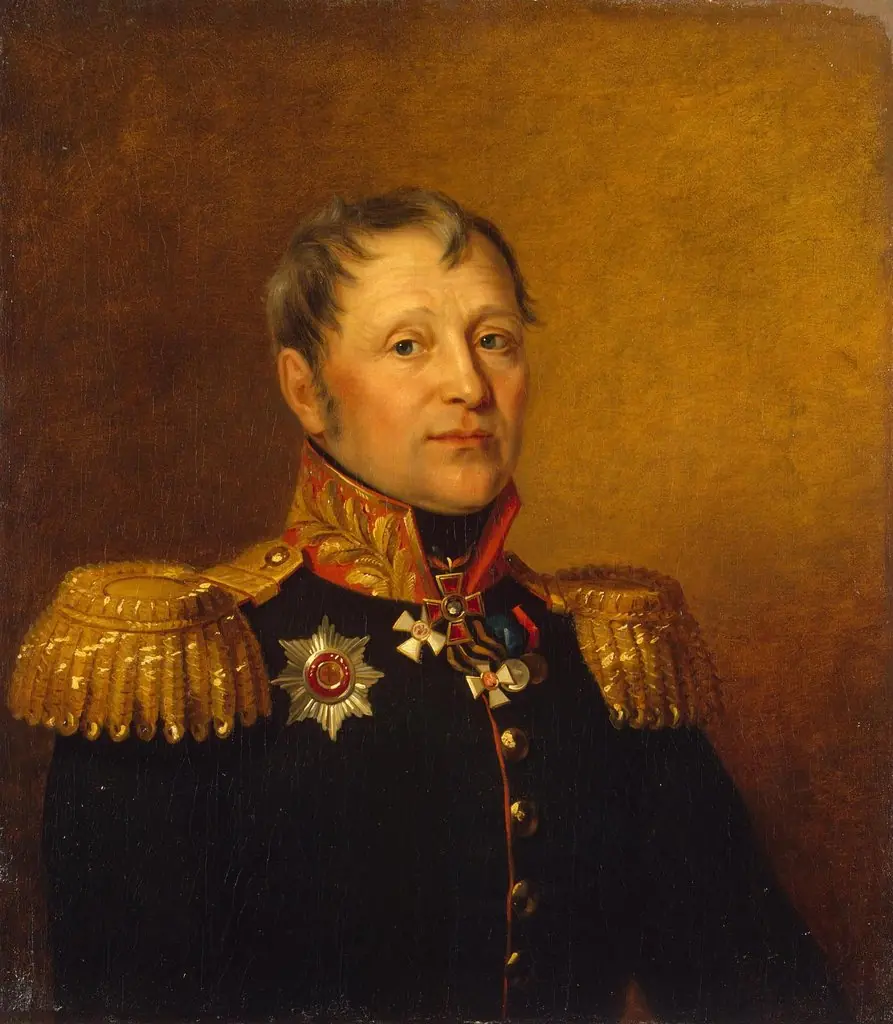 Portrait of Nikolai F. Yemelyanov (1768-1829)
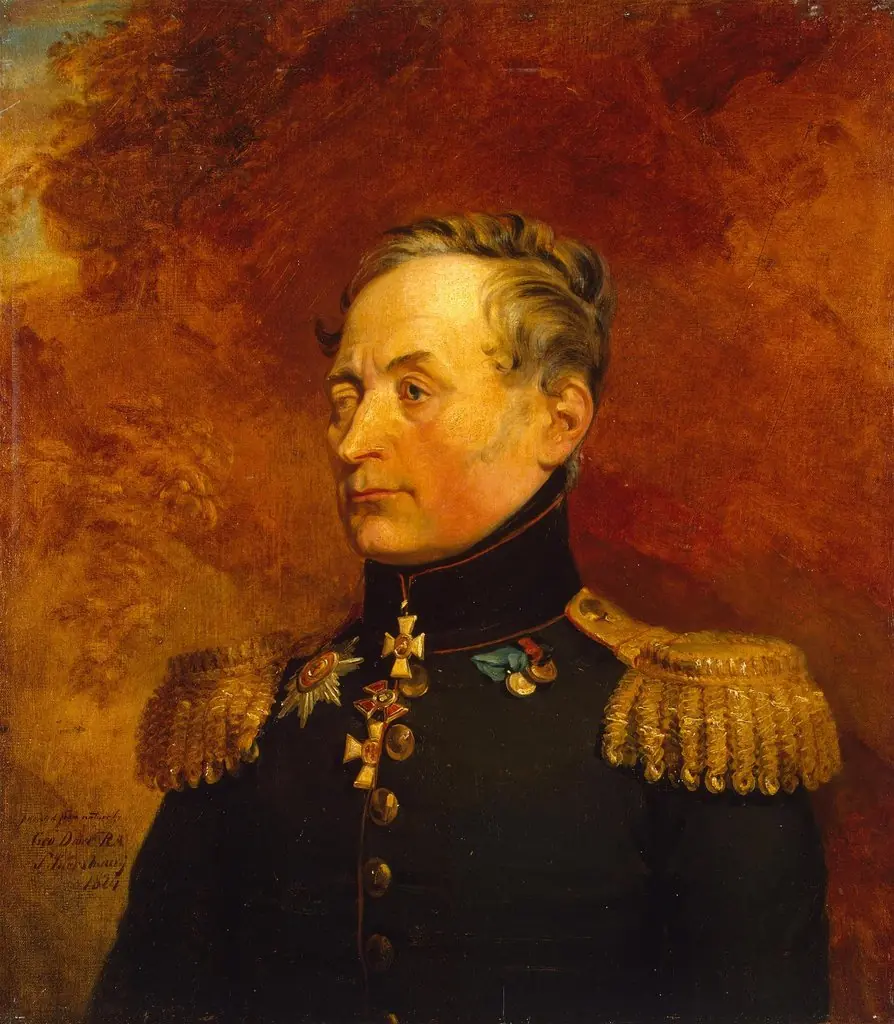 Portrait of Pavel I. Merlin (1769-1841/42)
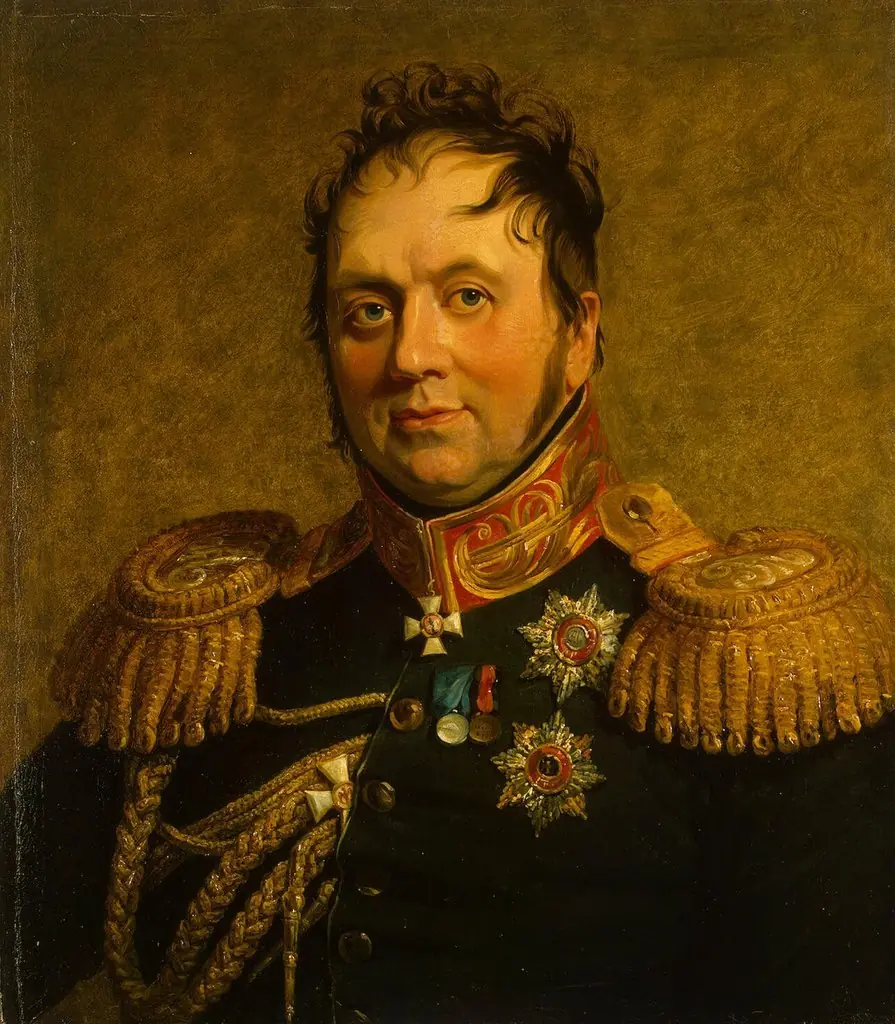 Portrait of Fyodor K. Korff (1773/74-1823)
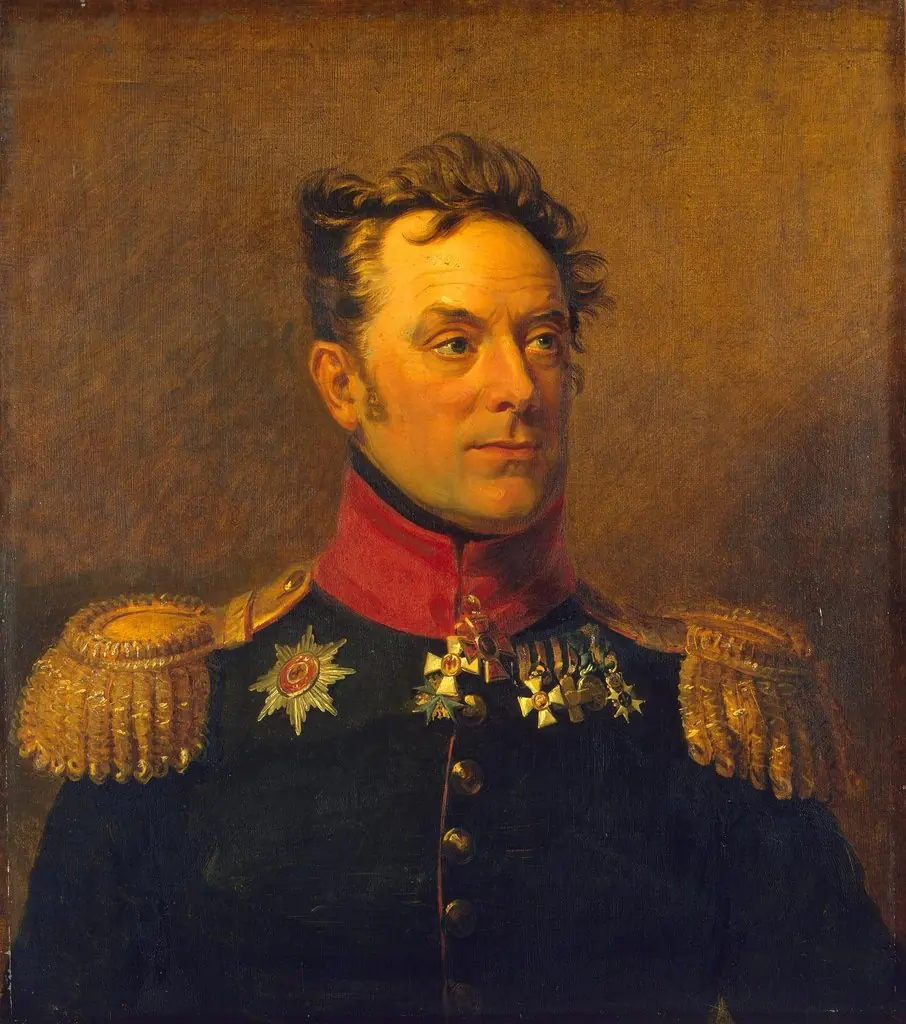 Portrait of Yermolai F. Kern (1765-1841)
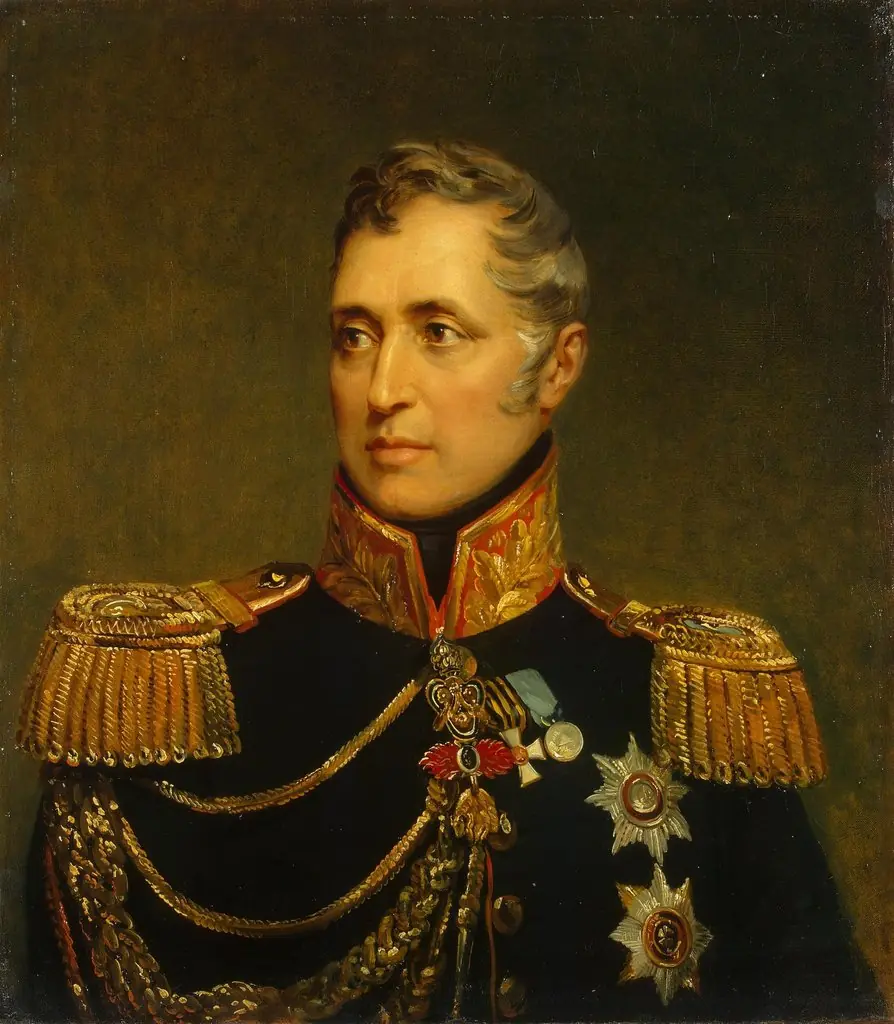 Portrait of Karl O. Pozzo di Borgo (1764-1842)
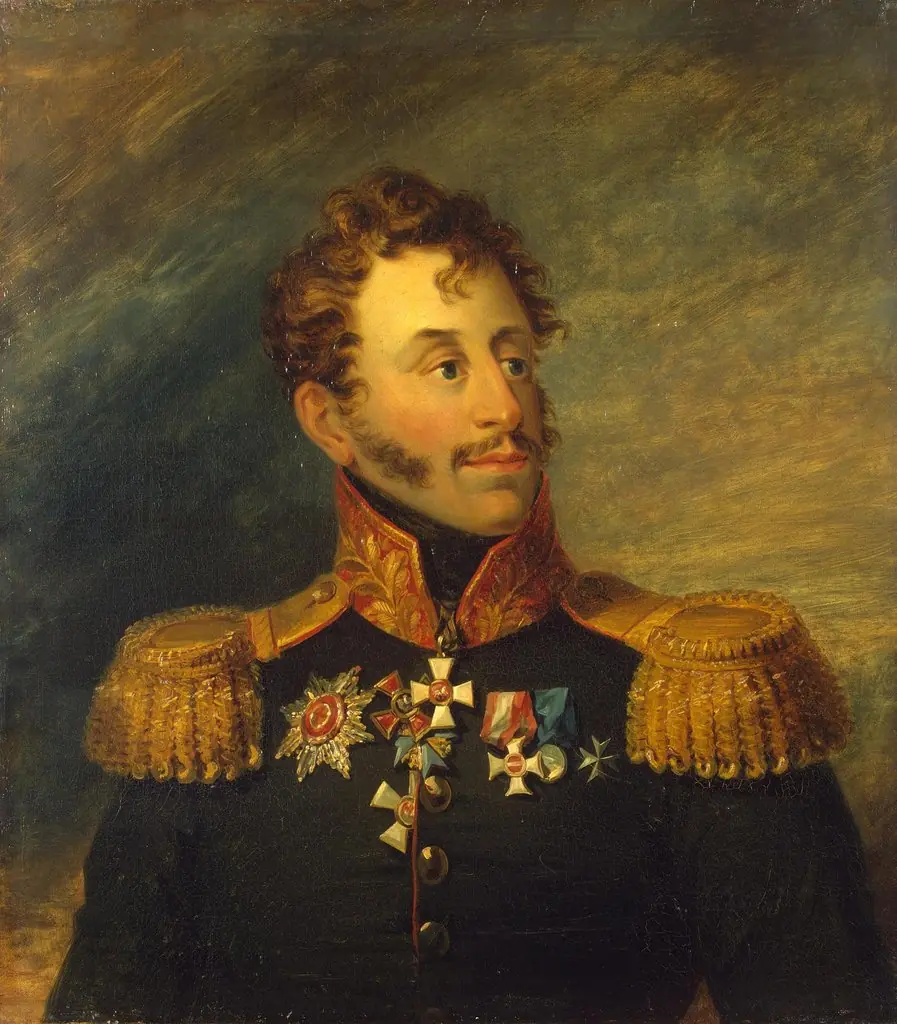 Portrait of Karl B. von Knorring (1774-1817) (3rd)