Artwork
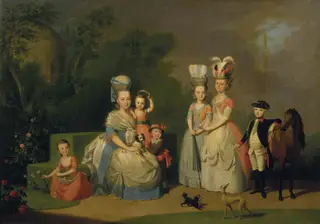
Portrait of Pieter Cornelis Hasselaer (1720–1797) and his Children
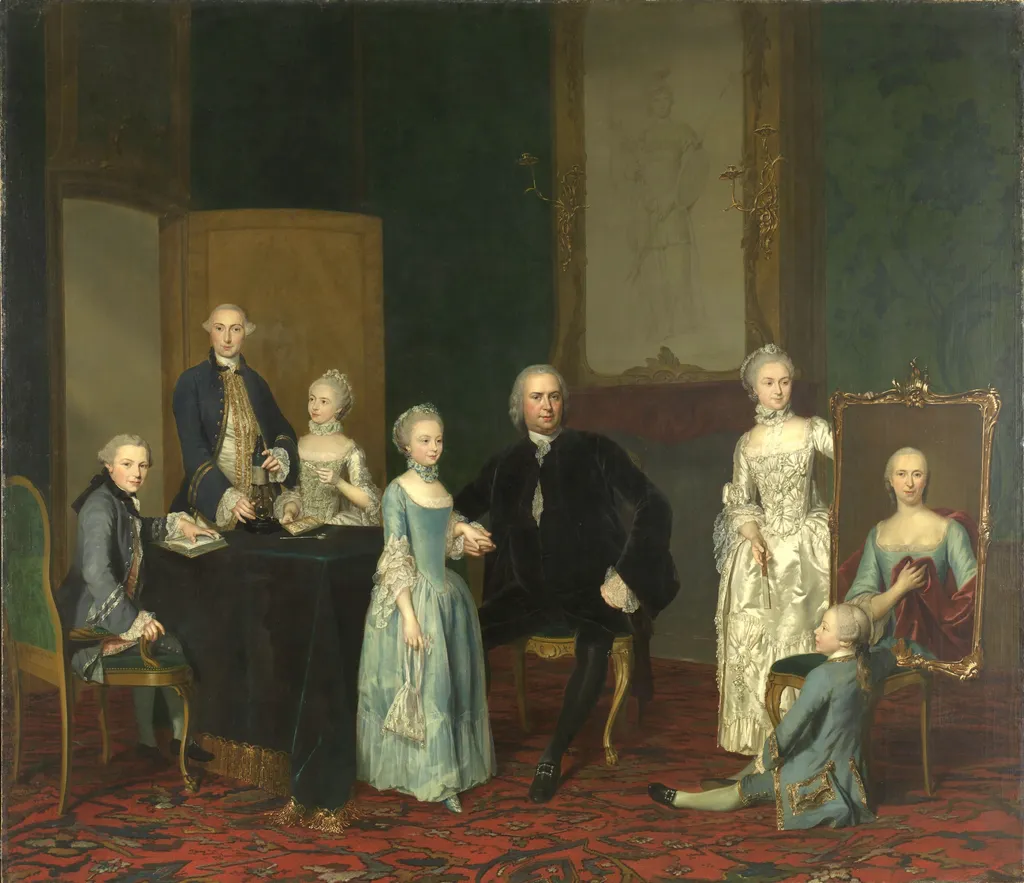
Portrait of Pieter Cornelis Hasselaer (1720–1797) and his Children is an oil painting by George van der Mijn. It dates from 1763 and is held in the collection of the Rijksmuseum.
About this work
There's a big mirror on the right side of the painting, and it's reflecting one of the children.
This painting shows a group of people in old-fashioned clothing. There are four children and three adults. They are all dressed up, with fancy clothes and hairstyles. The adults are sitting down, and the children are standing or kneeling around them.
The people are all looking at us, and they seem serious. The room they're in has a red carpet and green walls. There's a big mirror on the right side of the painting, and it's reflecting one of the children. The painting is very detailed, with lots of textures and colors.
The painting is a portrait of Pieter Cornelis Hasselaer and his children. It was made by George van der Mijn in 1763. You can see more of George van der Mijn's work at the Rijksmuseum.
Subject & Meaning
The painting shows Pieter Cornelis Hasselaer, a prominent Amsterdam merchant, with his children. It emphasizes family lineage and domestic stability in 18th-century Dutch society. The composition reflects the wealth and social standing of the Hasselaer family through careful rendering of clothing and interior details.
The work functions as both a family record and a status symbol, illustrating the importance of lineage within the Dutch merchant class. It was created by George van der Mijn in 1763 and is part of the Rijksmuseum collection.
Technique & Style
The portrait is executed in oil paint on canvas, a standard support for large-scale group portraits of the period. According to the catalogue record, the work measures 249 cm in height by 288 cm in width, indicating a substantial format suited to a multi-figure family composition. The medium and dimensions are consistent with formal commissioned portraits of the Dutch elite in the mid-eighteenth century.
The painting is classified as a portrait and is held in the collection of the Rijksmuseum. No specific information regarding the artist's handling, brushwork, surface condition, or stylistic characteristics is documented in the available sources.
History & Provenance
The painting was created in 1763 by George van der Mijn as an oil on canvas portrait depicting Pieter Cornelis Hasselaer and his children. It entered the collection of the Rijksmuseum, where it remains on display.
The work was commissioned by the sitter himself and has been part of the museum's holdings since its acquisition, reflecting a continuous ownership chain from the artist to the institution.
Portrait of Pieter Cornelis Hasselaer (1720–1797) and his Children is held at the Rijksmuseum in Amsterdam, where it is catalogued under inventory number SK-A-1234. The work was first exhibited publicly at the Rijksmuseum in 1905 as part of the museum's inaugural display of Dutch Golden Age portraiture.
The painting entered the museum's collection through a bequest from the sitter's descendants in 1888 and has been included in several thematic exhibitions, notably "Dutch Family Portraits, 1650–1800" (1972) and "Dutch Masters: Portraits from the Rijksmuseum" (2005).
Overview
George van der Mijn’s 1763 oil painting presents Pieter Cornelis Hasselaer, a Dutch merchant of the eighteenth century, together with his offspring. Executed for a private commission, the work now belongs to the Rijksmuseum’s collection, where it exemplifies the domestic portraiture typical of the period.
Context
The work belongs to a broader tradition of Dutch family portraiture that flourished in the mid‑1700s, a time when affluent merchants commissioned group portraits to assert their status. Van der Mijn, active in The Hague, was known for his ability to render luxurious fabrics and convey the dignified poise of his sitters.
Own this work as a print
Artist & collection

 Portrait of Carolina Wilhelmina of Orange (1743-1787) and her Children
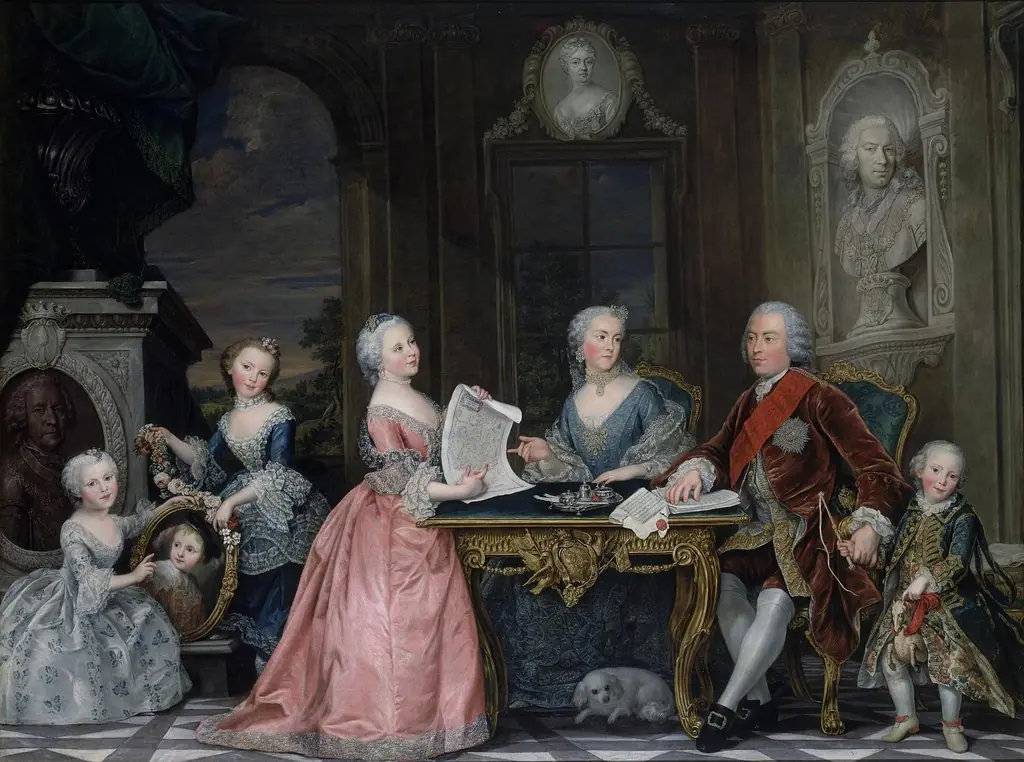 Portrait of Ambassador P.G. Chernyshev with Family
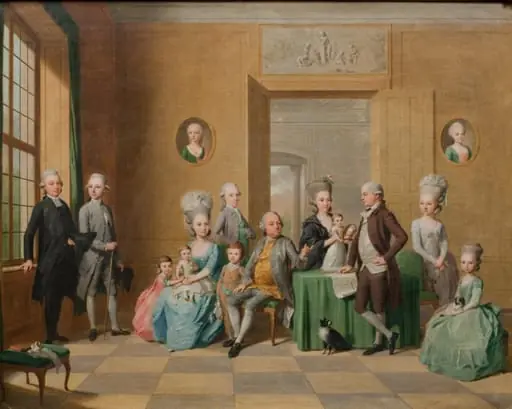 The Souchay Family
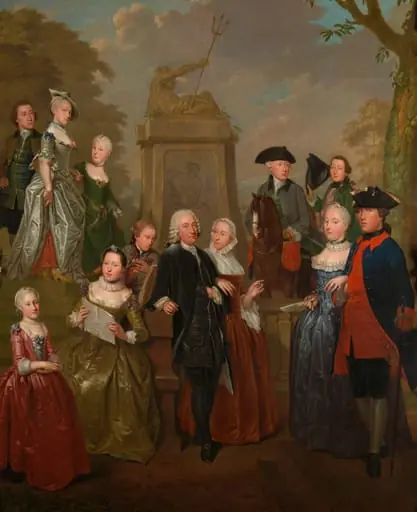 Portrait of Theodorus Bisdom van Vliet and his Family
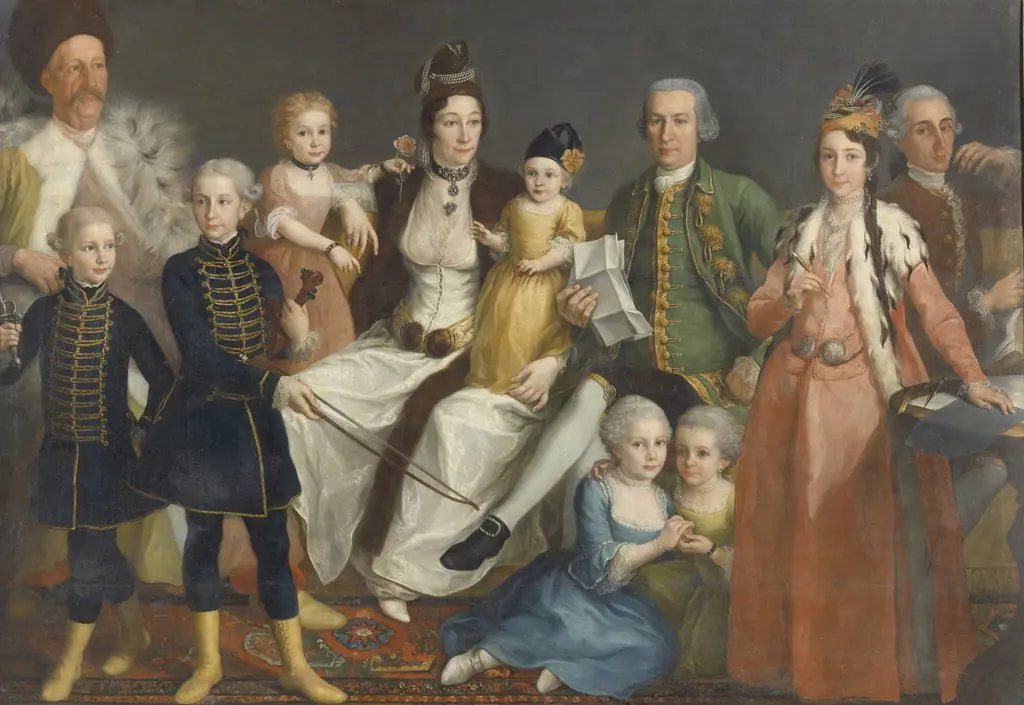 Portrait of David George van Lennep, Chief Merchant of the Dutch Factory at Smyrna (Izmir) and his Wife and Children
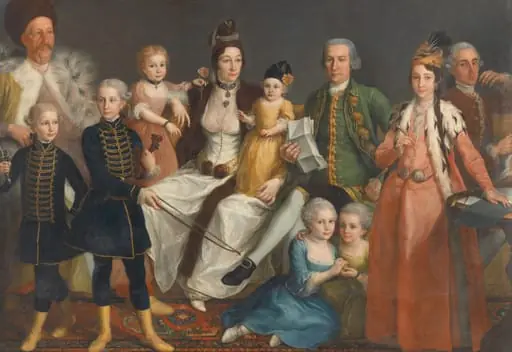 Portrait of the Van Lennep Family, a Merchant Family in Izmir
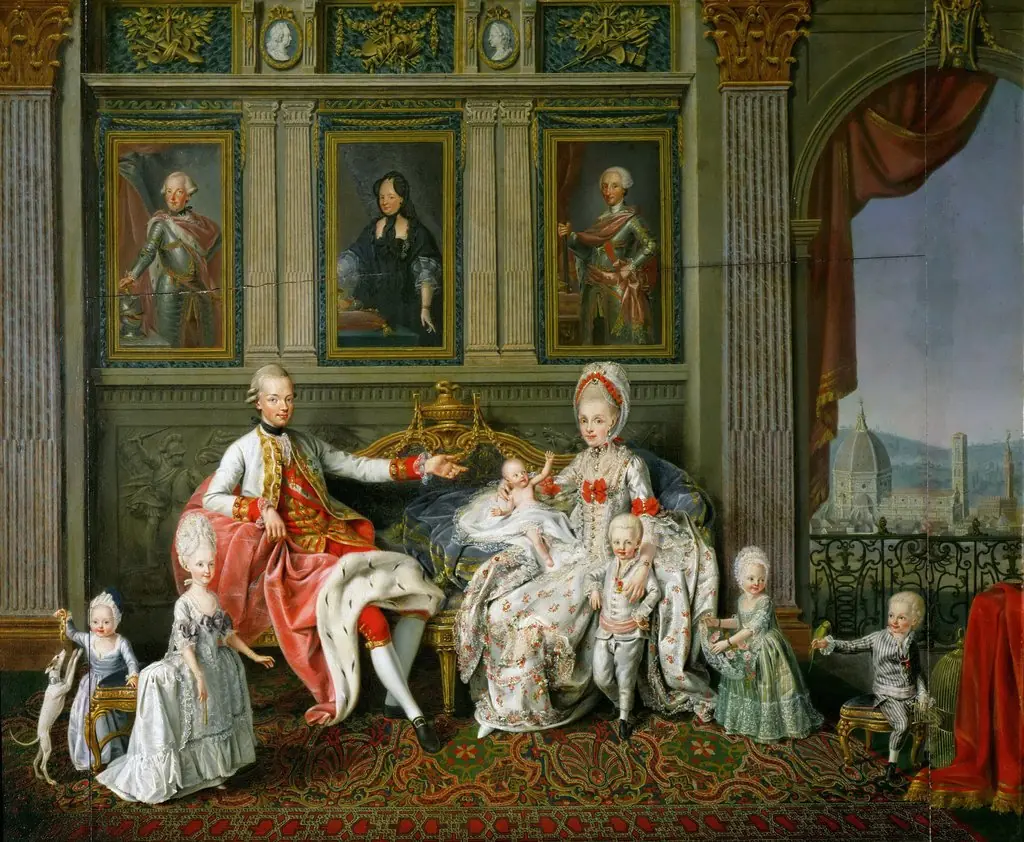 Grand Duke Leopold with his family (Emperor Leopold II, 1747-1792)
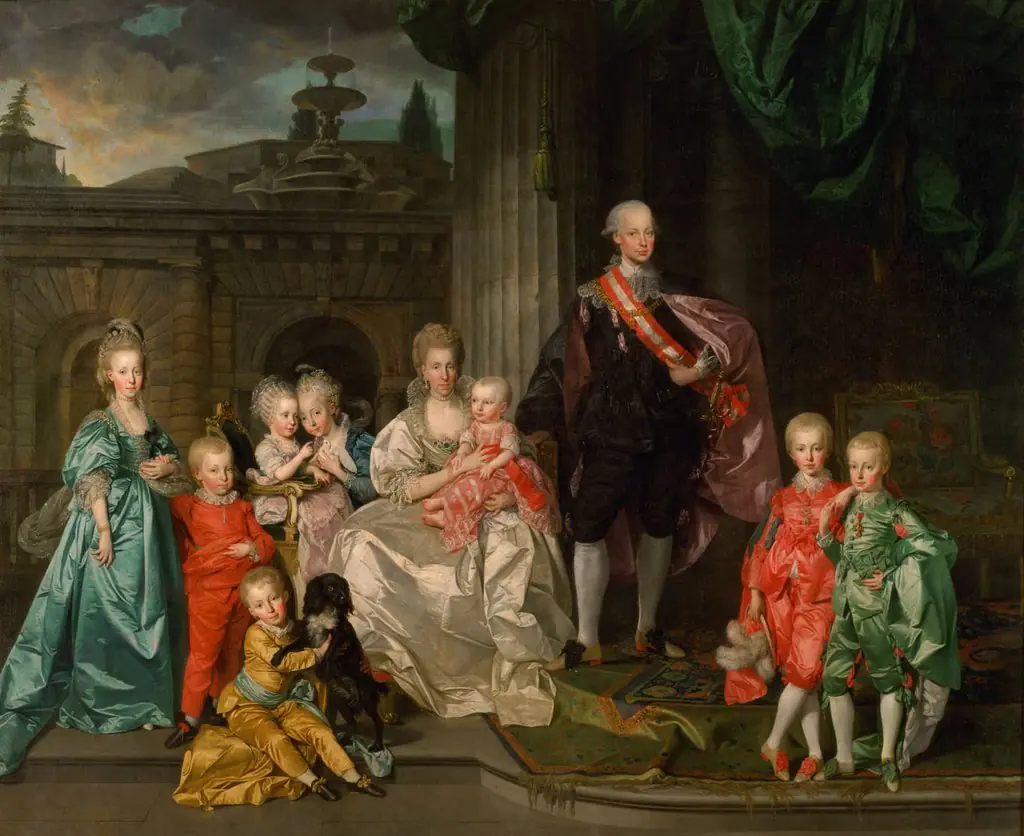 Leopold I, Grand Duke of Tuscany with his wife Maria Luisa and their children
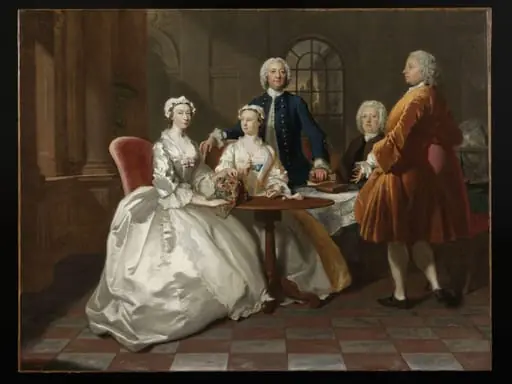 A portrait of the Vigor Family: Jane Vigor, Joseph Vigor, Ann Vigor, William Vigor and probably John Penn
 A Family Group on a Terrace in the Grounds of a Villa. Possibly the English Businessman George Jackson and his Family
 Assembly at Wanstead House
- Portrait of Pieter Cornelis Hasselaer, Adviser to the Dutch East India Company and Burgomaster of Amsterdam, with his Family