Artwork
Portrait of a Lady and Child
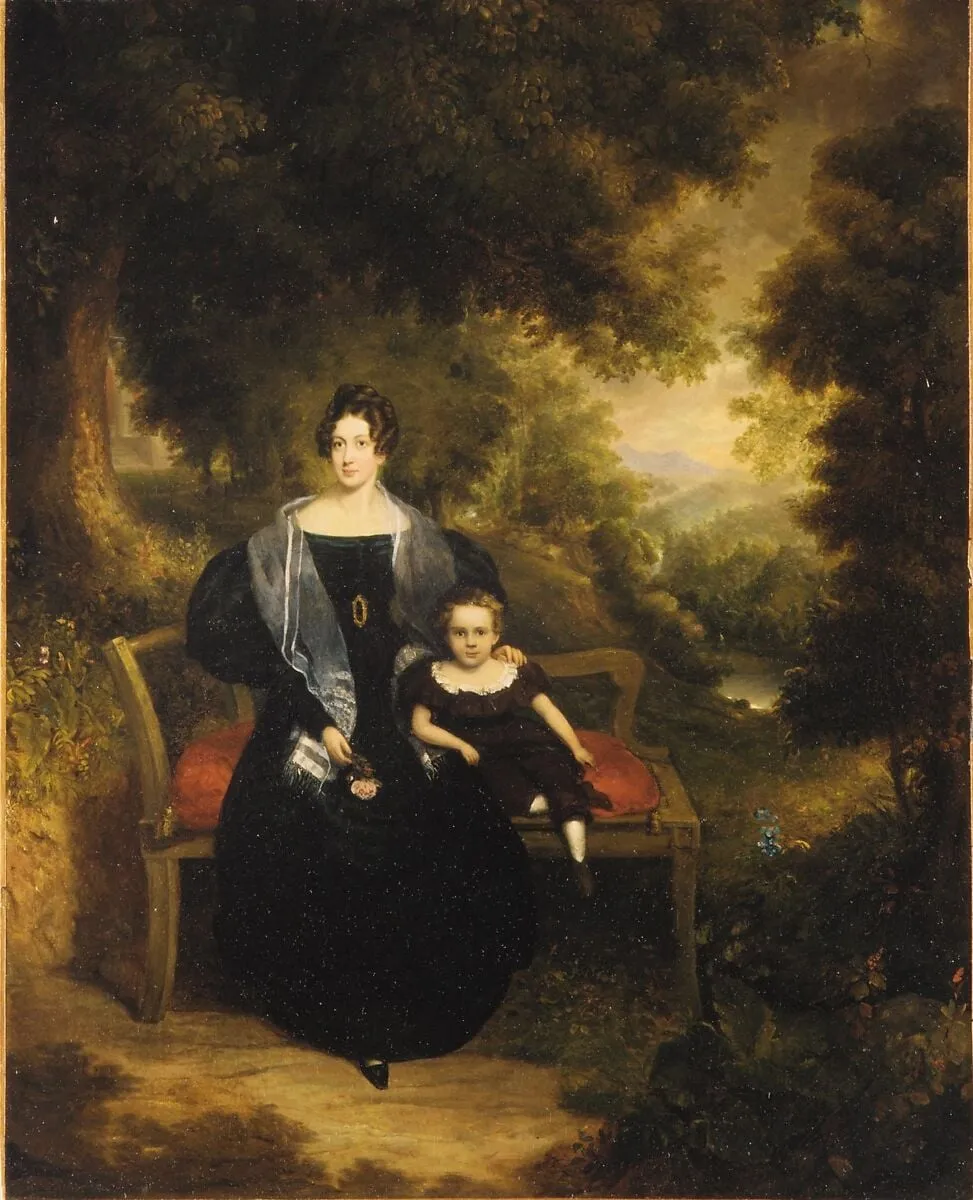
Portrait of a Lady and Child is an oil painting by the American Folk Art artist George W. Twibill Jr.. It dates from 1833 and is held in the collection of the Metropolitan Museum of Art.
About this work
Subject & Meaning
The composition centers on a woman and a child, the two human figures named in the work's title.
The composition centers on a woman and a child, the two human figures named in the work's title. The pair is rendered as a formal portrait group, a conventional arrangement in early-nineteenth-century American painting that linked maternal presence with familial continuity. A tree appears alongside the figures, a recurring motif in portraiture of this period often used to frame the sitters outdoors and to evoke themes of growth and natural vitality.
Together, the woman, child, and tree form an iconography that balances human kinship with the natural world, presenting the sitters within a setting that extends their identity beyond an interior domestic space.
Technique & Style
Portrait of a Lady and Child is executed in oil paint on canvas, a standard support for American portraiture of the early nineteenth century. The canvas measures 90.2 cm in height by 72.4 cm in width, presenting a vertical format suited to a half- or three-quarter-length composition of a seated woman accompanied by a child, with a tree included in the setting. The work is classified within The American Wing, consistent with its 1833 date and its genre designation as a portrait.
Beyond the identification of the medium and support, the available records do not document specific handling of the paint, surface condition, or stylistic features such as brushwork, palette, or compositional devices.
History & Provenance
The work titled Portrait of a Lady and Child was painted in 1833 by George W. Twibill Jr. using oil on canvas; it depicts a woman, child, and tree within the portrait genre. Initially created as an independent portrait, the painting later entered the collection of the Metropolitan Museum of Art, where it is catalogued as part of The American Wing. Its provenance thus traces from the artist's studio in 1833 to acquisition by the museum, where it has been displayed as a recognized work of American portraiture.
Overview
This oil on canvas work, titled "Portrait of a Lady and Child," captures a serene domestic scene. A woman in a dark dress holds a young girl on her lap, who wears a white gown and looks directly outward. Behind them, a soft landscape of trees and a pale sky provides a tranquil backdrop. The painting conveys a sense of quiet intimacy, presenting a seemingly personal moment between the subjects.
Context
Unusually for its time, this portrait lacks an artist's signature. This omission suggests a potential intent to prioritize the personal significance of the depicted moment over the artist's identity or public recognition. The unsigned status might indicate that the painting was created as a private keepsake or a family memento, rather than a formal commission intended for broader display.
Artist & collection

 Anica Manu cu copilul
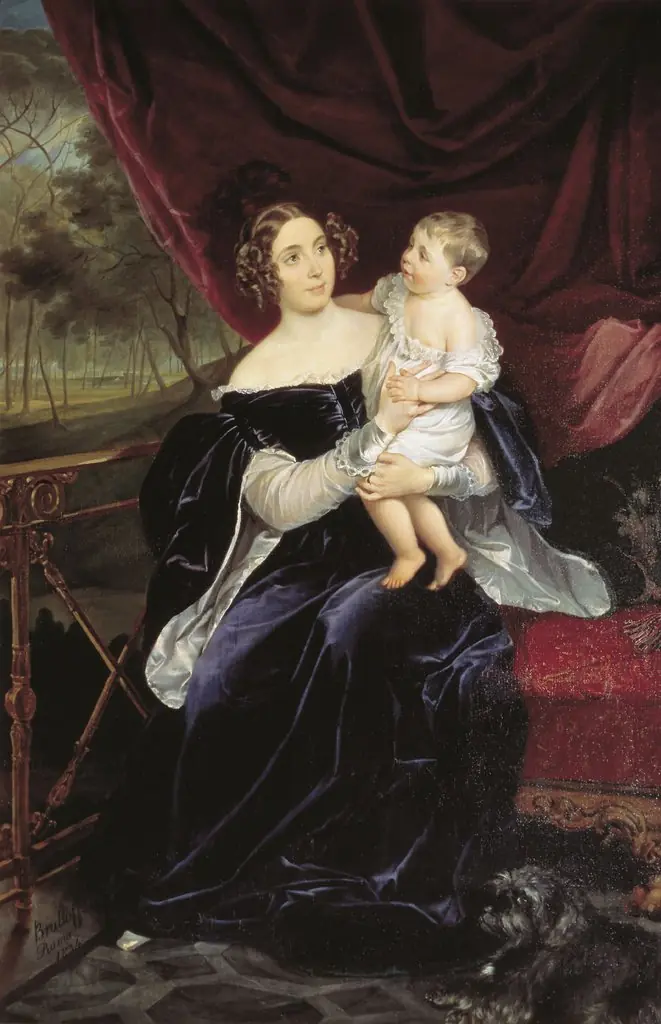 Portrait of the Princess Olga Ivanovna Orlova-Davydova with her daughter Natalya Vladimirovna
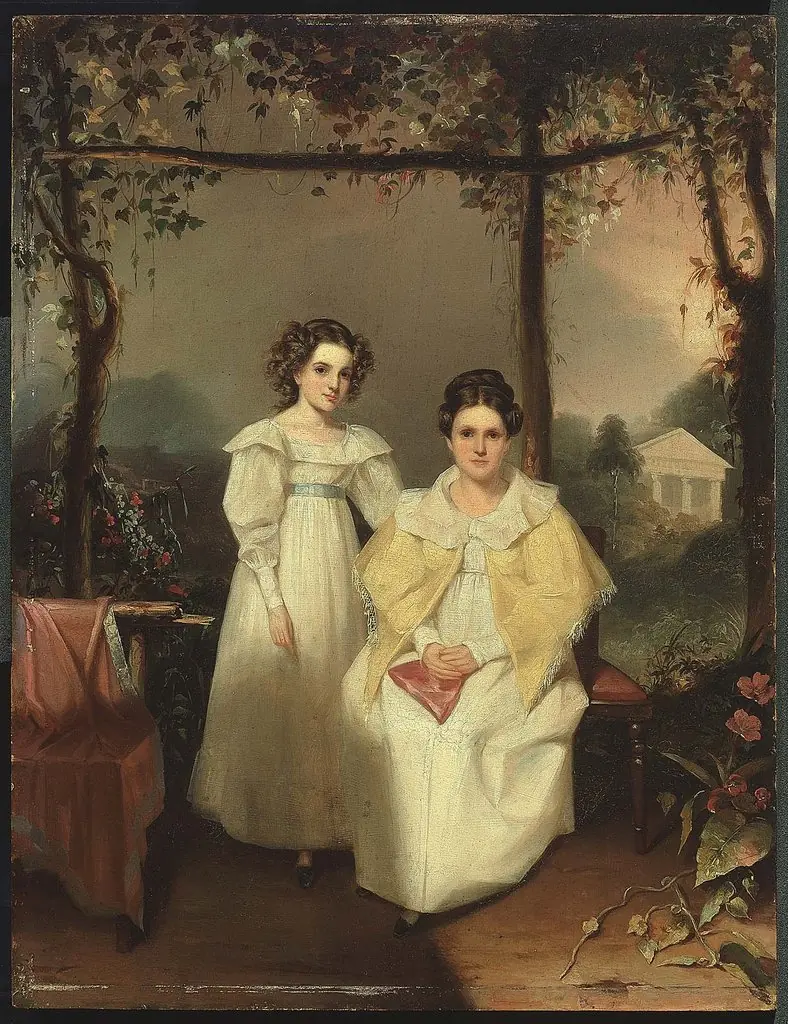 Margaret Oliver Colt and Mary Devereux Colt in the Gardens at "Green Mount," Baltimore
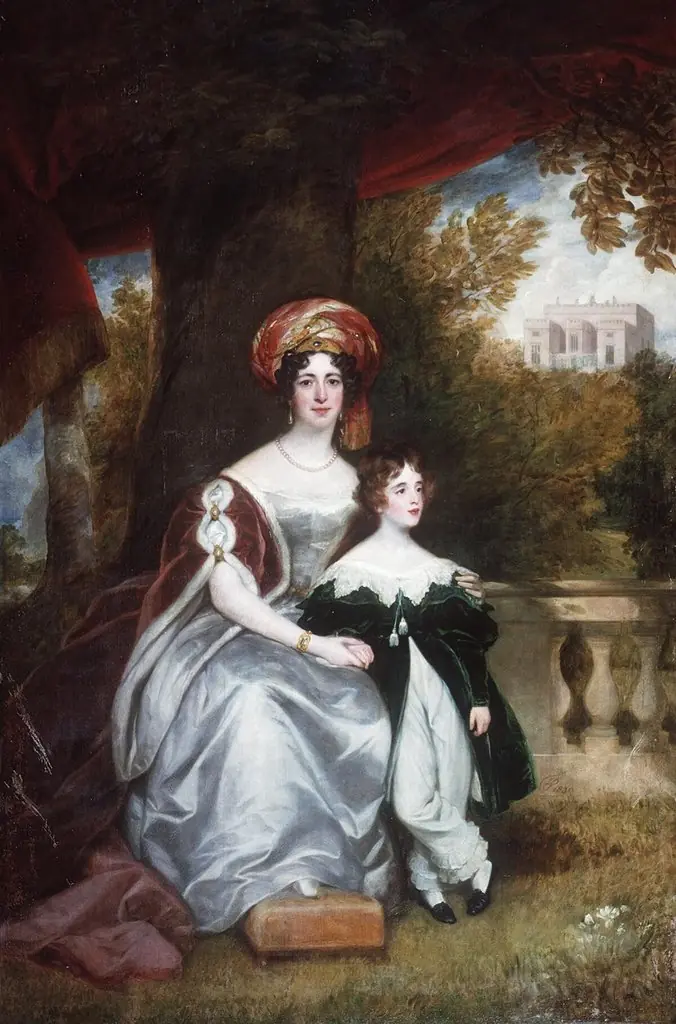 Caroline Windham
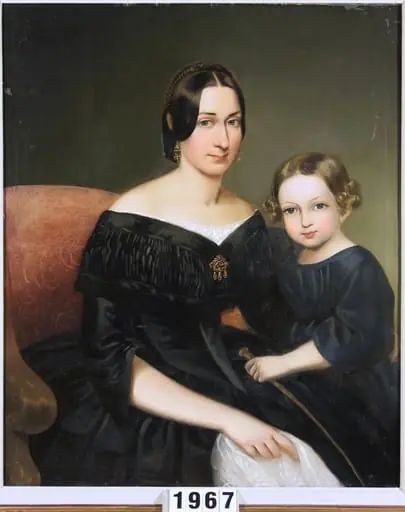 Alma Neugeboren cu copilul
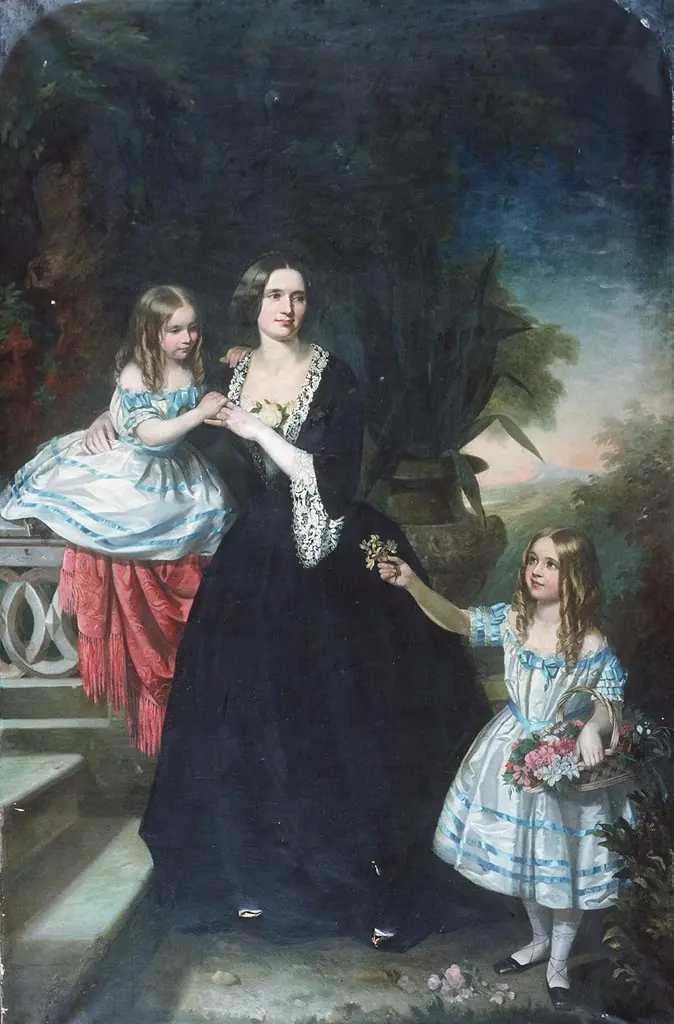 Wife & children of David Jones, Pantglas
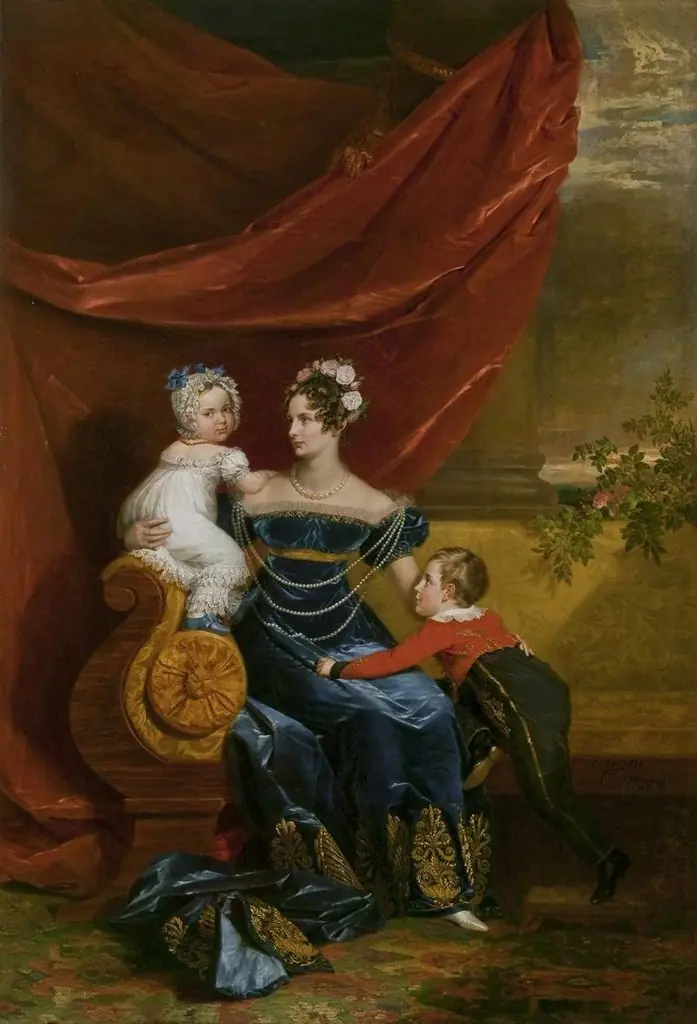 Portrait of Grand Duchess Alexandra Fiodorovna with Children
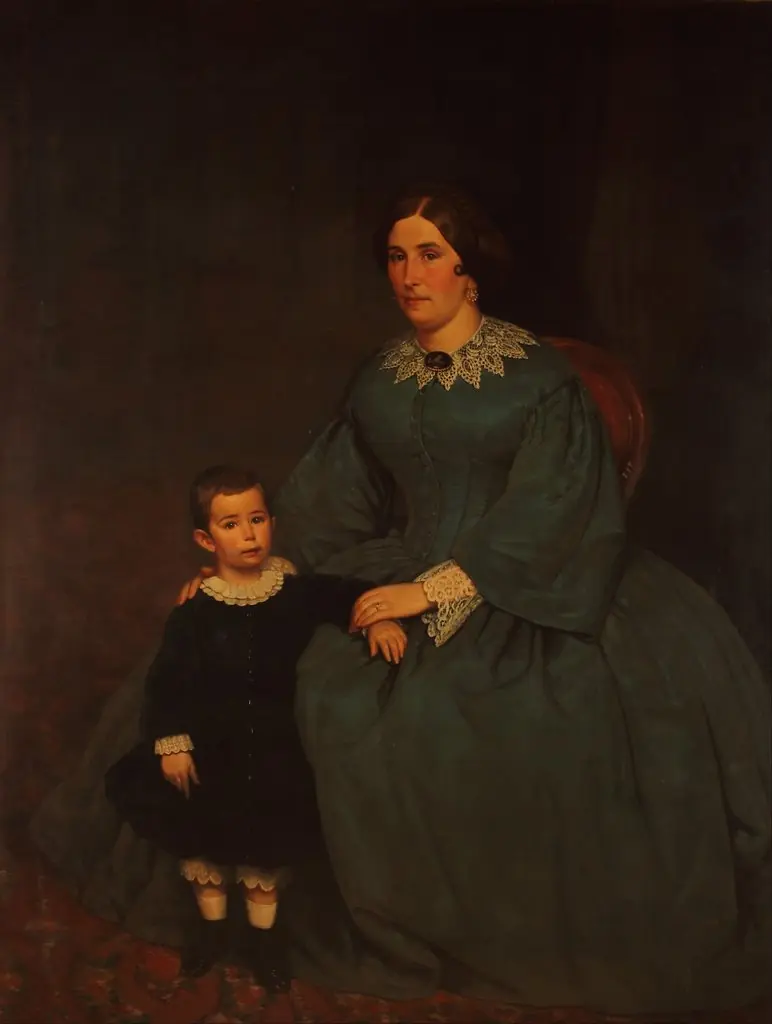 Retrato de Cecilia R. de Peralta Ramos y su hijo
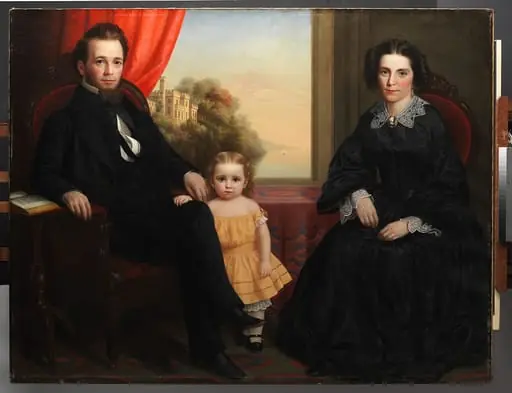 A Family Group
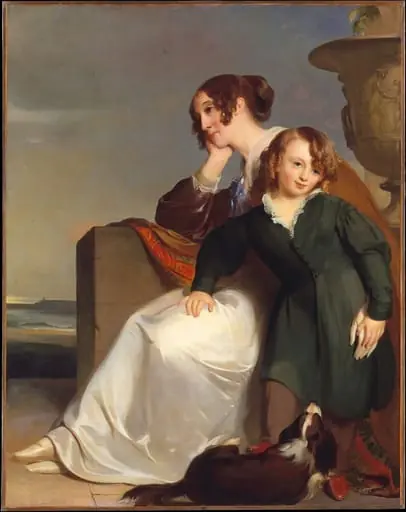 Mother and Son
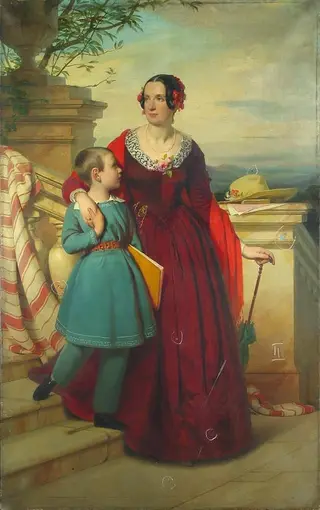 Portrait of I.V. Durnovo with Her Son
- Portrait of a Lady with her Son