Artwork
Untitled
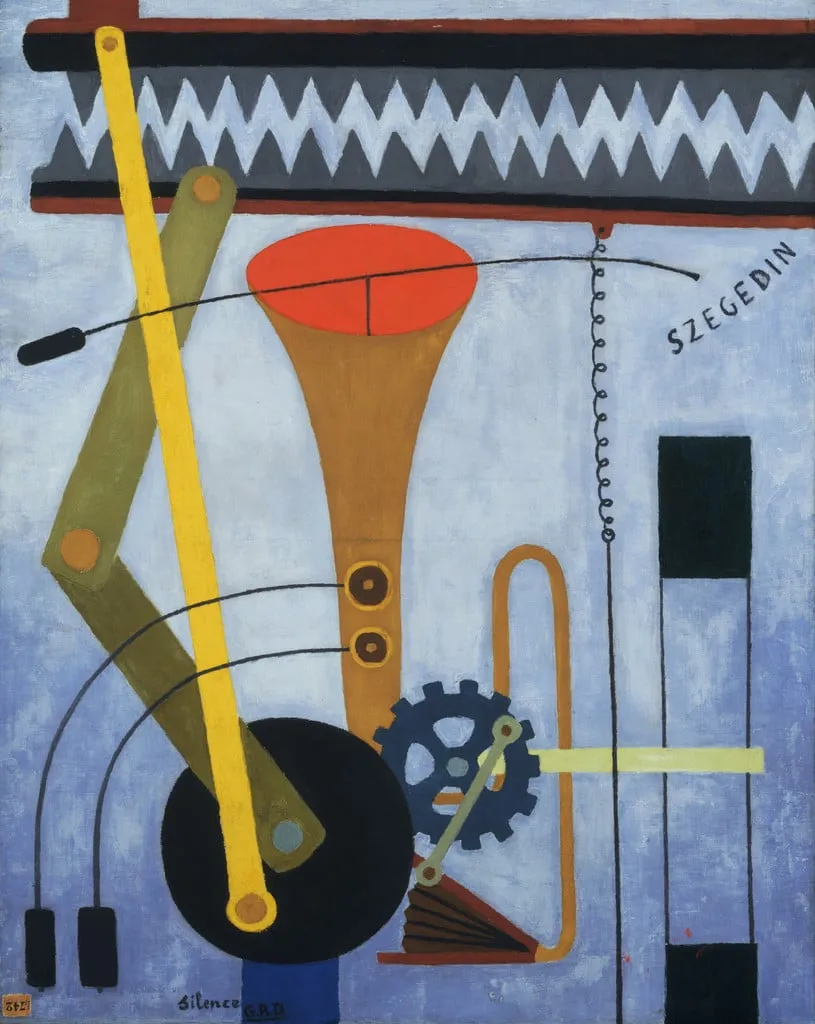
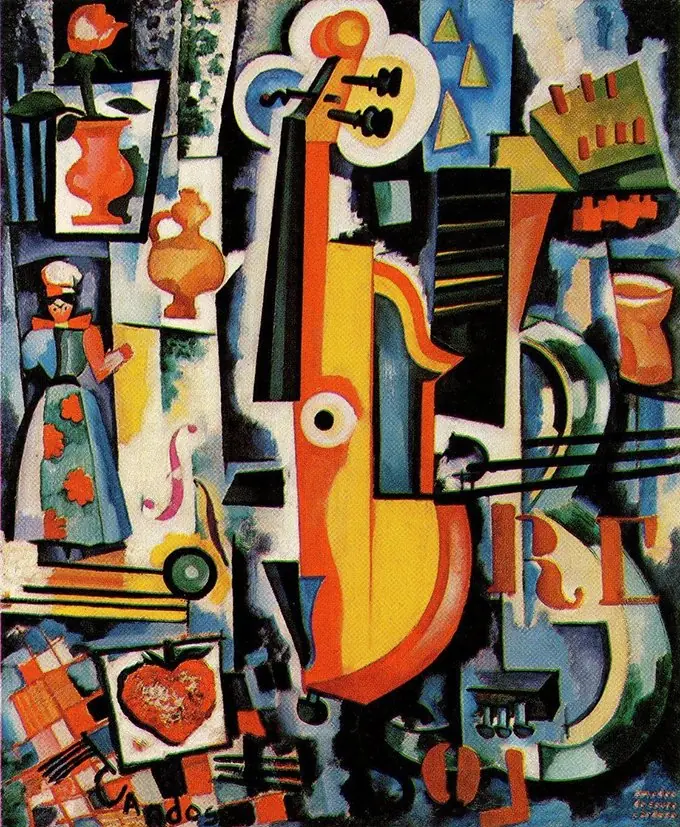
Untitled is an oil painting by the Cubism Analytic artist Georges Ribemont-Dessaignes. It dates from 1915 and is held in the collection of the Museum of Modern Art.
About this work
The artist played with simple shapes and bold colors to make something that feels both mechanical and dreamlike.
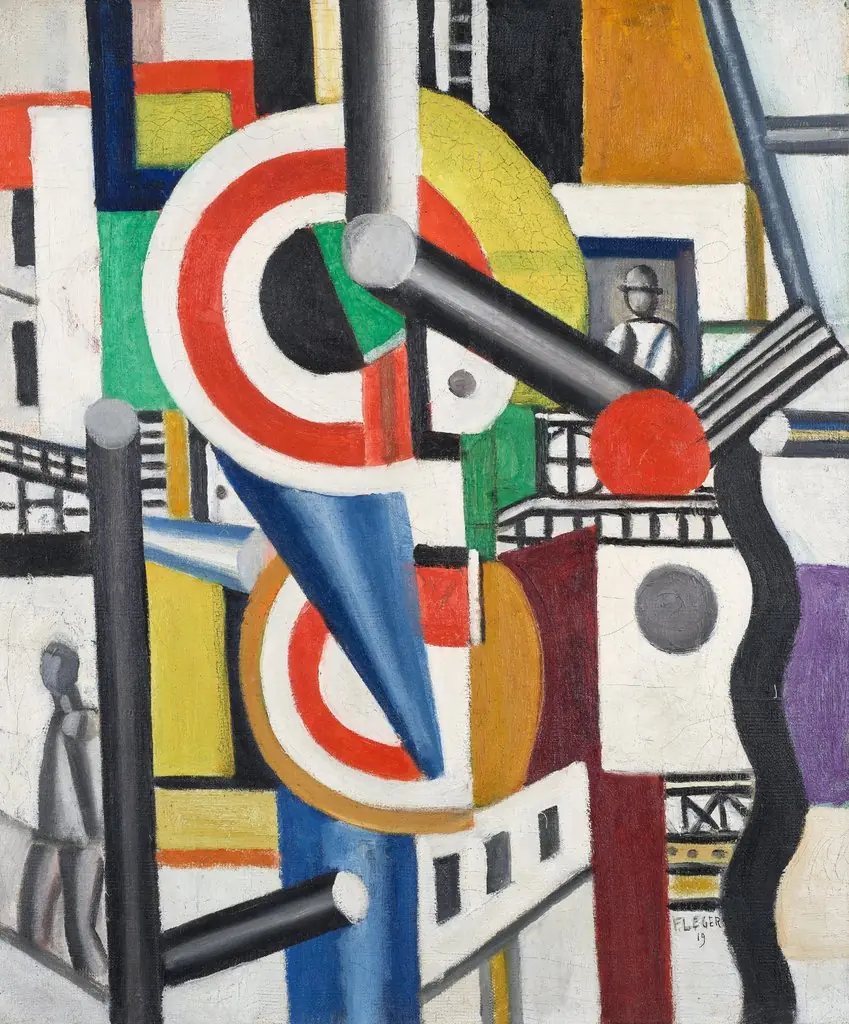
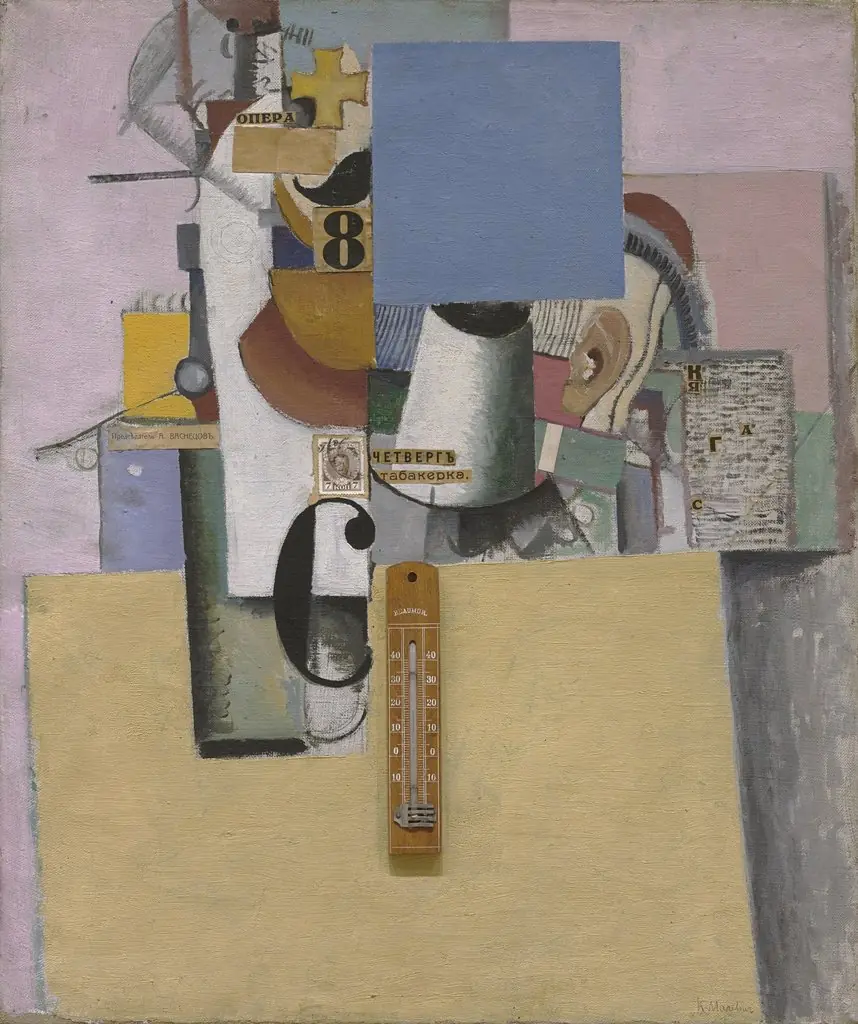
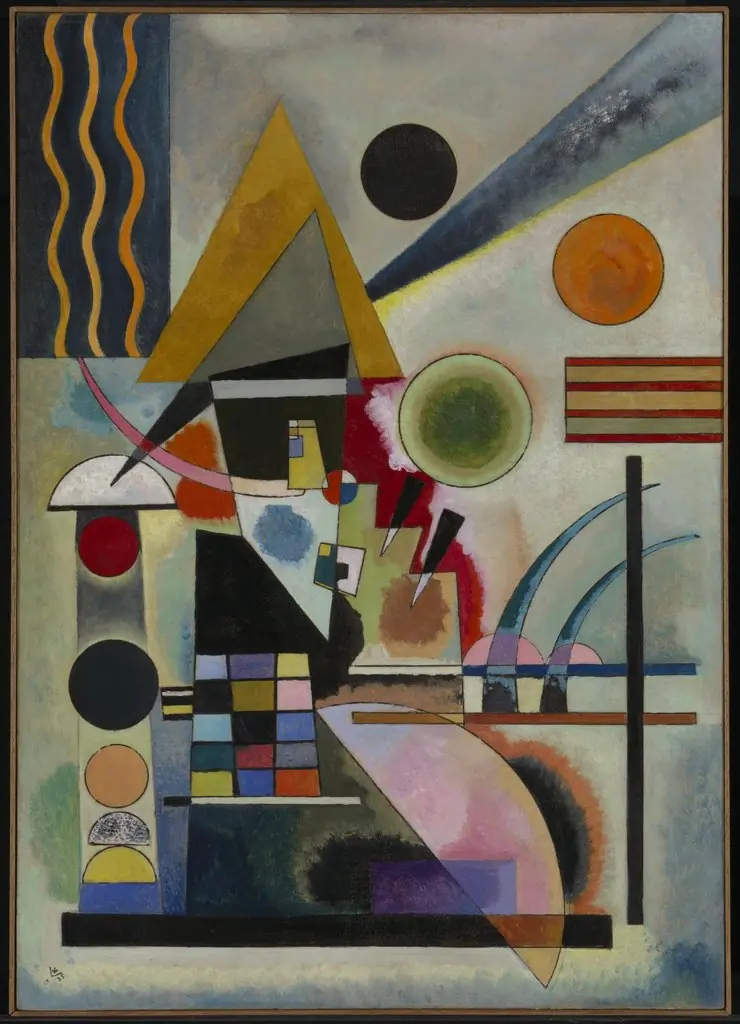
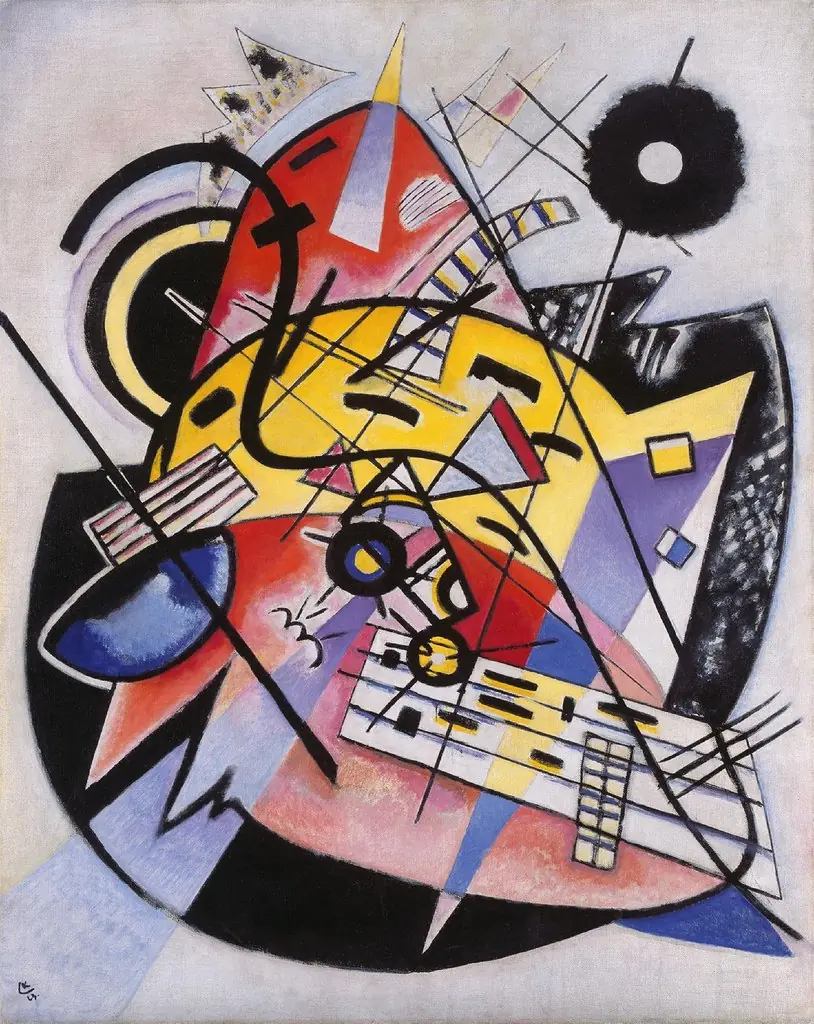
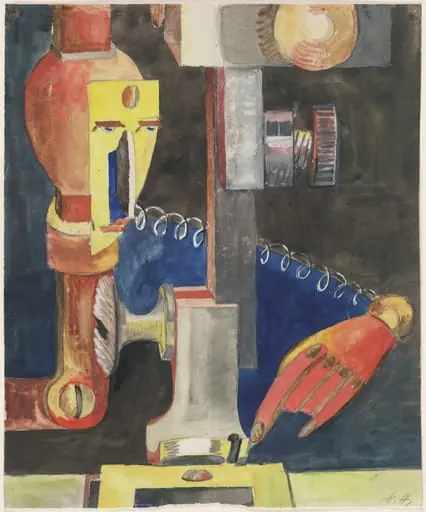
This painting shows a mix of odd shapes and colors on a blue background. There’s a big yellow scissor-like form, a red circle with a black line through it, and two brown funnel shapes. Black gears, a coiled rope, and a black box sit below, all connected by jagged lines. The top has a zigzag pattern and the name "Szegedin" written in the corner.
The artist played with simple shapes and bold colors to make something that feels both mechanical and dreamlike. The painting looks like it was made around 1915, but it doesn’t fit neatly into any art movement.
Look up Georges Ribemont-Dessaignes to see how his other work plays with words and objects.
Overview
Created around 1915, this untitled oil on canvas by Georges Ribemont‑Dessaignes belongs to the Museum of Modern Art’s collection. The work is an abstract composition that juxtaposes a blue field with a variety of geometric and biomorphic forms rendered in vivid hues, creating a visual tension between mechanical motifs and whimsical shapes.
Subject & Meaning
The canvas is populated by a large yellow element reminiscent of scissors, a red circle bisected by a black line, and two brown, funnel‑like shapes. Below these float black gears, a coiled rope and a rectangular box, all linked by jagged strokes. A zigzag pattern crowns the upper edge, while the word “Szegedin” appears in a corner, suggesting a playful interplay of language and object.
Technique & Style
Ribemont‑Dessaignes employs flat areas of saturated color alongside stark black outlines, emphasizing contrast and rhythm. The brushwork is smooth and uniform, allowing the geometric forms to dominate the surface. The composition’s balance of precise, mechanical symbols with more organic, dreamlike shapes reflects an experimental approach that resists easy categorisation within contemporary movements.
History & Provenance
The painting was produced circa 1915, during the artist’s involvement with avant‑garde circles in Paris. It entered the Museum of Modern Art’s holdings through acquisition, though the exact path of ownership prior to its museum entry is not extensively documented.
Context
Georges Ribemont‑Dessaignes was a multifaceted figure associated with Dada and Surrealist activities, known for integrating text, humor, and everyday objects into his visual work. This canvas exemplifies his tendency to blur the boundaries between the mechanical and the imaginative, echoing the broader experimental climate of early twentieth‑century French art.
Artist & collection

Artist
Georges Ribemont-Dessaignes was a French anti-art painter, writer, poet, musician, playwright closely associated with the intended affront to aesthetic sensibilities that was the Dada movement.