Artwork
Mecanical Element
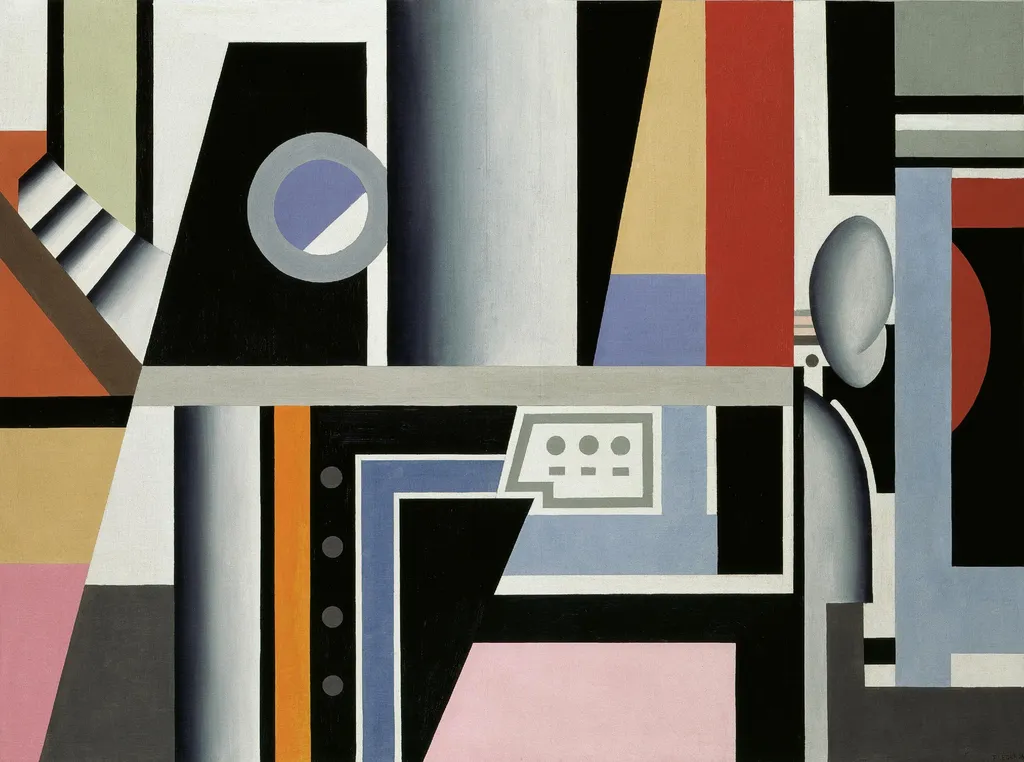
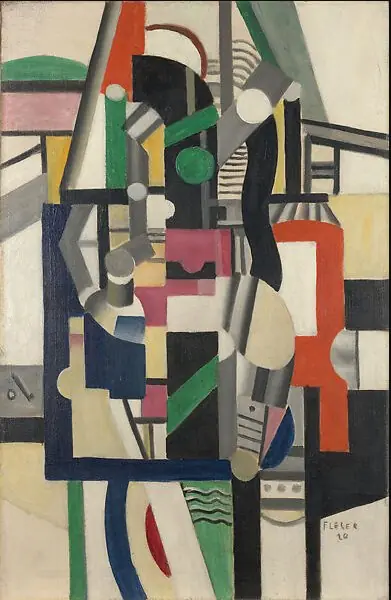
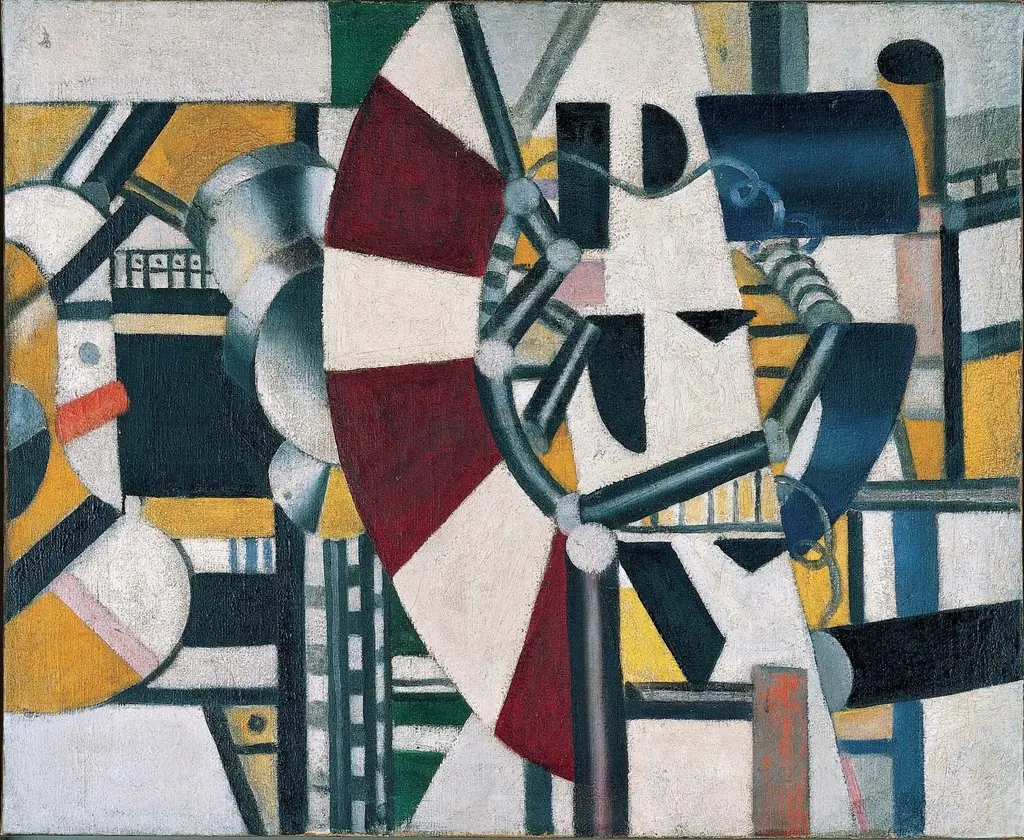
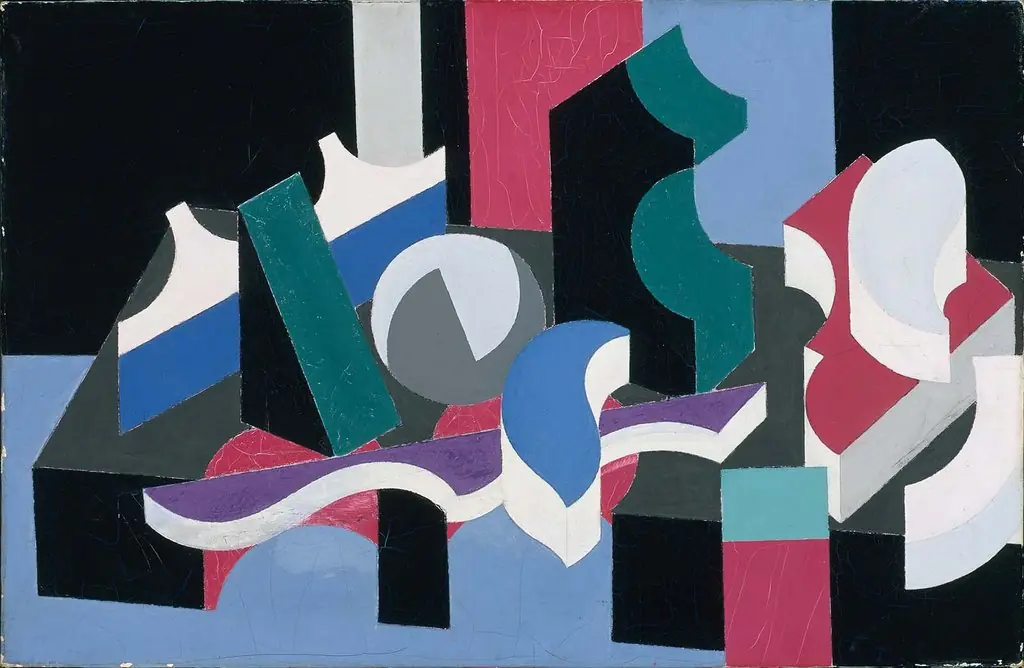
Mecanical Element is an oil painting by the Cubism Synthetic artist Fernand Léger. It dates from 1924 and is held in the collection of the Kunsthaus Zürich.
About this work
Overview
Created in 1924, Mechanical Element is an abstract oil painting by French artist Fernand Léger. It belongs to a series of works from the early 1920s in which he explored the visual language of industrial forms. The painting is part of the collection at the Kunsthaus Zürich, where it has been held since its acquisition in the mid-20th century.
Subject & Meaning
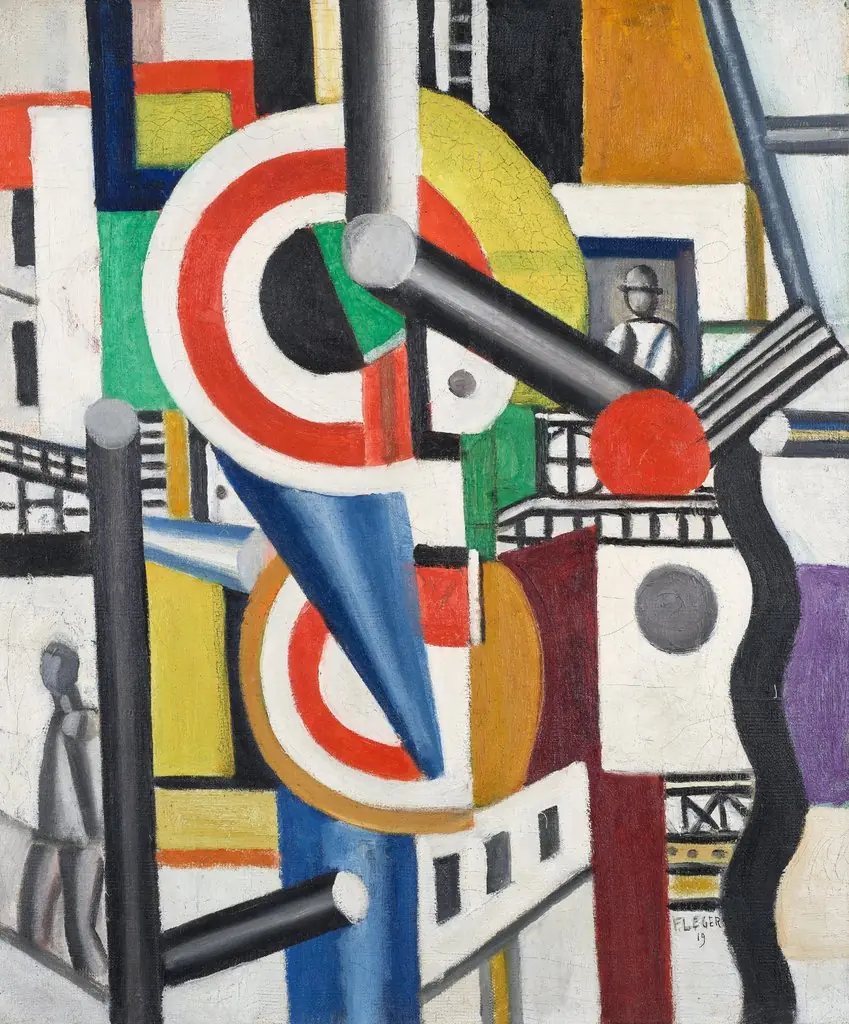
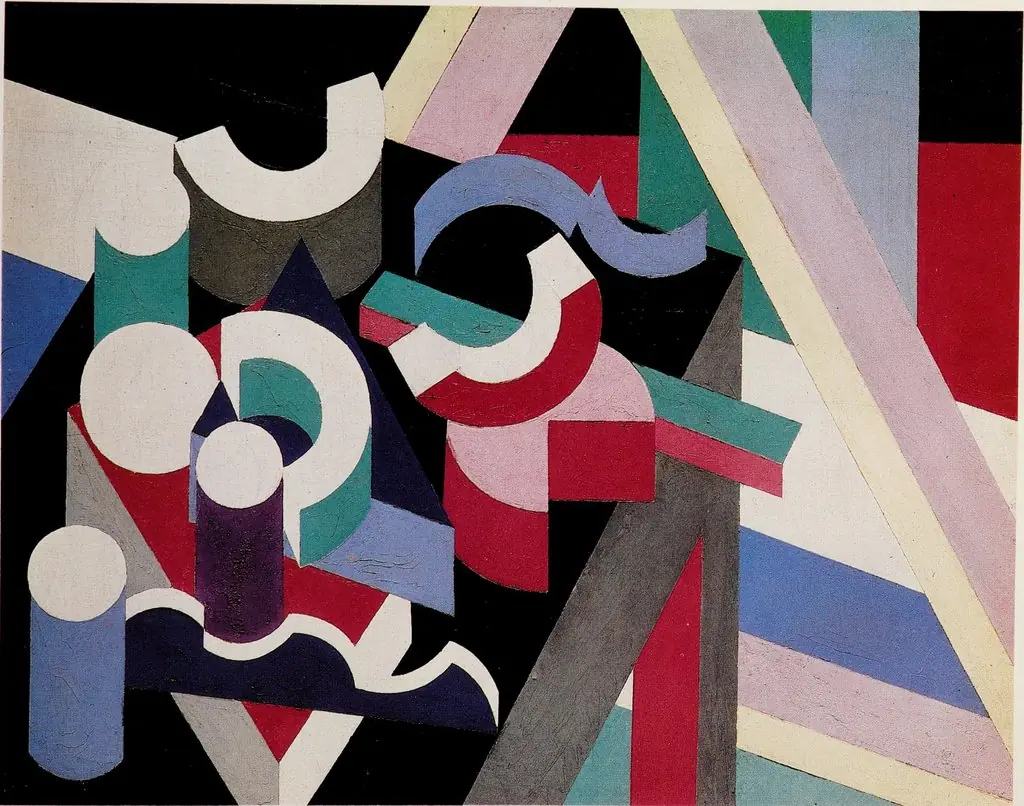
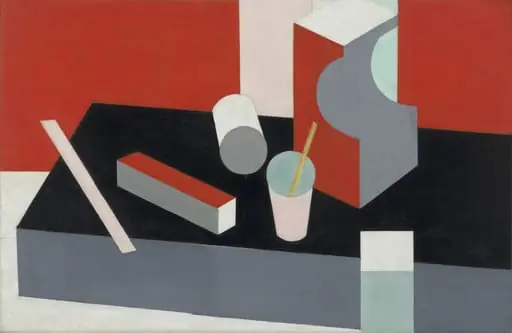
The painting presents fragmented, geometric shapes resembling machine parts, cylinders, pistons, and gears, arranged without clear hierarchy. Léger avoids literal representation, instead using these forms to evoke the rhythm and structure of modern mechanical life. The subject is not a specific device but the aesthetic and psychological presence of machinery in contemporary experience.
Technique & Style
Léger applied oil paint in flat, bold planes with sharp edges, emphasizing clarity and solidity. Color is limited to primary hues and neutrals, reinforcing the industrial tone. Brushwork is deliberate and uniform, minimizing expressive gesture in favor of mechanical precision. The composition balances asymmetry with rhythmic repetition, reflecting his interest in order amid modern chaos.
History & Provenance
Painted in 1924, the work emerged during Léger’s return to abstraction after World War I, when he increasingly focused on machine aesthetics. It entered the Kunsthaus Zürich’s collection in the 1950s, following the museum’s growing interest in European modernism. No significant alterations or restorations are documented, and its condition remains stable.
Context
In the early 1920s, Léger distanced himself from Cubism’s fragmentation, seeking a more accessible visual vocabulary aligned with industrial society.
In the early 1920s, Léger distanced himself from Cubism’s fragmentation, seeking a more accessible visual vocabulary aligned with industrial society. Mechanical Element reflects broader cultural fascination with technology and urbanization, paralleling movements like Constructivism and the Bauhaus. Unlike utopian visions, Léger’s work presents machinery as neutral, pervasive elements of daily life.
Legacy
The painting exemplifies Léger’s influence on later abstract and pop art traditions, particularly in how he elevated mechanical forms to aesthetic subjects. While not widely exhibited, it remains a key reference in studies of modernist abstraction and the intersection of art and industry. Its restrained palette and structured composition continue to inform discussions on form and function in 20th-century painting.
Own this work as a print
Artist & collection
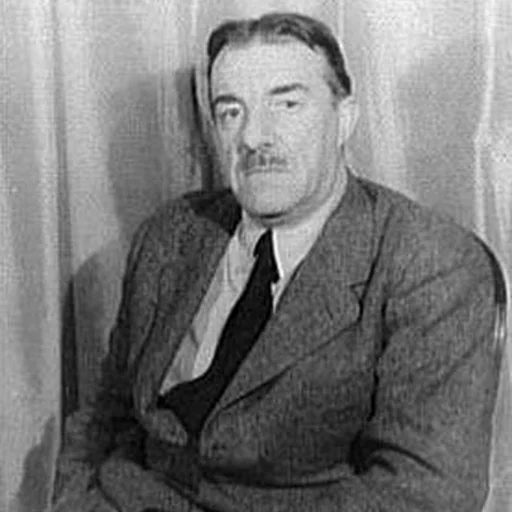
Artist
Joseph Fernand Henri Léger was a French painter, sculptor, and filmmaker. In his early works he created a personal form of cubism which he gradually modified into a more figurative, populist style. His boldly simplified…