Artwork
The Disks
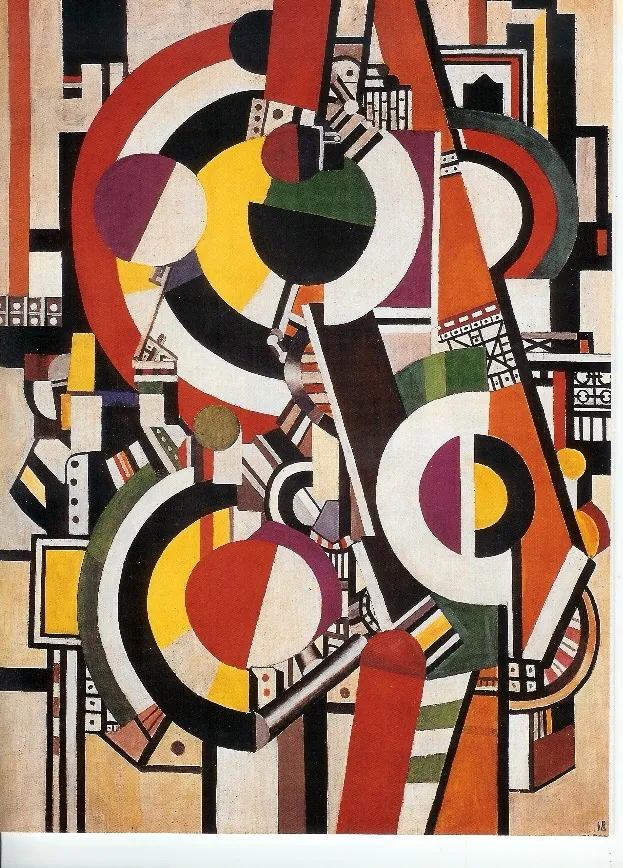
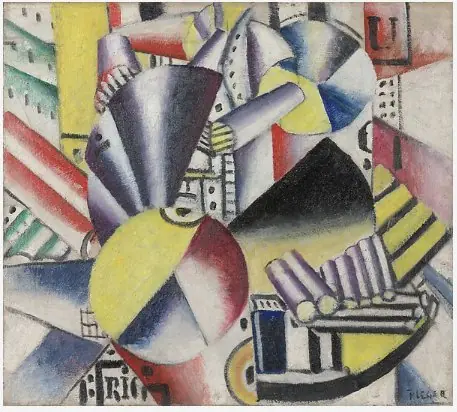
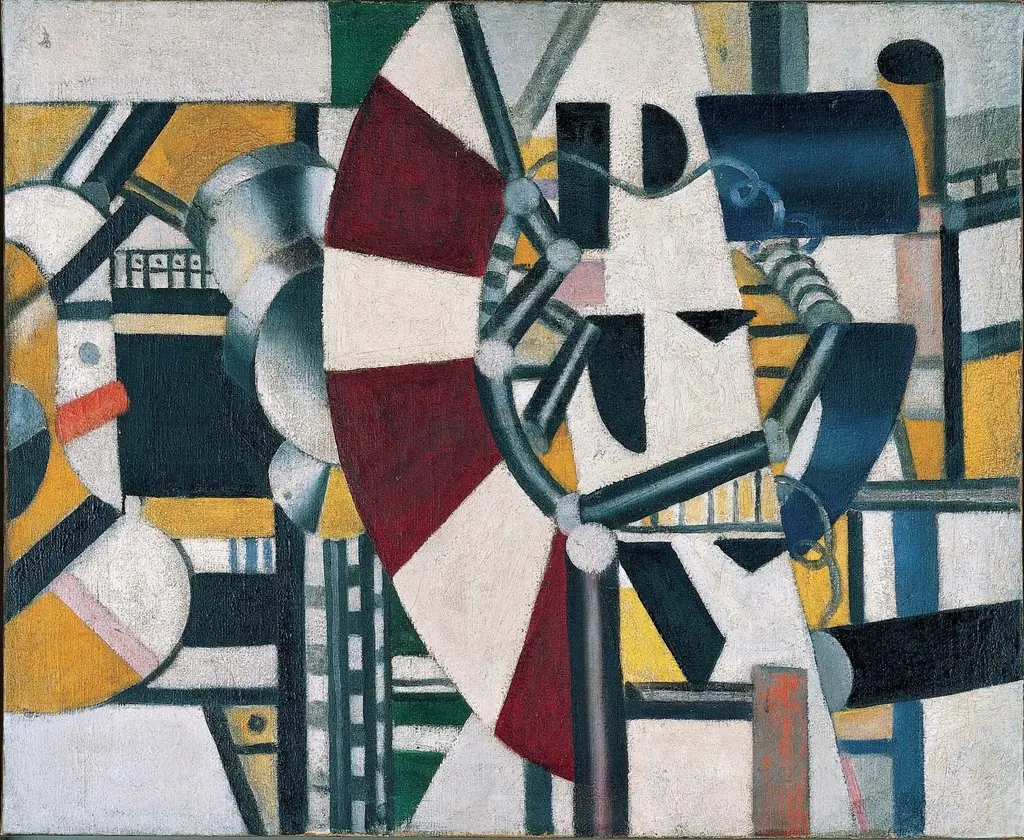
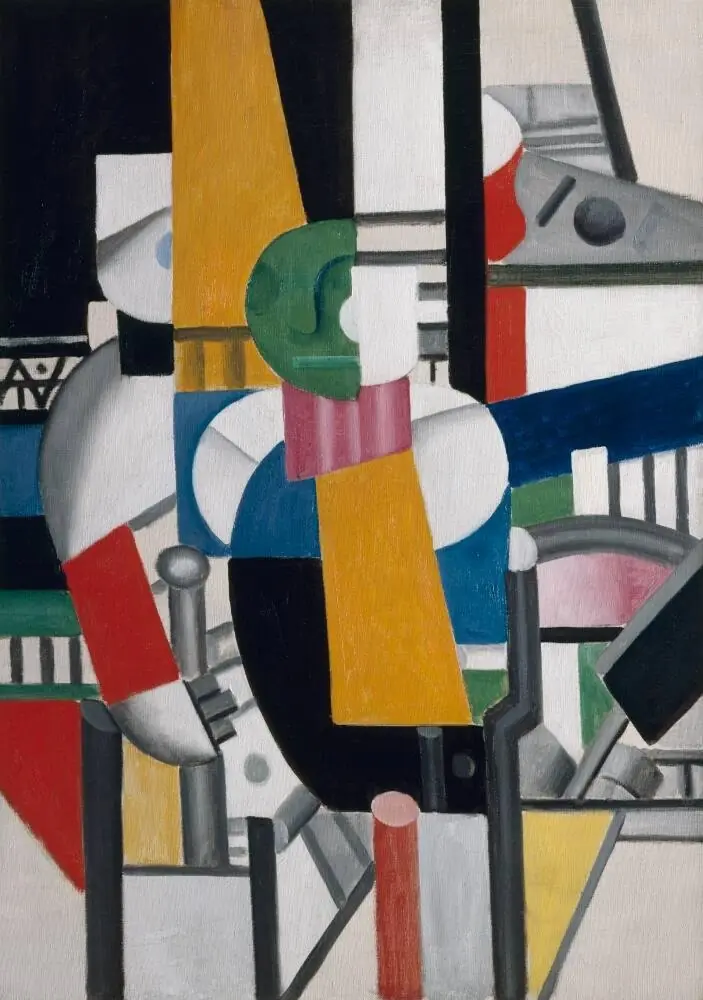
The Disks is an oil painting by Fernand Léger. It dates from 1918 and is held in the collection of the Musée d'art moderne de Paris.
About this work
Overview
It reflects the artist's belief in the beauty of the mechanical age and his desire to create an art form accessible to the modern worker.
Painted in 1918, The Disks is a seminal work of Fernand Léger's 'mechanical period,' created shortly after his service in World War I. The composition abandons traditional perspective in favor of a flat, rhythmic arrangement of geometric forms, primarily circles, cylinders, and rectangular planes that interlock across the canvas. Léger employs a palette of muted ochres, reds, greens, and blacks, often applied with a smooth, matte finish to evoke the industrial aesthetic of machine parts and urban construction. Unlike the fragmented, analytical approach of early Cubism, this work emphasizes the solidity and distinctness of individual shapes, treating them as autonomous elements within a dynamic, non-hierarchical field.
The title refers specifically to the prominent circular forms that dominate the visual field, suggesting gears, wheels, or portholes. This painting marks a pivotal moment in Léger's career where he synthesized Cubist fragmentation with a celebration of modern machinery, moving toward the pure abstraction that would characterize his later work. It reflects the artist's belief in the beauty of the mechanical age and his desire to create an art form accessible to the modern worker.
Subject & Meaning
The composition does not depict a recognizable scene; instead it explores the notion of value‑lessness, a concept Léger associated with the emerging ideas of data categorisation. By arranging circles, squares and rectangles without a clear hierarchy, the work suggests an egalitarian visual field where each element holds equal weight, reflecting contemporary debates about the neutrality of information structures.
Technique & Style
Léger applied oil paint in both precise, hard‑edged strokes and looser, textured passages. The palette is restrained, dominated by muted reds, yellows, greens and deep blacks. The juxtaposition of clean, linear contours with rougher, impasto surfaces creates a tension that animates the flat plane, giving the static geometry a sense of kinetic energy.
History & Provenance
Created in 1918, The Disks entered the Musée d’art moderne de Paris’s holdings during the mid‑20th century, though the exact acquisition date is not recorded in public archives. Its presence in the museum’s collection underscores Léger’s role in the development of French abstract painting during the interwar years.
Context
The painting emerged at a time when Léger was transitioning from his earlier cubist influences toward a more mechanistic abstraction. The geometric vocabulary aligns with his interest in industrial forms and the visual language of emerging technologies, situating The Disks within broader modernist attempts to reconcile art with the rapidly changing visual culture of the early twentieth century.
Artist & collection

Artist
Joseph Fernand Henri Léger was a French painter, sculptor, and filmmaker. In his early works he created a personal form of cubism which he gradually modified into a more figurative, populist style. His boldly simplified…