Artwork
Scenes of Christ's Passion Triptych
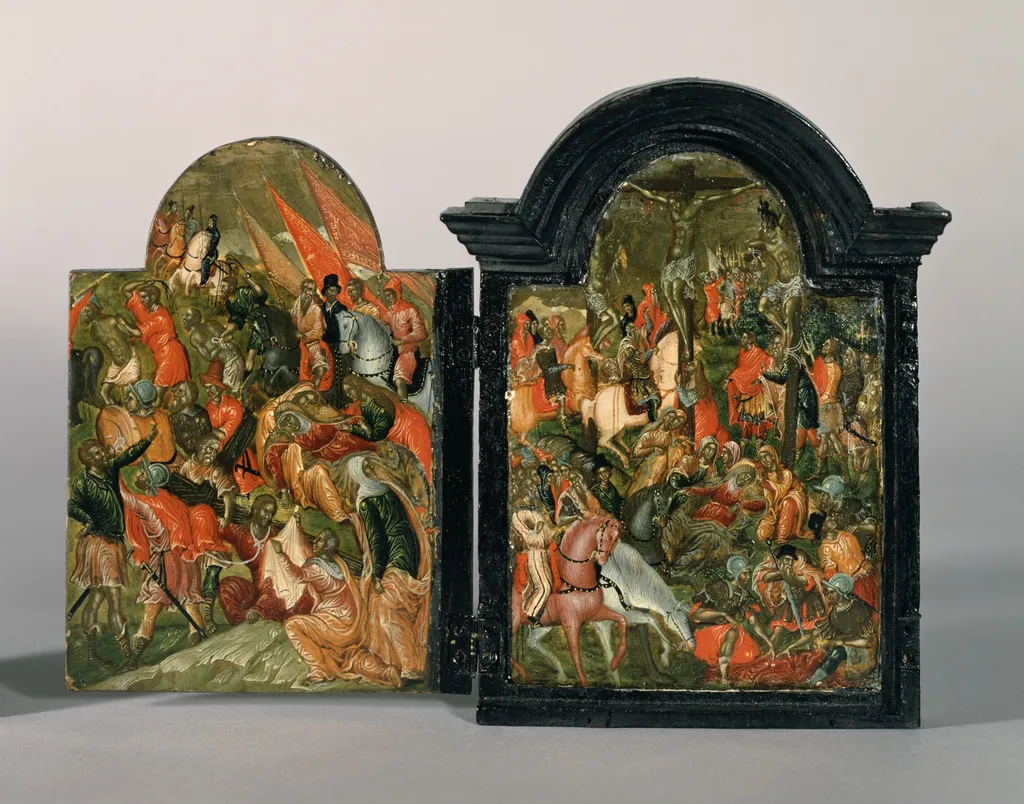
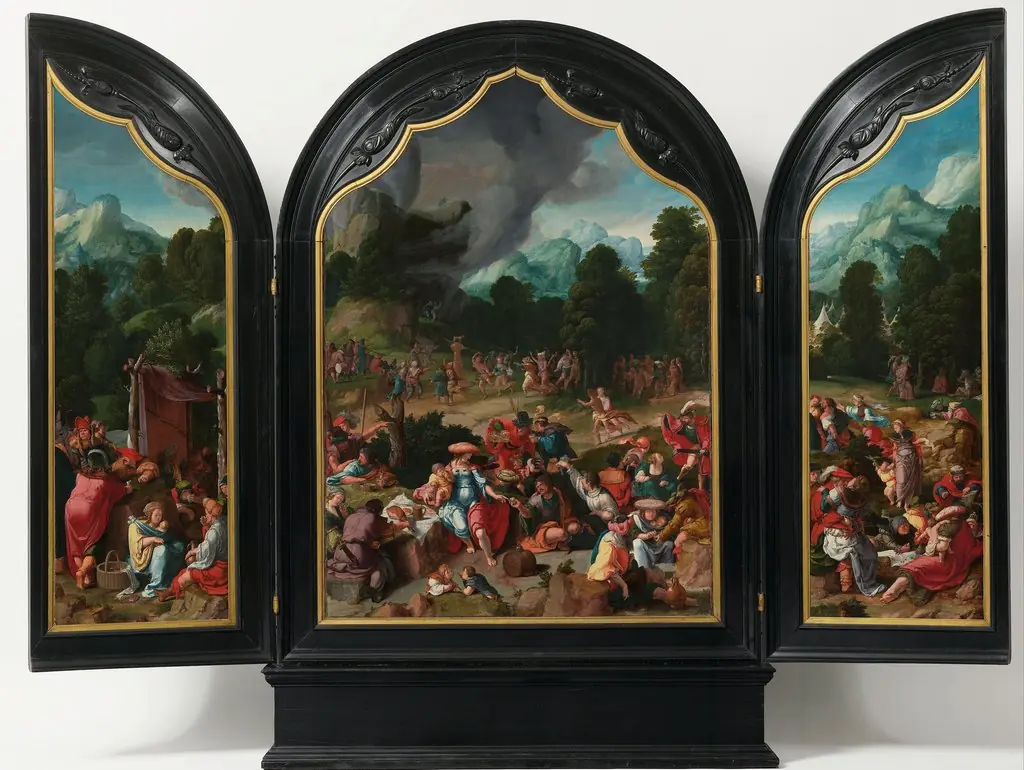
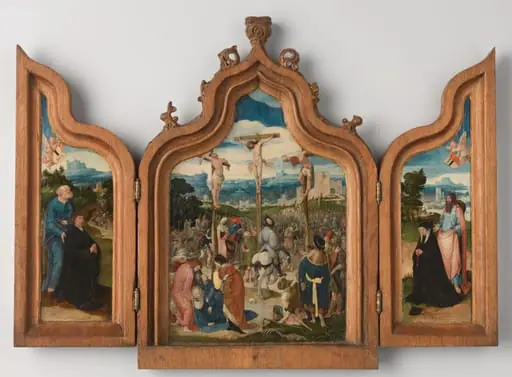
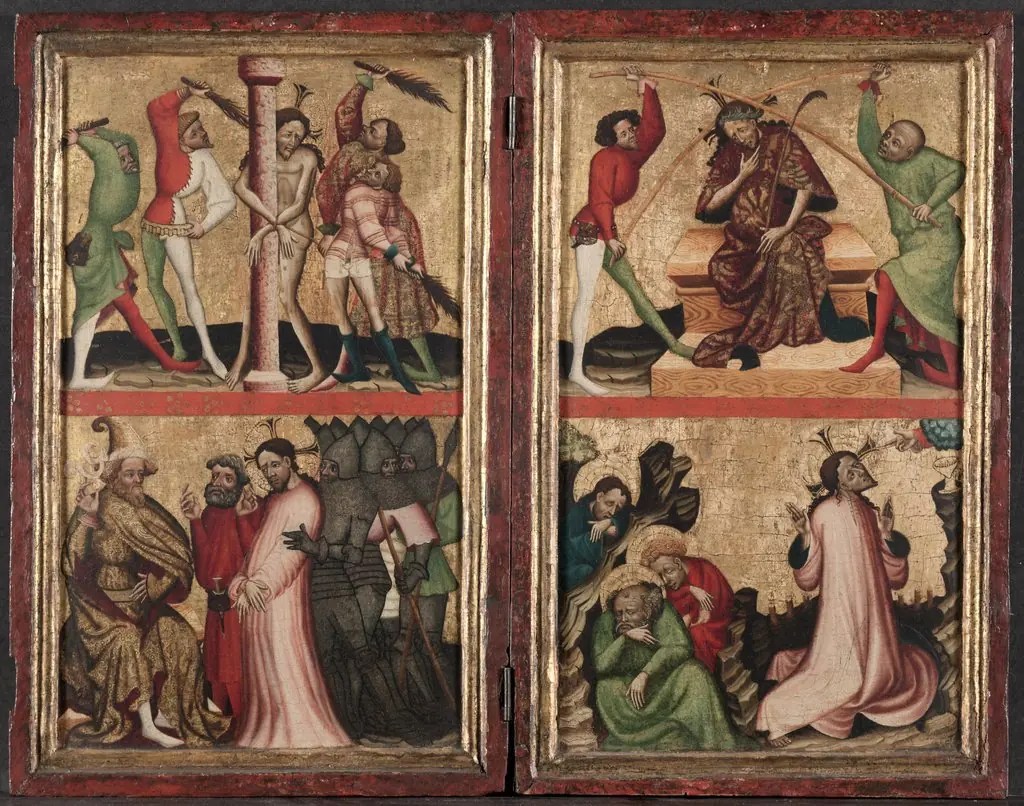
Scenes of Christ's Passion Triptych is a tempera painting by the Late Mannerist artist Georgios Klontzas. It dates from 1600 and is held in the collection of the Walters Art Museum.
About this work
Overview
The work consists of three hinged panels, designed to be displayed open or closed, typical of devotional art in the Eastern Mediterranean.
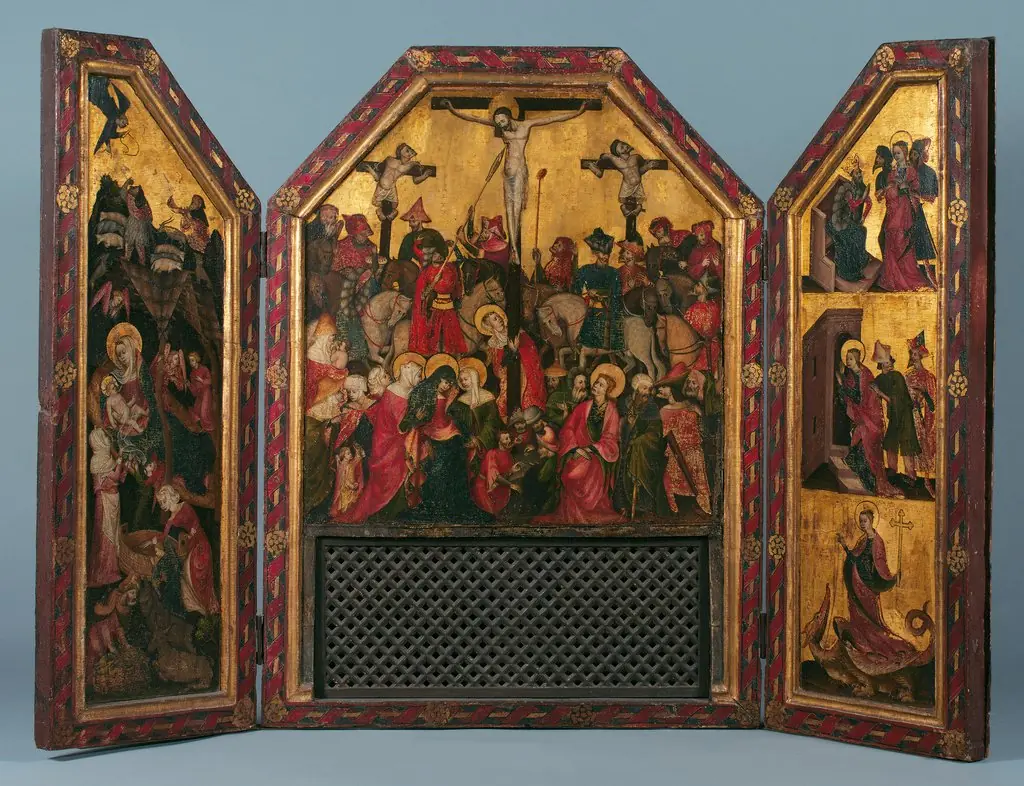
Created around 1600 by Georgios Klontzas, this tempera-on-panel triptych presents a multi-scene narrative of Christ’s Passion. The work consists of three hinged panels, designed to be displayed open or closed, typical of devotional art in the Eastern Mediterranean. Klontzas, a prolific Cretan painter, synthesized Byzantine traditions with emerging Western Renaissance elements, producing intricate compositions for both Orthodox and Catholic audiences across the Venetian-ruled island.
Subject & Meaning
The central panel portrays the Crucifixion, with Christ on the cross surrounded by mourners and soldiers. Flanking panels depict crowds of figures in varied attire, some on horseback, others bearing banners or arms, suggesting the presence of Roman authorities and onlookers from diverse social strata. The arrangement emphasizes the communal witness to Christ’s suffering, reinforcing theological themes of sacrifice and divine judgment within a liturgical context.
Technique & Style
Executed in tempera, a medium using egg yolk as a binder, the painting reflects the enduring Cretan tradition of meticulous detail and flat, decorative space. Klontzas employs rich reds and oranges to animate the figures and drapery, creating visual rhythm without naturalistic depth. The figures are densely packed, their gestures stylized, and the background remains gold-leafed, preserving a spiritual rather than earthly atmosphere characteristic of late post-Byzantine art.
History & Provenance
The triptych was likely commissioned for private devotion or a chapel in Crete during the late 16th century, a time when the island was under Venetian control. It entered the Walters Art Museum’s collection in the early 20th century, having passed through private hands in Europe. Its survival reflects the continued demand for Orthodox-style religious imagery even as Western artistic trends evolved elsewhere in Europe.
Context
Klontzas worked during a period of cultural overlap between Byzantine iconography and Italian Mannerism. Crete, under Venetian rule, became a hub where Eastern and Western artistic conventions merged. Artists like him catered to both Greek Orthodox and Latin Christian patrons, producing works that retained spiritual symbolism while incorporating Western compositional complexity and figural dynamism.
Legacy
Klontzas’s triptych exemplifies the Cretan School’s role in preserving and adapting religious imagery during a time of political and religious flux. His influence extended to later icon painters in the Balkans and the Greek diaspora. Though not widely known outside specialized circles, his work remains a vital link between medieval icon painting and early modern European religious art.
Own this work as a print
Artist & collection
Artist
Georgios Klontzas (Greek: Γεώργιος Κλώντζας; 1535–1608), also known as George Klontzas or Zorzi Cloza dito Cristianopullo, was a Greek scholar and painter of the Cretan Renaissance.