Artwork
Judgement of Cambyses
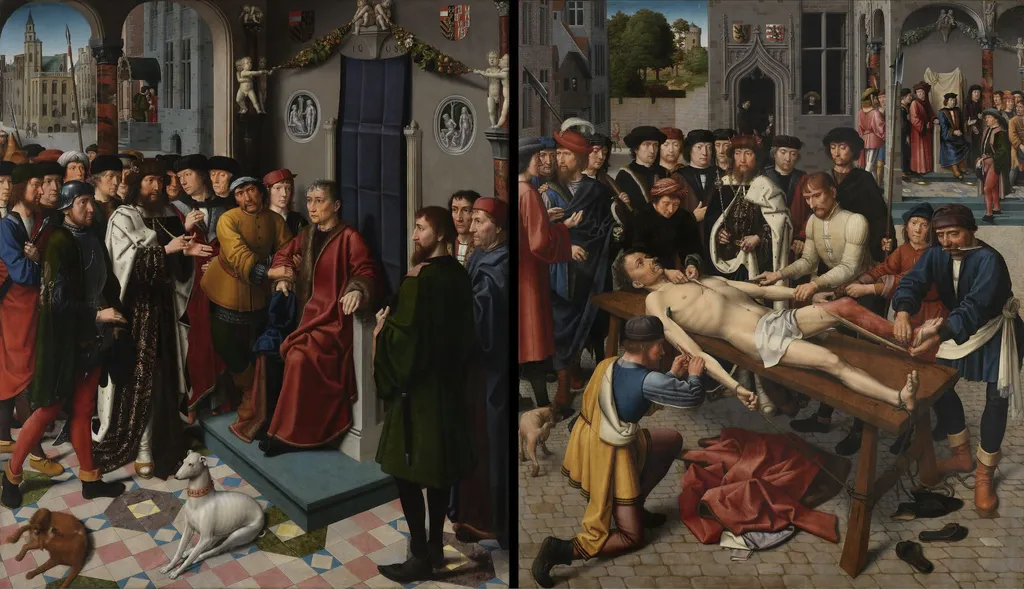
Judgement of Cambyses is an oil painting by the Northern Renaissance artist Gerard David. It dates from 1500 and is held in the collection of the Groeningemuseum.
About this work
Gerard David painted an oil-on-wood diptych called Judgement of Cambyses. It shows a harsh scene from an old story where a corrupt judge gets punished. The city leaders asked for it to hang in their hall.
This panel came from a real request in Bruges in 1487 or 1488. People used art in city buildings to remind officials of fair rule.
The next one to check out is the Groeningemuseum.
Subject & Meaning
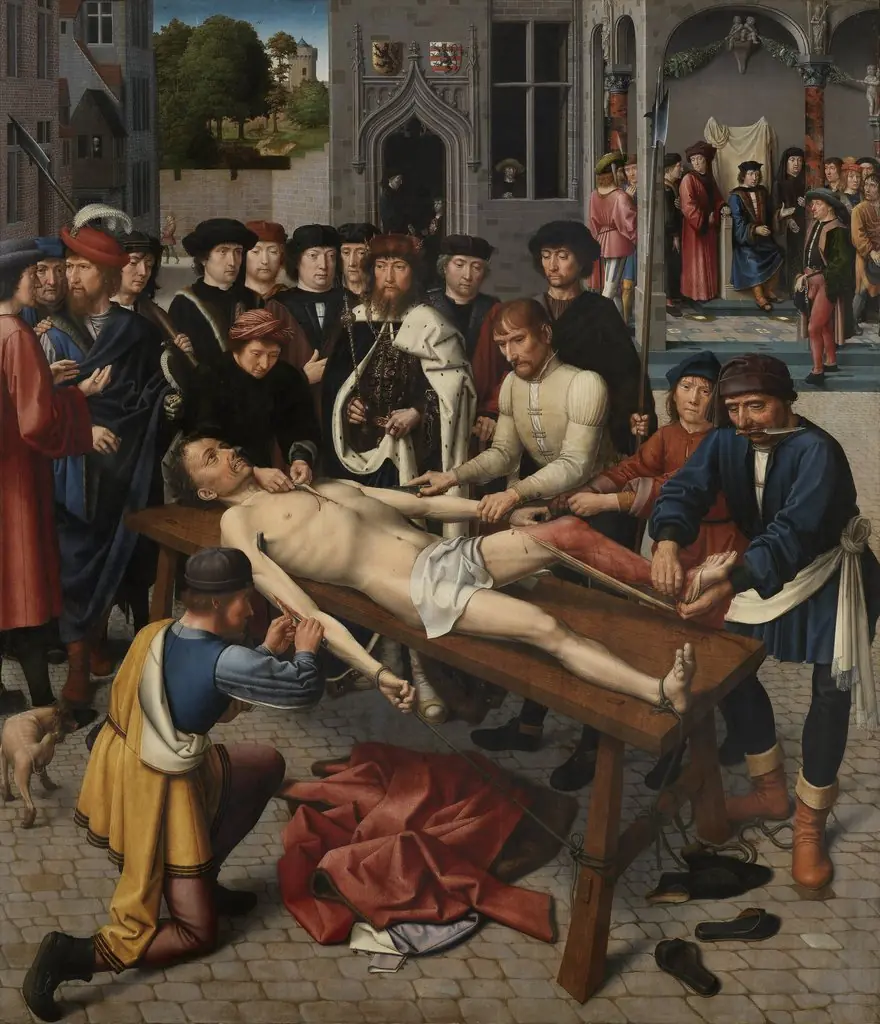
The diptych depicts the corrupt Persian judge Sisamnes, who accepted bribes, being arrested and flayed alive on Cambyses II’s orders, following the account in Herodotus’ Histories. The left panel shows Sisamnes’ arrest in a room with a red judge’s robe, while the right panel stages the flaying, executed by four beulens whose actions are meticulously detailed. In the upper right corner, Sisamnes’ son is portrayed dispensing justice from the father’s chair, now draped with the flayed skin, symbolizing the moral lesson that corrupt officials lose both office and life.
Commissioned by Bruges’ municipal authorities for the deputy burgomaster’s chamber, the work served as a civic exemplum virtutis, warning magistrates against corruption and publicly justifying the city’s 1488 detention of Maximilian I.
The setting is deliberately Flemish rather than Persian, with identifiable Bruges architecture and contemporary civic figures, embedding the moral narrative in local governance.
Technique & Style
Gerard David executed this work in 1498 as an oil painting on oak panels, forming a large diptych characteristic of Early Netherlandish art.
Gerard David executed this work in 1498 as an oil painting on oak panels, forming a large diptych characteristic of Early Netherlandish art. The composition functions visually as a four-part narrative sequence, integrating background and foreground scenes to depict the arrest and flaying of the corrupt judge Sisamnes within a contemporary Bruges setting rather than a Persian one.
The artist populates the architectural spaces with portraits of local magistrates and officials, grounding the moralizing subject in the specific civic context of the town hall. Detailed formal elements include the executioners depicted with knives held in their teeth while stripping the skin from the victim, and the subsequent display of the flayed hide draped over the seat of justice occupied by the condemned man's son.
History & Provenance
The Judgement of Cambyses was commissioned in 1487/1488 by the municipal authorities of Bruges as part of a series of panels for the deputy burgomaster's room in the town hall. Painted in 1498 by Gerard David on oak panels, it served as a justice panel (gerechtigheidstafereel) intended to encourage honesty among magistrates and as a symbolic public apology for the imprisonment of Maximilian I in Bruges in 1488. The work was first mentioned in Bruges' archives as "The Last Judgement."
Today the diptych is held in the collection of the Groeningemuseum in Bruges, managed by the Vlaamse Kunstcollectie. It was exhibited at the Exposition des primitifs flamands à Bruges.
Gerard David's diptych, The Judgement of Cambyses, is currently held in the collection of the Groeningemuseum in Bruges, part of the Vlaamse Kunstcollectie. The work was originally commissioned in 1487/1488 by the municipal authorities of Bruges for the deputy burgomaster's room in the town hall, where it served as a warning against judicial corruption. Although first recorded in Bruges archives under the title The Last Judgement, the painting is now cataloged with specific dimensions of 182.3 cm in height and 318.6 cm in width.
The work has been featured in significant exhibitions, including the Exposition des primitifs flamands à Bruges. Its presence in the Groeningemuseum marks its transition from a civic instrument of moral instruction within the Rathaus to a central piece of the city's artistic heritage.
Context
The Judgement of Cambyses occupies a distinct place in Early Netherlandish art as a civic exemplar of justice rather than a religious subject. Commissioned in 1487/1488 by Bruges municipal authorities for the deputy burgomaster’s chamber, the diptych was intended to remind magistrates of the consequences of corruption, aligning with local political tensions after the 1488 imprisonment of Maximilian I. Its unusual secular theme and didactic function set it apart from David’s religious oeuvre and from contemporaneous works, which more often depicted biblical or hagiographic narratives.
Scholars note the panel’s immediate reception as a civic symbol, recorded in Bruges archives under the misnomer “The Last Judgement.” Its enduring influence is evidenced by later treatments of the same subject, such as Dirck Vellert’s 1542 version. In modern usage, the painting’s imagery has been appropriated in protests, including its display in 2012 courtrooms to underscore arguments about judicial integrity.
Legacy
The diptych served as a prominent exemplum virtutis, functioning as a moral warning against judicial corruption and an apology for the imprisonment of Maximilian I by Bruges authorities in 1488. Its thematic focus on the flaying of a corrupt judge proved highly influential, inspiring similar commissions for other municipal governments throughout the sixteenth century, including a notable version by Dirck Vellert in 1542. The work's reputation as a symbol of judicial integrity extended into modern times; in 2012, reproductions were utilized by protesters in Russia to critique perceived judicial misconduct during the trials of Yulia Timoshenko and Maxim Luzyanin.
By depicting contemporary Bruges officials within the ancient narrative, David created a lasting visual argument that resonated across centuries as a deterrent against the abuse of power.
Overview
Gerard David’s oil‑on‑wood diptych, titled Judgement of Cambyses, presents a narrative scene from antiquity in two panels. The work was created in the late 15th century for the civic authorities of Bruges and was intended to decorate the deputy burgomaster’s chamber in the town hall.
Artist & collection
Artist
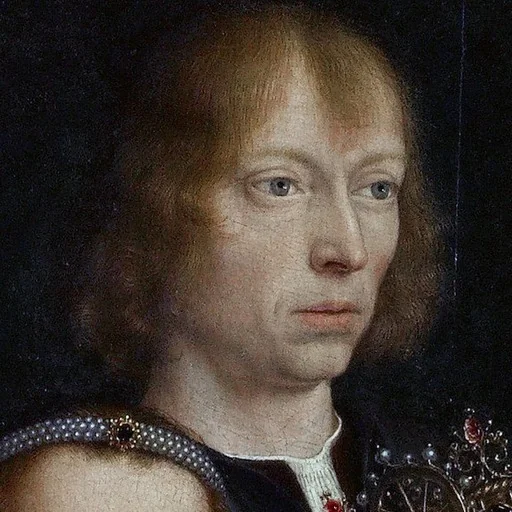
Gerard David (c. 1460 – 13 August 1523) was an Early Netherlandish painter and manuscript illuminator known for his brilliant use of color. Only a bare outline of his life survives, although some facts are known. He may…

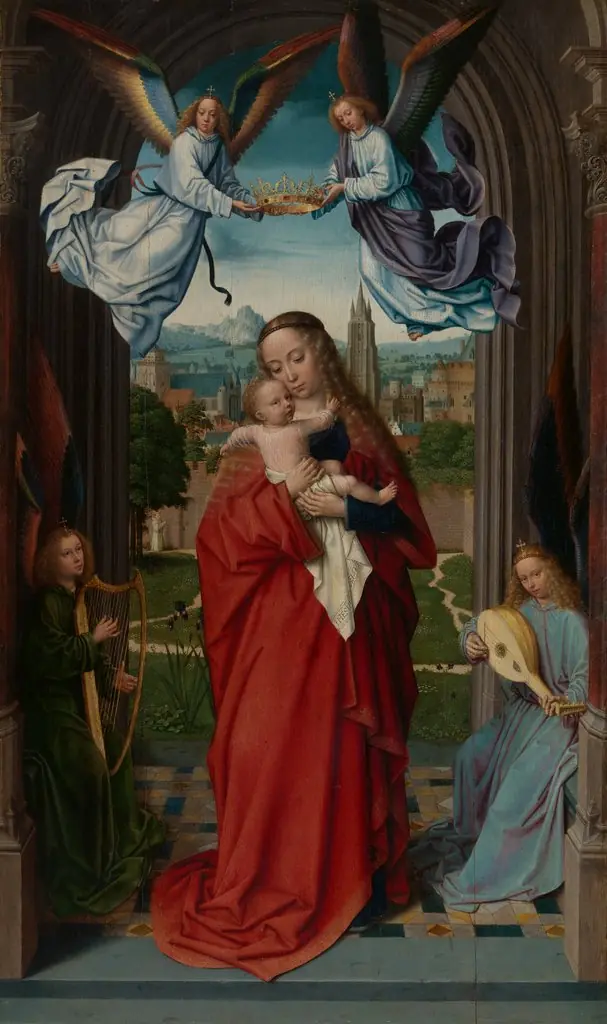 Virgin and Child with Four Angels
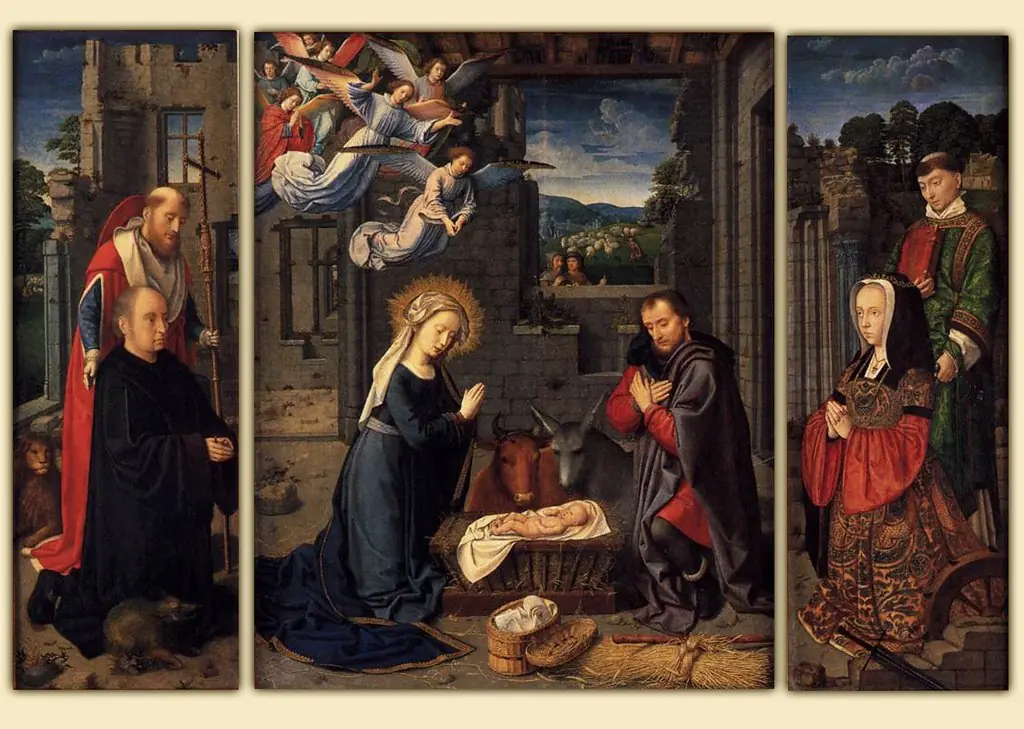 The Nativity with Donors and Saints Jerome and Leonard
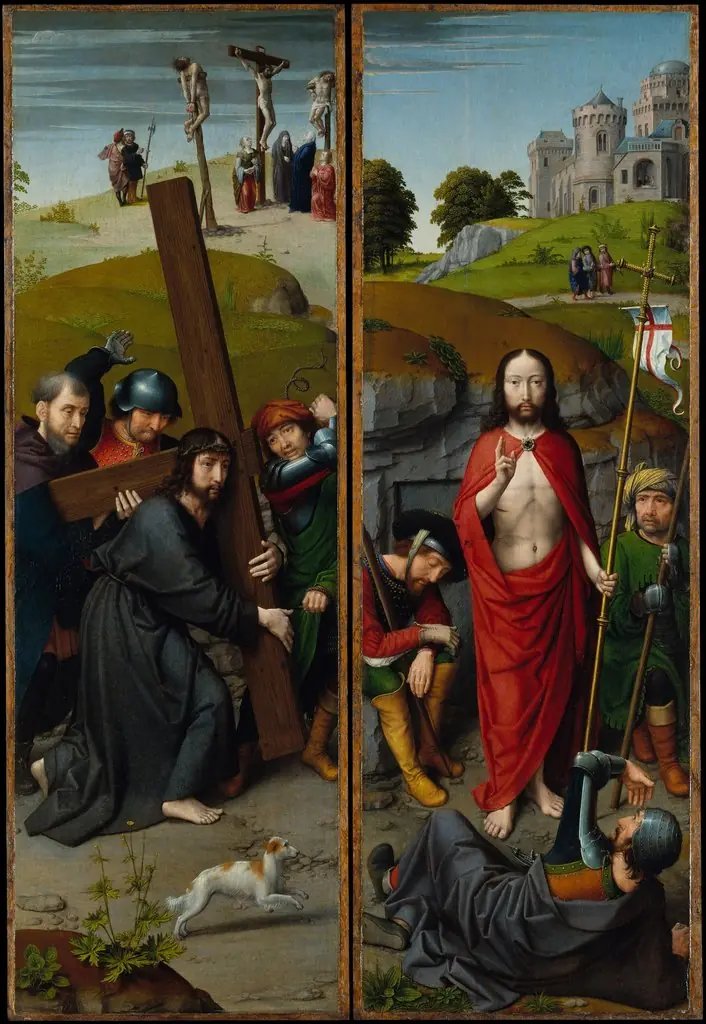 Christ Carrying the Cross, with the Crucifixion; The Resurrection, with the Pilgrims of Emmaus
 Christ Carrying the Cross, with the Crucifixion; The Resurrection, with the Pilgrims of Emmaus
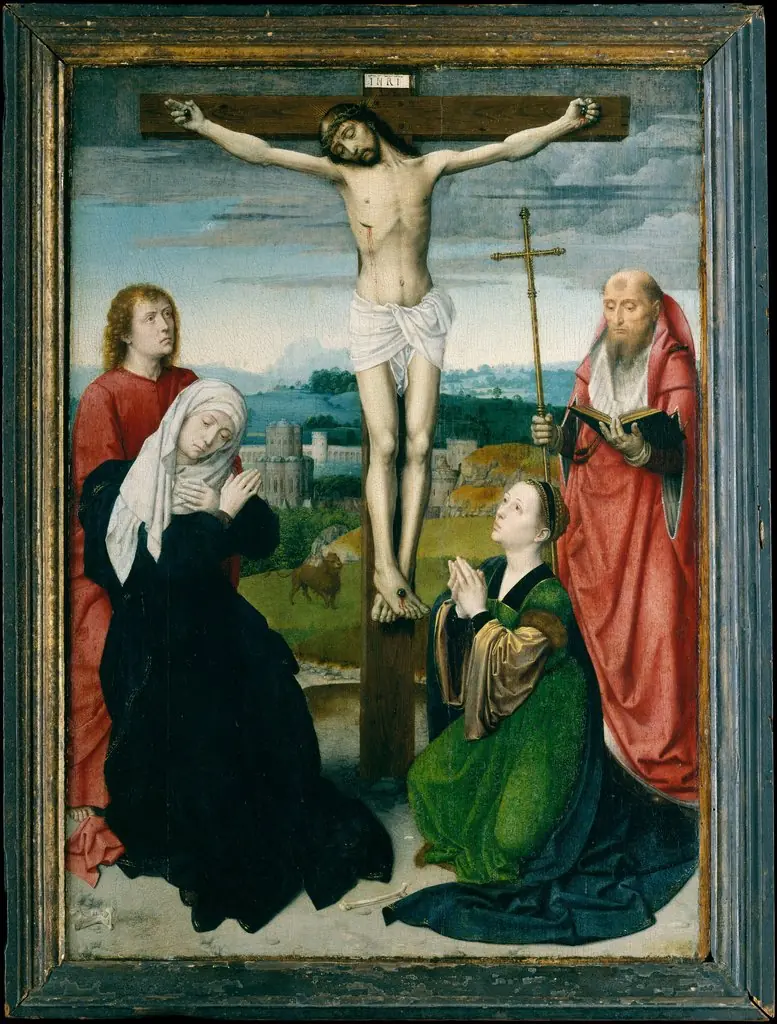 The Crucifixion
 The Rest on the Flight into Egypt
![The Saint Anne Altarpiece: Saint Anne with the Virgin and Child [middle panel], by Gerard David](https://artifactworldgallery.com/img/gerard-david--the-saint-anne-altarpiece-saint-anne-with-the-virgin-and-chi--781e919f9012a004-w320.webp) The Saint Anne Altarpiece: Saint Anne with the Virgin and Child [middle panel]
The Saint Anne Altarpiece: Saint Anne with the Virgin and Child [middle panel] The Nativity
 The Lamentation
 Lamentation of Christ
 The Raising of Lazarus
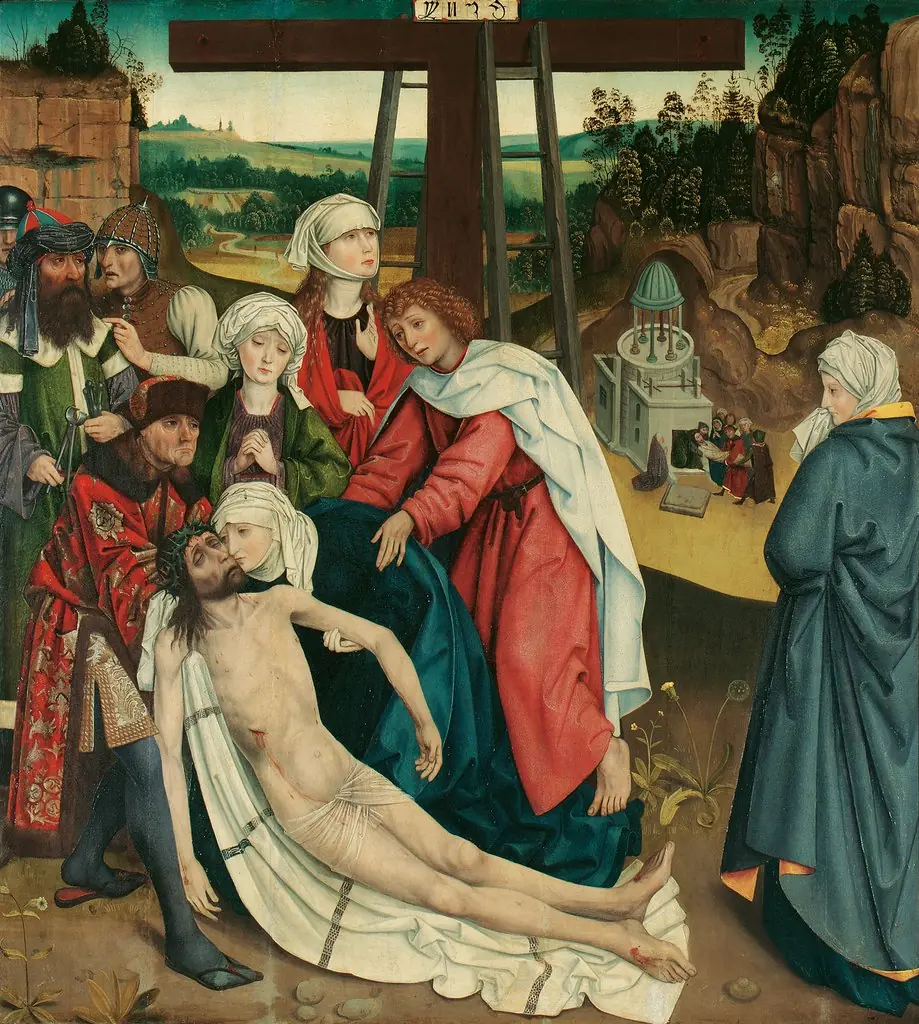 Lamentation of Christ
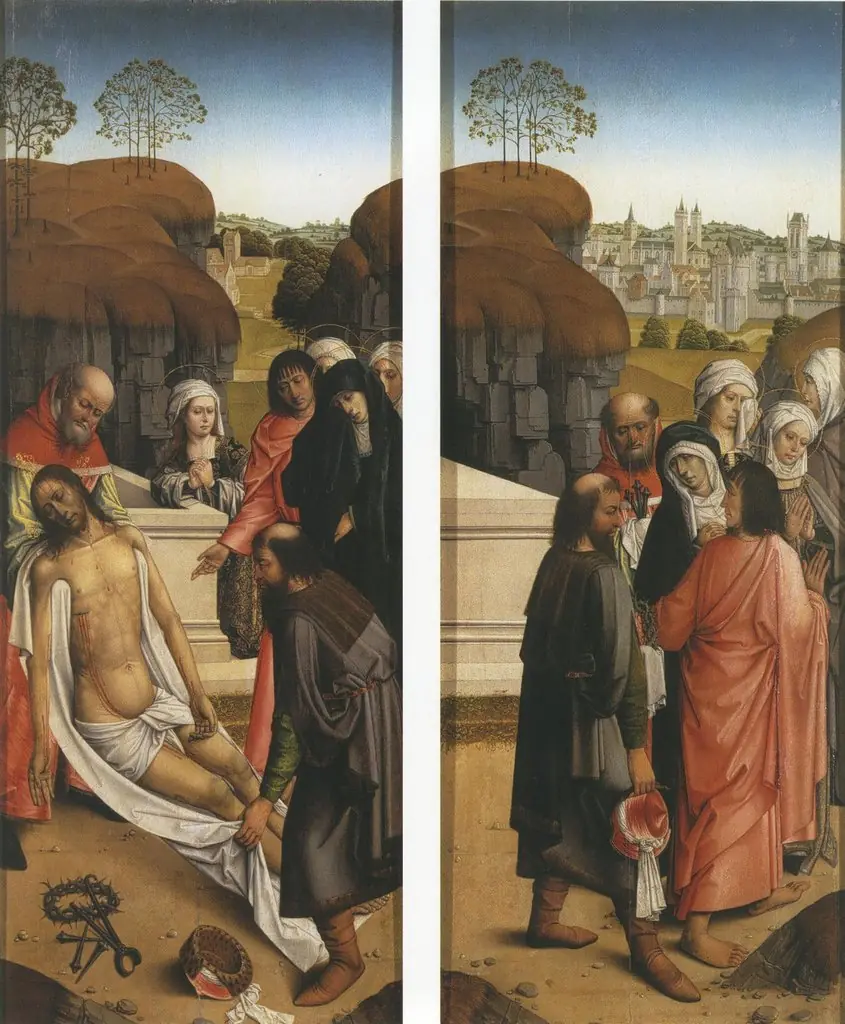 De graflegging (links), Maria, Johannes de Evangelist, Jozef van Arimatea, Nicodemus en de drie Maria's verlaten het graf (rechts)
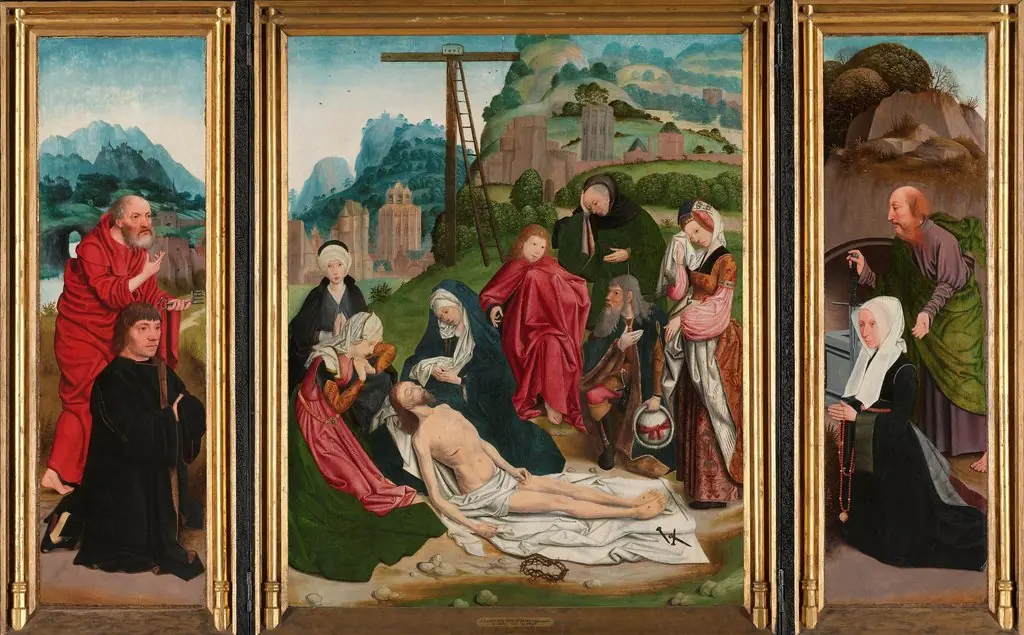 Triptych with the Lamentation (centre panel), the donor with St Peter (inner left wing), the donor’s wife with St Paul (inner right wing) and the donors’ coats of arms (outer wings)
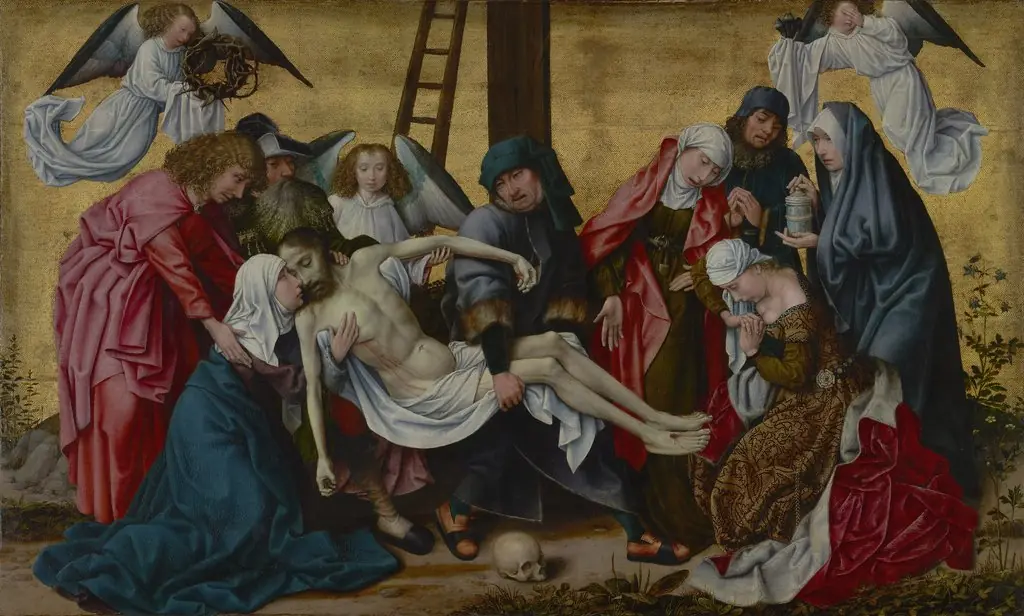 The Deposition
 The veneration and dedication of the Holy Cross to the church by Emperor Constantine and his mother Helena
 Altarpiece with The Passion of Christ
 Tríptico de la Flagelación