Artwork
Christ lead to Prison
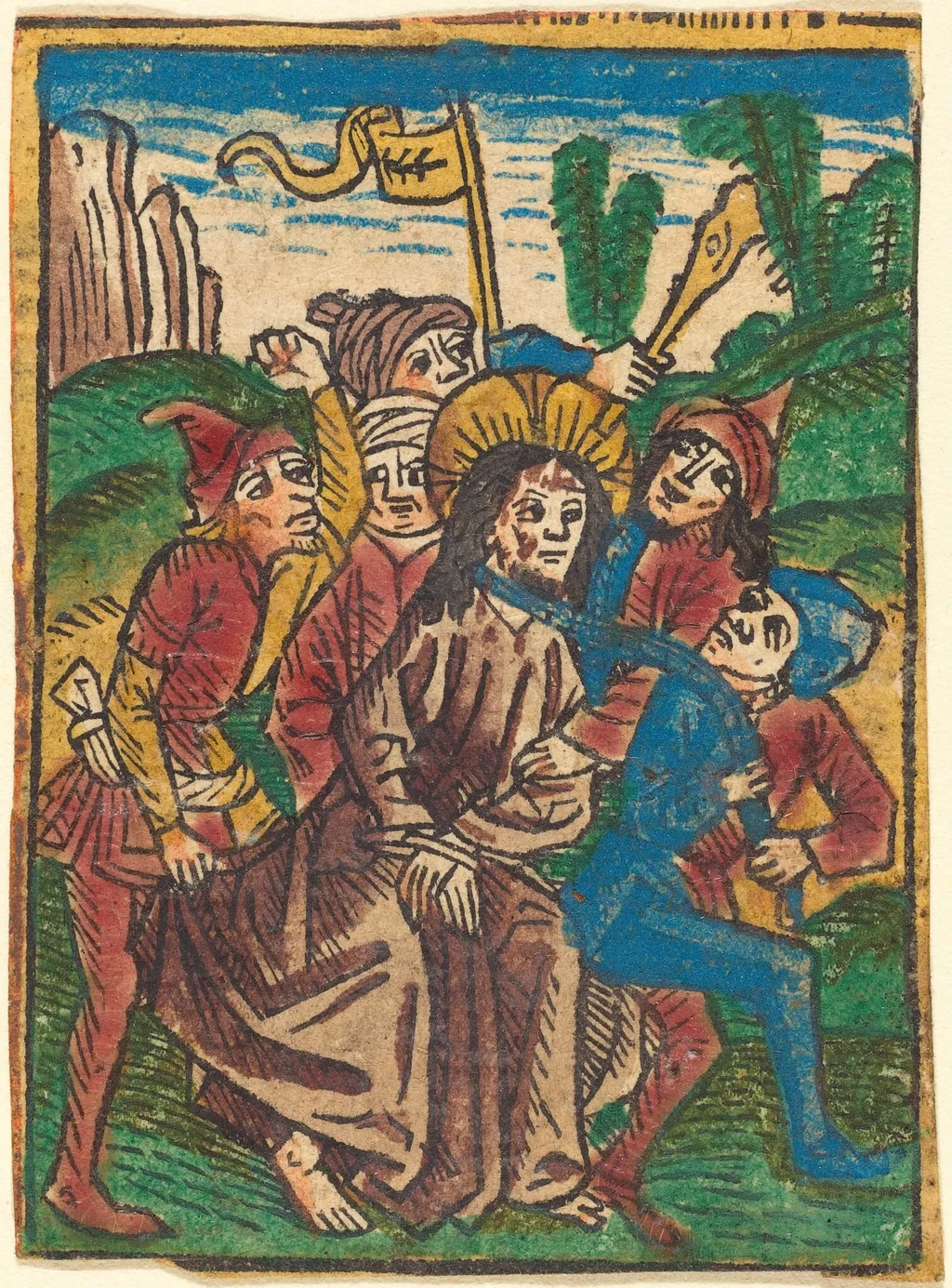
Christ lead to Prison is an ink print by the Renaissance artist German 15th Century. It dates from 1490 and is held in the collection of the National Gallery of Art.
About this work
Overview
The background features a stylized blue sky with a golden sun, reinforcing the symbolic nature of the scene rather than attempting naturalistic depth.
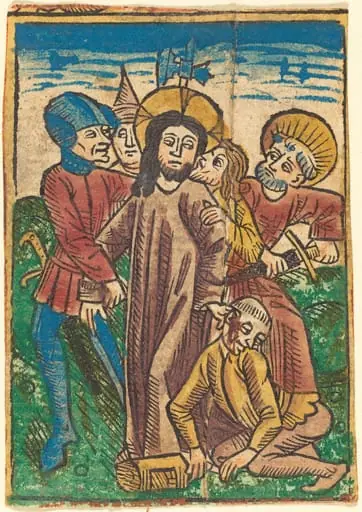
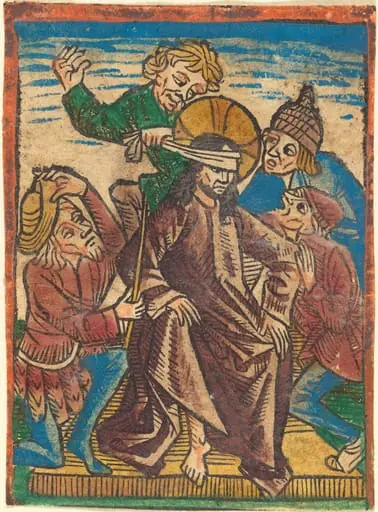
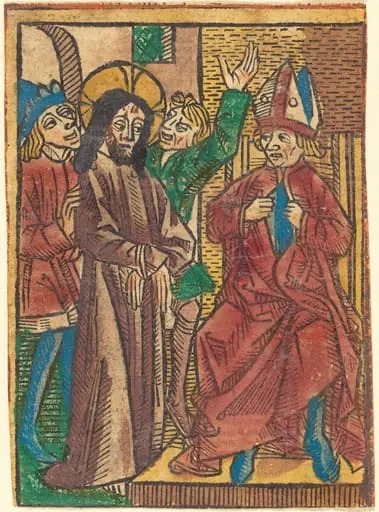
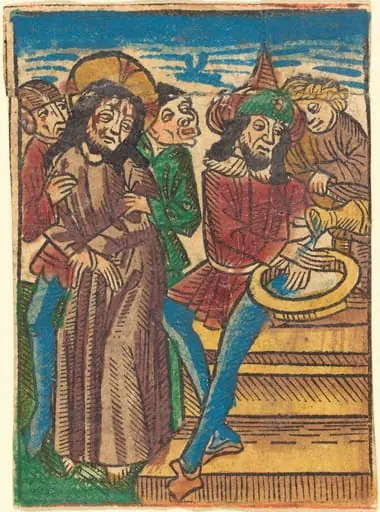
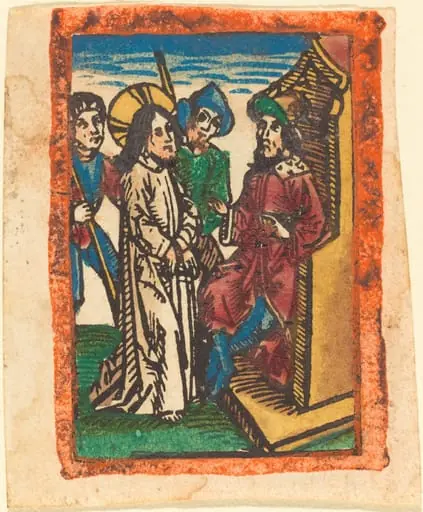
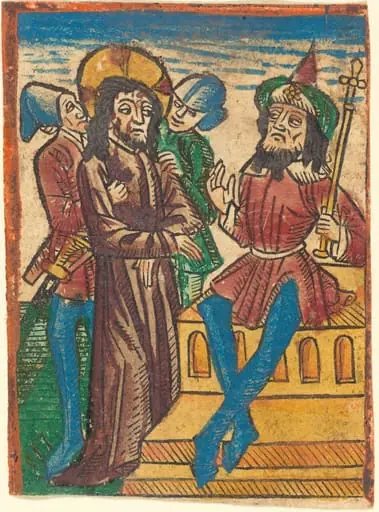
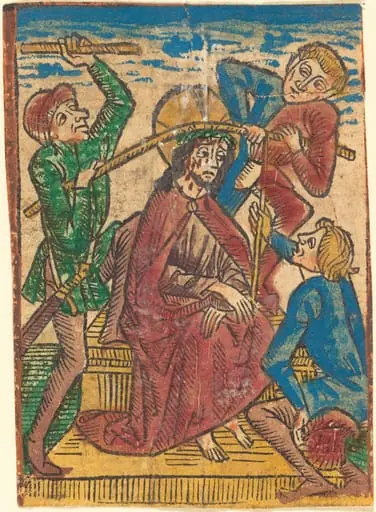
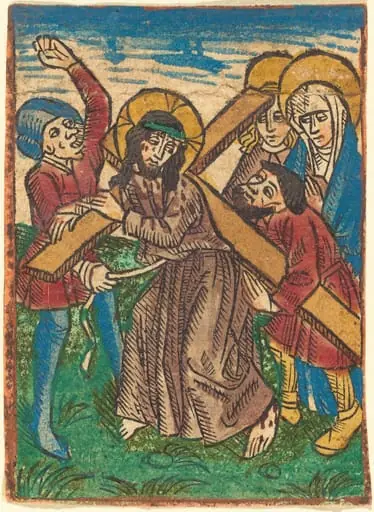
Created around 1490 by an anonymous German master active in the late 15th century, this hand-colored woodcut depicts the biblical scene of Christ being led to prison. The composition centers on five figures crowded onto a grassy hill, emphasizing the physical and emotional weight of the moment. Jesus, distinguished by a crown of thorns and a downward gaze, occupies the middle ground, flanked by armed guards holding staffs.
The artist employs a flat, graphic style characteristic of Northern European printmaking of the period, utilizing bold outlines and a limited palette of bright colors applied by hand to the printed lines. The background features a stylized blue sky with a golden sun, reinforcing the symbolic nature of the scene rather than attempting naturalistic depth. This work exemplifies the devotional art produced for lay audiences in late medieval Germany, where the tactile quality of hand-coloring enhanced the spiritual impact of mass-produced religious imagery.
It reflects the era's transition from manuscript illumination to printed media, maintaining the intricate detail and emotional intensity typical of German religious art before the Reformation.
Subject & Meaning
The central figure represents Christ, identifiable by the crown of thorns, suggesting a moment of suffering or arrest. The surrounding figures likely include soldiers or attendants, indicated by their staffs, reinforcing the narrative of Christ’s apprehension. The composition’s tight grouping emphasizes the tension of the scene.
Technique & Style
Executed as a hand‑colored woodcut, the image was created by carving the design into a wooden block, inking it, and pressing it onto paper. After printing, color was applied manually, a common practice in the 15th century for religious imagery. The flat, vivid hues and clear outlines reflect the aesthetic of early European woodcut prints.
History & Provenance
Woodcut prints of this type were widely produced in the 1400s for devotional purposes, often circulated among churches and private patrons. While specific ownership details for this piece are not recorded, its medium and style place it firmly within the tradition of late medieval religious printmaking.
Context
During the 15th century, woodcut technology enabled the mass production of religious scenes, making biblical narratives more accessible to a broader audience. This work exemplifies that trend, using a straightforward visual language to convey a pivotal moment from the Passion of Christ.
Artist & collection

Artist
This 15th-century German artist carved vivid religious scenes into metal and wood, then hand-painted them in bright, symbolic colors.

 Allegory of the Meeting of Pope Paul II and Emperor Frederick III
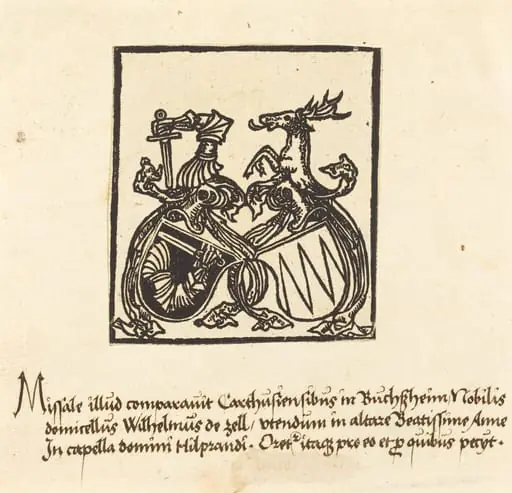 Bookplate of Wilhelm von Zell
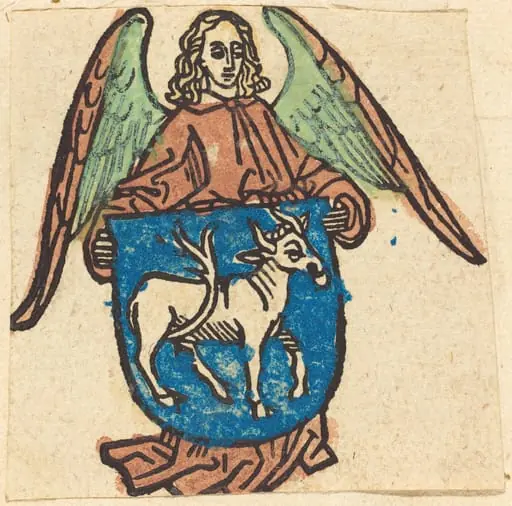 Bookplate of Hilprand Brandenburg of Bibrach
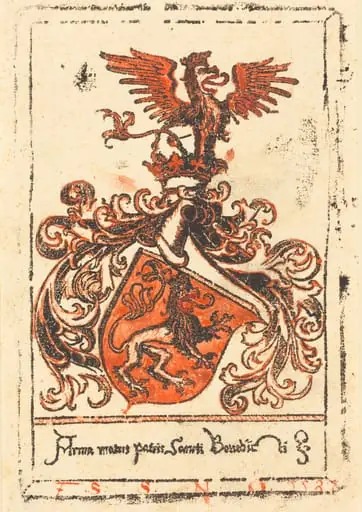 Bookplate of the Abbey of Ottobeuren
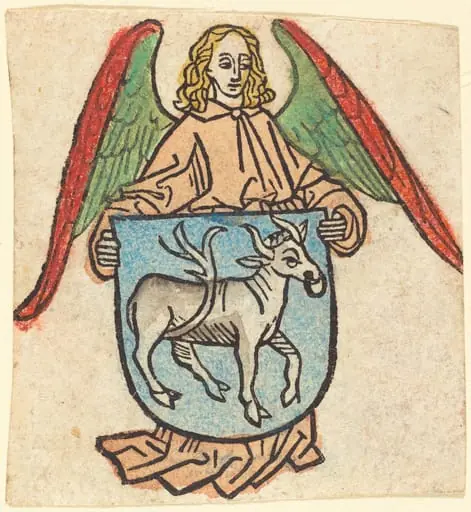 Bookplate of Hilprand Brandenburg of Bibrach
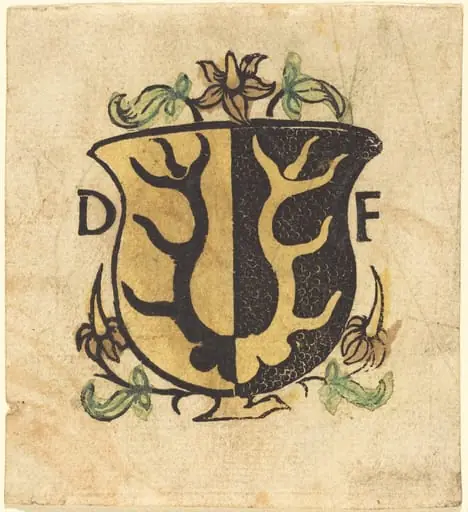 Bookplate of Dominicus Frauenfelder
![Studies for Six Figures (sheet from a model book) [recto], by German 15th Century](https://artifactworldgallery.com/img/german-15th-century--studies-for-six-figures-sheet-from-a-model-book-recto--4837429e0755bc3f-w320.webp) Studies for Six Figures (sheet from a model book) [recto]
Studies for Six Figures (sheet from a model book) [recto]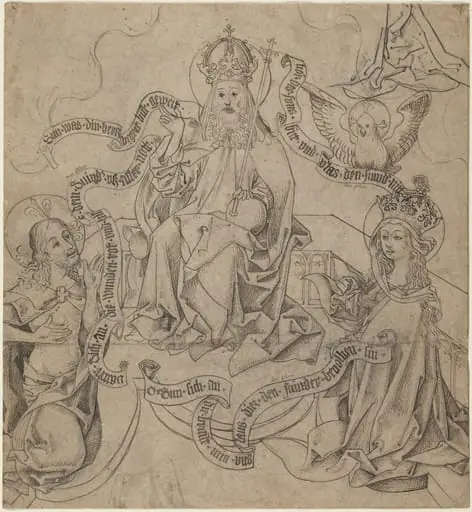 Christ and Mary Interceding with God the Father