Artwork
Foot Combat with Longswords
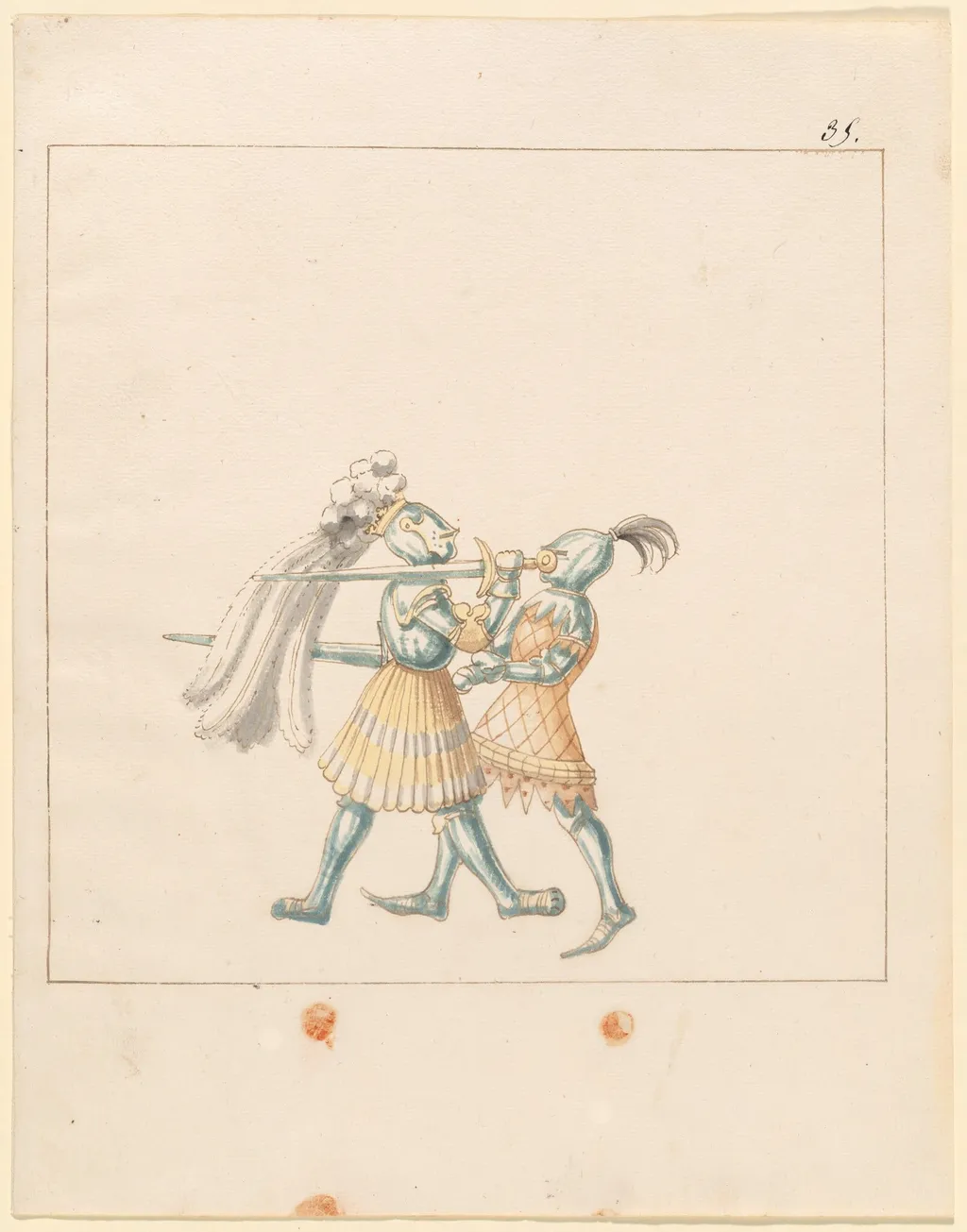
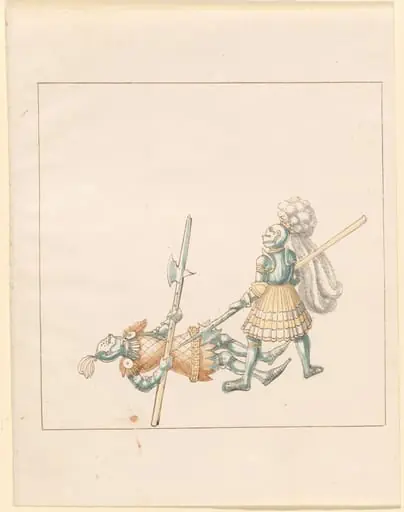
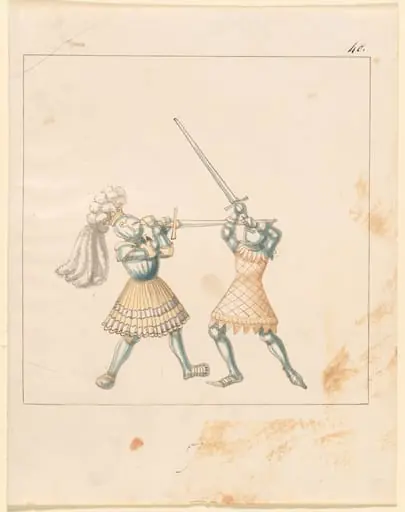
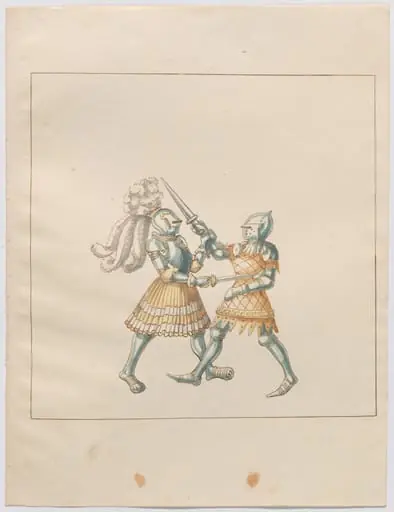
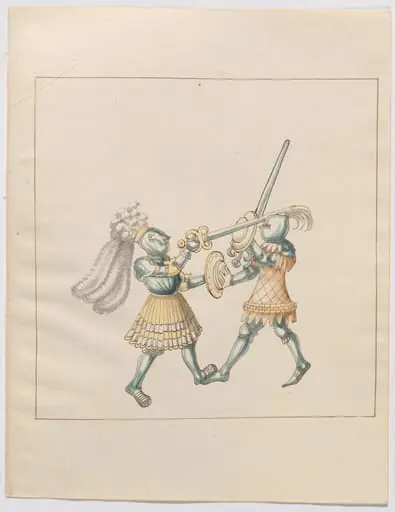
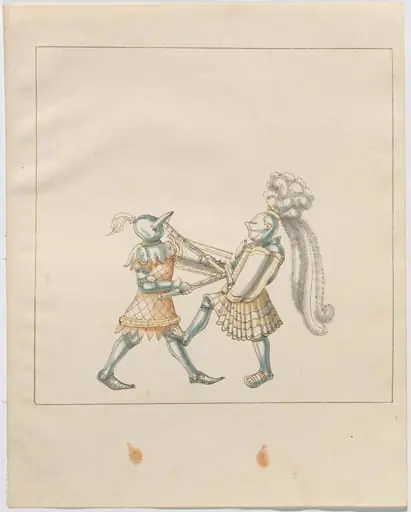
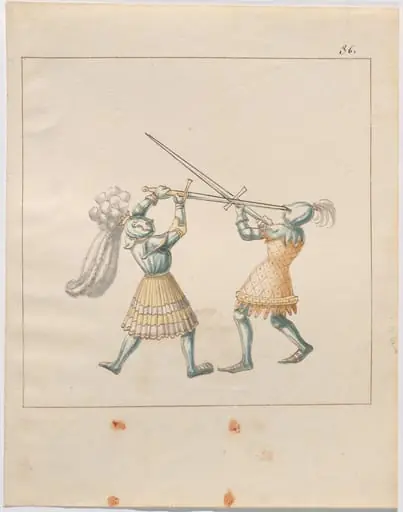
Foot Combat with Longswords is an ink drawing by the Renaissance artist German 16th Century. It dates from 1514 and is held in the collection of the National Gallery of Art. The drawing presents a pair of armored figures locked in a longsword duel, rendered in pen, ink, and watercolor on laid paper.
- Inscription
- Inscribed:upper right by unknown hand in black ink: 35; lower left on mount in black ink: 45; lower right on mount in black ink: A 95
About this work
The artist shows exact stances, feet planted, arms extended, so readers learn real combat moves.
Two armored fighters clash with longswords in a fencing manual page. Watercolor glazing adds depth to their steel plates and shadows. The artist shows exact stances, feet planted, arms extended, so readers learn real combat moves.
This page comes from a German fight book made around 1515. It teaches longsword play for soldiers and nobles, not just art.
Check the National Gallery of Art, Washington for more pages from this book.
Overview
The drawing presents a pair of armored figures locked in a longsword duel, rendered in pen, ink, and watercolor on laid paper. Executed circa 1515, the image functions as a page from a German martial manual, illustrating a specific combat posture. The work is part of the collection of the National Gallery of Art in Washington, D.C.
Subject & Meaning
The scene captures two combatants in full plate armor, each wielding a longsword and assuming a balanced stance with feet firmly planted and arms extended. The illustration serves an instructional purpose, demonstrating the mechanics of a particular thrust and parry sequence for practitioners of the period, rather than portraying a narrative episode.
Technique & Style
The artist employed fine pen lines to delineate the figures and their armor, while delicate watercolor washes add tonal variation to the steel surfaces and the surrounding space. The use of glazing creates subtle shadows that convey depth, and the precise rendering of joints and weapon angles reflects a methodical, diagrammatic approach typical of early sixteenth‑century combat treatises.
History & Provenance
Created in early sixteenth‑century Germany, the drawing is attributed to an anonymous artist associated with a contemporary fencing handbook. It entered the National Gallery of Art’s holdings through acquisition in the twentieth century, where it is displayed alongside other pages from the same instructional manuscript.
Context
The image belongs to a broader corpus of German fight books that circulated among soldiers and members of the aristocracy to codify longsword techniques. Such manuals combined practical martial instruction with artistic illustration, reflecting the period’s intertwining of military training and visual culture.
Artist & collection

Artist
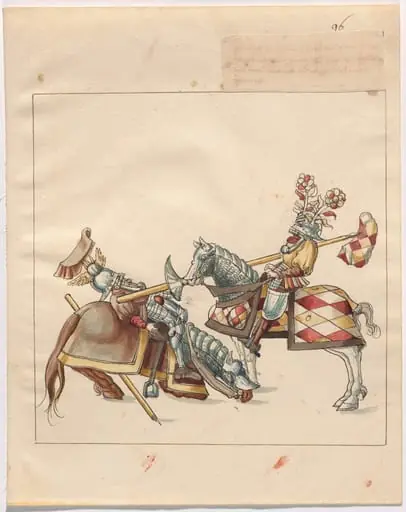
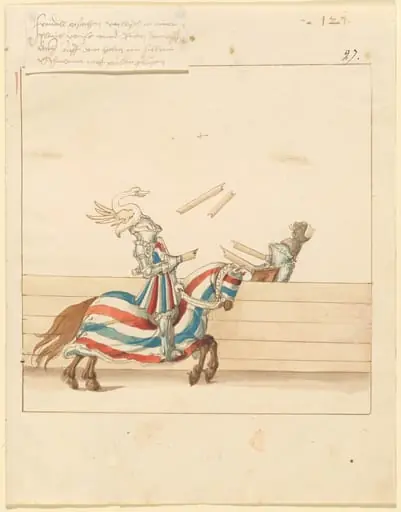
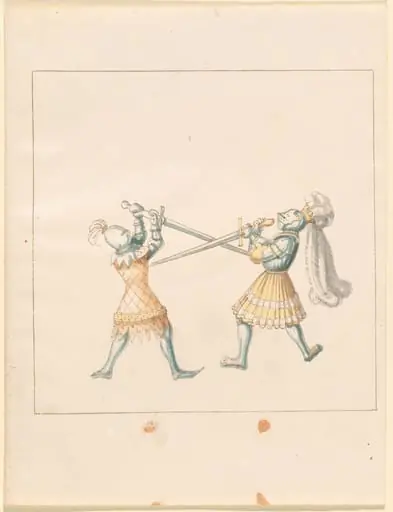
A German artist of the late 1500s drew knights clashing in parades and mock battles, filling sheets with detailed ink colored lightly in watercolor: soldiers mid-joust, shields flying, foot soldiers sparring with spears.

![Abraham Entertaining the Angels [verso], by German 16th Century](https://artifactworldgallery.com/img/german-16th-century--abraham-entertaining-the-angels-verso--69d1b25f4eba0a53-w320.webp)