Artwork
Calvary
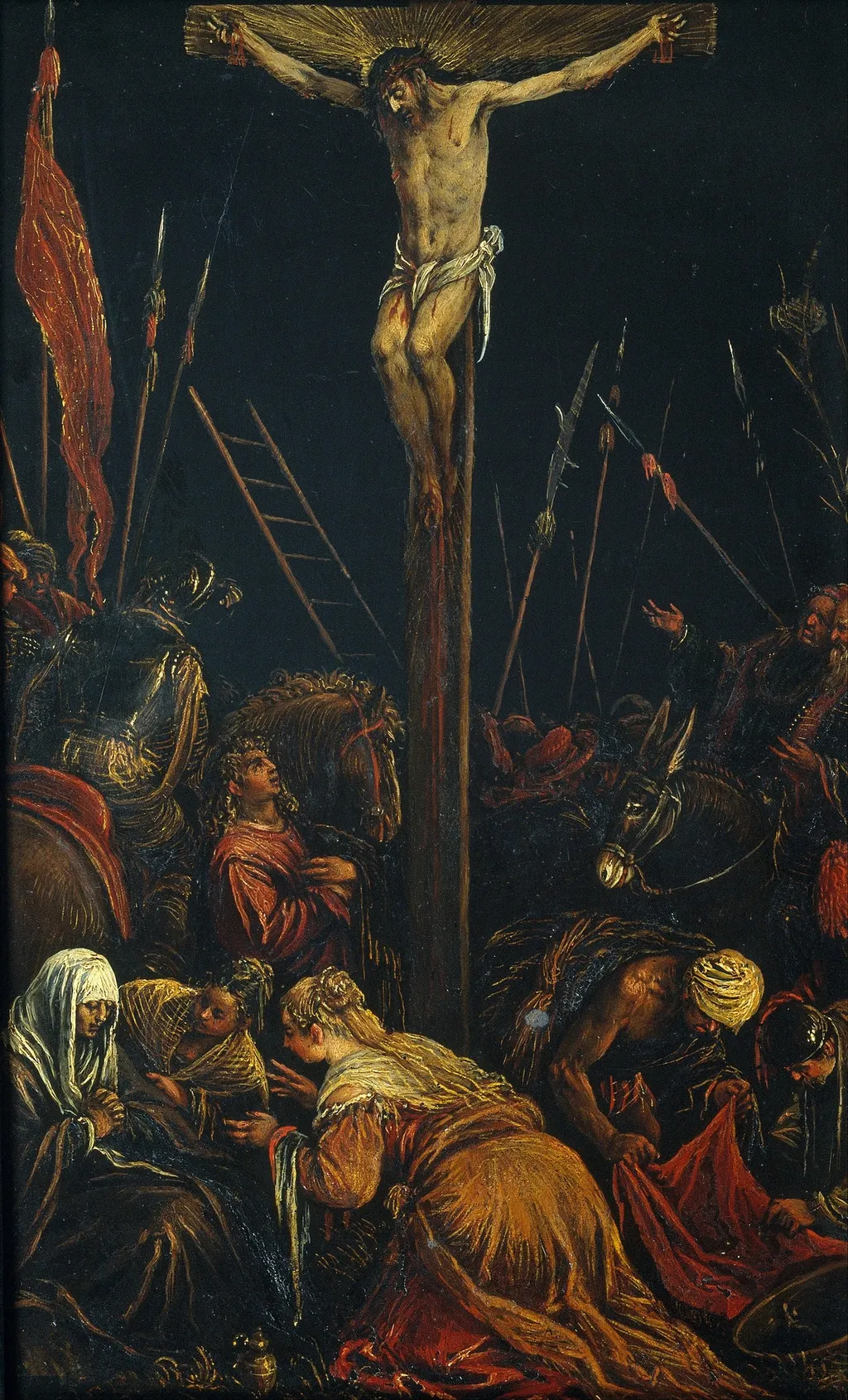
Calvary is an unspecified painting by the Early Baroque Italian artist Jacopo Bassano. It dates from 1575 and is held in the collection of the Museu Nacional d'Art de Catalunya.
About this work
Subject & Meaning
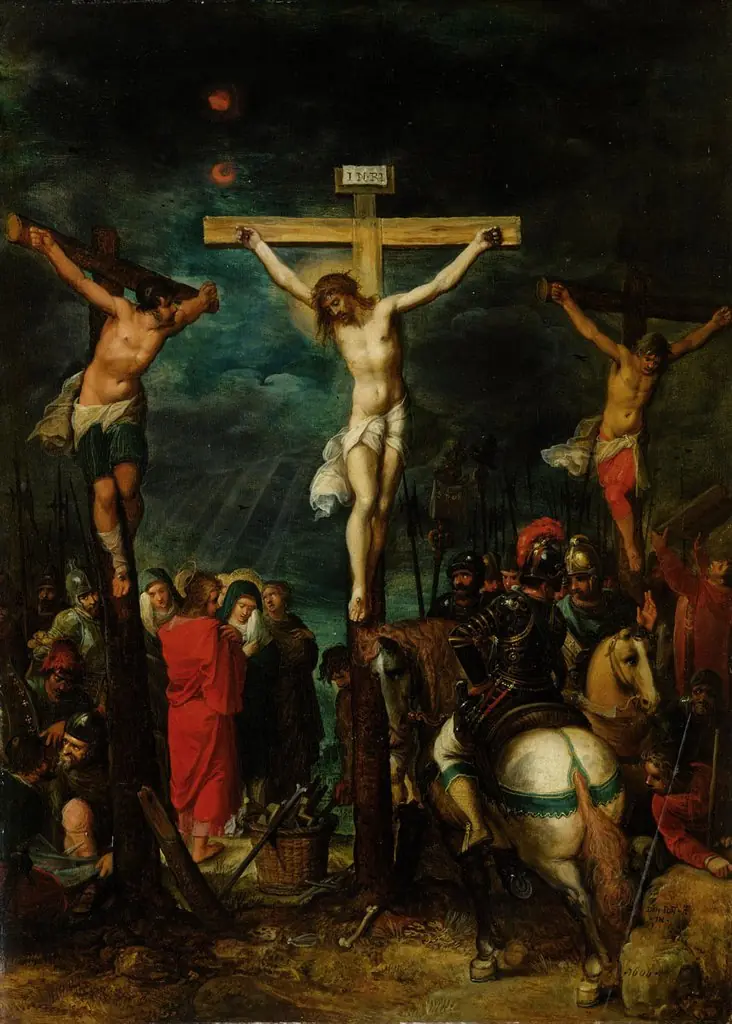
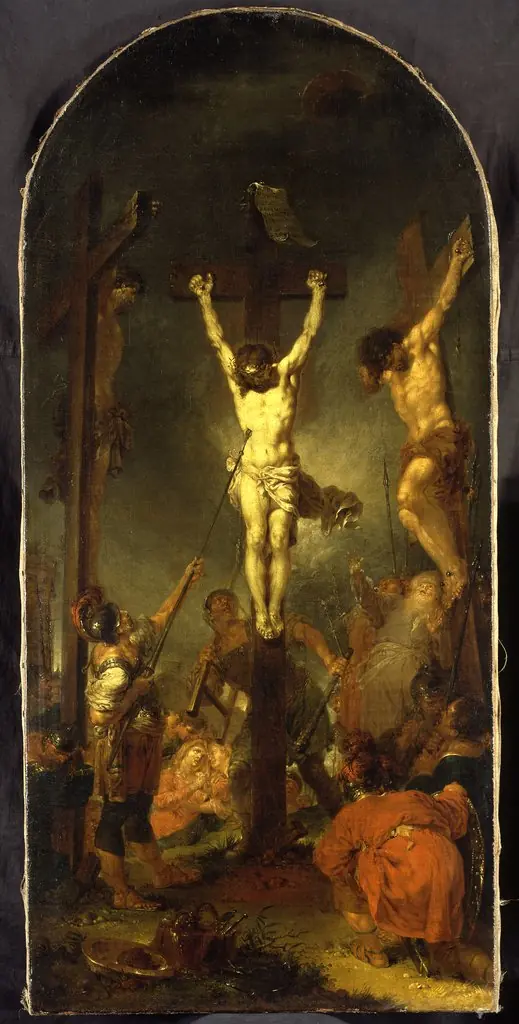
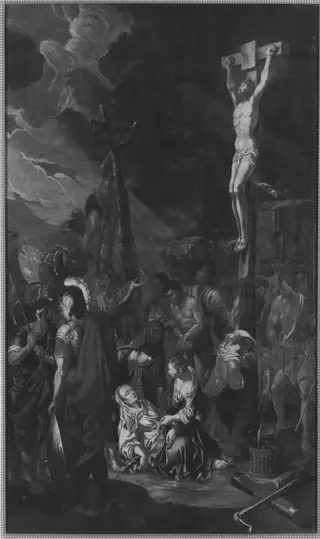
Christ is shown on the cross, his stigmata visible, while figures around him include soldiers, a mounted rider, and onlookers, some bearing banners and flags.
The painting depicts the Crucifixion of Jesus as its central subject, situated within a broader Calvary scene that includes the instruments of the Passion. Christ is shown on the cross, his stigmata visible, while figures around him include soldiers, a mounted rider, and onlookers, some bearing banners and flags. The iconography centers on the moment of Christ’s sacrifice, emphasizing the theological significance of the Crucifixion through traditional symbols such as the cross, the lance, and the ladder.
The inclusion of these elements underscores the narrative of redemption central to Christian belief, with Calvary, the place of the skull, serving as the setting for this pivotal event.
Technique & Style
Calvary is a religious painting by Jacopo Bassano dated 1575 and held by the Museu Nacional d'Art de Catalunya. The work measures 494 cm in height by 298 cm in width, indicating a large-scale vertical format suited to an ambitious multi-figure Crucifixion composition.
The painting depicts the crucifixion of Jesus together with a dense assembly of attendant figures and objects, including a ladder, a spear or halberd, a banner or flag, soldiers, a horse, men and women, and the stigmata, with the loincloth of Christ also rendered. This crowded iconographic program is characteristic of Bassano's late manner, in which the central Calvary event is surrounded by a bustling cast of witnesses and accoutrements of the Passion.
The vertical orientation and tall proportions support a layered arrangement of figures and horses around the cross, while the inclusion of a banner and military equipment points to a narrative handling of the scene rather than a stripped-down devotional image.
History & Provenance
The painting now in the Museu Nacional d’Art de Catalunya was created by Jacopo Bassano in 1575.
The work entered the museum’s collection as part of the holdings of the Museu d’Art Modern de Barcelona, where it had been recorded by the early twentieth century. It was later transferred to the Museu Nacional d’Art de Catalunya, where it remains in the permanent collection. No specific inventory or accession number is provided in the available sources, nor is there any record of the work's exhibition history.
Context
The work titled Calvary, painted by Jacopo Bassano in 1575, is classified as a religious painting within the Venetian tradition. It measures 494 cm in height and 298 cm in width and is held in the collection of the Museu Nacional d'Art de Catalunya in Barcelona. The composition portrays the crucifixion of Jesus surrounded by a range of figures and objects such as a ladder, soldiers, a banner, and a horse, illustrating Bassano’s practice of embedding genre details within sacred narratives.
This integration of everyday elements with sacred subject matter reflects the Counter‑Reformation emphasis on vivid, accessible storytelling in late Renaissance art, and highlights the painting’s significance within the artist’s late oeuvre and the broader Venetian tradition.
Overview
Jacopo Bassano completed Calvary, a religious painting, in 1575. This work depicts the crucifixion of Jesus Christ, a pivotal event in Christian theology. The composition features a central figure on the cross amidst a bustling crowd.
It is currently housed in the collection of the Museu Nacional d'Art de Catalunya, where it represents a significant example of 16th-century Venetian art.
Own this work as a print
Artist & collection
Artist
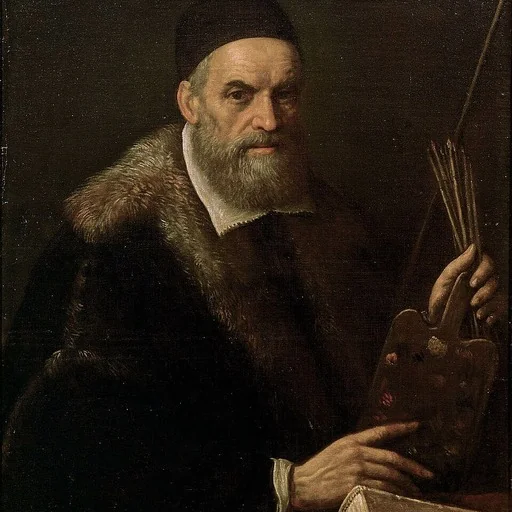
Jacopo Bassano was an Italian Renaissance painter of the Venetian school. He was born and died in Bassano del Grappa, and took the village as his surname. Having trained in the workshop of his father, Francesco the…