Artwork
Eve
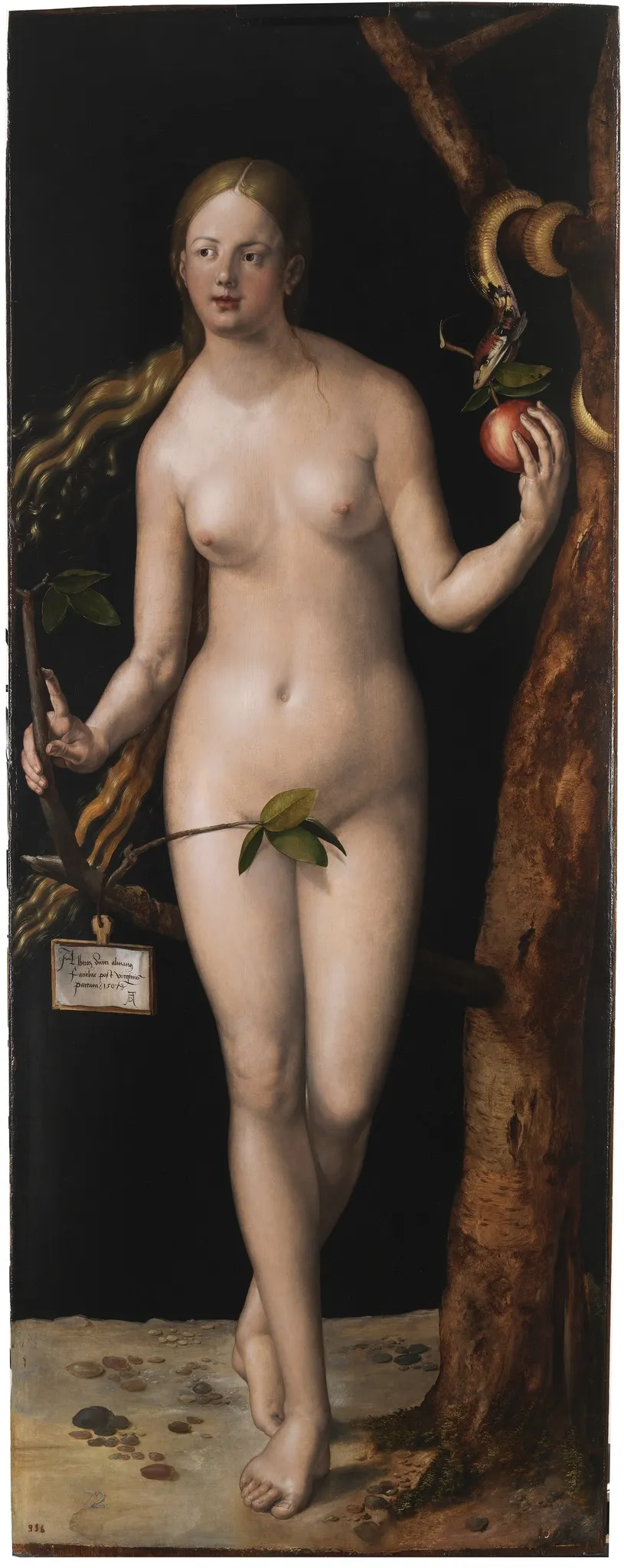
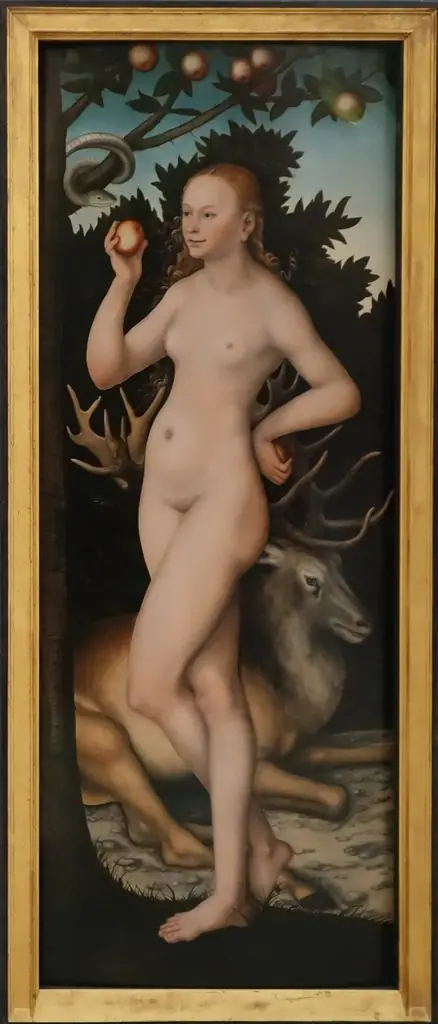
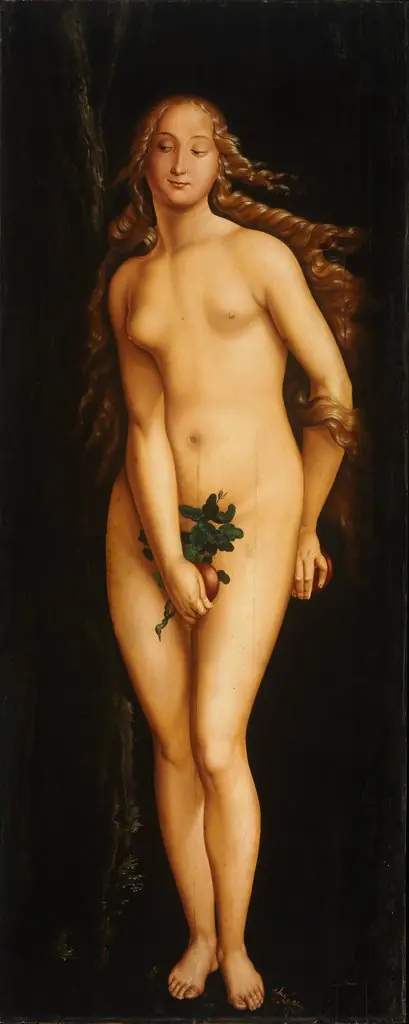
Eve is an oil painting by the Northern Renaissance artist Albrecht Dürer. It dates from 1507 and is held in the collection of the Museo del Prado.
About this work
Subject & Meaning
The composition focuses on Eve's role in this foundational theological event, presenting her as the primary agent within the depicted story.
Albrecht Dürer's 1507 oil painting depicts the biblical figure Eve as the central subject. Classified as a work of religious art, the piece specifically illustrates the narrative of the fall of man. The composition focuses on Eve's role in this foundational theological event, presenting her as the primary agent within the depicted story. The work serves as a visual representation of this pivotal moment in religious history.
Technique & Style
The work is a panel painting in oil on wood support. It depicts the Fall of Man with Eve at its center, rendered in a precise, linear style characteristic of Dürer’s mature work. The figure is modeled with careful transitions of light and shadow to convey three-dimensional form, while the surrounding flora and fauna are executed with botanical detail.
The composition emphasizes symmetry and proportion, aligning with Dürer’s engagement with Italian Renaissance principles. Handling shows meticulous brushwork in the rendering of textures, from the translucency of skin to the crispness of foliage.
History & Provenance
Albrecht Dürer created the oil painting Eve in 1507. Executed on a panel support, the work depicts the biblical figure of Eve as part of the Fall of Man narrative. The painting currently resides in the collection of the Museo del Prado, where it is displayed in Hall 055B.
While the specific circumstances of its original commission and the full chain of ownership prior to its museum acquisition are not detailed in the available records, its inception is firmly established as 1507.
The painting Eve by Albrecht Dürer is held in the collection of the Museo del Prado in Madrid, where it is catalogued under inventory number P00968. It has been displayed in the Museo del Prado's exhibition "The Renaissance in the North" (2003) and subsequently featured in the traveling exhibition "Albrecht Dürer: Master of the Northern Renaissance" (2009–2010).
Context
Albrecht Dürer's Eve (1507) occupies a pivotal position in early Northern Renaissance art, reflecting both devotional innovation and scholarly engagement with biblical narratives. The painting's depiction of Eve within the 'fall of man' composition aligns with contemporary theological discourse while demonstrating Dürer's technical mastery of oil on panel. Its presence in the Museo del Prado's collection since acquisition underscores its enduring art-historical significance, particularly in scholarly analyses of gender representation and exegetical visual culture within the period's religious art discourse.
Legacy
Albrecht Dürer's Eve influenced later religious art through its visual treatment of the fall of man, particularly noted for its composition and use of oil paint on panel. The work is housed in the Museo del Prado, where it remains on display in Prado Hall 055B. Its legacy is anchored in shaping narrative approaches to biblical subjects in early 16th-century European painting.
Overview
Eve is a 1507 oil painting by Albrecht Dürer, a prominent German Renaissance artist. The work depicts the biblical figure of Eve in a natural setting, characteristic of Dürer's technical proficiency and artistic innovation.
Artist & collection
Artist
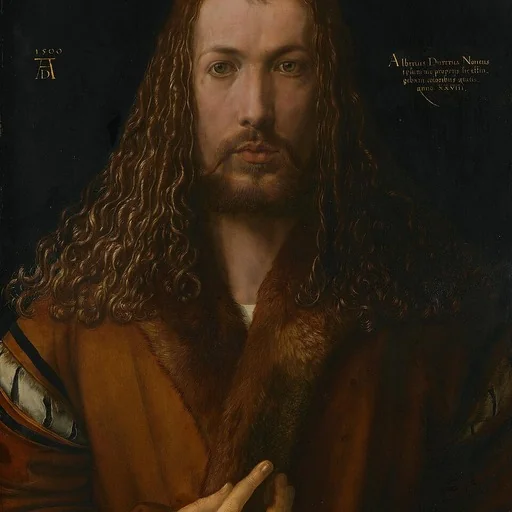
Albrecht Dürer spent his life in Nuremberg, a busy German city where artists traded prints like currency.

![Madonna and Child [obverse], by Albrecht Dürer](https://artifactworldgallery.com/img/albrecht-durer--madonna-and-child-obverse--d7b8ebf05d22ebe5-w320.webp)
![Lot and His Daughters [reverse], by Albrecht Dürer](https://artifactworldgallery.com/img/albrecht-durer--lot-and-his-daughters-reverse--b4ebf9b282faa17a-w320.webp)