Artwork
Jonah Preaching to the Ninevites
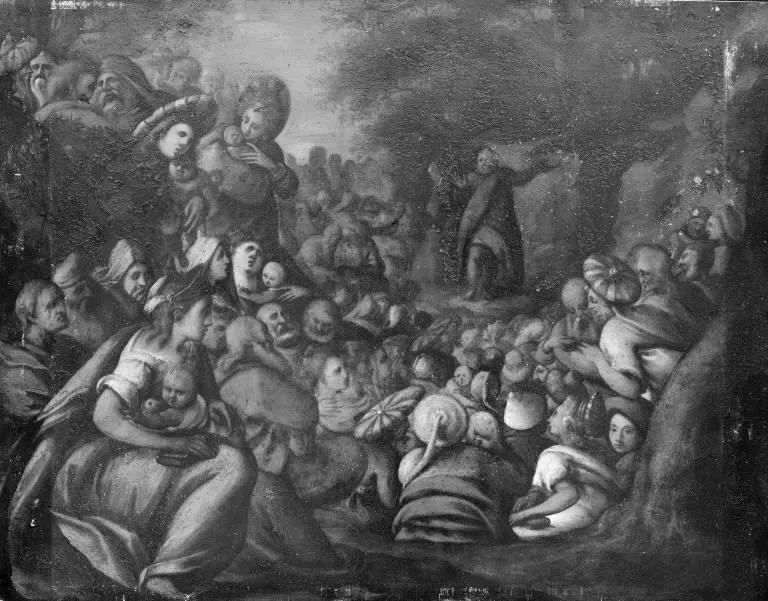
Jonah Preaching to the Ninevites is an unspecified painting by the Mannerist artist Gillis van Coninxloo. It dates from 1592 and is held in the collection of the Statens Museum for Kunst.
About this work
Overview
Executed in oil on a large support measuring 273 by 313 centimeters, the work depicts the biblical prophet Jonah addressing the citizens of Nineveh.
Jonah Preaching to the Ninevites is a religious painting by the Flemish artist Gillis van Coninxloo, dated 1583. Executed in oil on a large support measuring 273 by 313 centimeters, the work depicts the biblical prophet Jonah addressing the citizens of Nineveh. The painting is held in the collection of the Statens Museum for Kunst (National Gallery of Denmark) in Copenhagen. Though van Coninxloo is celebrated primarily as a pioneering landscape painter who shaped Northern European forest scenery around the turn of the seventeenth century, this early work represents a significant biblical narrative composition from his Antwerp period, before his departure from the city in 1585. It stands as one of his few major religious paintings and offers insight into his engagement with figural narrative before he devoted his career principally to landscape.
Subject & Meaning
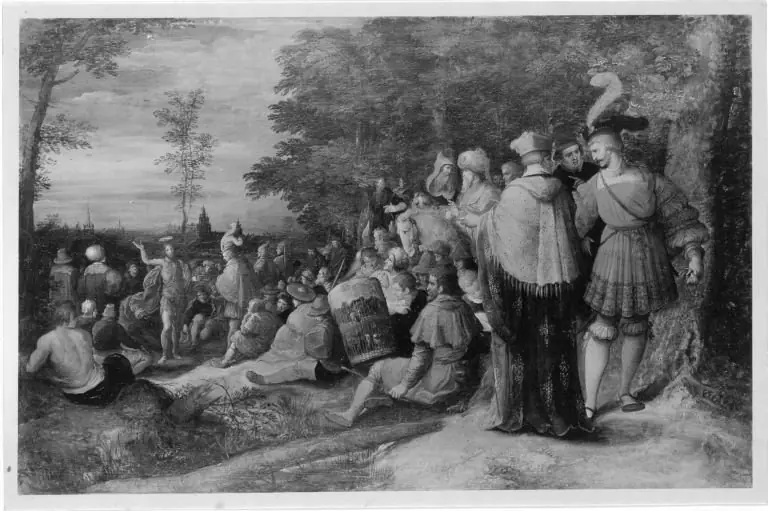
The painting illustrates the Old Testament story of Jonah, who, after being swallowed by a great fish, was commanded by God to preach repentance to the inhabitants of Nineveh. The composition centers on Jonah as a standing figure who raises one arm in a gesture of address, surrounded by a dense crowd of Ninevites gathered in the foreground and middle ground. The crowd includes seated and standing figures, with several women holding infants, and various individuals wearing turbans, head coverings, and draped garments. The outdoor setting includes trees in the upper right and a hazy sky above, with a rocky outcrop or tree trunk at the right edge. The iconography emphasizes collective repentance and salvation, themes resonant with the religious tensions of the Habsburg Netherlands during the period of Catholic-Protestant conflict. The inclusion of mothers with children and the diverse attire of the crowd suggest the universal call to repentance and the social breadth of Jonah's audience.
Technique & Style
The painting is executed in oil, with a palette that source observation describes as restricted to muted grays, blacks, and whites, suggesting either monochrome treatment or aged surface conditions. Light falls unevenly across the scene, illuminating faces and drapery while deep shadows pool between figures. The brushwork shows soft modeling on faces and looser handling in the background, consistent with Flemish painting practices of the period. The composition's dense figural arrangement and the integration of landscape elements with narrative action reflect the influence of Northern Mannerism, which van Coninxloo had absorbed through his training under Pieter Coecke van Aelst. The surface shows age-related wear and uneven texture throughout. At 273 by 313 centimeters, the work is exceptionally large for a biblical narrative of this type from the period, suggesting it was conceived as a major altarpiece or civic commission. The handling of atmospheric effects and the placement of figures within a natural setting already hint at van Coninxloo's emerging interest in landscape as a dominant compositional element.
History & Provenance
The painting is dated 1583, placing it in van Coninxloo's Antwerp period (1570-1588), during which he was an established master in the painters' guild and maintained a busy workshop producing works for international clients including the king of Spain. The circumstances of its commission remain unrecorded in the surviving sources. The work's provenance before its acquisition by the Statens Museum for Kunst is not documented in the provided sources. It is currently located at the Statens Museum for Kunst in Copenhagen, where it is catalogued under the artist's name. No exhibition history is specified in the available sources.
Context
Jonah Preaching to the Ninevites occupies a pivotal position in van Coninxloo's oeuvre as a work created during his Antwerp period, before his flight from the city in 1585 following the Spanish reconquest. At this time, Antwerp was a major artistic center of the Habsburg Netherlands, and van Coninxloo had become a member of the Guild of Saint Luke in 1570. The painting reflects the context of religious strife between Catholics and Protestants during the Eighty Years' War; van Coninxloo himself had taken the side of the Protestant rebels and was active in the defense of Antwerp during the siege of 1584-1585, for which he received a monetary reward from the outer mayor Philips of Marnix in January 1585. Scholarly attention to van Coninxloo has focused predominantly on his landscape innovations, with this biblical narrative receiving less critical analysis. Art historians including Karel van Mander, writing in 1604, praised van Coninxloo as the foremost landscape painter of his time. The Web Gallery of Art notes that his works demonstrate the transition from Mannerist to early Baroque landscape, while contemporary scholars emphasize his role in developing the forest landscape as an independent genre. The Jonah painting, with its expansive natural setting dominating the composition, anticipates this trajectory even while remaining primarily a figural narrative.
Legacy
While van Coninxloo's lasting reputation rests on his forest landscapes and his influence on Dutch Golden Age painting, Jonah Preaching to the Ninevites represents an important document of his early career and his capacity for large-scale narrative composition. The work is noted in scholarly accounts for the way its landscape setting already subordinates human action to natural surroundings, foreshadowing the artist's mature preoccupation with nature as the principal visual element. Van Coninxloo's broader legacy includes his decisive influence on the Frankenthal School of émigré Flemish painters during his residence in the Palatinate from 1588 to 1595, and his impact on subsequent Dutch and Flemish artists including Jan Brueghel the Elder, Pieter Schoubroeck, and Roelandt Savery. His emphasis on atmospheric depth, meticulous naturalism, and the self-contained forest view resonated with the emerging Dutch Golden Age aesthetic. The Jonah painting, held in a major national collection, continues to serve as a reference point for understanding the full range of his production beyond the specialized landscape genre for which he became famous.
Artist & collection
Artist
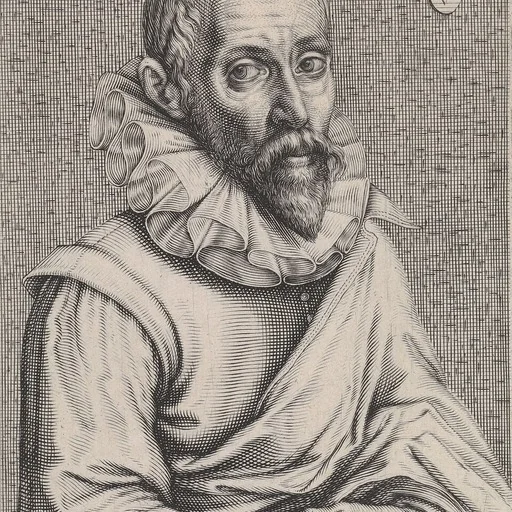
Gillis van Coninxloo (now also referred to as Gillis van Coninxloo II and previously referred to as Gillis van Coninxloo III) (24 January 1544 – January 1607) was a Flemish painter of landscapes.

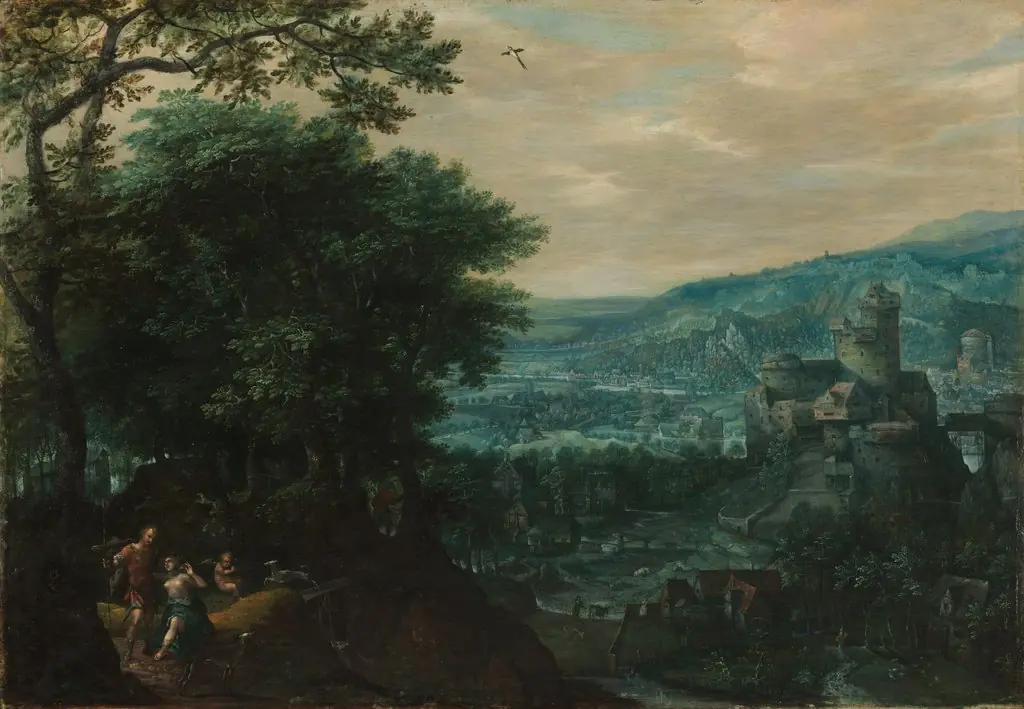
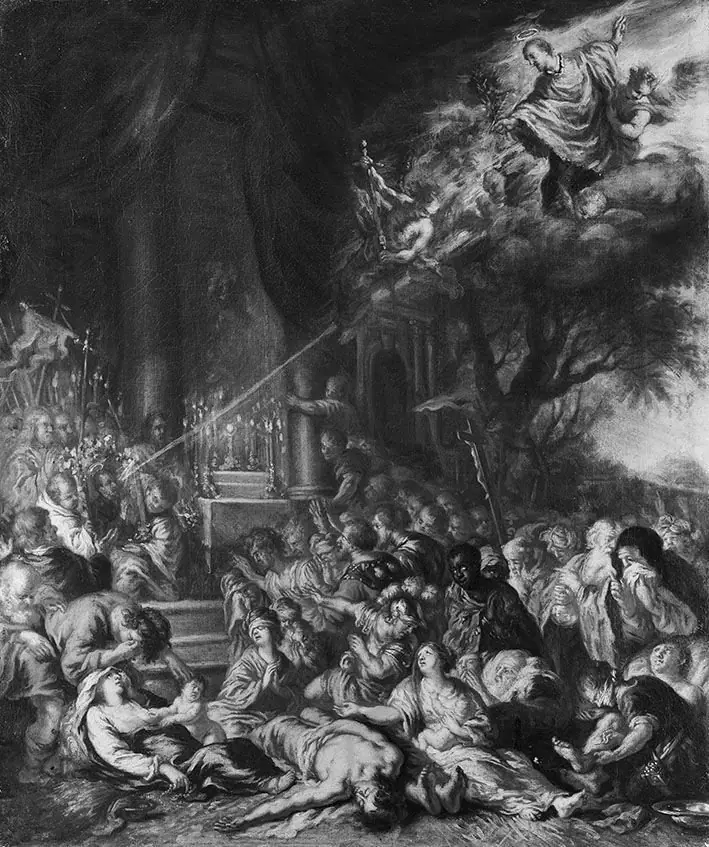 Wunder des hl. Cajetan an Pestkranken
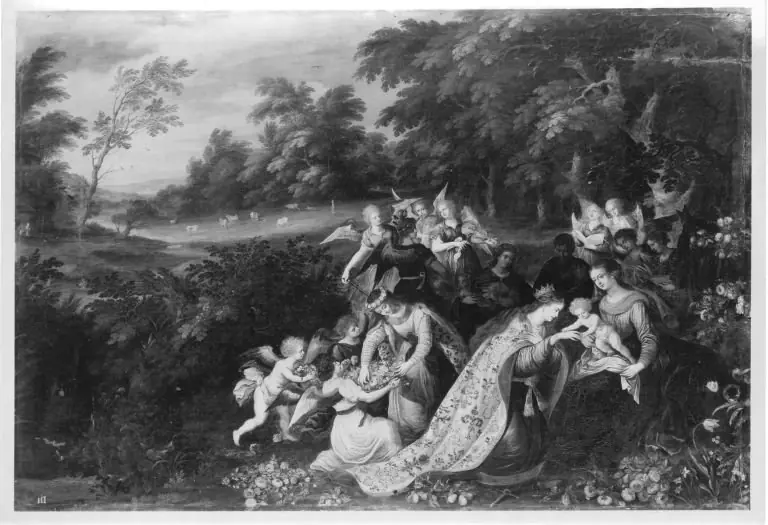 Vermählung der hl. Katharina
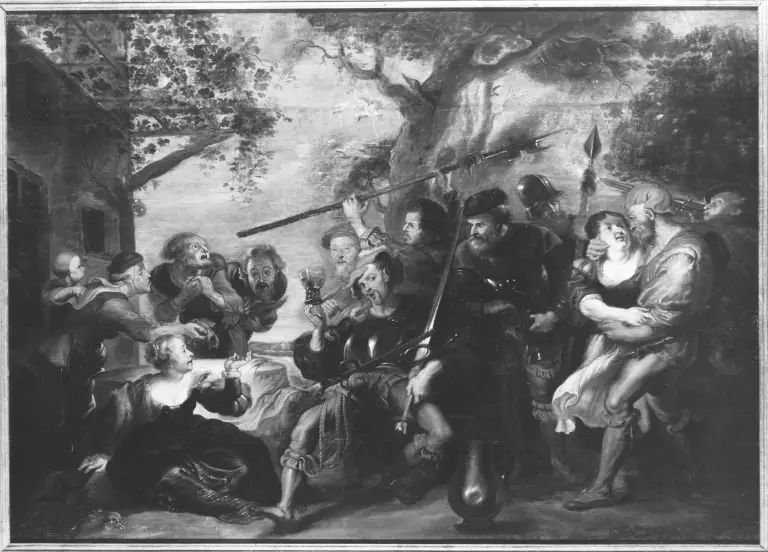 Marauding soldiers at an inn with prostitutes
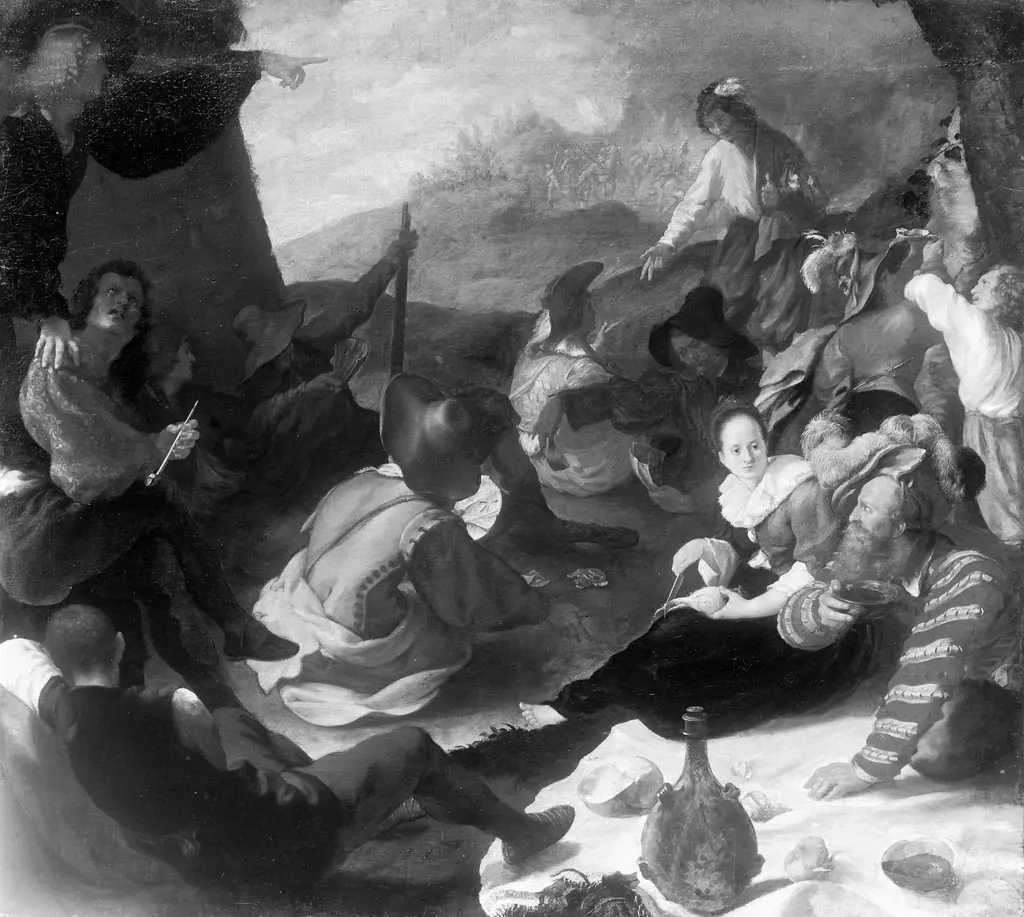 Rest of a band of robbers
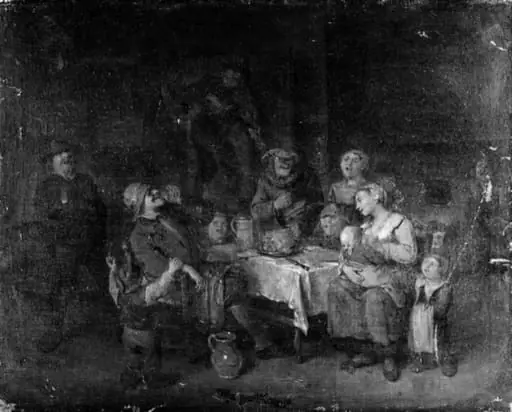 Peasants Merry-Making
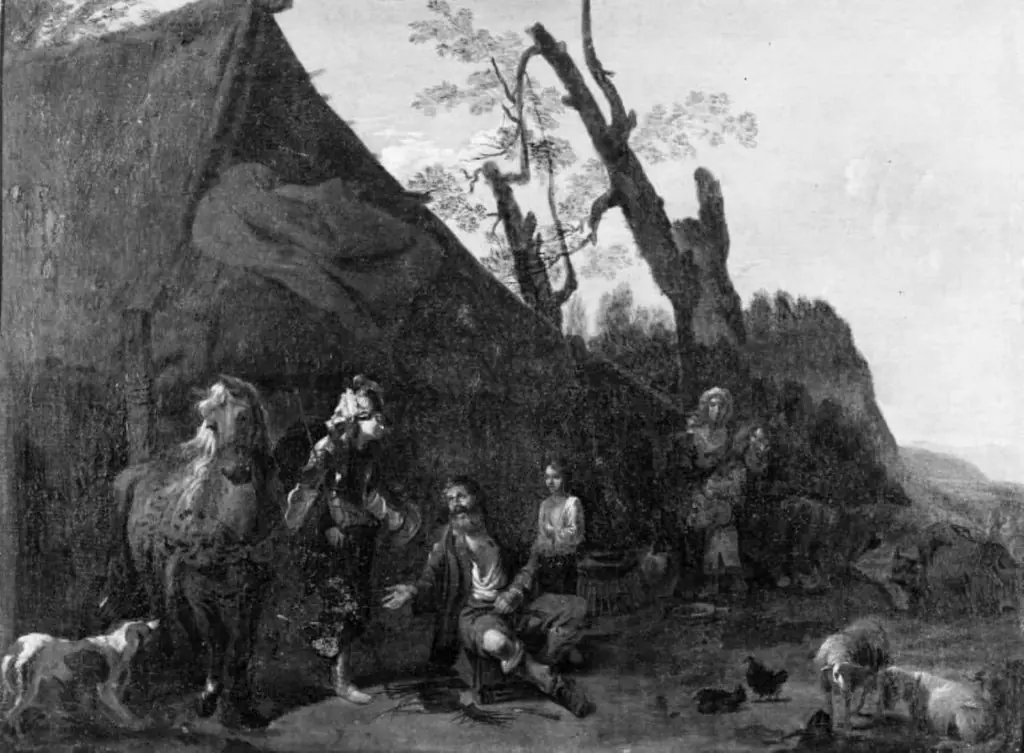 Erminia blandt hyrderne
 The Rest on the Flight into Egypt
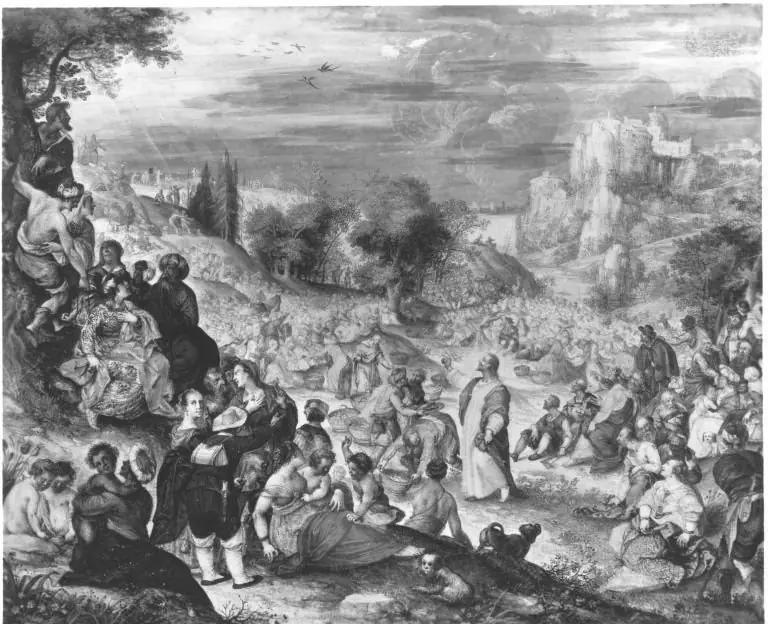 Speisung der Fünftausend
 Erminia blandt hyrderne
 Christ with St Martha and the Virgin Mary
 Predigt Johannes des Täufers
- Jonah Preaching to the Ninevites