Artwork
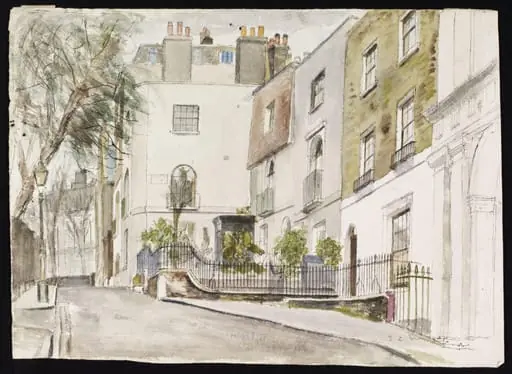
Albion Place, Reading
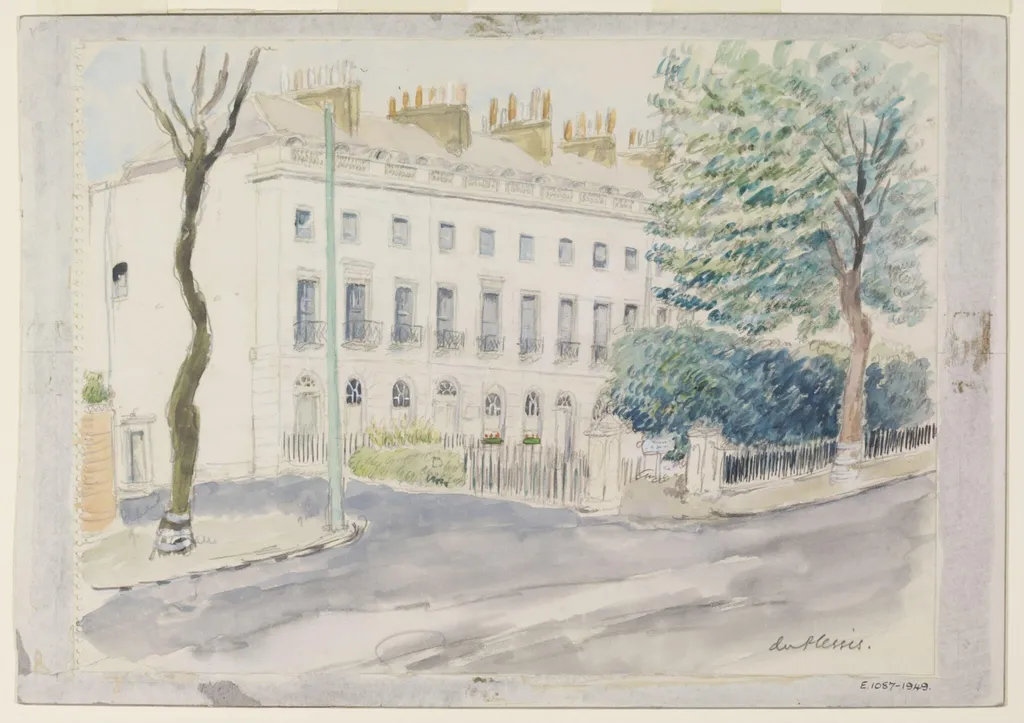
Albion Place, Reading is a watercolor work on paper by the Art Brut artist Du Plessis. It dates from 1940 and is held in the collection of the Victoria and Albert Museum.
About this work
Overview
Albion Place, Reading is a 1940 watercolour by the artist Du Plessis, signed and dated on the work. It portrays a modest street scene in the English town of Reading, focusing on a row of terraced houses that line a quiet corner of Albion Place.
Subject & Meaning
The composition captures a three‑storey pale façade with regular windows, a modest balcony on the second floor, and a lamppost framed by a leafless tree in the foreground. A larger, leafy tree rises behind the houses, its canopy spilling over a low fence, suggesting a tranquil, everyday urban environment.
Technique & Style
Du Plessis employs swift, fluid brushwork to render the interplay of light and shadow on the building’s walls and foliage. A restrained palette of soft pinks, blues, whites and muted darker tones creates a subtle atmospheric effect, while the loose handling conveys immediacy rather than detailed realism.
History & Provenance
The piece belongs to the Recording Britain collection, a wartime scheme organized by the Committee for the Employment of Artists in Wartime under the Ministry of Labour and National Service, with funding from the Pilgrim Trust. Between 1940 and 1943, ninety‑seven artists produced over 1,500 works documenting British landscapes and built‑environments considered at risk from conflict or modernization.
Context
Recorded during the early years of World War II, the work reflects the project’s aim to preserve visual records of ordinary streetscapes that might be altered or destroyed. Albion Place, a typical residential street, exemplifies the everyday settings the initiative sought to archive as part of Britain’s cultural heritage.
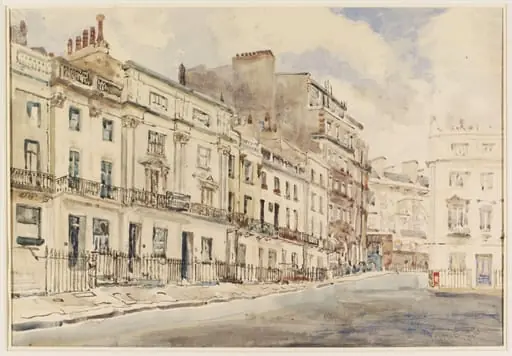
Artist & collection
Artist
Plessis Plessy, and de Plessis are related surnames of French origin, may refer to:

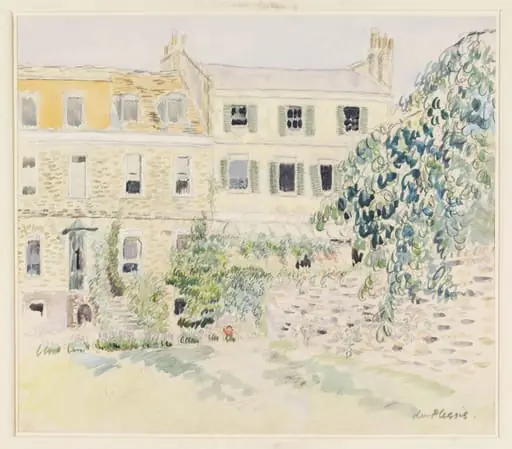
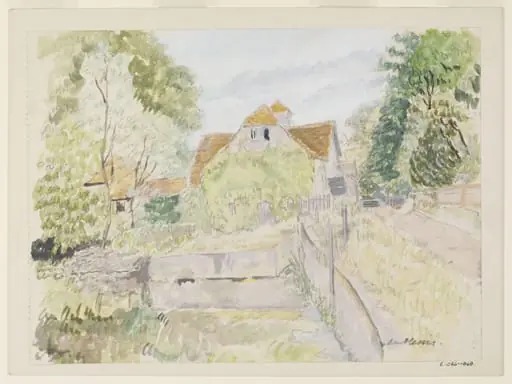
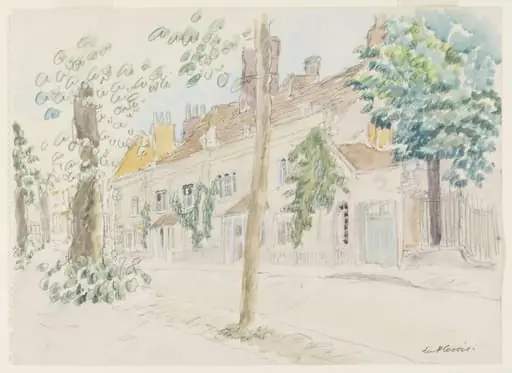
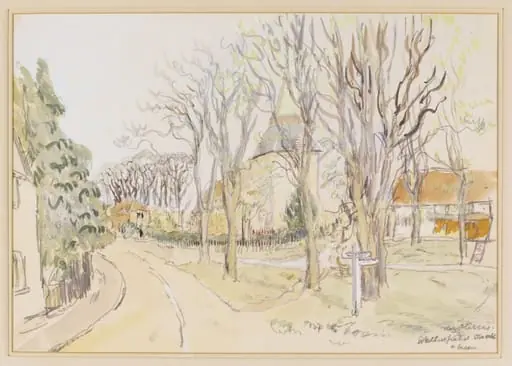
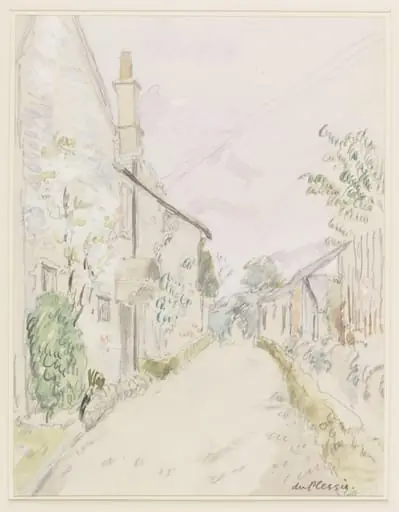
- Victoria Square S.W.1.
 Hollyberry Walk, N.W.3.
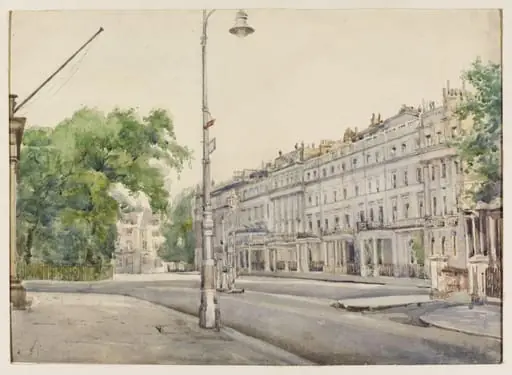 Belgrave Square
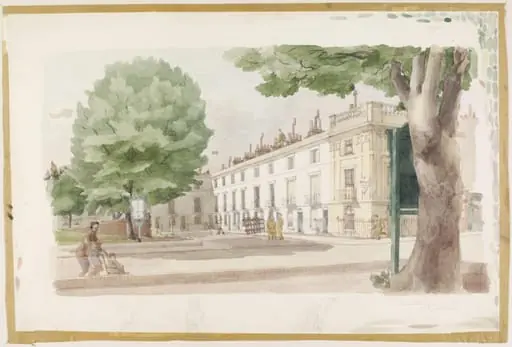 Munster Square, off Euston Road, N.W.1.
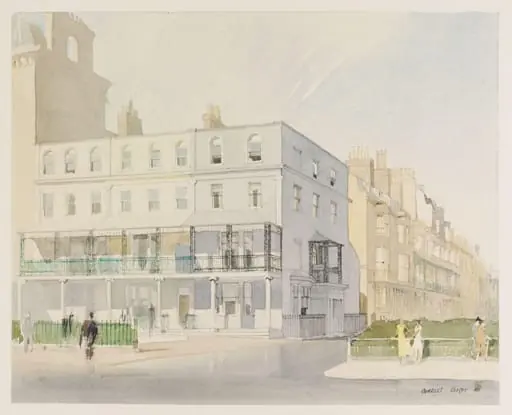 Regency Brighton; houses on Marine Parade and Sussex Square
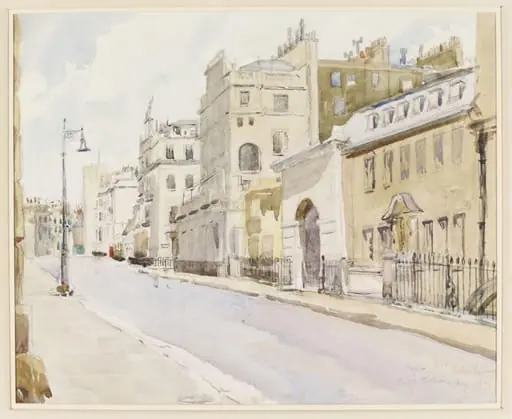 Lyall Street, Eaton Square
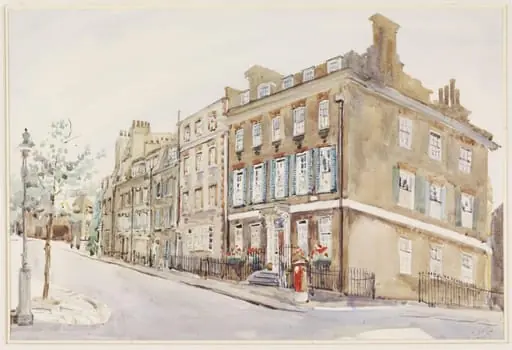 Buckingham Place, Westminster
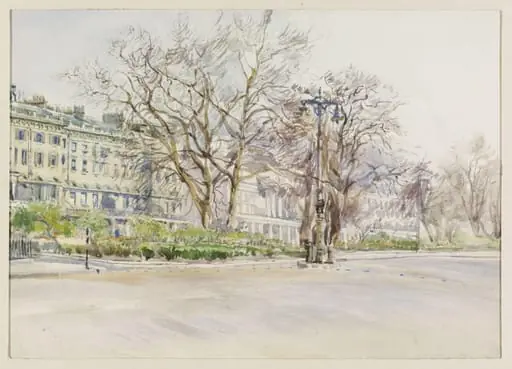 Eaton Square from Eaton Gate
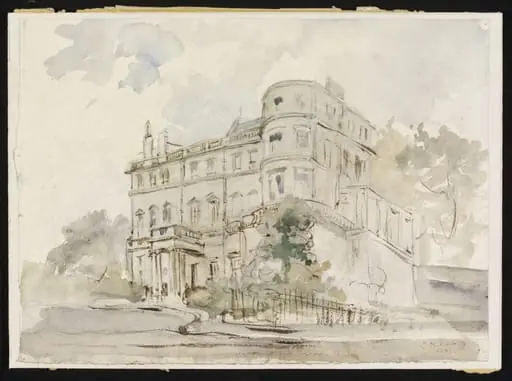 Carlton Terrace
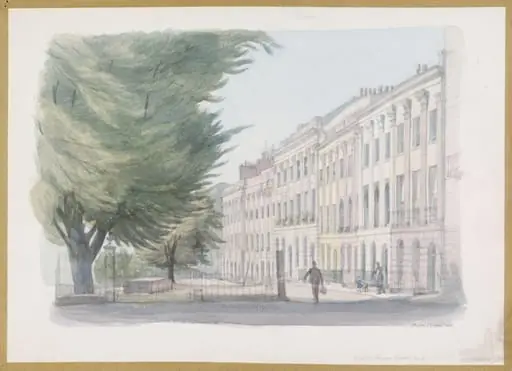 Windsor Terrace, Bristol
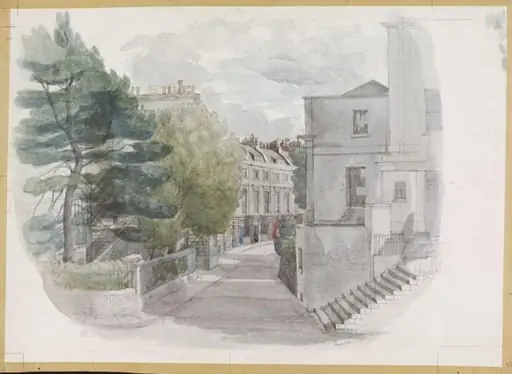 The Paragon, Clifton
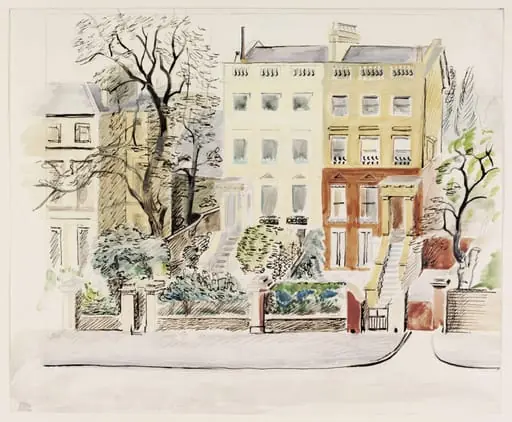 Houses in Marlborough Hill, St. John's Wood