Artwork
Emperor Maximilian I
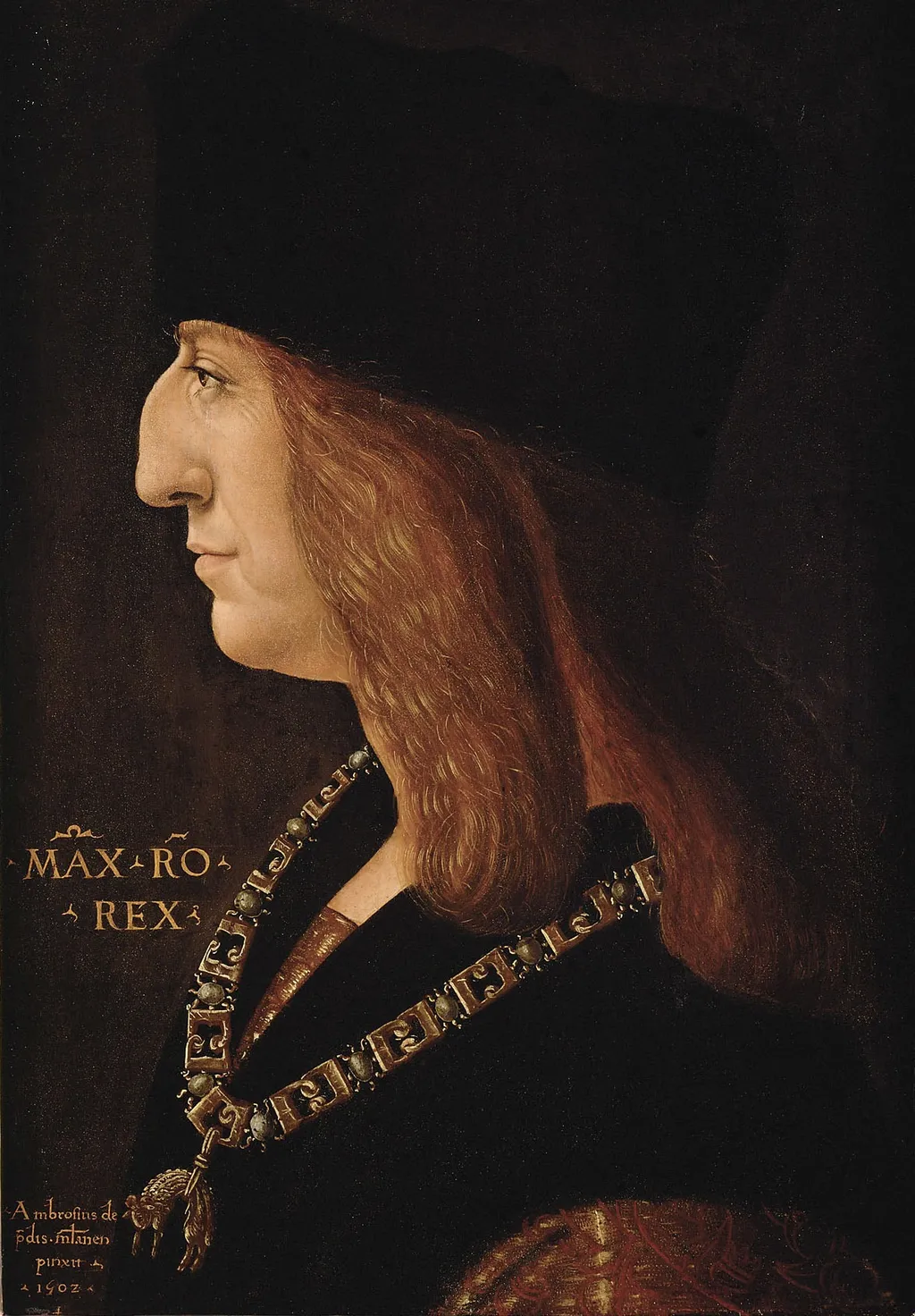
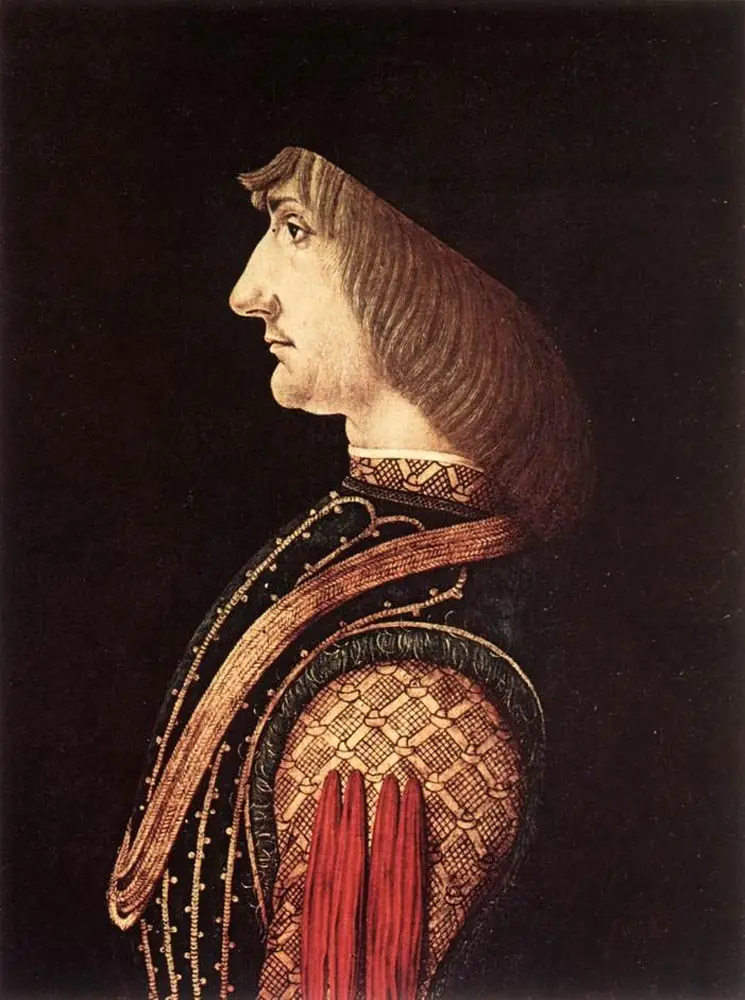
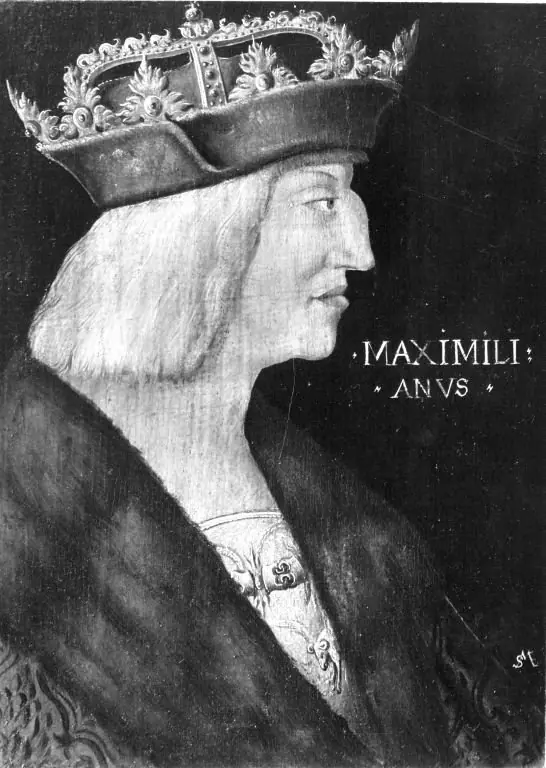
Emperor Maximilian I is an oil painting by the High Renaissance artist Giovanni Ambrogio de Predis. It dates from 1502 and is held in the collection of the Kunsthistorisches Museum.
About this work
Overview
3 centimeters, it depicts the Holy Roman Emperor in strict left profile against a dark background.
Emperor Maximilian I is an oil-on-oak-panel portrait painted in 1502 by Giovanni Ambrogio de Predis, a Lombard artist active at the court of Ludovico Sforza in Milan. Measuring 44 by 30.3 centimeters, it depicts the Holy Roman Emperor in strict left profile against a dark background. The painting is held in the Gemäldegalerie of the Kunsthistorisches Museum, Vienna, under inventory number 4431, having entered the collection from the Ambras Castle holdings. It is the only surviving signed and dated work by de Predis, making it a crucial touchstone for attributions to the artist and a significant document of early sixteenth-century imperial portraiture.
Subject & Meaning
The portrait depicts Maximilian I, King of the Romans and Holy Roman Emperor, identified by the gold inscription "MAX RO REX" at the lower left. The profile format itself carries political weight, evoking ancient Roman coins and medals to assert imperial authority and dynastic continuity. The emperor wears a black cap and dark garments with a fur collar, his long wavy auburn hair falling past his shoulders. Most striking is the elaborate gold chain with square links, each containing a small dark stone or pearl, terminating in a tassel and a small pendant sheep. This chain likely signifies Maximilian's membership in the Order of the Golden Fleece, the prestigious chivalric order to which he belonged. The pale, wrinkled skin and aged features convey the gravity of office rather than idealized beauty, while the severe profile projects unyielding authority. The patterned textile with gold and red threads visible in the lower right corner adds a note of princely luxury without compromising the portrait's austere official character.
Technique & Style
The work is executed in oil paint on oak panel, a support typical of Northern European practice that de Predis would have encountered through his Milanese context. The palette is restricted to blacks, deep browns, and golds, with warm light striking the face, hair, and chain from the left. The brushwork shows smooth, detailed handling in the jewelry and hair, with softer blending in the flesh tones. The Kunsthistorisches Museum characterizes the style as "rather regressive" for a master known to have collaborated with Leonardo da Vinci as early as 1483. This conservatism may be explained by the highly official function of the portrait, or by the personality of the sitter himself, which demanded a more traditional, formulaic presentation. The vertical, centered composition with the figure occupying most of the frame follows established conventions of court portraiture, while the dark, nearly black background isolates the emperor as an iconic presence. The surface condition and detailed execution of the chain and textile demonstrate de Predis's background as a miniaturist and illuminator, skills he brought to the larger scale of panel painting.
History & Provenance
The portrait's creation was rooted in the political alliance between the Habsburg and Sforza dynasties. When Emperor Maximilian I married Bianca Maria Sforza, niece of Ludovico il Moro, the latter sent his court painter Ambrogio de'Predis to Innsbruck in 1493 so that the couple might be painted. The 1502 portrait was completed based on a study made at that earlier time, nine years after the initial encounter. The artist inscribed and dated the work at lower left: "Ambrose de pdis.mlanen. pinxit. 1502," with the signature serving as what the museum calls "the guarantee of the work's authenticity." The painting's provenance traces through the collection at Ambras Castle before entering the Kunsthistorisches Museum, where it is now held in the Gemäldegalerie. No specific exhibition history is recorded in the available sources.
Legacy
The Portrait of Emperor Maximilian I occupies a pivotal position in de Predis's legacy as his sole securely documented work. Because so much of his output remains disputed, this painting serves as the anchor for attributions of related profile portraits of Milanese court figures. The work also exemplifies the international circulation of artists and portraits in the service of dynastic politics, as a Lombard painter working from an Innsbruck study produced an image of a German emperor for Habsburg collection. The painting's afterlife includes its preservation at Ambras Castle, the Habsburg treasury and portrait collection that became foundational to the Kunsthistorisches Museum. In broader cultural terms, the portrait appears in commercial reproduction contexts, with fine art prints marketed through heritage image collections, indicating its continued currency as an image of Renaissance imperial authority. Ezra Pound's reference to "Ambrogio Praedis" in Canto XLV of The Cantos, alongside Fra Angelico, as figures representing humanist accomplishment achieved without usury, testifies to the artist's lingering presence in modernist conceptions of Renaissance culture, even if the citation is more allusive than substantive.
Artist & collection
Artist
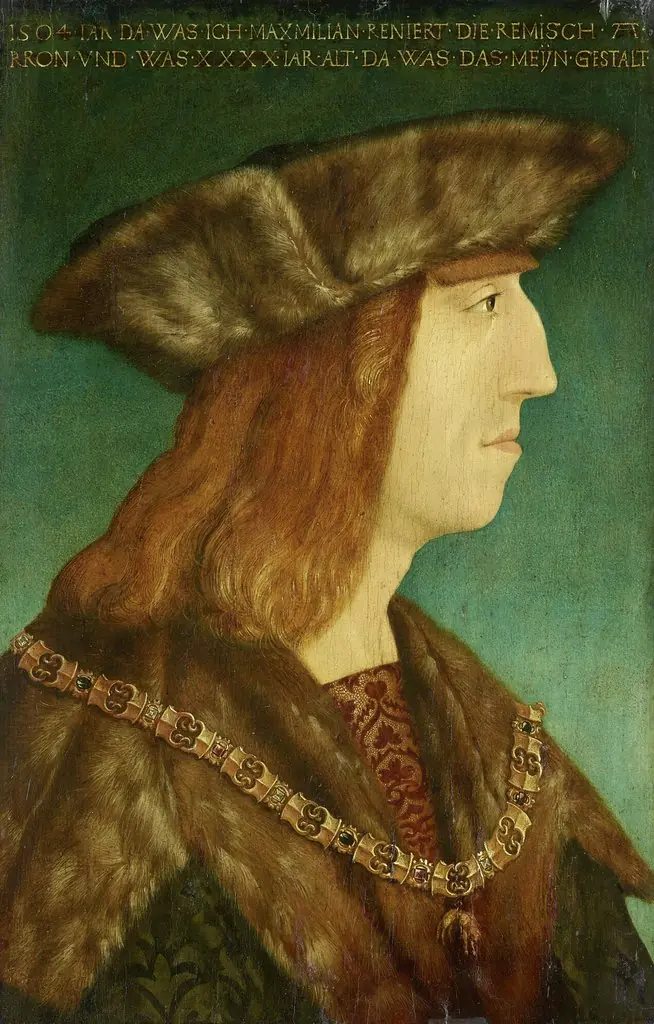
Giovanni Ambrogio de Predis (c. 1455 – c. 1508) was an Italian Renaissance painter, illuminator and designer of coins active in Milan. Ambrogio gained a reputation as a portraitist, including as a painter of miniatures,…