Artist
Giovanni Ambrogio de Predis
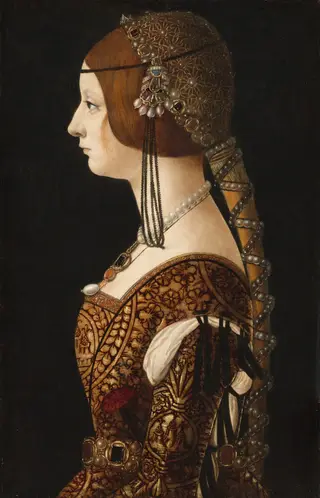
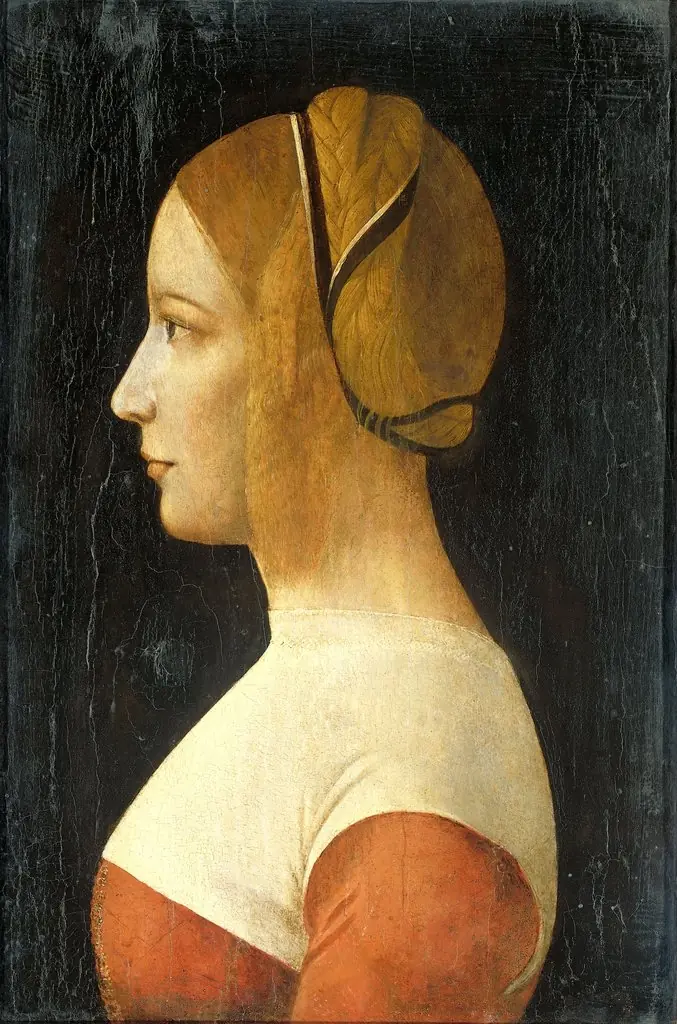
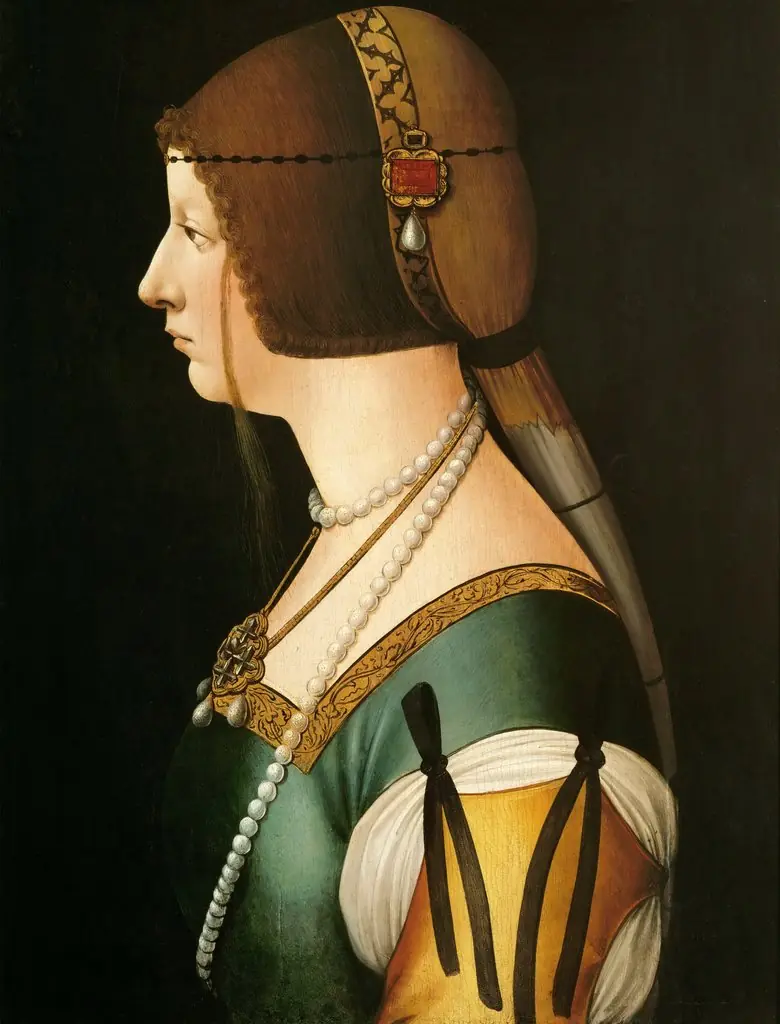
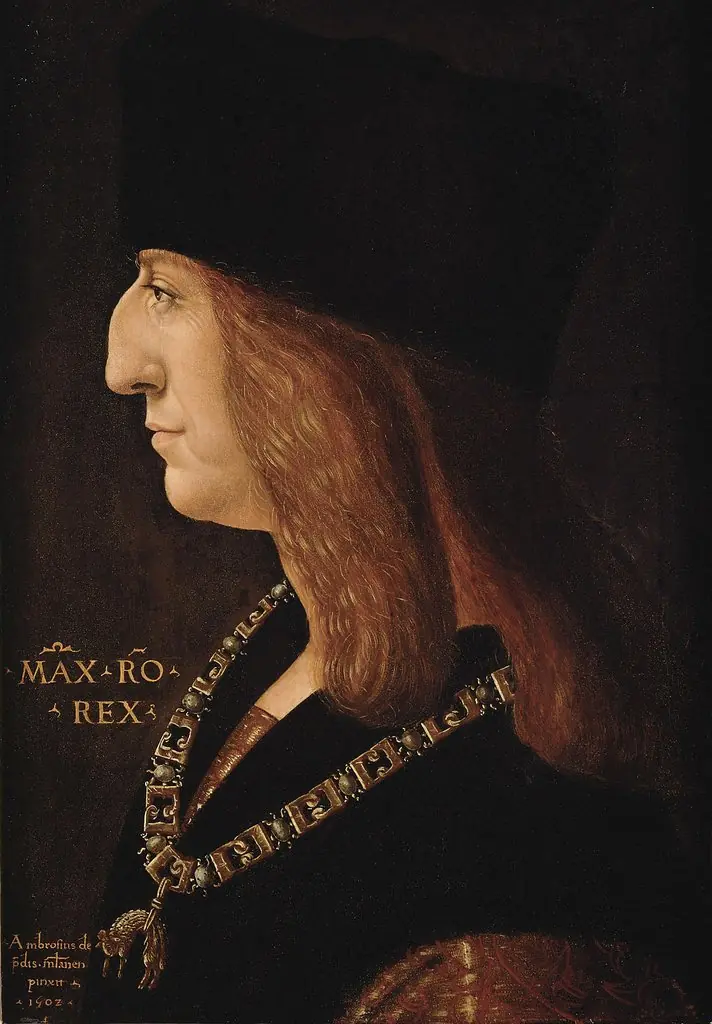
Giovanni Ambrogio de Predis is a High Renaissance artist. 6 works are cataloged here, principally at Kunsthistorisches Museum.
Overview
Giovanni Ambrogio de Predis (c. 1455, after 1508) was an Italian Renaissance painter, illuminator, and coin designer active primarily in Milan. A portraitist at the courts of Ludovico Sforza and later Emperor Maximilian I, he is best known for his collaboration with Leonardo da Vinci on the Virgin of the Rocks altarpiece and for his profile portraits of Milanese and Habsburg nobility. Though much of his oeuvre remains disputed, his documented role in one of the most famous commissions of the Renaissance, combined with his distinctive fusion of Lombard, Flemish, and Leonardesque elements, secures his place as a significant figure in the artistic culture of late Quattrocento Milan.
Biography & dates
Ambrogio de Predis was born in Milan around 1455 into a family of artists, the youngest of six sons from his father Leonardo de Predis's three marriages. His half-brothers Evangelista and Cristoforo were respectively a wood sculptor and miniaturist; Bernardino, his full brother, was a medalist. Cristoforo, who was deaf and mute, likely provided Ambrogio's early training in illumination. Between 1472 and 1474, Ambrogio produced miniatures for Books of Hours commissioned by the Borromeo family, works that no longer survive. From 1479, he worked alongside Bernardino at the Milan mint, becoming responsible for Milanese coinage by 1482. That same year, he entered the service of Ludovico Sforza as a portraitist, documented by a gift of satin from the duke in March 1482 following a trip to Ferrara. On 25 April 1483, Ambrogio and Evangelista contracted with the Confraternity of the Immaculate Conception to collaborate with Leonardo da Vinci on an altarpiece for San Francesco Grande. The marriage of Bianca Maria Sforza to Emperor Maximilian I in 1493 transformed Ambrogio's career: he painted her portrait before the wedding, followed her to Innsbruck that year, and worked intermittently for the imperial court in 1493-1494, 1502, and 1506. He also designed stage scenery and supervised tapestry works. His only surviving signed and dated work, a portrait of Maximilian I, was painted in 1502 and is now in the Kunsthistorisches Museum, Vienna. He died after 1508, possibly in Milan.
Style & movement
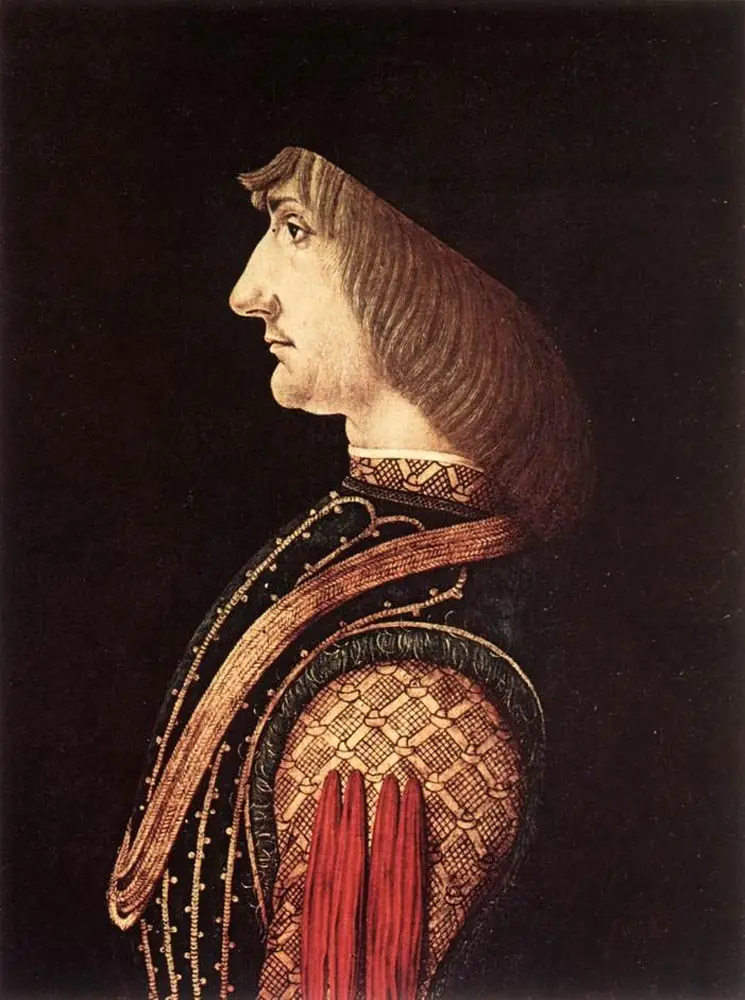
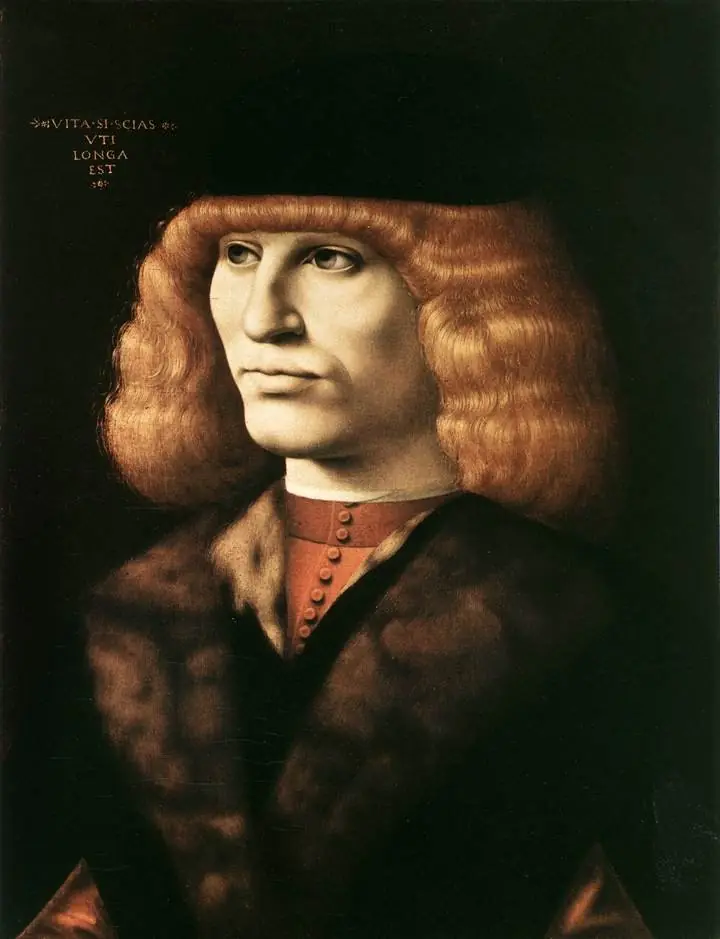
De Predis operated within the High Renaissance movement, though his style represents a distinctive Milanese synthesis. His portraits, typically in strict profile, preserve explicit Flemish influences, particularly in their limpid detail and meticulous rendering of fabrics and jewelry, while retaining residues of courtly Gothic conventions demanded by his patrons. The French source notes his work as a compromise between traditional Lombard painting and an archaic interpretation of Leonardo da Vinci's influence. After Leonardo's arrival in Milan, Ambrogio's style shifted markedly; he became, in the estimation of Italian scholarship, the first and oldest of Leonardo's Milanese followers, adapting his manner to incorporate Leonardesque softness and atmospheric effects even as he maintained the profile format preferred by his sitters. His illuminations for the Arconati and Torriani Hours demonstrate continuity with his half-brother Cristoforo's models, while his coin and medal designs show the interdisciplinary versatility characteristic of Milanese court artists. The broader Milanese context included Flemish contacts, International Gothic survivals, and the revolutionary presence of Bramante after the late 1470s, all of which shaped the environment in which de Predis developed.
Major works
The Virgin of the Rocks altarpiece (1483-1508) constitutes de Predis's most significant commission. Leonardo painted the central panel, while Ambrogio and Evangelista executed the side panels with music-making angels; these panels, now in the National Gallery, London, were acknowledged by the brothers during the protracted legal dispute over the altarpiece. The second version of Leonardo's central panel, also in London, may involve de Predis's hand in its completion. Among attributed portraits, the Profile Portrait of Bianca Maria Sforza (c. 1493) exists in two versions: one in the National Gallery of Art, Washington, D.C., and another in the Kunsthistorisches Museum, Vienna. The Lady with the Pearl Net (c. 1485-1500, Pinacoteca Ambrosiana, Milan) may involve collaboration with Leonardo. Other attributed works include a Profile Portrait of a Young Man (c. 1500, Museum of Fine Arts, Houston) and a Profile Portrait of a Man (c. 1500, Galleria degli Uffizi, Florence). Disputed attributions include the Portrait of Francesco di Bartolomeo Archinto (1494, National Gallery, London), Young Lady with Cherries (c. 1491-1495, Metropolitan Museum of Art, New York), and Portrait of Gian Galeazzo Maria Sforza as Saint Sebastian (c. 1483, Cleveland Museum of Art). The charcoal drawing of Bianca Maria Sforza (1492, Venice, Accademia) provides documentary evidence of his preparatory practice.
Influences & students
De Predis's early formation occurred within his family's workshop, particularly through collaboration with his half-brother Cristoforo, the miniaturist, and his brother Bernardino, the medalist. His artistic education aligned him with contemporary Lombard painters including Cristoforo Foppa, Bernardino Butinone, and Bernardo Zenale. The decisive external influence on his mature work was Leonardo da Vinci, whom he assisted from 1483 and possibly housed in Porta Ticinese. Leonardo's impact on de Predis was transformative: whereas other Milanese painters only approached Leonardo's manner in the early Cinquecento, Ambrogio adapted his style immediately, becoming the first local artist to incorporate Leonardesque elements. The reverse influence also obtained, as de Predis provided Leonardo with entre into Milanese court circles. No pupils of de Predis are documented, though his workshop employed family members and he managed a substantial atelier that undertook diplomatic as well as artistic functions for the Sforza court.
Legacy
De Predis's posthumous reputation has been constrained by the disputed attribution of much of his oeuvre and by his subordination to Leonardo in traditional art historical narratives. The legal disputes over the Virgin of the Rocks, which extended until 1506 with Ambrogio's active involvement after Evangelista's death in January 1491, preserved his name in the documentary record but also fixed his identity as Leonardo's collaborator rather than independent master. Ezra Pound's Canto XLV (1921) invoked Ambrogio Praedis as a figure of Renaissance humanist achievement untainted by usury, placing him alongside Fra Angelico in a characteristic juxtaposition. Modern scholarship, particularly Janice Shell's work in The Legacy of Leonardo (1998), has sought to reestablish his independent artistic profile. The National Gallery of Art's systematic catalogue cautions that of the numerous profile portraits assigned to him, only those close in style to the documented 1502 Maximilian portrait warrant secure attribution. His market recognition remains limited by these attribution challenges, though works in major museums have sustained scholarly interest in his role as a conduit between Lombard, Flemish, and Leonardesque artistic traditions.
Works by Giovanni Ambrogio de Predis
Collections represented


Artists in a similar vein