Artwork
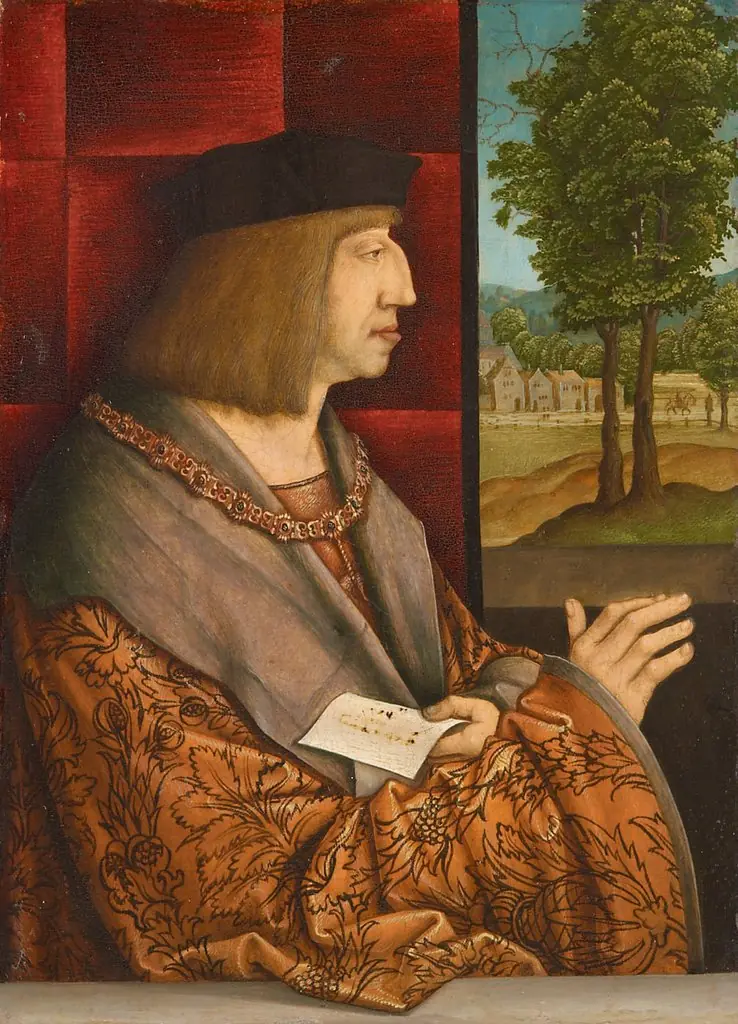
Portrait of Maximilian I (1459-1519)
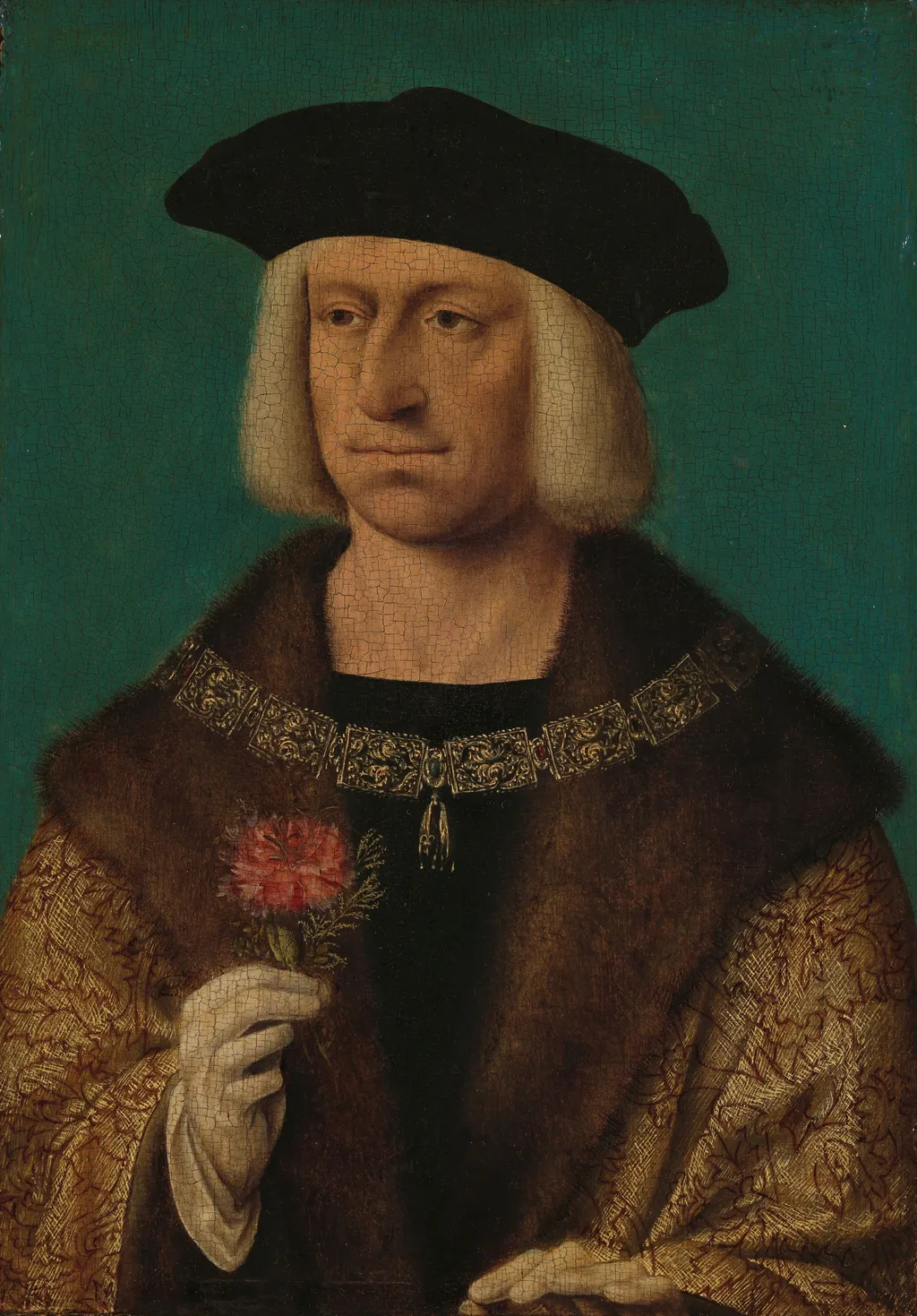
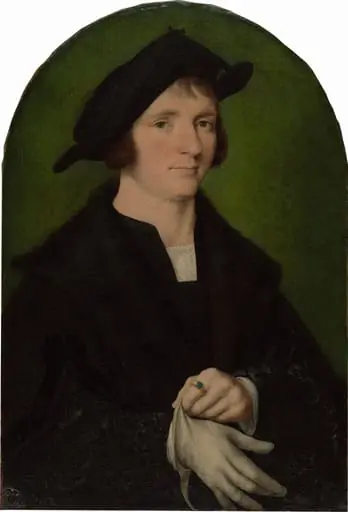
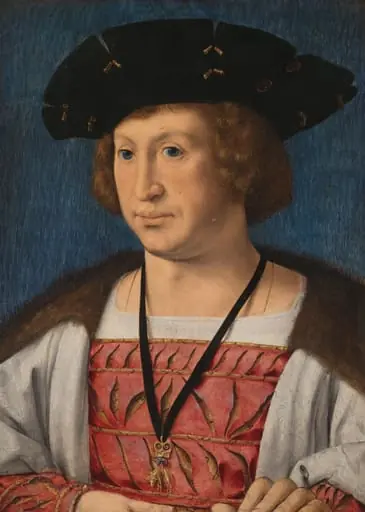
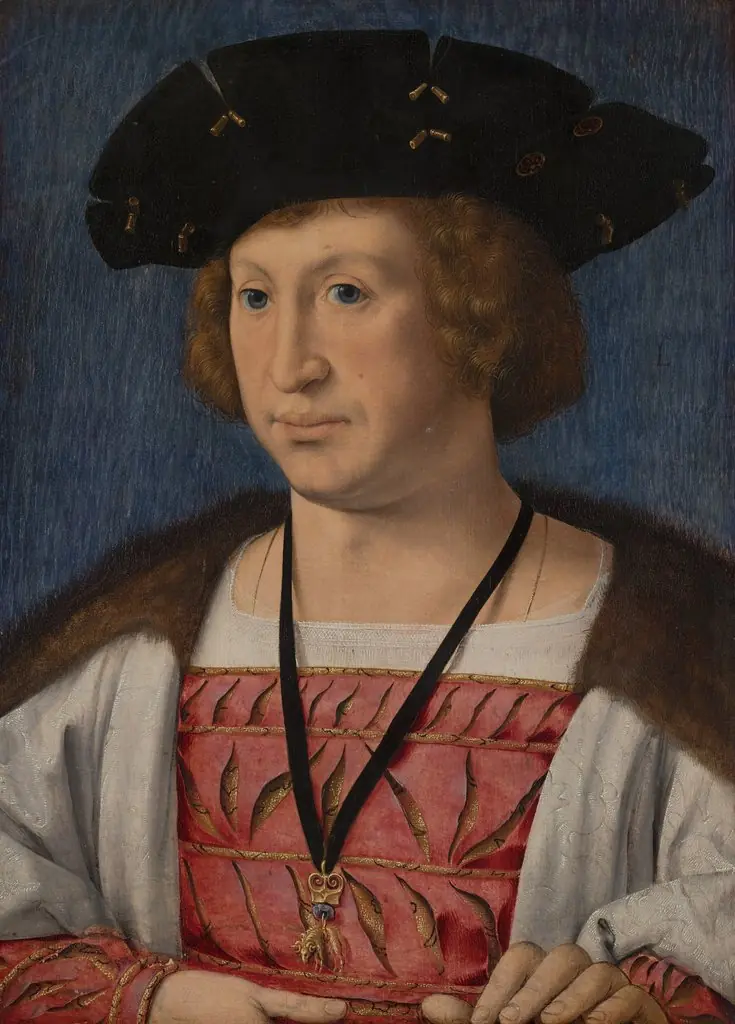
Portrait of Maximilian I (1459-1519) is an oil painting by Joos van Cleve. It dates from 1530 and is held in the collection of the Rijksmuseum.
About this work
Subject & Meaning
The composition focuses on the individual likeness of Maximilian I, establishing his historical presence within the visual record.
The work depicts Maximilian I, the Holy Roman Emperor, serving as a formal posthumous portrait created in 1530 by Joos van Cleve. As a portrait genre piece, the painting functions primarily to represent the identity and status of the late ruler rather than to convey complex allegorical narratives or specific symbolic attributes. The composition focuses on the individual likeness of Maximilian I, establishing his historical presence within the visual record.
The subject is identified explicitly as the emperor, with the work originating in Antwerp to commemorate his legacy.
Technique & Style
The portrait is executed in oil paint on panel, a standard support for Netherlandish painters of the early sixteenth century. Produced in Antwerp in 1530, the work is a small-scale panel measuring 34.6 cm in height by 24.4 cm in width, an intimate format consistent with Joos van Cleve's portrait practice. The classification as a painting and the genre designation of portrait confirm its function as a representational likeness of Maximilian I.
The use of oil on panel allowed for the fine detail and subtle modeling typical of the Antwerp school, though specific handling notes such as glazes, underdrawing, or pigment analysis are not documented in the available sources. No information is provided regarding the current condition of the work.
History & Provenance
The portrait was painted in 1530 by Joos van Cleve, likely in Antwerp. It depicts Maximilian I (1459–1519) and is executed in oil on panel. The work was formerly owned by Dominicus Antonius Josephus Kessler and Anna Christina Maria Helena Hülsmann. It is now in the collection of the Rijksmuseum.
The Portrait of Maximilian I (1459–1519) by Joos van Cleve is held in the collection of the Rijksmuseum in Amsterdam. Created in 1530, the oil-on-panel work depicts the Holy Roman Emperor and measures 34.6 cm in height by 24.4 cm in width. The painting was previously owned by Dominicus Antonius Josephus Kessler and Anna Christina Maria Helena Hülsmann before entering the museum's holdings.
The provided sources do not contain specific records regarding the work's inventory number or a history of public exhibitions.
Context
Joos van Cleve's Portrait of Maximilian I (1459-1519) exemplifies Northern Renaissance portraiture with its emphasis on status and material detail, reflecting Antwerp's prominence as a artistic and commercial hub circa 1530. The work's creation in Antwerp aligns with Joos van Cleve's documented activity there, placing it within his mature period following earlier collaborations. Scholarly interpretation situates it as a key example of elite portraiture circulating among merchant elites, with its attribution to van Cleve reinforced by stylistic analysis of courtly representation in the Low Countries.
The painting's presence in the Rijksmuseum collection, originally owned by Kessler and Hülsmann, underscores its historical journey from private collection to public institution.
Overview
This portrait, painted in oil on an unspecified surface, is the work of Joos van Cleve, a prominent Antwerp artist active between 1511 and 1540 or 1541. The painting is dated to 1530 and is currently part of the Rijksmuseum's collection.
Own this work as a print
Artist & collection
Artist
Joos van Cleve (; also Joos van der Beke; c. 1485–1490 – 1540/1541) was a leading painter active in Antwerp from his arrival there around 1511 until his death in 1540 or 1541. Within Dutch and Flemish Renaissance…