Artwork
Annunciation
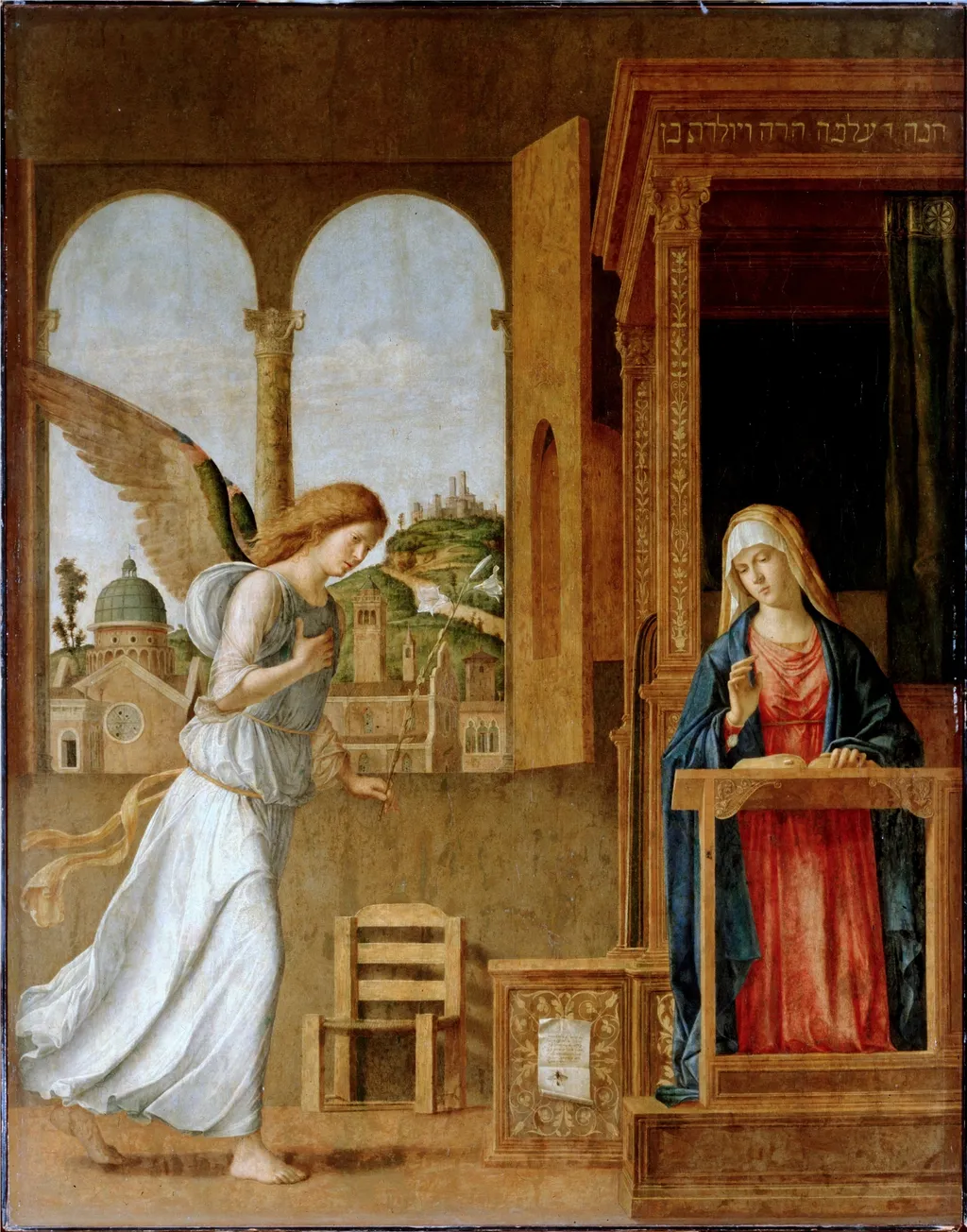
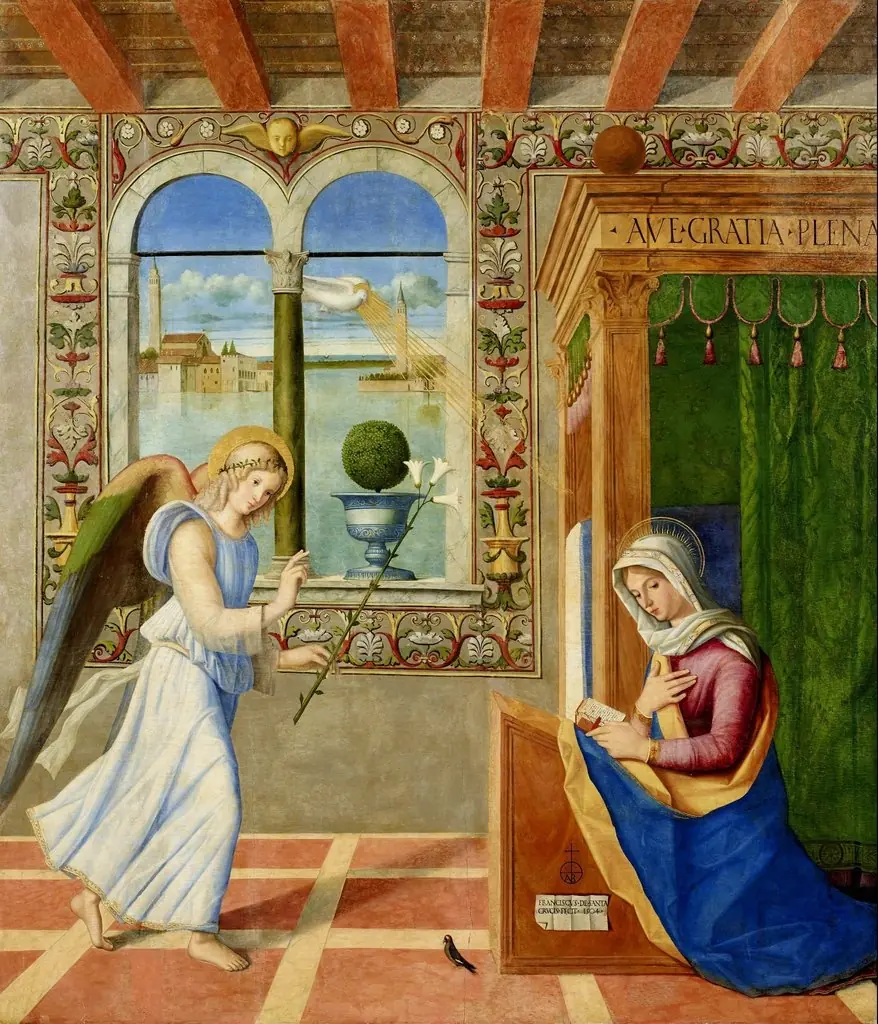
Annunciation is an oil painting by the Venetian Renaissance artist Giovanni Battista Cima da Conegliano. It dates from 1498 and is held in the collection of the Hermitage Museum.
About this work
The Annunciation is a painting by Giovanni Battista Cima da Conegliano. It was created in 1495.
This painting is an oil on panel work. It is now held at the State Hermitage Museum in Saint Petersburg, Russia, which suggests it has been preserved and is available for viewing.
To learn more about the style and methods used in this painting, look up the technique of glazing.
Subject & Meaning
The work was commissioned by the Silk Weavers' Guild for their chapel in Venice and later entered the Hermitage Museum collection in Saint Petersburg.
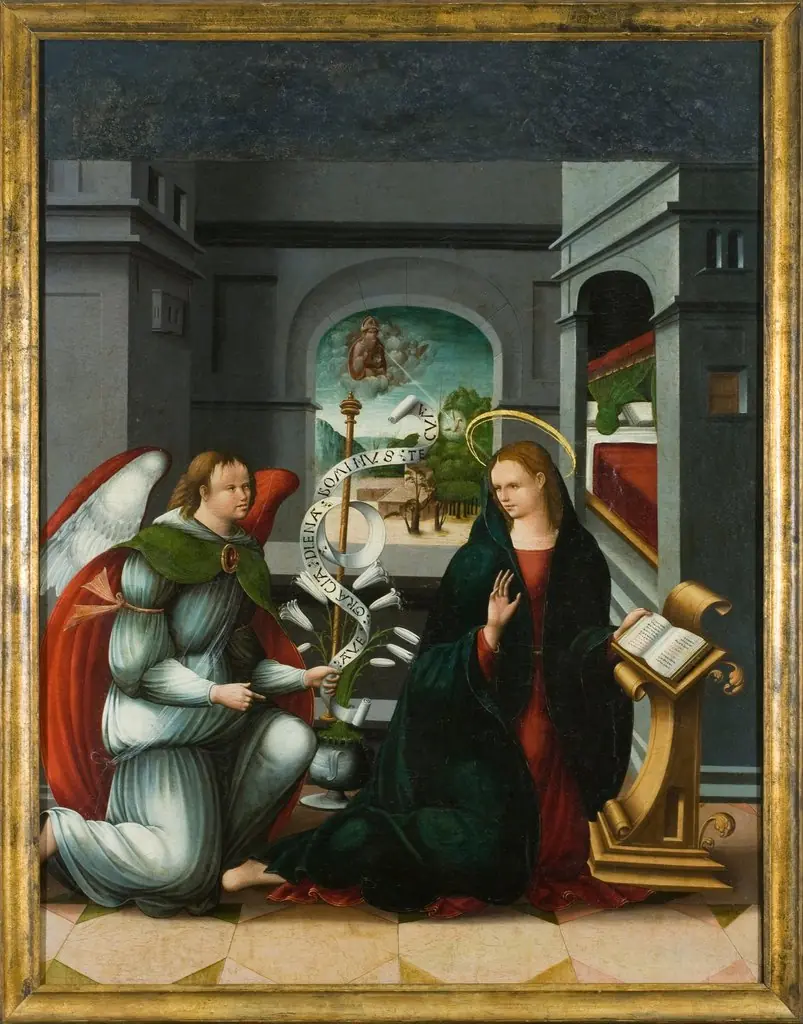
The painting depicts the biblical moment of the Annunciation, showing the Virgin Mary receiving the angel Gabriel's greeting. It is part of a religious composition that emphasizes the divine announcement of Christ's incarnation. The work was commissioned by the Silk Weavers' Guild for their chapel in Venice and later entered the Hermitage Museum collection in Saint Petersburg. Its iconography includes traditional elements such as the angel Gabriel and the Virgin Mary, with symbolic details like a fly on a notice board referenced in contemporary notes.
Technique & Style
The painting is executed in oil on wooden panel, measuring 136 by 107 centimeters, and was created in 1495. It depicts the moment of the Annunciation with the Virgin Mary receptive to the angelic message, rendered in a balanced composition that emphasizes luminous color and precise detail characteristic of late 15th‑century Venetian practice. The work was originally commissioned by the Silk Weavers’ Guild for their chapel at Santa Maria dei Crociferi in Venice, later relocated to the Hermitage Museum in Saint‑Petersburg, where it remains on display.
History & Provenance
The Annunciation was commissioned by the Silk Weavers' Guild for their chapel in the Church of Santa Maria dei Crociferi in Venice, and executed in 1495. Originally painted on wood panel, it was later transferred to canvas. The work entered the collection of the Hermitage Museum in Saint Petersburg, where it remains on display. Its dimensions are 136 cm in height and 107 cm in width, and it depicts the Virgin Mary receiving the Angel Gabriel in a religious composition. The attribution to Giovanni Battista Cima da Conegliano is supported by archival records and stylistic analysis.
The painting was later transferred to canvas and acquired by the Hermitage Museum, where it has been part of the collection since its acquisition.
The painting is held in the Hermitage Museum in Saint Petersburg, Russia, as part of the museum's collection. It was originally commissioned by the Arte dei Tessitori di Seta (the Silk Weavers' Guild) for their chapel in the Church of Santa Maria dei Crociferi in Venice, later rebuilt as the Church of Santa Maria Assunta of the Jesuit order. A cartellino on the work records both the date of execution and the names of the guild's officials for that year. The panel was subsequently transferred from its original wooden support to canvas. No specific accession number or detailed exhibition history is recorded in the available sources.
Context
The Annunciation by Giovanni Battista Cima da Conegliano, painted in 1495 for the Scuola dei Tessitori di Seta in Venice, was later acquired by the Hermitage Museum in Saint Petersburg. Originally created as a wooden panel (136 × 107 cm) for a chapel altarpiece, it was transferred to canvas and remains a significant example of late 15th-century Venetian religious art. The work has been studied in scholarship on Renaissance patronage, particularly regarding guild-sponsored commissions, and is discussed in relation to broader trends in devotional painting of the period. Its iconography, including a symbolic depiction of the Devil as a fly near the Virgin’s lectern, has attracted attention in art historical discourse.
The painting is frequently referenced in encyclopedic and academic sources as a key work by Cima da Conegliano within the context of Renaissance Venice and Venetian guild patronage.
Legacy
The painting holds a distinct place in visual culture, having been featured as the design for a 1988 postage stamp in Madagascar. Additionally, the work is noted for a curious symbolic detail: a representation of the Devil in the form of a fly resting on the cartellino next to the Virgin's lectern.
Own this work as a print
Artist & collection
Artist
Giovanni Battista Cima da Conegliano
Giovanni Battista Cima, also called Cima da Conegliano (c. 1459 – c. 1517), was an Italian Renaissance painter, who mostly worked in Venice. He can be considered part of the Venetian school, though he was also…

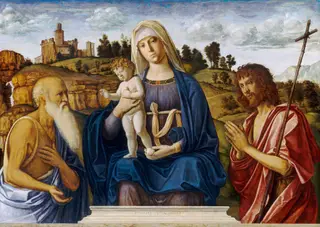 Madonna and Child with Saint Jerome and Saint John the Baptist
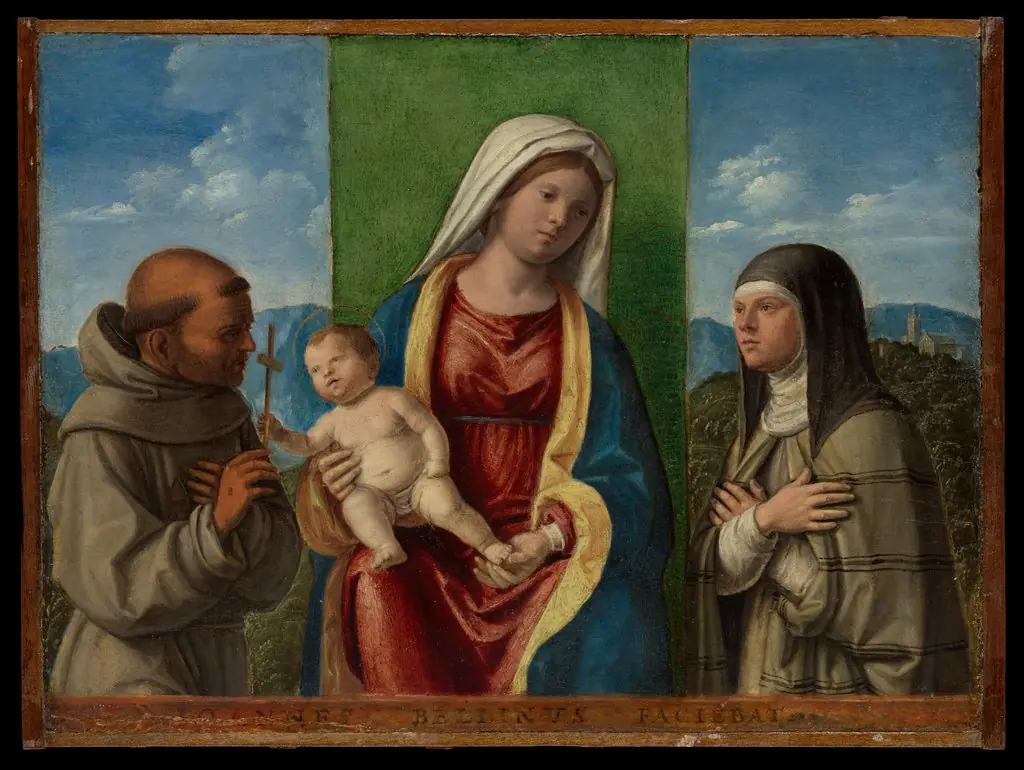 Madonna and Child with Saints Francis and Clare
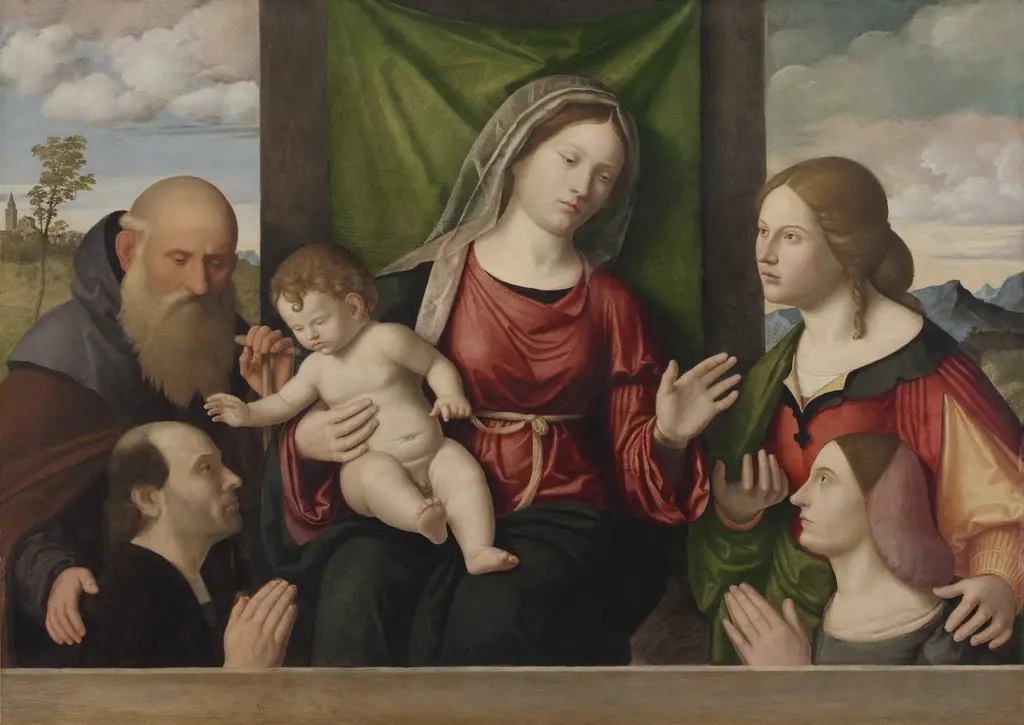 Virgin and Child with Saints and Donors
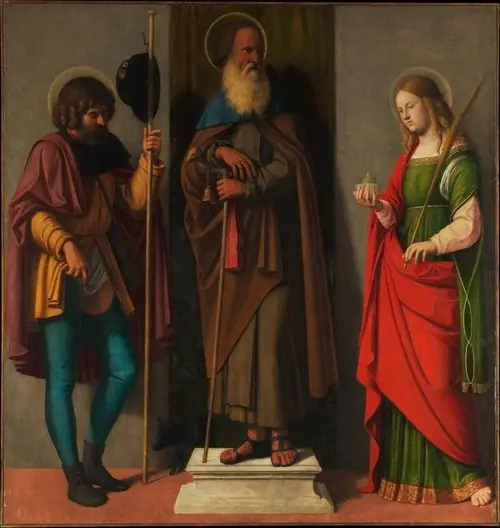 Saints Roch, Anthony Abbot and Lucy
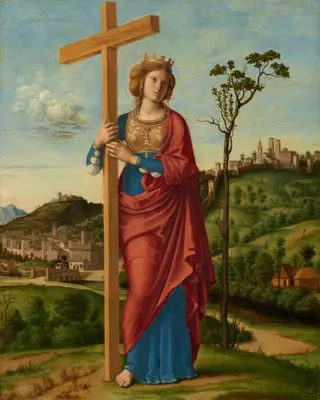 Saint Helena
 Saint Jerome in the Wilderness
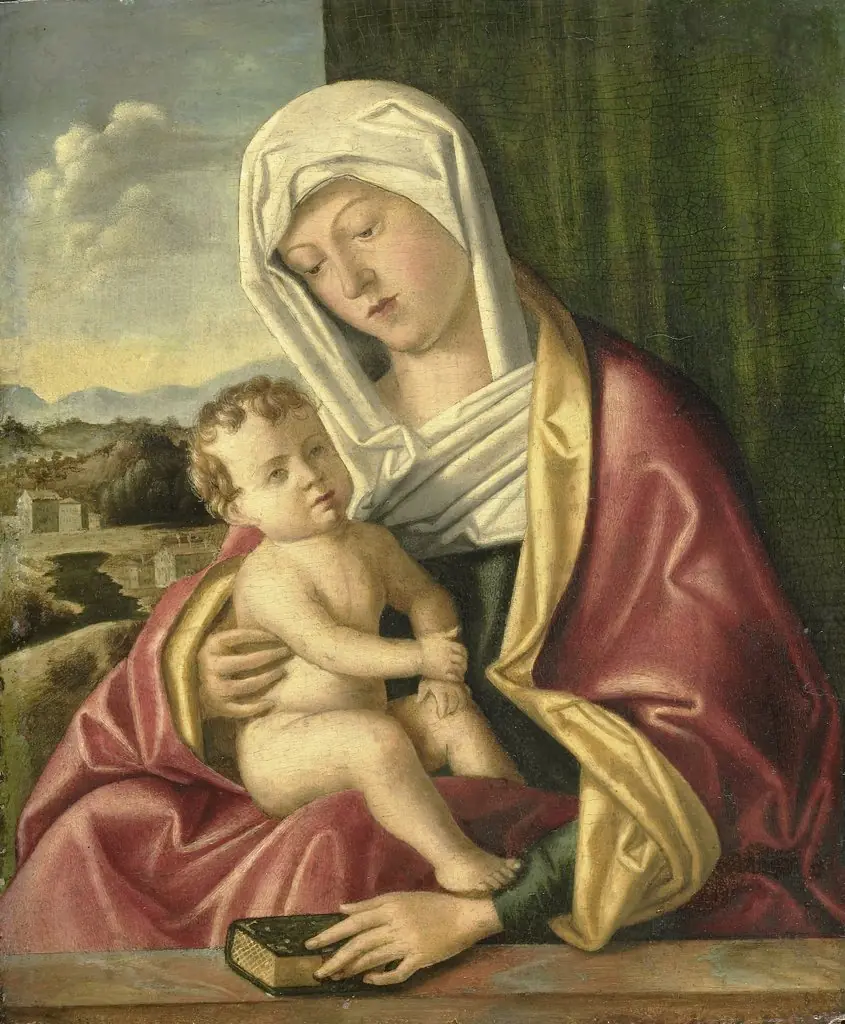 Virgin and Child
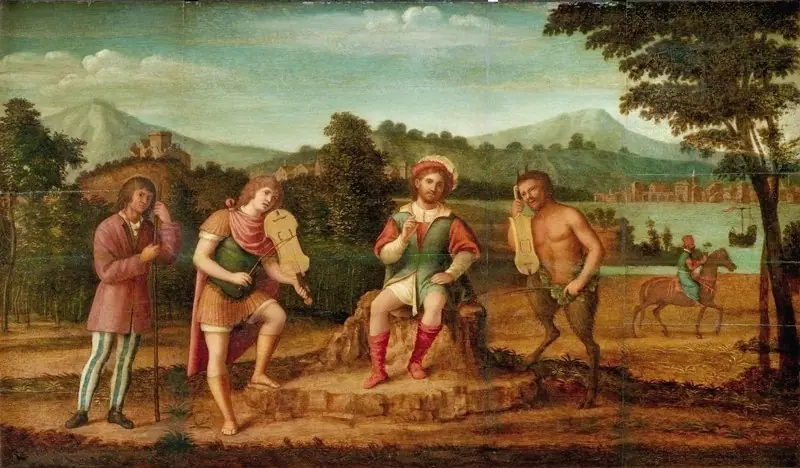 The Judgement of Midas. The Musical Contest between Apollo and Marsyas