Artwork
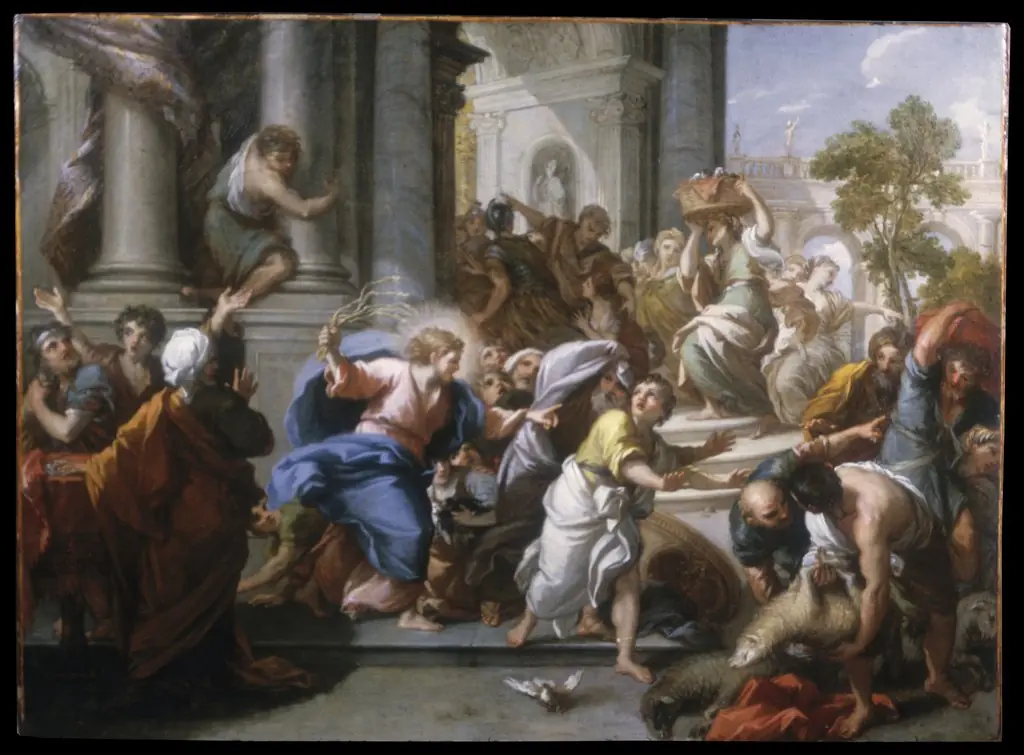
Christ casting the Money Changers out of the Temple
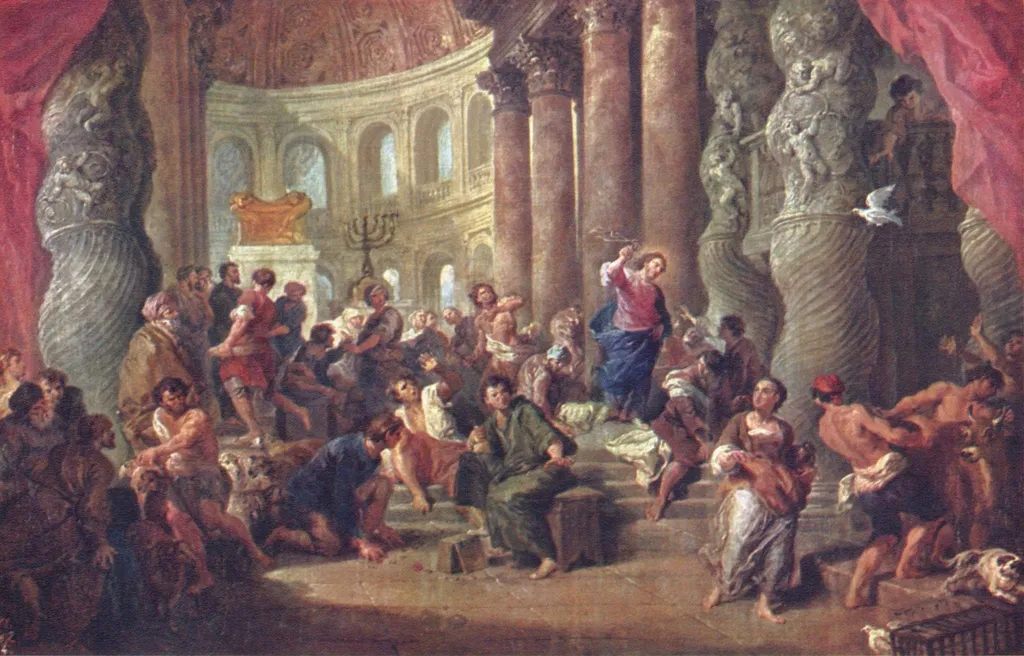
Christ casting the Money Changers out of the Temple is an oil painting by the Rococo painting artist Giovanni Paolo Panini. It dates from 1725 and is held in the collection of the Museo del Prado.
About this work
Subject & Meaning
The painting portrays the biblical moment of Christ driving merchants and money changers from the temple, a scene symbolizing spiritual purification and condemnation of commercial exploitation of sacred spaces. It belongs to the religious genre and reflects themes of divine authority and moral cleansing.
Technique & Style
The medium and dimensions reflect the standard practices for religious canvases of the period, focusing on the narrative subject matter within a compact format.
Giovanni Paolo Panini executed Christ casting the Money Changers out of the Temple using oil paint on a canvas support. The work measures 40 cm in height and 63 cm in width, classifying it as a religious painting. Created in 1725, the piece depicts the biblical Cleansing of the Temple scene.
The medium and dimensions reflect the standard practices for religious canvases of the period, focusing on the narrative subject matter within a compact format.
History & Provenance
The work titled Christ casting the Money Changers out of the Temple was painted by Giovanni Paolo Panini in 1725 using oil on canvas. It measures 40 cm in height and 63 cm in width and depicts the biblical scene of the Cleansing of the Temple. The painting was created as part of Panini's religious oeuvre and reflects his interest in architectural and scriptural subjects.
It was later owned by Ferdinand VII of Spain and entered the collection of the Museo del Prado, where it remains on display in the Royal Palace of Aranjuez. The work's provenance traces its journey from the artist's studio to royal ownership, underscoring its significance within Spanish royal collections of religious art.
The painting is housed in the Museo del Prado in Madrid, where it is recorded under the accession number P00968. Its provenance includes ownership by Ferdinand VII of Spain before entering the museum's collection. The work has been featured in several exhibitions at the Prado, including displays focusing on Panini's religious subjects and thematic presentations on the Cleansing of the Temple motif.
Overview
Giovanni Paolo Panini completed this oil painting in 1725, portraying the biblical episode in which Jesus drives the merchants from the Temple. Executed in a Rococo manner, the work combines religious narrative with Panini’s skill in rendering architectural space, and it now belongs to the Museo del Prado’s collection.
Context
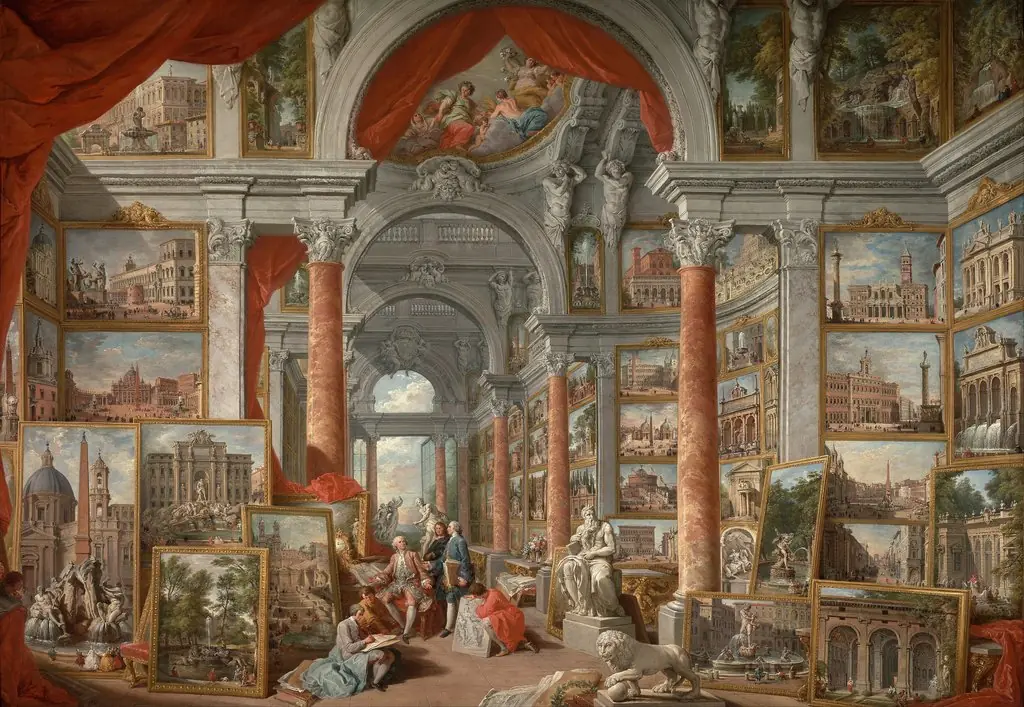
Although Panini is best known for his panoramic views of ancient Roman ruins, this work demonstrates his ability to integrate architectural expertise into a biblical scene. The choice of a Temple interior aligns with the 18th‑century interest in dramatizing scriptural events within grand, classical settings.
Legacy
The painting illustrates the intersection of Rococo elegance and Baroque drama, influencing later artists who sought to combine meticulous architectural rendering with emotive religious storytelling. Its presence in a major national museum underscores Panini’s broader contribution to the visual language of 18th‑century Italian art.
Own this work as a print
Artist & collection
Artist
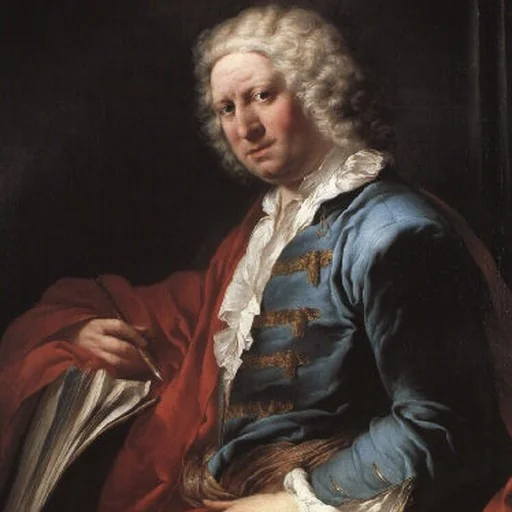
Giovanni Paolo, also known as Gian Paolo Panini or Pannini (17 June 1691 – 21 October 1765), was an Italian Baroque painter and architect who worked in Rome and is primarily known as one of the vedutisti ("view painters").

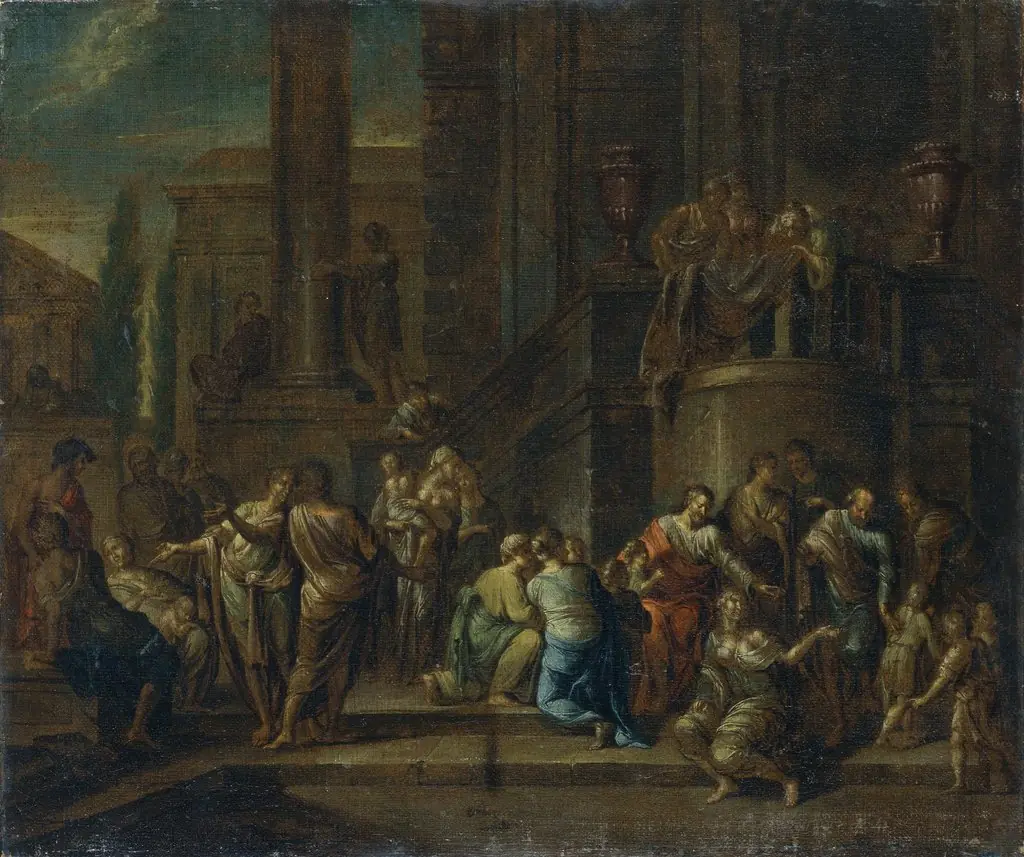 Christ Blessing the Children ('Suffer little children to come unto me, and forbid them not...')
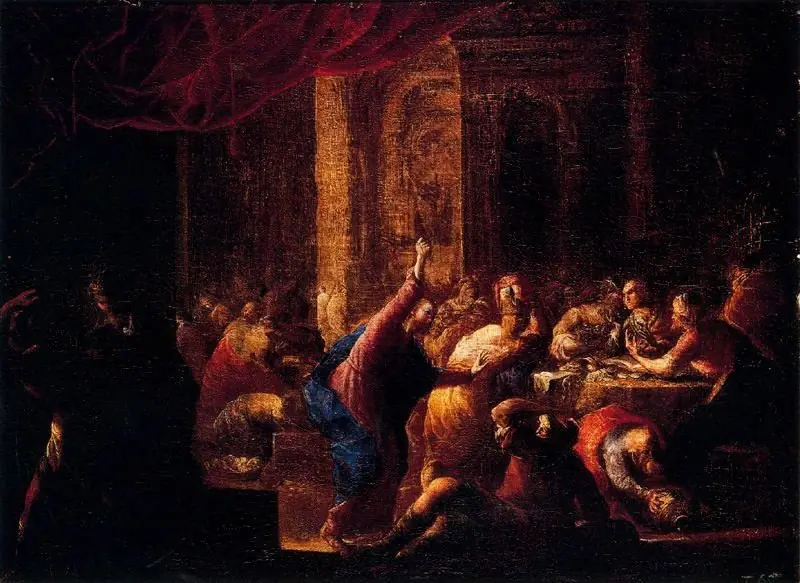 Expulsión de los mercaderes del templo
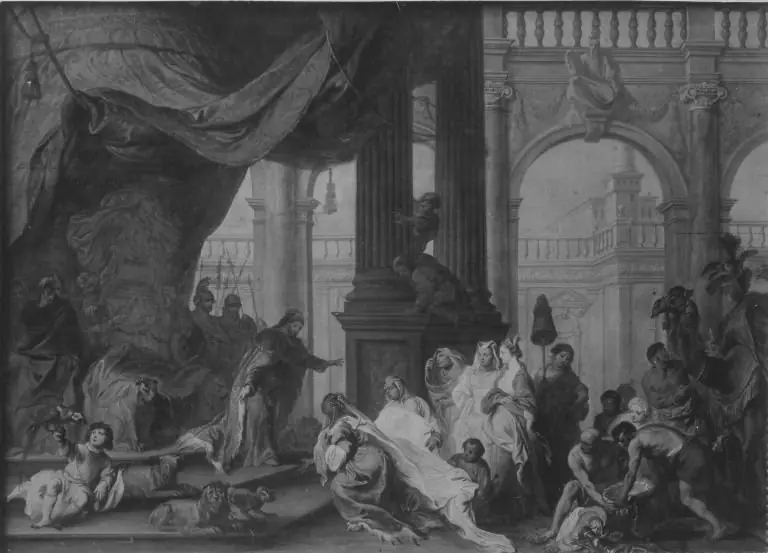 Salomon receives the Queen of Sheba
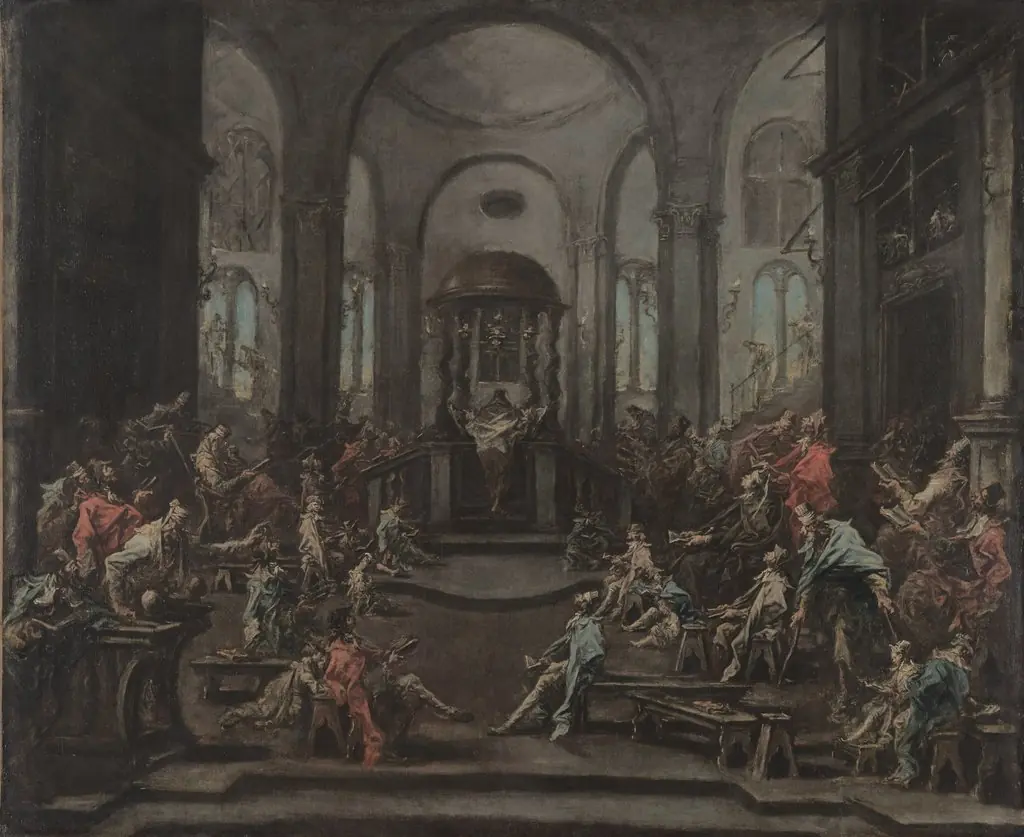 Interior of a Synagogue
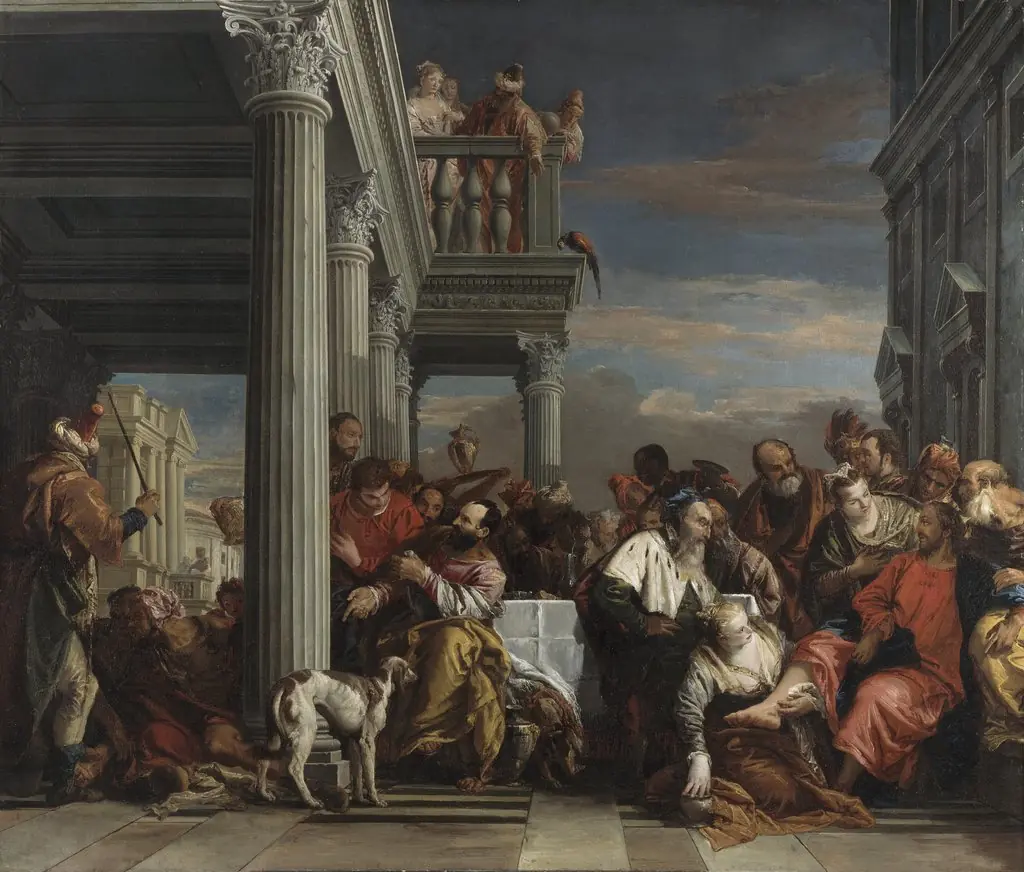 Christ in the House of Simon the Pharisee
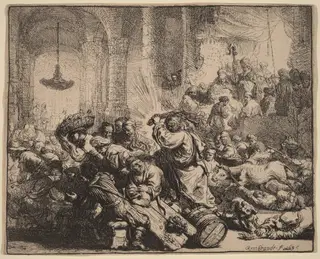
 The Cleansing of the Temple
 Marriage of Alexander the Great, King of Macedonia, with Roxana of Bacteriane
 Paul and Barnabas at Lystra
 The Raising of Lazarus