Artwork
Interior of a Synagogue
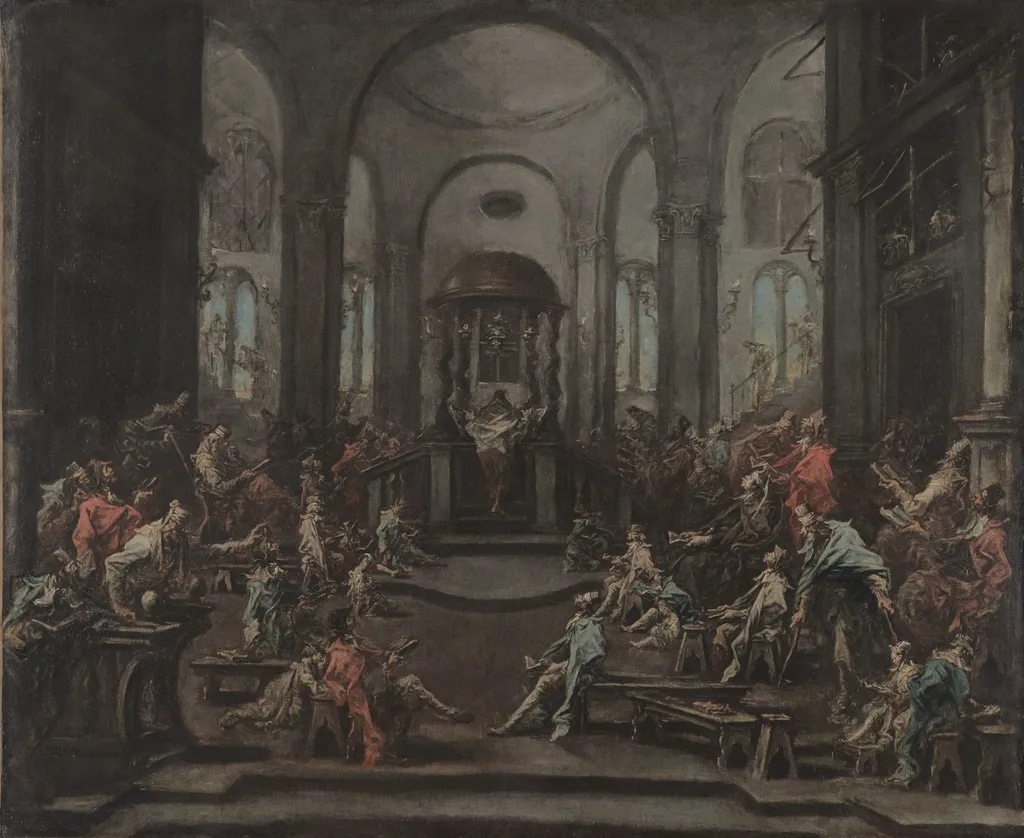
Interior of a Synagogue is an oil painting by the Rococo painting artist Alessandro Magnasco. It dates from 1725 and is held in the collection of the Cleveland Museum of Art.
About this work
Technique & Style
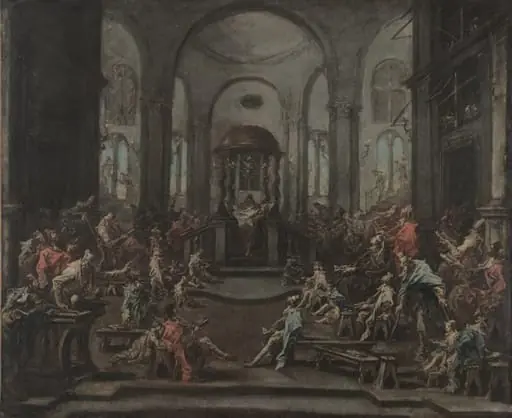
Figures and architecture are rendered through attenuated, flickering strokes that dissolve spatial clarity into a restless, almost tremulous atmosphere.
The painting is executed in oil on canvas, a medium characteristic of Magnasco’s mature practice, with the support prepared in the Italian tradition of the early eighteenth century. Handling is rapid and fluid, emphasizing sketch-like brushwork that leaves passages partially resolved and optically lively. Figures and architecture are rendered through attenuated, flickering strokes that dissolve spatial clarity into a restless, almost tremulous atmosphere.
Stylistically, the composition favors low-key chiaroscuro and a muted palette dominated by earthy browns and ochres, punctuated by flashes of red and white that heighten the scene’s spiritual intensity. The cavernous interior, with its crowded benches and gesturing figures, is organized along a shallow, diagonal recession, creating a sense of compressed space and theatrical immediacy.
History & Provenance
Interior of a Synagogue was painted circa 1725 by the Italian Baroque artist Alessandro Magnasco while working in Italy. The oil-on-canvas work entered the Cleveland Museum of Art’s holdings and is recorded under accession number 1930.22. Though specific records of its original commission or early owners are not documented in the available sources, the painting has been part of the museum’s collection since at least the early twentieth century, where it remains on display.
The painting is held by the Cleveland Museum of Art, where it is accessioned as 1930.22.
It has been exhibited at least once by the Cleveland Museum of Art, in the 1931 Cleveland Museum of Art exhibition titled “Italian Paintings of the 17th and 18th Centuries.”
Overview
Alessandro Magnasco’s Interior of a Synagogue (1725) is an oil on canvas that depicts a bustling interior space filled with figures in period dress. The composition is dominated by a vaulted hall, an altar at the rear, and a scattering of people in varied postures, illuminated by a muted light that filters through small windows.
Subject & Meaning
The work presents a crowded religious gathering, with worshippers kneeling, reaching, and even lying on the floor, suggesting a scene of intense devotion or communal fervor. The lack of a clear hierarchical arrangement may reflect the artist’s interest in the chaotic energy of collective ritual rather than a formal liturgical depiction.
Context
The piece belongs to a period when Italian artists were exploring more intimate, interior subjects, moving away from grand historical narratives. Magnasco’s depiction of a synagogue, a relatively uncommon subject for a Catholic painter, reflects a broader curiosity about diverse cultural settings within the cosmopolitan milieu of early 18th‑century Italy.
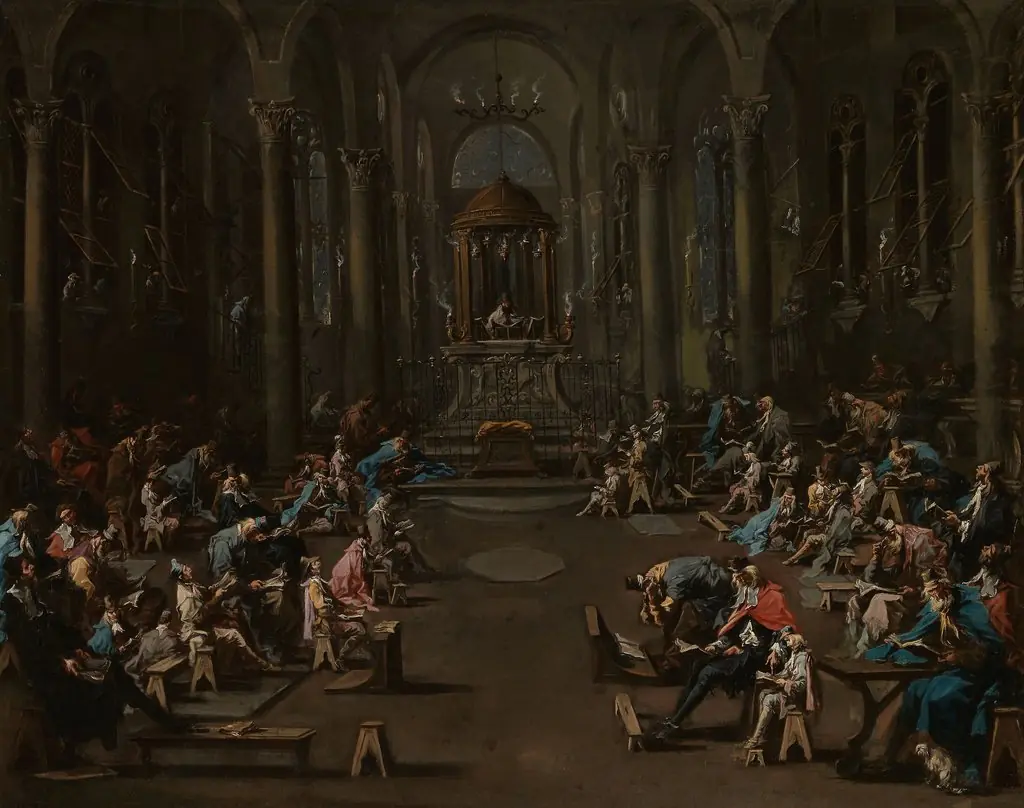
Own this work as a print
Artist & collection

Artist
Alessandro Magnasco (February 4, 1667 – March 12, 1749), also known as il Lissandrino, was an Italian late-Baroque painter active mostly in Milan and Genoa.




 Interior of a Synagogue
 Christ Blessing the Children ('Suffer little children to come unto me, and forbid them not...')
 Christ casting the Money Changers out of the Temple
 Nocturnal party and masquerade
 Sancho Fleeing from the Servants of the Duke
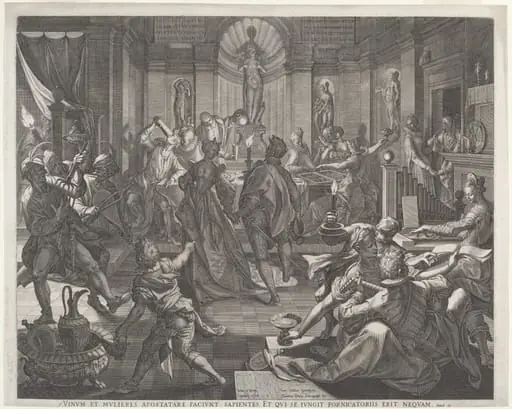 A Pleasure House
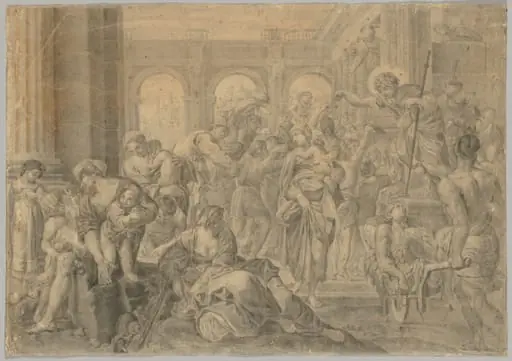 Copy of Annibale Carracci's St. Roch Giving Alms
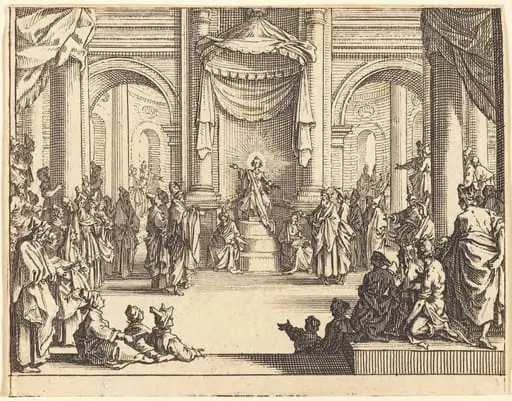 Christ Disputing with the Doctors
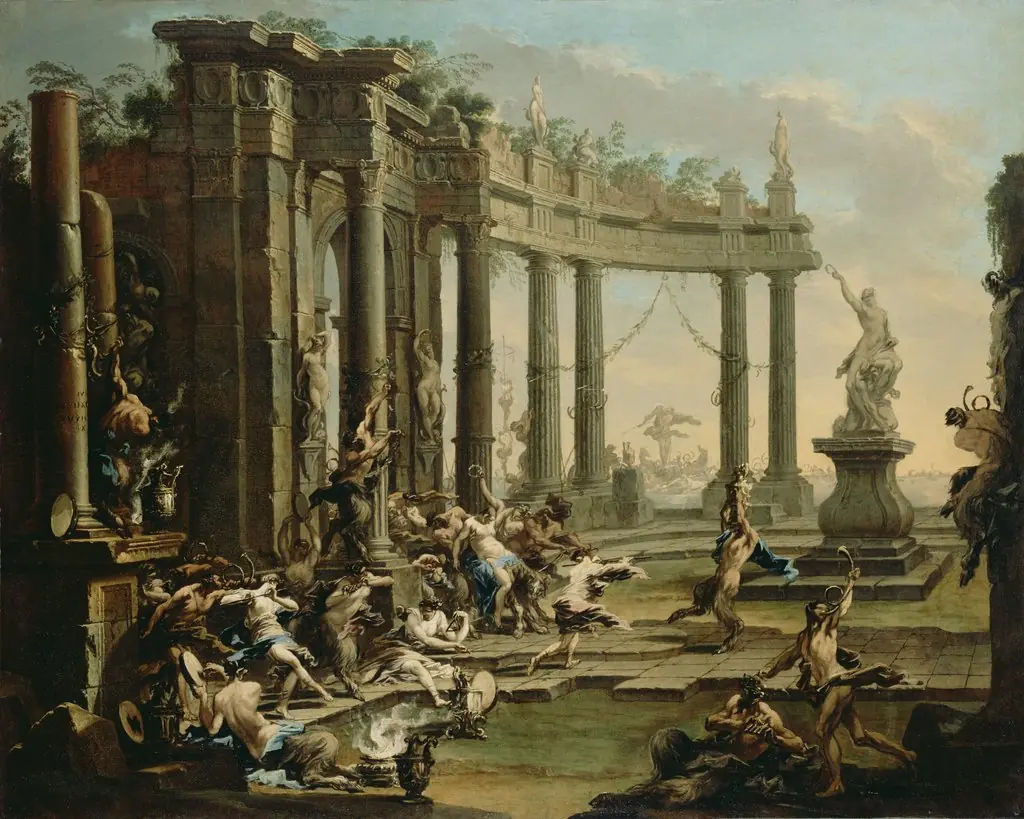 Bacchanale
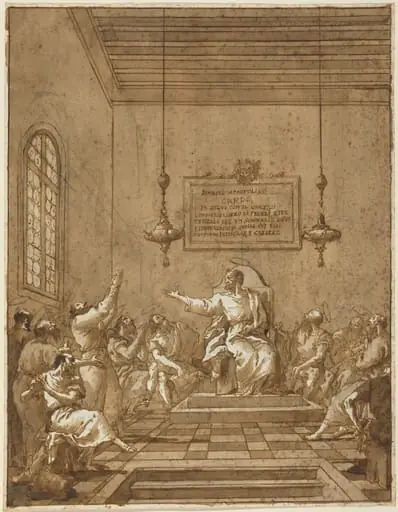 The Apostles' Creed
- The Synagogue